Edward Page Mitchell – författare
570 kr
Skickas inom 5-8 vardagar
94 kr
Läs direkt efter köp
31 kr
Läs direkt efter köp
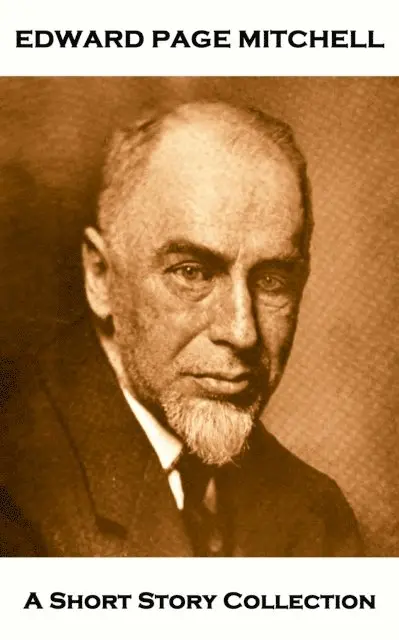
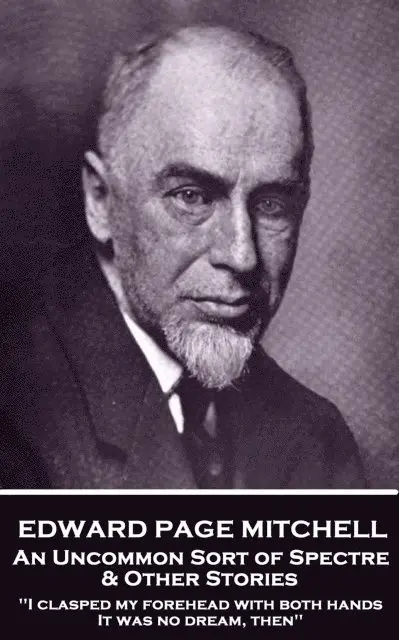
Edward Page Mitchell was born in Bath, Maine on 24th March 1852 into a wealthy family. When he was eight the family moved to a house on New York’s famed Fifth Avenue.
In 1863 he witnessed the Draft Riots and in the aftermath Mitchell''s father moved the family to Tar River, North Carolina. It was there, at the age of fourteen, that his letters were first published in the local newspaper The Bath Times.
In 1872, at age twenty, whilst on a train journey to Bath, Maine, a hot cinder from the engine''s smokestack flew in through the window blinding his left eye. After several weeks, while doctors attempted to restore his sight, his uninjured right eye underwent sympathetic blindness. He was now completely blind. His burnt left eye eventually regained its sight, but his uninjured right eye remained blind and was later replaced with a prosthetic glass eye. While recovering from this surgery, Mitchell wrote his dazzling story ‘The Tachypomp’.
Mitchell’s influence on science fiction writing is incredible and pre-dated many major themes. He wrote about a man made invisible, a time-travel machine, a thinking computer, teleportation, superior mutants and mind transfer. Add to this other stories which predicted travel by pneumatic tube, electrical heating, newspapers printed at home, food-pellet concentrates, international broadcasts, and suspended animation through cryogenics and they amount to talents that are not as publicly lauded as they should be.
Edward Page Mitchell died of a cerebral hemorrhage in New London, Connecticut on 22nd January 1927. He was 76.
154 kr
Läs direkt efter köp
To know the future is perhaps the most fabled of wishes.
In this volume we present a roll-call of classic authors including H P Lovecraft, H G Wells, Mary Shelley, Lewis Carroll, Jack London and many others who short story by short story establish much of what today is science fact. From space travel, the Internet, robots and cyborgs to voice control, organ transplants, mobile phones, these are just a few of the amazing and bewildering predictions that together bring a unique yet intricate account of the beginnings of this most prescient of genres.
44 kr
Läs direkt efter köp
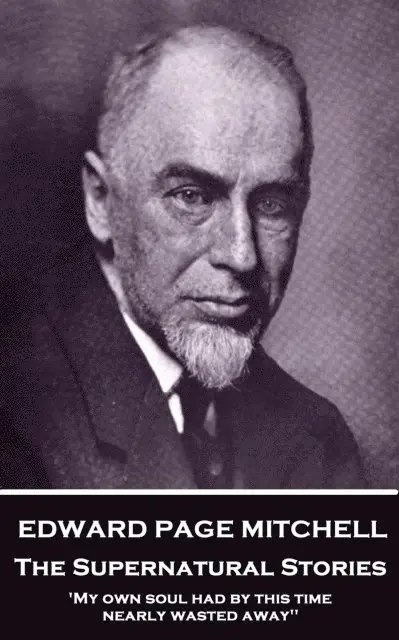
Edward Page Mitchell was born in Bath, Maine on 24th March 1852 into a wealthy family. When he was eight the family moved to a house on New York’s Fifth Avenue.
In 1863 he witnessed the Draft Riots and in the aftermath Mitchell''s father moved the family to Tar River, North Carolina. It was there, at the age of fourteen, that his letters were first published in the local newspaper The Bath Times.
In 1872, at age twenty, whilst on a train journey to Bath, Maine, a hot cinder from the engine''s smokestack flew in through the window blinding his left eye. After several weeks, while doctors attempted to restore his sight his uninjured right eye underwent sympathetic blindness. He was now completely blind. His burnt left eye eventually regained its sight, but his uninjured right eye remained blind and was later removed surgically and replaced with a prosthetic glass eye. While recovering from this surgery, Mitchell wrote his famed story ‘The Tachypomp’.
He became a journalist for the Daily Advertiser in Boston, where his mentor was Edward Everett Hale, now also recognized as an early pioneer of science fiction.
Mitchell’s influence on science fiction writing is incredible, pre-dating many major themes. He wrote about a man made invisible (‘The Crystal Man’, 1881), a time-travel machine (‘The Clock that Went Backward’), about faster-than-light travel (‘The Tachypomp’, 1874), a thinking computer and a cyborg (‘The Ablest Man in the World’, 1879), matter transmission or teleportation (‘The Man without a Body’, 1877), superior mutants (‘Old Squids and Little Speller’) and mind transfer (‘Exchanging Their Souls’, 1877). Add to this other stories which predicted travel by pneumatic tube, electrical heating, newspapers printed at home, food-pellet concentrates, international broadcasts, and suspended animation through cryogenics amount to talents that are not as publicly lauded as they should be.
He had a lifelong interest in the supernatural and paranormal—several early newspaper pieces are factual investigations of alleged hauntings and usually he determined they had rational explanations.
In 1874, Mitchell married Annie Sewall Welch and they had four children.
In 1903, Mitchell became editor-in-chief of the New York Sun, then the Nation’s leading newspaper.
In 1912, following Annie’s death, he married Ada M. Burroughs and produced a fifth son. Mitchell remained a popular and respected figure in American journalism and writing up to his death.
Edward Page Mitchell died of a cerebral hemorrhage in New London, Connecticut on 22nd January 1927. He was 76.
57 kr
Läs direkt efter köp
Edward Page Mitchell was born in Bath, Maine on 24th March 1852 into a wealthy family. When he was eight the family moved to a house on New York’s Fifth Avenue.
In 1863 he witnessed the Draft Riots and in the aftermath Mitchell''s father moved the family to Tar River, North Carolina. It was there, at the age of fourteen, that his letters were first published in the local newspaper The Bath Times.
In 1872, at age twenty, whilst on a train journey to Bath, Maine, a hot cinder from the engine''s smokestack flew in through the window blinding his left eye. After several weeks, while doctors attempted to restore his sight his uninjured right eye underwent sympathetic blindness. He was now completely blind. His burnt left eye eventually regained its sight, but his uninjured right eye remained blind and was later removed surgically and replaced with a prosthetic glass eye. While recovering from this surgery, Mitchell wrote his famed story ‘The Tachypomp’.
He became a journalist for the Daily Advertiser in Boston, where his mentor was Edward Everett Hale, now also recognized as an early pioneer of science fiction.
Mitchell’s influence on science fiction writing is incredible, pre-dating many major themes. He wrote about a man made invisible (‘The Crystal Man’, 1881), a time-travel machine (‘The Clock that Went Backward’), about faster-than-light travel (‘The Tachypomp’, 1874), a thinking computer and a cyborg (‘The Ablest Man in the World’, 1879), matter transmission or teleportation (‘The Man without a Body’, 1877), superior mutants (‘Old Squids and Little Speller’) and mind transfer (‘Exchanging Their Souls’, 1877). Add to this other stories which predicted travel by pneumatic tube, electrical heating, newspapers printed at home, food-pellet concentrates, international broadcasts, and suspended animation through cryogenics amount to talents that are not as publicly lauded as they should be.
He had a lifelong interest in the supernatural and paranormal—several early newspaper pieces are factual investigations of alleged hauntings and usually he determined they had rational explanations.
In 1874, Mitchell married Annie Sewall Welch and they had four children.
In 1903, Mitchell became editor-in-chief of the New York Sun, then the Nation’s leading newspaper.
In 1912, following Annie’s death, he married Ada M. Burroughs and produced a fifth son. Mitchell remained a popular and respected figure in American journalism and writing up to his death.
Edward Page Mitchell died of a cerebral hemorrhage in New London, Connecticut on 22nd January 1927. He was 76.
56 kr
Läs direkt efter köp
Edward Page Mitchell was born in Bath, Maine on 24th March 1852 into a wealthy family. When he was eight the family moved to a house on New York’s Fifth Avenue.
In 1863 he witnessed the Draft Riots and in the aftermath Mitchell''s father moved the family to Tar River, North Carolina. It was there, at the age of fourteen, that his letters were first published in the local newspaper The Bath Times.
In 1872, at age twenty, whilst on a train journey to Bath, Maine, a hot cinder from the engine''s smokestack flew in through the window blinding his left eye. After several weeks, while doctors attempted to restore his sight his uninjured right eye underwent sympathetic blindness. He was now completely blind. His burnt left eye eventually regained its sight, but his uninjured right eye remained blind and was later removed surgically and replaced with a prosthetic glass eye. While recovering from this surgery, Mitchell wrote his famed story ‘The Tachypomp’.
He became a journalist for the Daily Advertiser in Boston, where his mentor was Edward Everett Hale, now also recognized as an early pioneer of science fiction.
Mitchell’s influence on science fiction writing is incredible, pre-dating many major themes. He wrote about a man made invisible (‘The Crystal Man’, 1881), a time-travel machine (‘The Clock that Went Backward’), about faster-than-light travel (‘The Tachypomp’, 1874), a thinking computer and a cyborg (‘The Ablest Man in the World’, 1879), matter transmission or teleportation (‘The Man without a Body’, 1877), superior mutants (‘Old Squids and Little Speller’) and mind transfer (‘Exchanging Their Souls’, 1877). Add to this other stories which predicted travel by pneumatic tube, electrical heating, newspapers printed at home, food-pellet concentrates, international broadcasts, and suspended animation through cryogenics amount to talents that are not as publicly lauded as they should be.
He had a lifelong interest in the supernatural and paranormal—several early newspaper pieces are factual investigations of alleged hauntings and usually he determined they had rational explanations.
In 1874, Mitchell married Annie Sewall Welch and they had four children.
In 1903, Mitchell became editor-in-chief of the New York Sun, then the Nation’s leading newspaper.
In 1912, following Annie’s death, he married Ada M. Burroughs and produced a fifth son. Mitchell remained a popular and respected figure in American journalism and writing up to his death.
Edward Page Mitchell died of a cerebral hemorrhage in New London, Connecticut on 22nd January 1927. He was 76.
11 kr
Läs direkt efter köp
15 kr
Läs direkt efter köp
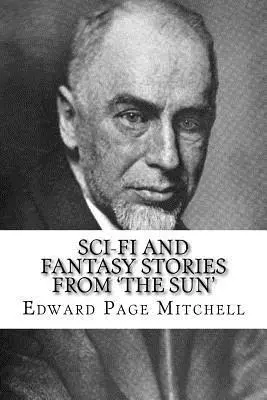
Later described as "the lost giant of American science fiction," Edward Page Mitchell wrote many science fiction and fantasy short stories in the 1870''s to 1890''s, nearly all of which were published anonymously in the The Sun daily newspaper of New York. Mitchell was editor-in-chief of The Sun and was a member of the Pulitzer Prize Board for many years.
Mitchell introduced many technological and social predictions which were daring for the time, prior to similar predictions by famous authors, such as travel by pneumatic tube, electrical heating, newspapers printed in the home by electrical transmission, food-pellet concentrates, international broadcasts, suspended animation of a living human being through freezing (cryogenics), a man rendered invisible by scientific means, a time-travel machine, faster-than-light travel, a thinking computer, a cyborg, matter transmission or teleportation, voting by American women, and interracial marriage. His fantasy stories dabble with the occult and bizarre, involving ghosts, the Devil, masochism, inanimate objects coming to life, and more.
THE TACHYPOMP (April 1894),
THE SOUL SPECTROSCOPE (19 December 1875),
THE FACTS IN THE RATCLIFF CASE (07 March 1879),
THE STORY OF THE DELUGE (29 April 1875),
THE PROFESSOR''S EXPERIMENT (22 February 1880),
THE INSIDE OF THE EARTH (27 February 1876),
THE BALLOON TREE (25 February 1883),
OLD SQUIDS AND LITTLE SPELLER (19 July 1885),
THE MAN WITHOUT A BODY (25 March 1877),
THE ABLEST MAN IN THE WORLD (04 May 1879),
THE SENATOR''S DAUGHTER (27 July 1879),
THE CRYSTAL MAN (30 January 1881),
THE CLOCK THAT WENT BACKWARD (18 September 1881),
and 17 more are contained in this anthology, 30 in all, with an introduction about The Sun by the contributor of this work to Feedbooks'' public domain collection.
72 kr
Läs direkt efter köp
73 kr
Läs direkt efter köp