Edward Shils – författare
Visar alla böcker från författaren Edward Shils. Handla med fri frakt och snabb leverans.
21 produkter
21 produkter
Häftad, Engelska, 2006
274 kr
Skickas inom 5-8 vardagar
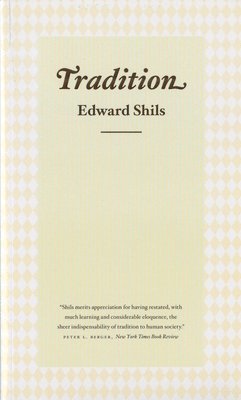
"Tradition", by esteemed sociologist Edward Shils, was the first book to fully explore the history, significance, and future of tradition as a whole. Intent on questioning the meaning of the antitraditionalist impulse in today's society, Shils argues here that the tendency to distrust and rebel against tradition is at the heart of tradition itself; only through suspicion and defiance does tradition actually move forward. Revealing the importance of tradition to social and political institutions, technology, science, literature, religion, and scholarship, "Tradition" remains the definitive work on this vital element of our society.
Inbunden, Engelska, 2010
2 225 kr
Skickas inom 10-15 vardagar
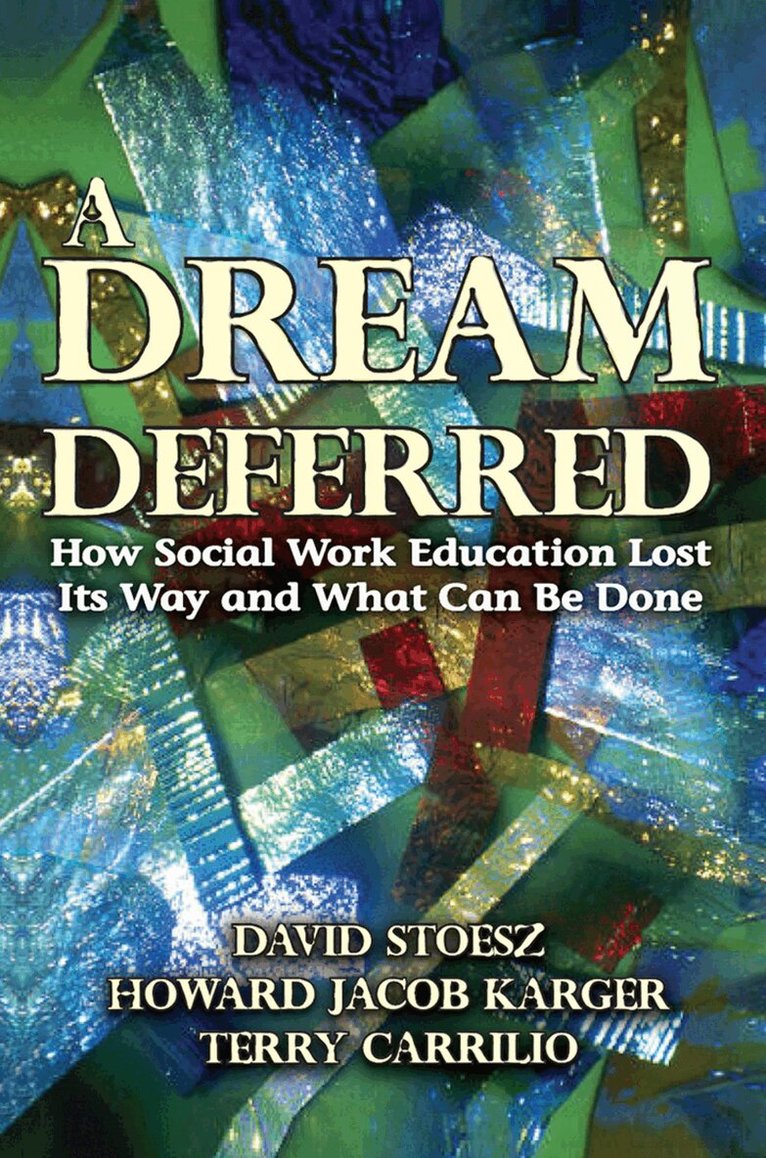
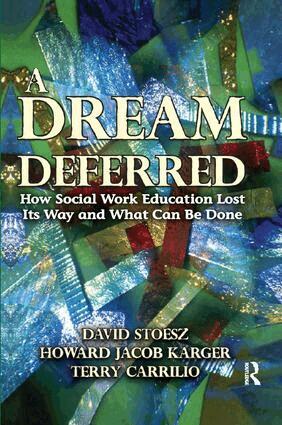
From its inception in the late nineteenth century, social work has struggled to carry out the complex, sometimes contradictory, functions associated with reducing suffering, enhancing social order, and social reform. Since then, social programs like the implementation of welfare and the expansion of the service economy-which should have augured well for American social work-instead led to a continued loss of credibility with the public and within the academy.A Dream Deferred chronicles this decline of social work, attributing it to the poor quality of professional education during the past half-century. The incongruity between social work's promise and its performance warrants a critical review of professional education. For the past half-century, the fortunes of social work have been controlled by the Council of Social Work Education, which oversees accreditation of the nation's schools of social work. Stoesz, Karger, and Carrilio argue that the lack of scholarship of the Board of Directors compromises this accreditation policy. Similarly, the quality of professional literature suffers from the weak scholarship of editors and referees. The caliber of deans and directors of social work educational programs is low and graduate students are ill-prepared to commence studies in social work. Further complicating this debate, the substitution of ideology for academic rigor makes social work vulnerable to its critics.The authors state that, since CSWE is unlikely to reform social work education, schools of social work should be free to obtain accreditation independently, and they propose criteria for independent accreditation. A Dream Deferred builds on the past, presents a bracing critique of the present, and proposes recommendations for a better future that cannot be ignored or dismissed.
Häftad, Engelska, 1982
367 kr
Skickas inom 5-8 vardagar
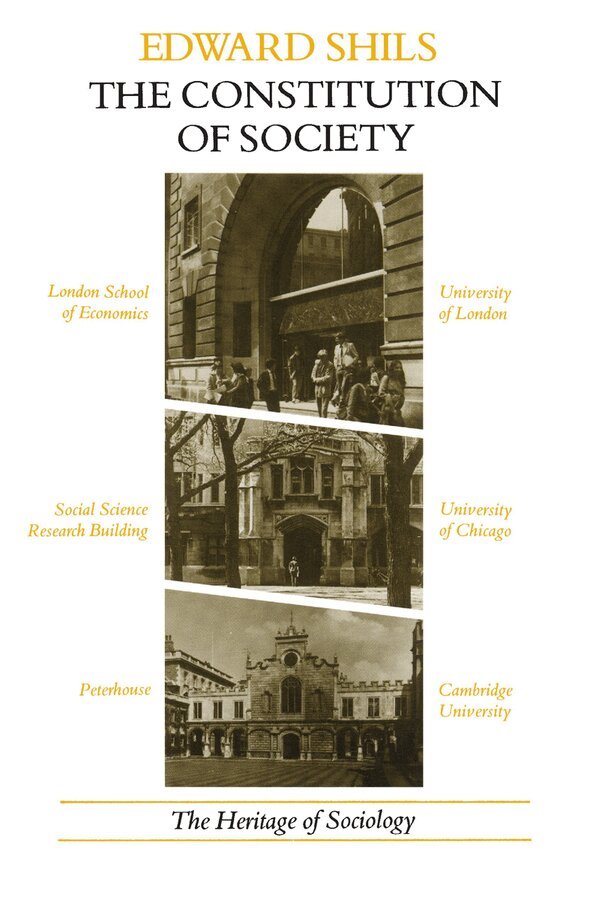
Edward Shils's attempt to work out a macrosociological theory which does justice both to the spiritual and intellectual dispositions and powers of the mind and to the reality of the larger society is an enterprise that has spanned several decades. In his steps toward the development of this theory he has not proceeded deductively; rather he has worked from his own concrete observations of Western, Asian, and African societies. Thus, despite the inevitable abstractness of marcrosociological theory, the papers in this volume—which have been published separately since the Second World War—have a quality of vivid substantiality that makes the theoretical statements they present easier to comprehend. Professor Shils has attempted to develop a theory that has a place for more than those parts of society that are generated from the biological nature of human beings and those parts that are engendered by the desires of individuals, acting for themselves or for groups and categories of individuals, to maintain and increase their power over other human beings and to secure material goods and services for themselves. He has argued that there are constituents of society in which human beings seek and cultivate connections with objects that transcend those needed to satisfy biological necessity and the desire for material objects and power over others. This third stratum of social existence, he concludes, cannot be reduced to the other two and cannot be disregarded in any serious attempt to understand the function of any society. Thus Edward Shils, without disregarding its many valuable achievements, has nevertheless parted ways with much of modern sociology. For this collection of papers the author has written an introductory intellectual autobiography that places each essay in the setting of the development of his thought and that connects it with his other writings.
Häftad, Engelska, 1997
328 kr
Skickas inom 5-8 vardagar
Ranging widely across many disciplines, this collection of essays demonstrates a distaste for intellectuals who "run with the intellectual mob", and a deep respect for those who maintain their integrity under great pressure. The collection includes an affectionate treatment of Leo Szilard, the physicist whose involvement with the development of the atomic bomb led him to work towards addressing its social consequences; a discussion of the educational philosophy of Robert Maynard Hutchins, the University of Chicago's fifth, and most controversial, president; an account of the Polish emigre Leopold Labedz's outspoken resistance to communism, and an essay on Indian writer Nirad Chaudhuri. Many of these essays have appeared in "The American Scholar", edited by Joseph Epstein, who introduces this volume with his own portrait of Edward Shils.
Häftad, Engelska, 1997
293 kr
Skickas inom 5-8 vardagar
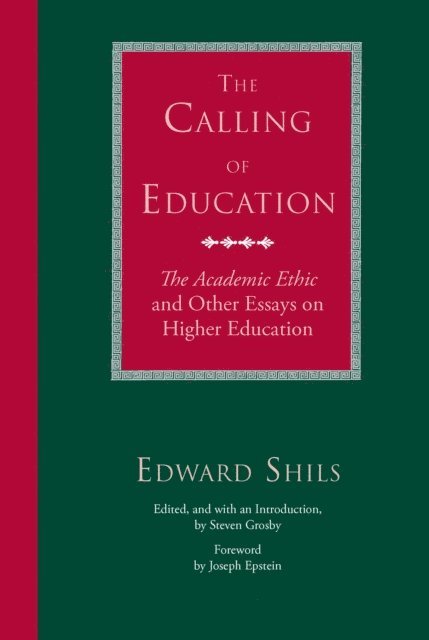
Throughout his long career, Edward Shils brought a wide knowledge of academic institutions to discussions about higher education. "The Calling of Education" features Shils's most incisive writing on this topic from the last 25 years of his life. The first essay, "The Academic Ethic," articulates the unique ethical demands of the academic profession and directs special attention to the integration of teaching and research. Other pieces, including Shils's renowned Jefferson lectures, focus on perennial issues in higher learning: the meaning of academic freedom, the connection between universities and the state, and the criteria for appointing individuals to academic positions. Edward Shils understood the university as a great symphonic conductor comprehends the value of each instrument and section, both separately and in co-operation. "The Calling of Education" offers Shils's insightful perspective on problems that are no less pressing than when he first confronted them.
Häftad, Engelska, 2010
695 kr
Skickas inom 7-10 vardagar
Originally published in 1982, this is a collection of studies by representatives of countries in western Europe, writing about important legislation affecting universities and showing trends of government control over higher education. In the 1960s European universities faced two major challenges: a rapid increase in enrolment, with consequent expansion of staff and a growing need for money; and a demand for changes in their governing structures by student activists and some staff and government administrators. Taking the widespread student agitation in 1968 as the starting-point, the authors summarise the general history of higher education; events of the late 1960s and 1970s and their political and public consequences for educators; and the then current positions of stage and private universities in their countries. In addition, one chapter contrasts the situations in Great Britain and the United States. Hans Daalder provides a retrospective overview of these problems and their resolutions.
Häftad, Engelska, 1996
493 kr
Skickas inom 7-10 vardagar
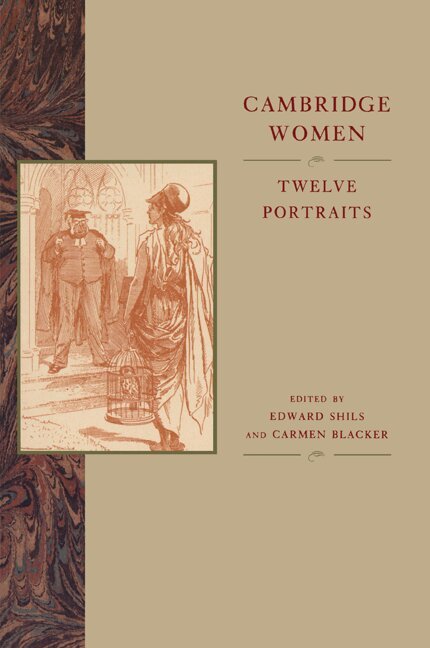
This is a collection of portraits of twelve outstanding women who lived and worked in Cambridge during the century before women were admitted fully to membership of the University. The subjects include Jane Harrison, distinguished scholar of Greek religion, Mrs Sidgwick, founder of Newnham College, Eileen Power, medieval historian, Nora Chadwick, scholar of Norse and Celtic, Honor Fell, cell biologist and founding force behind the Strangeways Laboratory, Frances Cornford, poet, and Rosalind Franklin, whose work on DNA was essential to the Watson-Crick model. All were outstanding personalities as well as distinguished scholars, and the 'twelve portraits' give a vivid account of their lives and work.
Inbunden, Engelska, 2006
2 293 kr
Skickas inom 10-15 vardagar
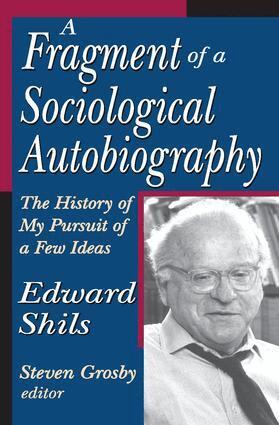
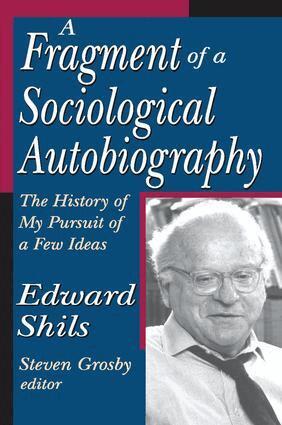
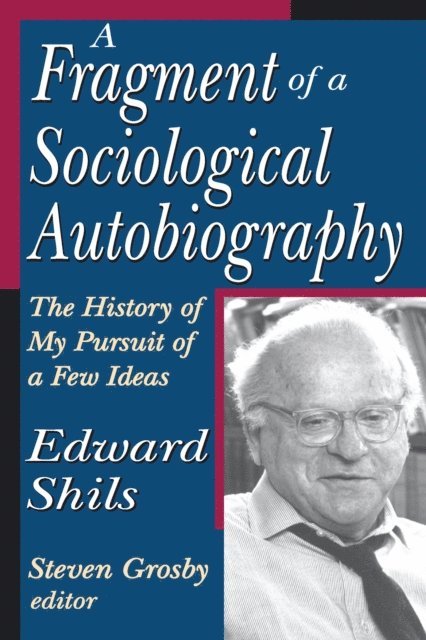
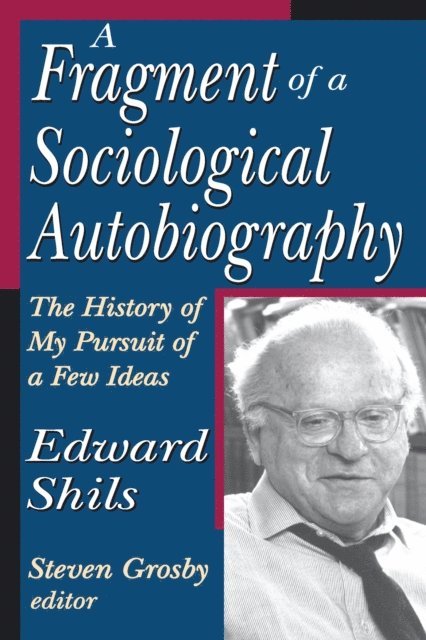
Edward Shils was one of the giants of sociological theory in the period after World War II. In this autobiography, written three years before his death in 1995 and never before published, Shils reflects on the remarkable range of his life's work and activities, including founding and editing the journal Minerva, being a central figure in the Congress of Cultural Freedom, serving as a founding member of the editorial board of The Bulletin of Atomic Scientists, and being a member of the International Council on the Future of the University.Shils recognizes that a unity of concern runs through his many theoretical writings and activities. Early in his life the concern was expressed as understanding the character of consensus. During the last fifteen years of his life, he refined his understanding of consensus through investigation of the nature of "collective self-consciousness." That concern was the structure and character of the moral order of a society, and, in particular, liberal, democratic society. Accompanying the autobiography are two unpublished essays, "Society, Collective Self-Consciousness and Collective Self-Consciousnesses" and "Collective Self-Consciousness and Rational Choice," two areas of intellectual concern discussed in the autobiography. The book contains fascinating discussion of many of the people Shils knew throughout his illustrious career: Robert Park, Louis Wirth, Talcott Parsons, Karl Mannheim, Michael Polanyi, Audrey Richards, Karl Popper, Robert Merton, and many others.The volume represents Shils' final formulations on the character of society and its moral order. As such, it is a most important contribution both to the history of the social sciences in the twentieth century and to sociological theory.
Häftad, Engelska, 1997
200 kr
Skickas inom 3-6 vardagar
Inbunden, Engelska, 2022
362 kr
Skickas inom 5-8 vardagar
Häftad, Engelska, 2022
228 kr
Skickas inom 5-8 vardagar
Inbunden, Engelska, 2022
459 kr
Skickas inom 5-8 vardagar
Häftad, Engelska, 2022
348 kr
Skickas inom 5-8 vardagar
Häftad, Engelska, 2017
684 kr
Skickas inom 10-15 vardagar
From its inception in the late nineteenth century, social work has struggled to carry out the complex, sometimes contradictory, functions associated with reducing suffering, enhancing social order, and social reform. Since then, social programs like the implementation of welfare and the expansion of the service economy-which should have augured well for American social work-instead led to a continued loss of credibility with the public and within the academy.A Dream Deferred chronicles this decline of social work, attributing it to the poor quality of professional education during the past half-century. The incongruity between social work's promise and its performance warrants a critical review of professional education. For the past half-century, the fortunes of social work have been controlled by the Council of Social Work Education, which oversees accreditation of the nation's schools of social work. Stoesz, Karger, and Carrilio argue that the lack of scholarship of the Board of Directors compromises this accreditation policy. Similarly, the quality of professional literature suffers from the weak scholarship of editors and referees. The caliber of deans and directors of social work educational programs is low and graduate students are ill-prepared to commence studies in social work. Further complicating this debate, the substitution of ideology for academic rigor makes social work vulnerable to its critics.The authors state that, since CSWE is unlikely to reform social work education, schools of social work should be free to obtain accreditation independently, and they propose criteria for independent accreditation. A Dream Deferred builds on the past, presents a bracing critique of the present, and proposes recommendations for a better future that cannot be ignored or dismissed.
Häftad, Engelska, 2017
822 kr
Skickas inom 10-15 vardagar
Edward Shils was one of the giants of sociological theory in the period after World War II. In this autobiography, written three years before his death in 1995 and never before published, Shils reflects on the remarkable range of his life's work and activities, including founding and editing the journal Minerva, being a central figure in the Congress of Cultural Freedom, serving as a founding member of the editorial board of The Bulletin of Atomic Scientists, and being a member of the International Council on the Future of the University.Shils recognizes that a unity of concern runs through his many theoretical writings and activities. Early in his life the concern was expressed as understanding the character of consensus. During the last fifteen years of his life, he refined his understanding of consensus through investigation of the nature of "collective self-consciousness." That concern was the structure and character of the moral order of a society, and, in particular, liberal, democratic society. Accompanying the autobiography are two unpublished essays, "Society, Collective Self-Consciousness and Collective Self-Consciousnesses" and "Collective Self-Consciousness and Rational Choice," two areas of intellectual concern discussed in the autobiography. The book contains fascinating discussion of many of the people Shils knew throughout his illustrious career: Robert Park, Louis Wirth, Talcott Parsons, Karl Mannheim, Michael Polanyi, Audrey Richards, Karl Popper, Robert Merton, and many others.The volume represents Shils' final formulations on the character of society and its moral order. As such, it is a most important contribution both to the history of the social sciences in the twentieth century and to sociological theory.
Häftad, Engelska, 2018
423 kr
Skickas inom 10-15 vardagar
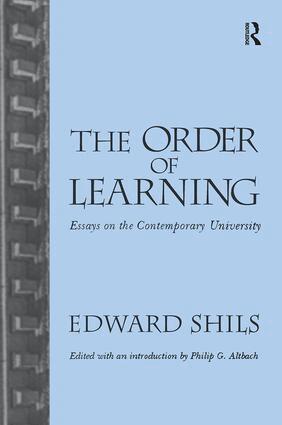
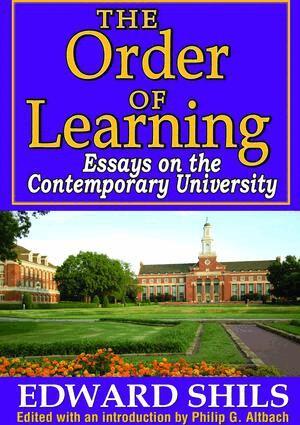
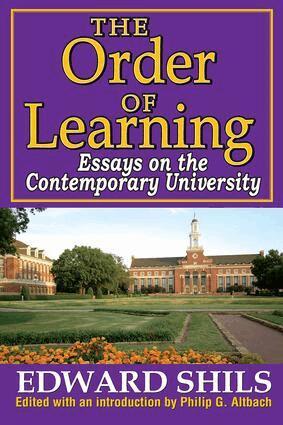
The Order of Learning considers the problems facing higher education by focusing on main underlying factors: the relationship of higher education to government, academic freedom, and the responsibilities of the academic profession, among others. Edward Shils argues that higher education has a central role in society, and that distractions, such as pressures from government, disinterest of students and faculty in education, and involvement of institutions of higher learning in social questions, have damaged higher education by deflecting it from its commitment to teaching, learning, and research.Shils believes that the modern university must be steadfast in its commitment to the pursuit of truth, the education of students, and the provision of research. Universities should not be all things to all people. On one hand, the academic community must understand the essential mission of the university and resist distractions. On the other, government must provide the necessary support to higher education, even when the immediate "pay-off" is not self-evident.This book provides a refreshing new perspective precisely by taking a traditional stance on the role of higher education in modern society. It includes carefully researched and elegantly written essays on many of the central issues facing education today. This work will be of great interest to educators and students alike, as well as those interested in the future of higher education in the United States.
Inbunden, Engelska, 2017
1 282 kr
Skickas inom 10-15 vardagar
The Order of Learning considers the problems facing higher education by focusing on main underlying factors: the relationship of higher education to government, academic freedom, and the responsibilities of the academic profession, among others. Edward Shils argues that higher education has a central role in society, and that distractions, such as pressures from government, disinterest of students and faculty in education, and involvement of institutions of higher learning in social questions, have damaged higher education by deflecting it from its commitment to teaching, learning, and research.Shils believes that the modern university must be steadfast in its commitment to the pursuit of truth, the education of students, and the provision of research. Universities should not be all things to all people. On one hand, the academic community must understand the essential mission of the university and resist distractions. On the other, government must provide the necessary support to higher education, even when the immediate "pay-off" is not self-evident.This book provides a refreshing new perspective precisely by taking a traditional stance on the role of higher education in modern society. It includes carefully researched and elegantly written essays on many of the central issues facing education today. This work will be of great interest to educators and students alike, as well as those interested in the future of higher education in the United States.
Häftad, Engelska, 2013
436 kr
Skickas inom 10-15 vardagar
The Order of Learning considers the problems facing higher education by focusing on main underlying factors: the relationship of higher education to government, academic freedom, and the responsibilities of the academic profession, among others. Edward Shils argues that higher education has a central role in society, and that distractions, such as pressures from government, disinterest of students and faculty in education, and involvement of institutions of higher learning in social questions, have damaged higher education by deflecting it from its commitment to teaching, learning, and research.Shils believes that the modern university must be steadfast in its commitment to the pursuit of truth, the education of students, and the provision of research. Universities should not be all things to all people. On one hand, the academic community must understand the essential mission of the university and resist distractions. On the other, government must provide the necessary support to higher education, even when the immediate "pay-off" is not self-evident.This book provides a refreshing new perspective precisely by taking a traditional stance on the role of higher education in modern society. It includes carefully researched and elegantly written essays on many of the central issues facing education today. This work will be of great interest to educators and students alike, as well as those interested in the future of higher education in the United States.
Häftad, Engelska, 1996
212 kr
Skickas inom 10-15 vardagar
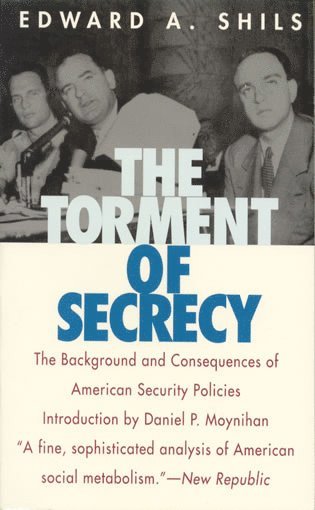
Edward Shils's The Torment of Secrecy is one of the few minor classics to emerge from the cold war years of anticommunism and McCarthyism in the United States. Mr. Shils's "torment" is not only that of the individual caught up in loyalty and security procedures; it is also the torment of the accuser and judge. This essay in sociological analysis and political philosophy considers the cold war preoccupation with espionage, sabotage, and subversion at home, assessing the magnitude of such threats and contrasting it to the agitation—by lawmakers, investigators, and administrators—so wildly directed against the "enemy." Mr. Shils's examination of a recurring American characteristic is as timely as ever. "Brief...lucid... brilliant."—American Political Science Review. "A fine, sophisticated analysis of American social metabolism."—New Republic. "An excitingly lucid and intelligent work on a subject of staggering importance...the social preconditions of political democracy."—Social Forces.
Inbunden, Engelska, 1997
1 039 kr
Tillfälligt slut
Ranging widely across many disciplines, this collection of essays demonstrates a distaste for intellectuals who "run with the intellectual mob", and a deep respect for those who maintain their integrity under great pressure. The collection includes an affectionate treatment of Leo Szilard, the physicist whose involvement with the development of the atomic bomb led him to work towards addressing its social consequences; a discussion of the educational philosophy of Robert Maynard Hutchins, the University of Chicago's fifth, and most controversial, president; an account of the Polish emigre Leopold Labedz's outspoken resistance to communism, and an essay on Indian writer Nirad Chaudhuri. Many of these essays have appeared in "The American Scholar", edited by Joseph Epstein, who introduces this volume with his own portrait of Edward Shils.
Inbunden, Engelska, 1997
1 084 kr
Tillfälligt slut
The Order of Learning considers the problems facing higher education by focusing on main underlying factors: the relationship of higher education to government, academic freedom, and the responsibilities of the academic profession, among others. Edward Shils argues that higher education has a central role in society, and that distractions, such as pressures from government, disinterest of students and faculty in education, and involvement of institutions of higher learning in social questions, have damaged higher education by deflecting it from its commitment to teaching, learning, and research.Shils believes that the modern university must be steadfast in its commitment to the pursuit of truth, the education of students, and the provision of research. Universities should not be all things to all people. On one hand, the academic community must understand the essential mission of the university and resist distractions. On the other, government must provide the necessary support to higher education, even when the immediate "pay-off" is not self-evident.This book provides a refreshing new perspective precisely by taking a traditional stance on the role of higher education in modern society. It includes carefully researched and elegantly written essays on many of the central issues facing education today. This work will be of great interest to educators and students alike, as well as those interested in the future of higher education in the United States.