Ekaterina Rousseva – författare
Visar alla böcker från författaren Ekaterina Rousseva. Handla med fri frakt och snabb leverans.
8 produkter
8 produkter
E-bok
PDF, Engelska, 20203 571 kr
Läs direkt efter köp
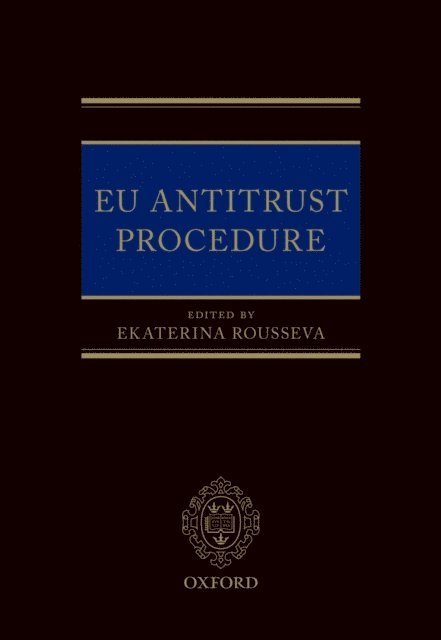
The EU antitrust enforcement system for several decades has been one of the most mature antitrust enforcement systems in the world. The European Commission has been recognised as a leading antitrust agency internationally, and a role model for enforcers. This would not have been possible without effective procedural rules. This volume provides a comprehensive and practically-oriented account of EU antirust procure. After setting out the institutional design and legal framework of the EU antitrust enforcement system, it explores the EU Commission''s investigative powers, the possible outcomes of its investigations, the types of decisions it adopts and the remedies and fines it imposes. This volume looks closely at the rights of defences enjoyed by the investigated parties, and how the EU Commission strike a balance between their full observance on the one hand and the effectiveness of its enforcement on the other. Particular attention is given to the judicial review of the EU Commission''s acts and the role of the EU Courts in providing judicial protection and ensuring compliance with fundamental rights and principles. Recognising cooperation as a key feature of the EU antitrust enforcement system, the volume explores the mechanisms for cooperation between national antitrust enforcers and the EU Commission, between national courts and the EU Court of Justice as well as the mechanisms for international cooperation. It also provides an in-depth review of the ECN+ Directive and explains how it contributes to making national competition authorities more effective enforcers. Written primarily with enforcers and practitioners in mind, it is essential reading for anyone with an interest in EU antitrust procedure.
E-bok
Engelska, 20203 571 kr
Läs direkt efter köp
The EU antitrust enforcement system for several decades has been one of the most mature antitrust enforcement systems in the world. The European Commission has been recognised as a leading antitrust agency internationally, and a role model for enforcers. This would not have been possible without effective procedural rules. This volume provides a comprehensive and practically-oriented account of EU antirust procure. After setting out the institutional design and legal framework of the EU antitrust enforcement system, it explores the EU Commission''s investigative powers, the possible outcomes of its investigations, the types of decisions it adopts and the remedies and fines it imposes. This volume looks closely at the rights of defences enjoyed by the investigated parties, and how the EU Commission strike a balance between their full observance on the one hand and the effectiveness of its enforcement on the other. Particular attention is given to the judicial review of the EU Commission''s acts and the role of the EU Courts in providing judicial protection and ensuring compliance with fundamental rights and principles. Recognising cooperation as a key feature of the EU antitrust enforcement system, the volume explores the mechanisms for cooperation between national antitrust enforcers and the EU Commission, between national courts and the EU Court of Justice as well as the mechanisms for international cooperation. It also provides an in-depth review of the ECN+ Directive and explains how it contributes to making national competition authorities more effective enforcers. Written primarily with enforcers and practitioners in mind, it is essential reading for anyone with an interest in EU antitrust procedure.
Inbunden, Engelska, 2020
4 747 kr
Skickas inom 7-10 vardagar
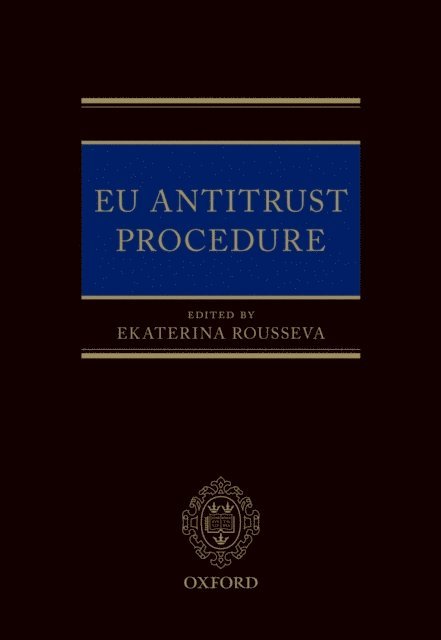
The EU antitrust enforcement system for several decades has been one of the most mature antitrust enforcement systems in the world. The European Commission has been recognised as a leading antitrust agency internationally, and a role model for enforcers. This would not have been possible without effective procedural rules. This volume provides a comprehensive and practically-oriented account of EU antirust procure. After setting out the institutional design and legal framework of the EU antitrust enforcement system, it explores the EU Commission's investigative powers, the possible outcomes of its investigations, the types of decisions it adopts and the remedies and fines it imposes. This volume looks closely at the rights of defences enjoyed by the investigated parties, and how the EU Commission strike a balance between their full observance on the one hand and the effectiveness of its enforcement on the other. Particular attention is given to the judicial review of the EU Commission's acts and the role of the EU Courts in providing judicial protection and ensuring compliance with fundamental rights and principles. Recognising cooperation as a key feature of the EU antitrust enforcement system, the volume explores the mechanisms for cooperation between national antitrust enforcers and the EU Commission, between national courts and the EU Court of Justice as well as the mechanisms for international cooperation. It also provides an in-depth review of the ECN+ Directive and explains how it contributes to making national competition authorities more effective enforcers. Written primarily with enforcers and practitioners in mind, it is essential reading for anyone with an interest in EU antitrust procedure.
4 811 kr
Skickas inom 5-8 vardagar
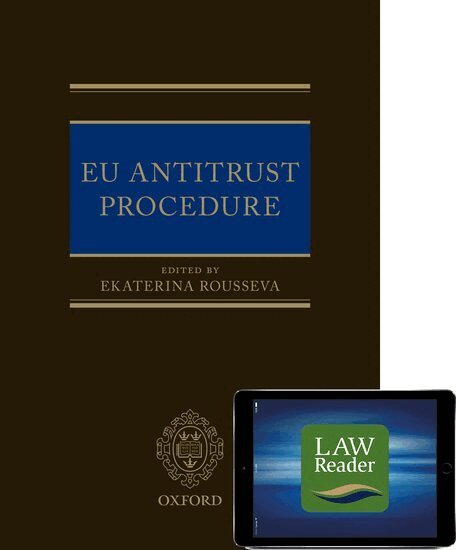
Companion website: www.oup.com/rousseva The EU antitrust enforcement system for several decades has been one of the most mature antitrust enforcement systems in the world. The European Commission has been recognised as a leading antitrust agency internationally, and a role model for enforcers. This would not have been possible without effective procedural rules. This volume provides a comprehensive and practically-oriented account of EU antirust procure. After setting out the institutional design and legal framework of the EU antitrust enforcement system, it explores the EU Commission's investigative powers, the possible outcomes of its investigations, the types of decisions it adopts and the remedies and fines it imposes. This volume looks closely at the rights of defences enjoyed by the investigated parties, and how the EU Commission strike a balance between their full observance on the one hand and the effectiveness of its enforcement on the other. Particular attention is given to the judicial review of the EU Commission's acts and the role of the EU Courts in providing judicial protection and ensuring compliance with fundamental rights and principles. Recognising cooperation as a key feature of the EU antitrust enforcement system, the volume explores the mechanisms for cooperation between national antitrust enforcers and the EU Commission, between national courts and the EU Court of Justice as well as the mechanisms for international cooperation. It also provides an in-depth review of the ECN+ Directive and explains how it contributes to making national competition authorities more effective enforcers. Written primarily with enforcers and practitioners in mind, it is essential reading for anyone with an interest in EU antitrust procedure.EU Antitrust Procedure: Digital Pack includes a digital app with enhanced user functionalities that ensure that you have access to the text and all your accompanying notes wherever you are. The app is available on PC, Mac, Android devices, iPad or iPhone.
Inbunden, Engelska, 2010
2 416 kr
Skickas inom 10-15 vardagar
This book offers an original interpretation of the case law on exclusionary abuses under Article 82 EC (now Article 102 TFEU, according to the numbering introduced by the Treaty of Lisbon), and it identifies the various factors that have shaped the application of this provision through its history. The book provides an in-depth analysis of the European Commission's Guidance on enforcement priorities under Article 82 and it makes a provocative proposal for further modernisation of the analysis of exclusionary abuses by recasting the prohibition of abuse of dominance as a norm which deals only with unilateral conduct. The first part of the book reconsiders fundamental legal and economic concepts underpinning the assessment of exclusionary abuses and identifies the difficulties posed by the principal forms of abusive practices (refusals to deal, predatory pricing, rebates and tying). The EU case law is compared with the US experience under Section 2 of the Sherman Act.The second part of the book explores solutions, based on the premise that the reform of Article 82 (now Article 102 TFEU) should be in line with the modernisation of Article 81 (now Article 101 TFEU) and the EU merger control rules. The last chapter demonstrates the gradual convergence of the application of Articles 81 and 82 in the area of vertical restraints. It points towards a redefined division of labour between these two provisions with a view to ensuring efficient enforcement, better protection of consumer interests, and clearer incentives for dominant firms to invest in desirable commercial practices. The book will be of interest to students and practitioners of EU competition law, and to those in other jurisdictions where the application of competition law to practices of dominant firms is controversial.
Inbunden, Engelska, 2025
1 894 kr
Skickas inom 5-8 vardagar
E-bok
Engelska, 20251 609 kr
Läs direkt efter köp
In March 2023, the European Commission launched a process leading to the adoption of Guidelines for Article 102 of the Treaty on the Functioning of the European Union (Article 102 TFEU), with regard to exclusionary practices, i.e., practices that harm competitors and thus competition. The Guidelines are aimed at increasing legal certainty to the benefit of consumers, businesses, national competition authorities, and national courts. In this in-depth analysis of the role of Article 102 TFEU in EU law, prominent scholars and practitioners trace the roots of this fundamental provision, identify the forces that have driven its development, and examine its future challenges in the light of the forthcoming guidelines.While reviewing the case law and analysing how it has foreshadowed the new Commission Guidelines, the contributing authors discuss such issues and topics as the following:the evolution of the notion of abuse and the challenges for its assessment;the concept of competition on the merits ;benefits and limitations of the effects-based approach;the relationship between market power and market definition;the impact of the revised market definition notice on the assessment of abuse of dominance;categories of abuses and effectiveness of legal tests;particular abuses, such as refusal to supply (seen in the context of the essential facilities doctrine) and self- preferencing ;presumptions and other evidentiary burden shifting tools in abuse of dominance cases;standards of proof and judicial review of abuse cases; andjudicial style in Article 102 TFEU cases.As a contextual tool to read the forthcoming Commission Guidelines on Article 102 TFEU, this book has no peers. Not only does it provide insight into what the Guidelines will look like, but it also offers expert recommendations for an effects-based framework for the enforcement of the law. The book will be widely welcomed by the entire competition law community, including counsel for multinational enterprises.
E-bok
PDF, Engelska, 20251 609 kr
Läs direkt efter köp
In March 2023, the European Commission launched a process leading to the adoption of Guidelines for Article 102 of the Treaty on the Functioning of the European Union (Article 102 TFEU), with regard to exclusionary practices, i.e., practices that harm competitors and thus competition. The Guidelines are aimed at increasing legal certainty to the benefit of consumers, businesses, national competition authorities, and national courts. In this in-depth analysis of the role of Article 102 TFEU in EU law, prominent scholars and practitioners trace the roots of this fundamental provision, identify the forces that have driven its development, and examine its future challenges in the light of the forthcoming guidelines.While reviewing the case law and analysing how it has foreshadowed the new Commission Guidelines, the contributing authors discuss such issues and topics as the following:the evolution of the notion of abuse and the challenges for its assessment;the concept of competition on the merits ;benefits and limitations of the effects-based approach;the relationship between market power and market definition;the impact of the revised market definition notice on the assessment of abuse of dominance;categories of abuses and effectiveness of legal tests;particular abuses, such as refusal to supply (seen in the context of the essential facilities doctrine) and self- preferencing ;presumptions and other evidentiary burden shifting tools in abuse of dominance cases;standards of proof and judicial review of abuse cases; andjudicial style in Article 102 TFEU cases.As a contextual tool to read the forthcoming Commission Guidelines on Article 102 TFEU, this book has no peers. Not only does it provide insight into what the Guidelines will look like, but it also offers expert recommendations for an effects-based framework for the enforcement of the law. The book will be widely welcomed by the entire competition law community, including counsel for multinational enterprises.