Assimakis Komninos – författare
3 358 kr
Läs direkt efter köp
2 210 kr
Skickas inom 5-8 vardagar
1 847 kr
Skickas inom 5-8 vardagar
1 569 kr
Läs direkt efter köp
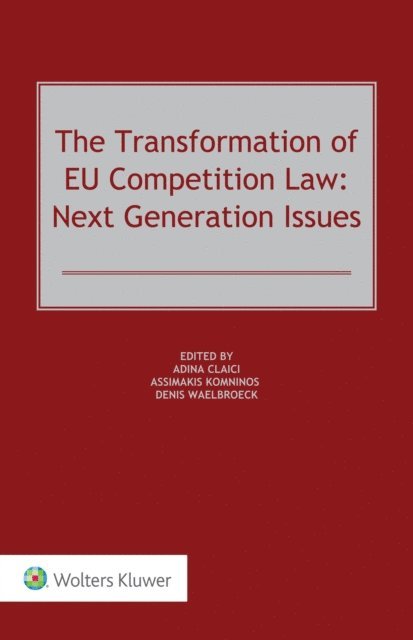
The controversy surrounding EU competition rules has grown in recent years. Pressure from such phenomena as the COVID-19 pandemic, climate change and the digital economy have fostered a fragmentation in the interpretation of the rules at both national and EU levels. This volume takes stock of the current situation, assessing the successes and failures of the prevailing ‘modernisation’ policy and setting forth a range of potential legal adaptations designed to offer the right responses to a rapidly changing world.
The book’s contributions are based on papers delivered at the 2022 Annual Conference of the Global Competition Law Center (GCLC) at the College of Europe in Bruges. The authors include prominent practitioners and academics, members of the European Commission, representatives of national competition authorities, and judges from both EU and national courts. They address such salient issues as the following:
free competition versus ‘regulated competition’ as alternative or complementary models;
new methods for the identification of consumer harm and benefits;
sui generis competition law regimes for specific sectors;
State aid enforcement and crisis management; and
the green and digital objectives and their legal and political implications.
Taken together, the essays provide extensive treatment of the EU Courts’ jurisprudence and the literature in the field. For practitioners, policymakers and academics working with competition law, the book will clearly explain the new competencies of the Commission, raise awareness of the latest case law on the analysis of effects, and ensure a forward-looking approach to competition law enforcement in Europe.
1 569 kr
Läs direkt efter köp
The controversy surrounding EU competition rules has grown in recent years. Pressure from such phenomena as the COVID-19 pandemic, climate change and the digital economy have fostered a fragmentation in the interpretation of the rules at both national and EU levels. This volume takes stock of the current situation, assessing the successes and failures of the prevailing ‘modernisation’ policy and setting forth a range of potential legal adaptations designed to offer the right responses to a rapidly changing world.
The book’s contributions are based on papers delivered at the 2022 Annual Conference of the Global Competition Law Center (GCLC) at the College of Europe in Bruges. The authors include prominent practitioners and academics, members of the European Commission, representatives of national competition authorities, and judges from both EU and national courts. They address such salient issues as the following:
free competition versus ‘regulated competition’ as alternative or complementary models;
new methods for the identification of consumer harm and benefits;
sui generis competition law regimes for specific sectors;
State aid enforcement and crisis management; and
the green and digital objectives and their legal and political implications.
Taken together, the essays provide extensive treatment of the EU Courts’ jurisprudence and the literature in the field. For practitioners, policymakers and academics working with competition law, the book will clearly explain the new competencies of the Commission, raise awareness of the latest case law on the analysis of effects, and ensure a forward-looking approach to competition law enforcement in Europe.
1 894 kr
Skickas inom 5-8 vardagar
1 609 kr
Läs direkt efter köp
1 609 kr
Läs direkt efter köp
1 501 kr
Läs direkt efter köp
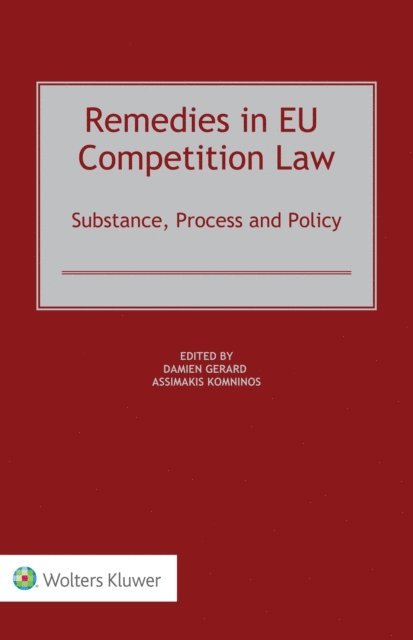
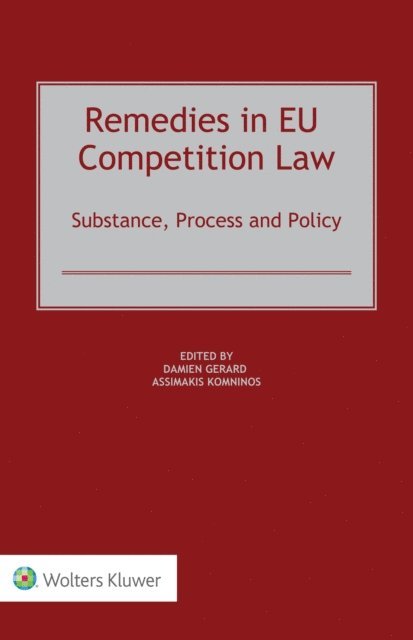
By their nature, remedies are central to competition law enforcement and represent the yardstick against which the efficiency of the overall system can be measured. Yet very rarely have remedies been treated in a horizontal and comprehensive manner from the combined perspectives of substance, process and policy. The present volume, developed in partnership with the College of Europe’s Global Competition Law Centre (GCLC), provides coherent, practical, and authoritative commentaries by leading experts from the GCLC’s incomparable network.
The contributions – originally presented at the 2019 GCLC annual conference – examine remedies to assess the overall effectiveness of competition law enforcement in merger, antitrust and State aid matters. The overall topic is presented under five headings:
objectives and limitations of remedies; types of remedies in competition law enforcement; implementation and process; ex post assessment of remedies and policy lessons; and national and international approaches.The high-profile and wide-ranging group of authors includes the Director-General of the European Commission’s competition department, lawyers from major international firms, and well-known economists and academics specialising in competition law.
With a sharp focus on how to make competition rules work well in today’s digital environment, this systematic and coherent analysis illuminates an issue that we need to fully grasp and understand in order to make sense of competition policy, law and enforcement in the years and decades to come.
1 501 kr
Läs direkt efter köp
By their nature, remedies are central to competition law enforcement and represent the yardstick against which the efficiency of the overall system can be measured. Yet very rarely have remedies been treated in a horizontal and comprehensive manner from the combined perspectives of substance, process and policy. The present volume, developed in partnership with the College of Europe’s Global Competition Law Centre (GCLC), provides coherent, practical, and authoritative commentaries by leading experts from the GCLC’s incomparable network.
The contributions – originally presented at the 2019 GCLC annual conference – examine remedies to assess the overall effectiveness of competition law enforcement in merger, antitrust and State aid matters. The overall topic is presented under five headings:
objectives and limitations of remedies; types of remedies in competition law enforcement; implementation and process; ex post assessment of remedies and policy lessons; and national and international approaches.The high-profile and wide-ranging group of authors includes the Director-General of the European Commission’s competition department, lawyers from major international firms, and well-known economists and academics specialising in competition law.
With a sharp focus on how to make competition rules work well in today’s digital environment, this systematic and coherent analysis illuminates an issue that we need to fully grasp and understand in order to make sense of competition policy, law and enforcement in the years and decades to come.
1 894 kr
Skickas inom 5-8 vardagar
1 609 kr
Läs direkt efter köp
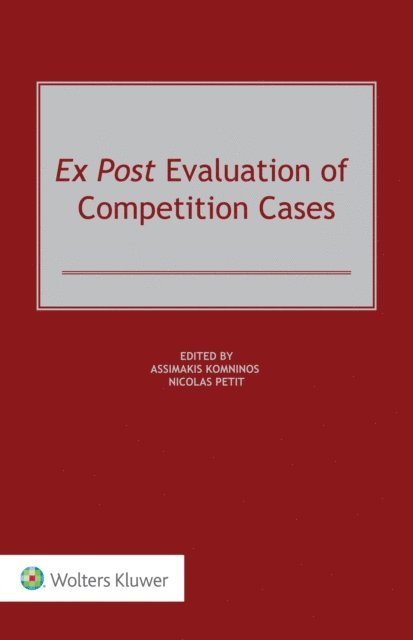
Competition authorities use ex post evaluation of enforcement decisions to help determine if an intervention (or non-intervention) has achieved its objectives – and, if not, the reasons it failed to do so – thus allowing for improvement in the design and use of techniques used in the analysis underpinning the decision. In this essential volume, expert contributors use this procedure to provide a neutral and extensive assessment of cases that have significantly shaped European Union (EU) competition law enforcement.
With in-depth analysis of foundational cases of EU competition law and the methodologies that have been developed over time to predict how enforcement decisions will affect competition, for each case the authors respond thoroughly to such questions as the following:
Did the decision have an impact on the affected market? Did it improve consumer or social welfare? With the benefit of hindsight, were the factual assertions true? Were all the relevant theories of harm (and efficiency justifications) properly investigated? Was the decision able to deter similar anticompetitive behaviour? Did the decision provide clear guidance on which types of conduct should be deemed illegal?Industries covered include information technology (the Microsoft cases), payment cards (the Visa Europe 2010 Commitments Decision), pharmaceuticals, and conditional rebates (Michelin I, Michelin II and BA/Virgin). Also investigated are the role of buyer power in concentration cases and the relative strength of competition law enforcement versus regulation, where appropriate.
In its accumulation of evidence from individual cases that have gradually improved our ability to grasp the connections between policy choices and the outcomes they lead to, this matchless volume has no peers. It constitutes an invaluable resource for competition authorities in performing ex post evaluations and will be welcomed by practitioners and academics concerned with European competition law.
1 609 kr
Läs direkt efter köp
Competition authorities use ex post evaluation of enforcement decisions to help determine if an intervention (or non-intervention) has achieved its objectives – and, if not, the reasons it failed to do so – thus allowing for improvement in the design and use of techniques used in the analysis underpinning the decision. In this essential volume, expert contributors use this procedure to provide a neutral and extensive assessment of cases that have significantly shaped European Union (EU) competition law enforcement.
With in-depth analysis of foundational cases of EU competition law and the methodologies that have been developed over time to predict how enforcement decisions will affect competition, for each case the authors respond thoroughly to such questions as the following:
Did the decision have an impact on the affected market? Did it improve consumer or social welfare? With the benefit of hindsight, were the factual assertions true? Were all the relevant theories of harm (and efficiency justifications) properly investigated? Was the decision able to deter similar anticompetitive behaviour? Did the decision provide clear guidance on which types of conduct should be deemed illegal?Industries covered include information technology (the Microsoft cases), payment cards (the Visa Europe 2010 Commitments Decision), pharmaceuticals, and conditional rebates (Michelin I, Michelin II and BA/Virgin). Also investigated are the role of buyer power in concentration cases and the relative strength of competition law enforcement versus regulation, where appropriate.
In its accumulation of evidence from individual cases that have gradually improved our ability to grasp the connections between policy choices and the outcomes they lead to, this matchless volume has no peers. It constitutes an invaluable resource for competition authorities in performing ex post evaluations and will be welcomed by practitioners and academics concerned with European competition law.