Elaine B. Sharp - Böcker
Visar alla böcker från författaren Elaine B. Sharp. Handla med fri frakt och snabb leverans.
5 produkter
5 produkter
314 kr
Skickas inom 10-15 vardagar
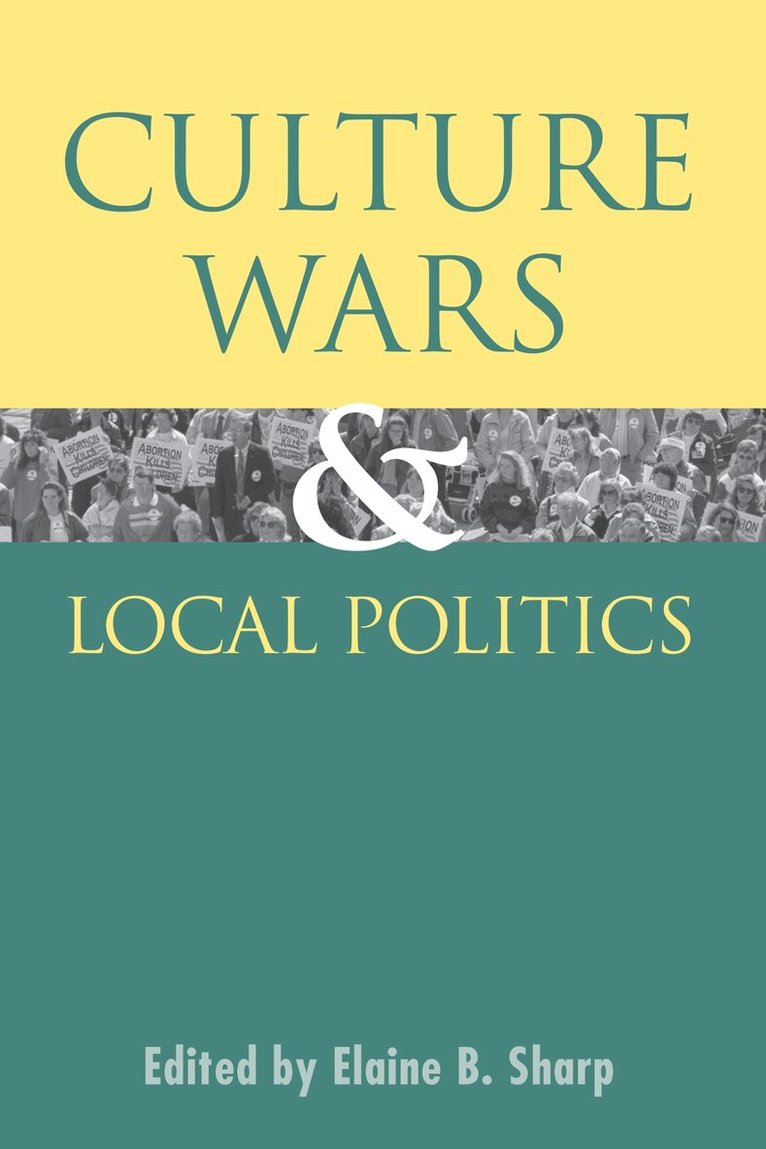
This collection offers alternative explanations of local actions with a focus on conflict. It features examples of experiences selected from various cities. It examines how the responses of local governments to specific issues are influenced by such factors as political culture and intitutions.
314 kr
Skickas inom 10-15 vardagar
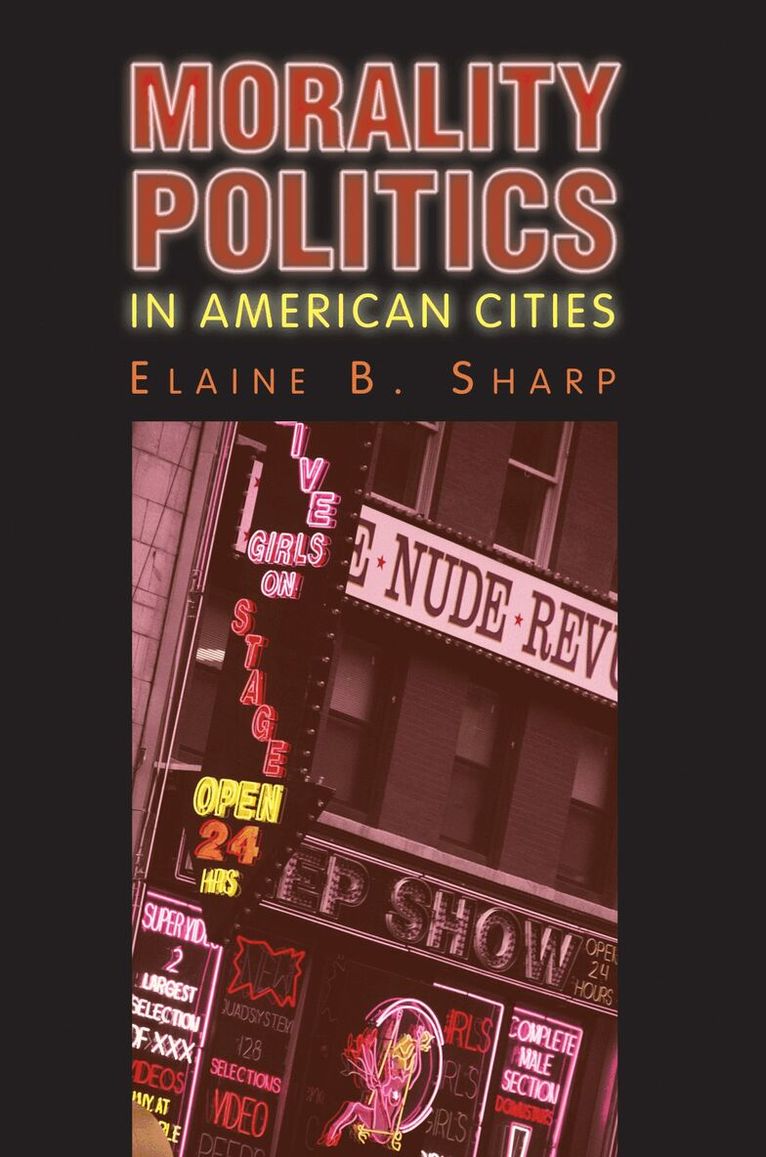
Topless bars, casino gambling, needle exchange programs for drug addicts—theres no question, morality issues remain front and center in urban politics.Presenting a systematic analysis of culture-war issues at the local level, Elaine Sharp shows how American cities deal with these ongoing concerns. Drawing on a sample of ten strategically chosen cities, she explains differences in how municipalities respond to controversies surrounding sex business, abortion clinics, legalized gambling, gay rights, and drug use. By analyzing the relative importance of subculture, economics, and institutional arrangements in the disputes, she points the way toward richer and more complete understanding of how different cities respond differently to these hot-button issues.Far more than a statistical study, Morality Politics in American Cities is a collection of fascinating stories of real people grappling with down-to-earth issues and real-life drama—richly informative case studies that will captivate students and interested citizens alike. Mayors, public health directors, activists, and others speak their minds about the pros and cons of these controversies. Here are officials in one city confronting the Vatican over funding for abortion services, those in another battling a local university over its refusal to provide health benefits to gay partners of faculty members, and still others mounting a massive, community-sponsored attack on topless clubs.These stories provide detailed evidence to support classifications needed for comparing cities experience with each of the five morality issues. They also corroborate inferences drawn from the comparisons by showing what considerations were in play as local officials grappled with these issues. Overall, the study shows that cultural factors usually dominate policymaking in local politics—except when specific economic interests are at stake—and also observes that county-level governments are more important than previously thought in terms of morality-issue decisions.As provocative as it is informative, Morality Politics in American Cities demonstrates that such issues—same-sex marriage, for example—are multidimensional and often difficult to resolve. Its conclusions, however contingent, mark an important step in the ongoing process of understanding important differences in approaches to these issues and clearly show how moral conflicts continue to define American politics.
1 057 kr
Tillfälligt slut
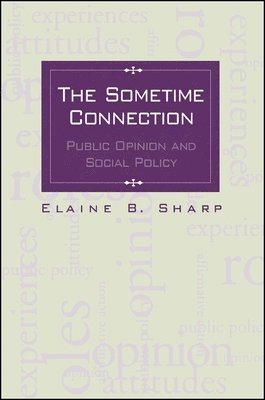
Explores the role that public opinion plays in the development of social policy in the United States.CHOICE 2000 Outstanding Academic TitleThe Sometime Connection introduces a variety of theoretical perspectives on the connection between public opinion and policy and applies them to six social policy topics: abortion, affirmative action, welfare, Social Security, corrections, and pornography. The book provides complete policy histories, information on trends in public opinion, and a diagnosis of the role that public opinion has played in the development of policy for each of the six topics discussed.
382 kr
Tillfälligt slut
Explores the role that public opinion plays in the development of social policy in the United States.CHOICE 2000 Outstanding Academic TitleThe Sometime Connection introduces a variety of theoretical perspectives on the connection between public opinion and policy and applies them to six social policy topics: abortion, affirmative action, welfare, Social Security, corrections, and pornography. The book provides complete policy histories, information on trends in public opinion, and a diagnosis of the role that public opinion has played in the development of policy for each of the six topics discussed.
260 kr
Skickas inom 10-15 vardagar
Until recently, policy evaluation has mostly meant assessing whether government programs raise reading levels, decrease teen pregnancy rates, improve air quality levels, lower drunk-driving rates, or achieve any of the other goals that government programs are ostensibly created to do. Whether or not such programs also have consequences with respect to future demands for government action and whether government programs can heighten-or dampen-citizen involvement in civic activities are questions that are typically overlooked.This book applies such questions to local government. Employing policy feedback theory to a series of local government programs, Elaine B. Sharp shows that these programs do have consequences with respect to citizens’ political participation. Unlike other feedback theory investigations, which tend to focus on federal government programs, Sharp’s looks at a broad range of policy at the local level, including community policing programs, economic development for businesses, and neighborhood empowerment programs.With this clear-eyed analysis, Sharp finds that local governments’ social program activities actually dampen participation of the have-nots, while cities’ development programs reinforce the political involvement of already-privileged business interests. Meanwhile, iconic urban programs such as community policing and broader programs of neighborhood empowerment fail to enhance civic engagement or build social capital at the neighborhood level; at worst, they have the potential to deepen divisions-especially racial divisions-that undercut urban neighborhoods.