Elaine Webster - Böcker
Visar alla böcker från författaren Elaine Webster. Handla med fri frakt och snabb leverans.
5 produkter
5 produkter
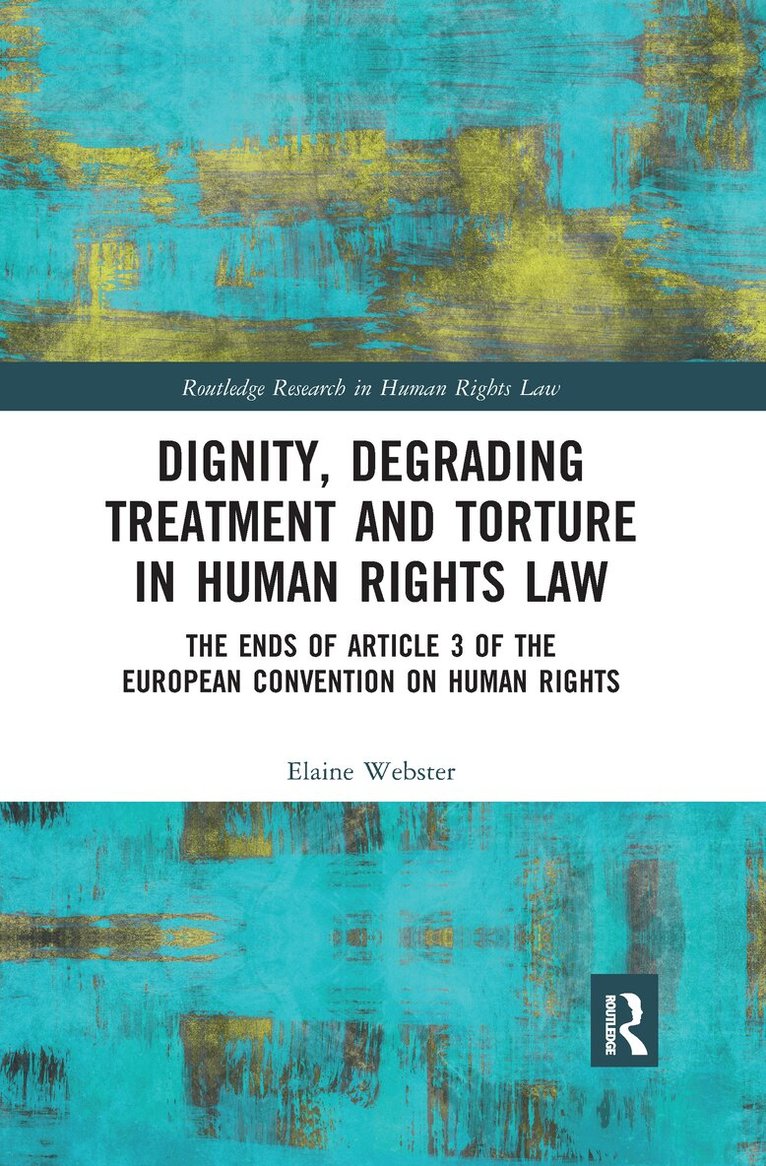
Dignity, Degrading Treatment and Torture in Human Rights Law
The Ends of Article 3 of the European Convention on Human Rights
Häftad, Engelska, 2019
567 kr
Skickas inom 10-15 vardagar
Although scholars have shown longstanding interest in the boundaries of interpretation of the right not to be subjected to torture and other prohibited harm, the existing body of work does not sufficiently reflect the significance of the interpretive scope of degrading treatment. This book argues that the degrading treatment element of the right is a crucial site of analysis, in itself and for understanding the parameters of the right as a whole. It addresses how, methodologically, the scope of meaning and application of the right not to be subjected to degrading treatment should best be identified and considers the implications thereof. It systematically examines the diverse aspects of degrading treatment’s scope, from foundations of legal interpretation to the drivers of humiliation. It draws on wide-ranging literature and extensive analysis of more than 1,500 judgments of the European Court of Human Rights, which has pioneered the right’s interpretive growth. The book aims to explore how the interpretive possibilities, and limits, of the right not to be subjected to degrading treatment turn upon the axes of human dignity and state responsibility, and aims to show how this right’s protection can be achieved as well as limited through processes of interpretation. Dignity, Degrading Treatment and Torture in Human Rights Law provides interpreters with analytical tools to advance the application of the right not to be subjected to torture, cruel, inhuman or degrading treatment or punishment in international, regional and domestic human rights law. It will appeal to all who have an interest in understanding the right’s meaning, development, and potential scope of application, as well as those with an interest in methodologies of human rights interpretation.
Grandma's in the Basement
A Collection of Stories about the Elderly Based on Personal Experience
Häftad, Engelska, 2001
170 kr
Skickas inom 5-8 vardagar
Dignity, Degrading Treatment and Torture in Human Rights Law
The Ends of Article 3 of the European Convention on Human Rights
Inbunden, Engelska, 2018
1 936 kr
Skickas inom 10-15 vardagar
Although scholars have shown longstanding interest in the boundaries of interpretation of the right not to be subjected to torture and other prohibited harm, the existing body of work does not sufficiently reflect the significance of the interpretive scope of degrading treatment. This book argues that the degrading treatment element of the right is a crucial site of analysis, in itself and for understanding the parameters of the right as a whole. It addresses how, methodologically, the scope of meaning and application of the right not to be subjected to degrading treatment should best be identified and considers the implications thereof. It systematically examines the diverse aspects of degrading treatment’s scope, from foundations of legal interpretation to the drivers of humiliation. It draws on wide-ranging literature and extensive analysis of more than 1,500 judgments of the European Court of Human Rights, which has pioneered the right’s interpretive growth. The book aims to explore how the interpretive possibilities, and limits, of the right not to be subjected to degrading treatment turn upon the axes of human dignity and state responsibility, and aims to show how this right’s protection can be achieved as well as limited through processes of interpretation. Dignity, Degrading Treatment and Torture in Human Rights Law provides interpreters with analytical tools to advance the application of the right not to be subjected to torture, cruel, inhuman or degrading treatment or punishment in international, regional and domestic human rights law. It will appeal to all who have an interest in understanding the right’s meaning, development, and potential scope of application, as well as those with an interest in methodologies of human rights interpretation.
1 589 kr
Skickas inom 10-15 vardagar
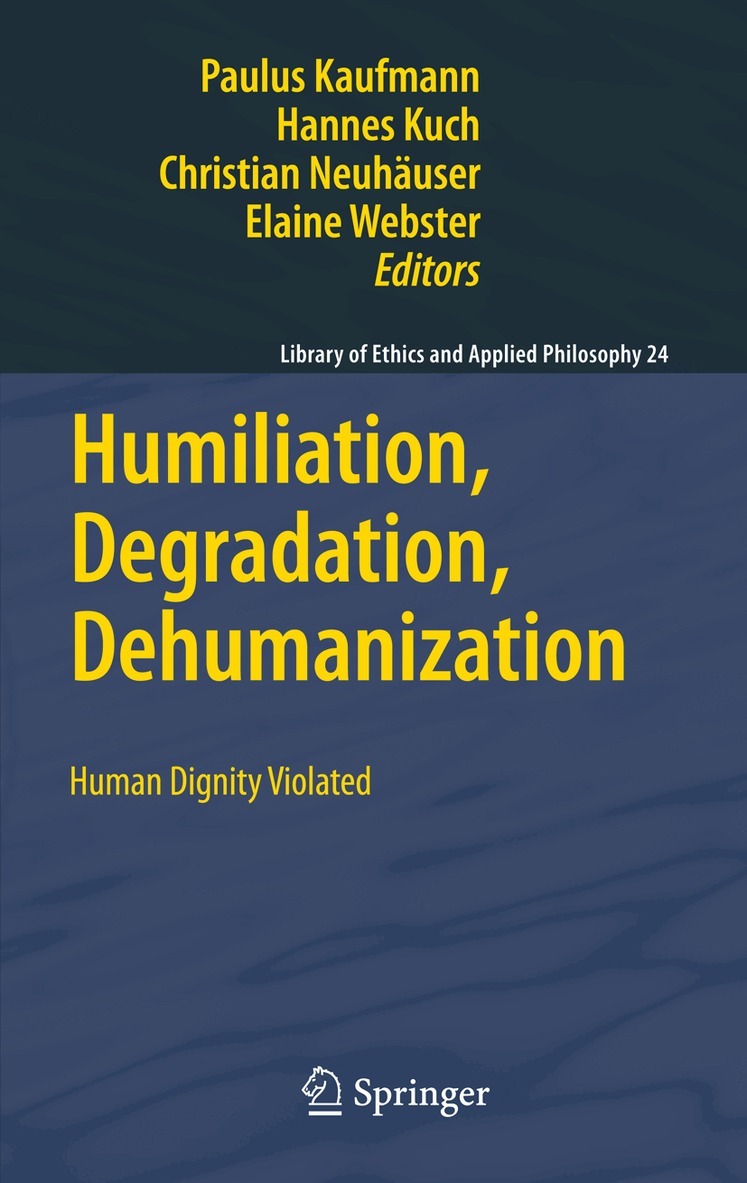
Degradation, dehumanization, instrumentalization, humiliation, and nonrecognition – these concepts point to ways in which we understand human beings to be violated in their dignity. Violations of human dignity are brought about by concrete practices and conditions; some commonly acknowledged, such as torture and rape, and others more contested, such as poverty and exclusion. This volume collates reflections on such concepts and a range of practices, deepening our understanding of human dignity and its violation, bringing to the surface interrelationships and commonalities, and pointing to the values that are thereby shown to be in danger. In presenting a streamlined discussion from a negative perspective, complemented by conclusions for a positive account of human dignity, the book is at once a contribution to the body of literature on what dignity is and how it should be protected as well as constituting an alternative, fresh and focused perspective relevant to this significant recurring debate. As the concept of human dignity itself crosses disciplinary boundaries, this is mirrored in the unique range of perspectives brought by the book’s European and American contributors – in philosophy and ethics, law, human rights, literature, cultural studies and interdisciplinary research. This volume will be of interest to social and moral philosophers, legal and human rights theorists, practitioners and students.
1 589 kr
Skickas inom 10-15 vardagar
Degradation, dehumanization, instrumentalization, humiliation, and nonrecognition – these concepts point to ways in which we understand human beings to be violated in their dignity. Violations of human dignity are brought about by concrete practices and conditions; some commonly acknowledged, such as torture and rape, and others more contested, such as poverty and exclusion. This volume collates reflections on such concepts and a range of practices, deepening our understanding of human dignity and its violation, bringing to the surface interrelationships and commonalities, and pointing to the values that are thereby shown to be in danger. In presenting a streamlined discussion from a negative perspective, complemented by conclusions for a positive account of human dignity, the book is at once a contribution to the body of literature on what dignity is and how it should be protected as well as constituting an alternative, fresh and focused perspective relevant to this significant recurring debate. As the concept of human dignity itself crosses disciplinary boundaries, this is mirrored in the unique range of perspectives brought by the book’s European and American contributors – in philosophy and ethics, law, human rights, literature, cultural studies and interdisciplinary research. This volume will be of interest to social and moral philosophers, legal and human rights theorists, practitioners and students.