
Elie Essa Kas Hanna – författare
Visar alla böcker från författaren Elie Essa Kas Hanna. Handla med fri frakt och snabb leverans.
1 produkt
1 produkt
Del 17 - Limina/Limites: Archaeologies, histories, islands and borders in the Mediterranean (365-1556)
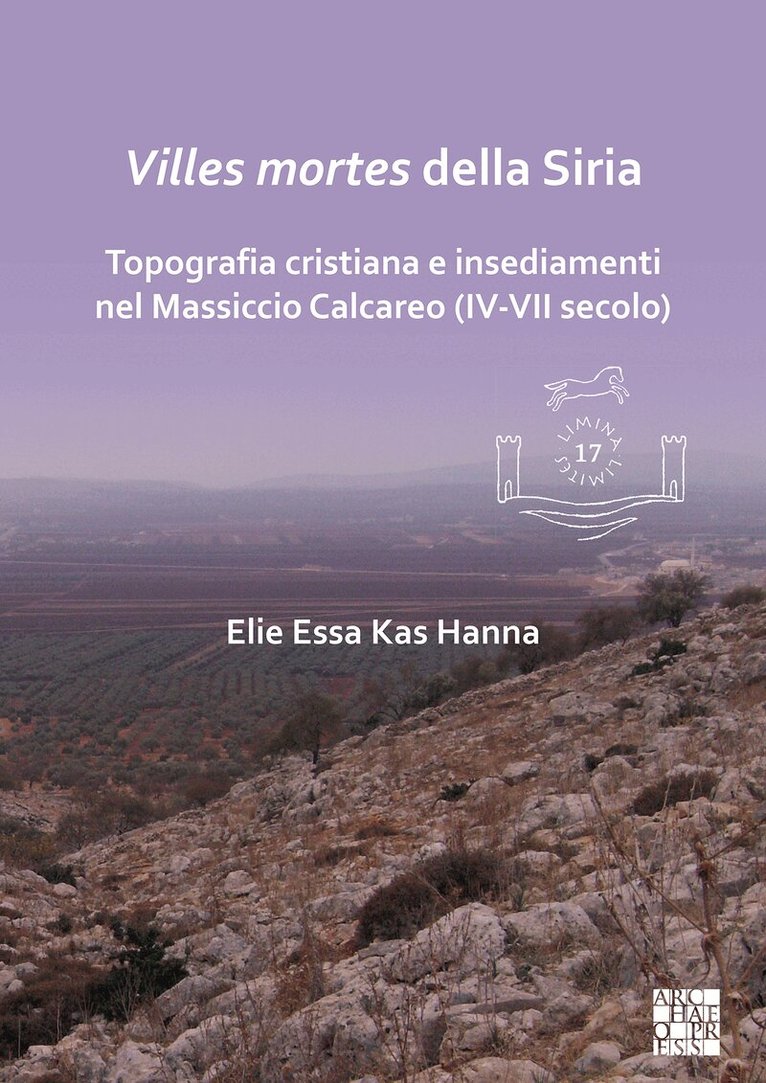
Villes mortes della Siria
Topografia cristiana e insediamenti del Massiccio Calcareo (IV-VII secolo)
Häftad, Italienska, 2025
744 kr
Skickas
The so-called Dead Cities region, or the Syrian Limestone Massif region, is located in the north-western part of Syria, in the historical region of Belus, bordered by the cities of Apamea, Antioch, Kyrrus and Aleppo. From the first centuries of the Christian era, the mountains of Belus experienced an extraordinary development, becoming an important and integral part of the Early Byzantine Empire, a phase in which the region saw a quantitative and qualitative peak of rural settlements never seen in the rest of the Empire. With the arrival of the Arabs in 636 CE, the Limestone Massif continued to be one of the key territories for the Muslims, especially for their expansionist plans, which caused the gradual dissolution of the proto-Byzantine economic system. This book is the result of archaeological research carried out a few months before the outbreak of the Syrian conflict, thanks to the support of the Metropolitan of the Syriac Orthodox Church of Aleppo, Mar Gregorios Yuhanna Ibrahim. The work also summarizes the results of previous researches carried out by European and American teams, who have been interested in the region. After appropriate historical and religious introductions, the book traces the topography of settlements in their poto-Byzantine phase, highlighting the various transformations and expedients that affected the architecture in general, with a main focus on the ecclesiastical architecture. The work also presents unpublished photographs of visited archaeological sites which, in 2010, were still in an excellent state of preservation and which today, due to the events of the war, have been partially or completely destroyed.