Elisabeth Fritz – författare
Visar alla böcker från författaren . Handla med fri frakt och snabb leverans.
10 produkter
10 produkter
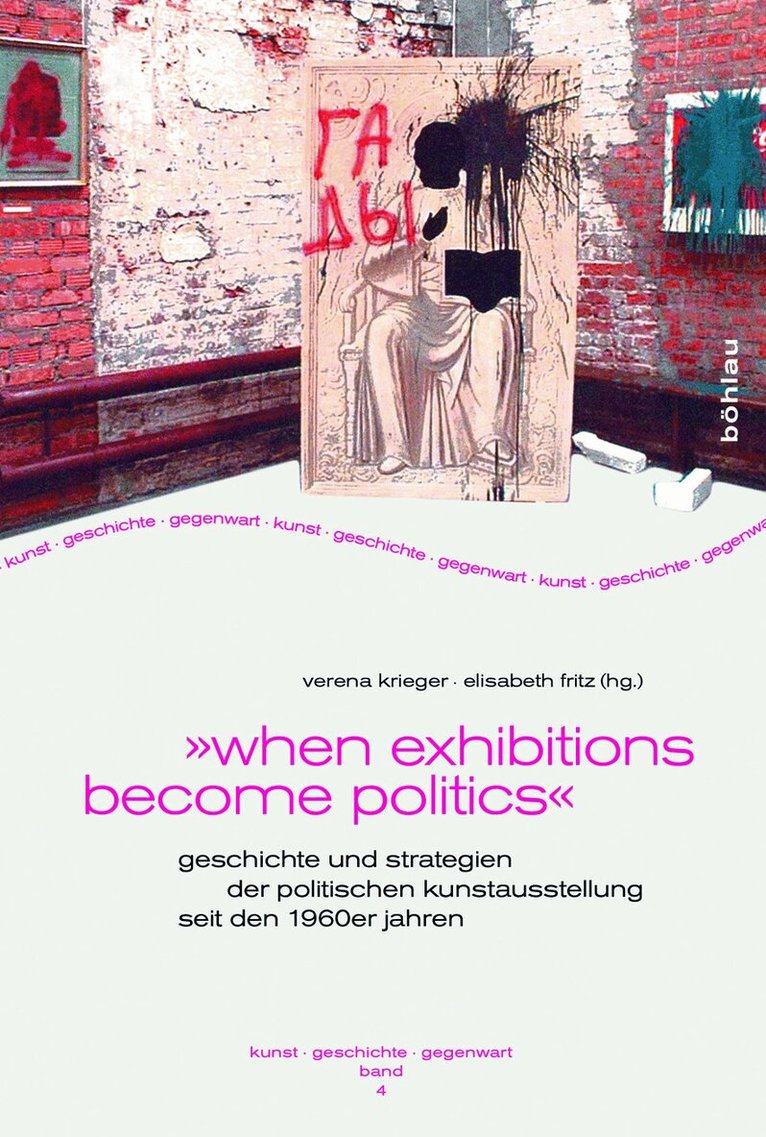
Häftad, Tyska, 2014
1 015 kr
Skickas inom 11-20 vardagar
Häftad, Tyska, 2016
715 kr
Skickas inom 11-20 vardagar
Häftad, Tyska, 2025
691 kr
Skickas inom 3-6 vardagar
E-bok
PDF, Engelska, 2009263 kr
Läs direkt efter köp
Seminar paper from the year 2008 in the subject Didactics for the subject English - Literature, Works, grade: 1,0, University of Augsburg (Englische Literaturwissenschaft), course: James Joyce, language: English, abstract: This paper analyses the nighttown episode of Joyce's Ulysses through the framework of Freud's psychoanalytic understanding of dreams. Setting of from the assumption that Freud's ground-breaking claims must have found their way into the complex, allusion-laden writing of his contemporary Joyce, it works out elements in the hallucinatory "e;Circe"e; chapter that refer to Freud's theory on dreams, concentrating specifically on the portrayal of Bloom. After an overview of the central aspects of Freud's Interpretation of Dreams, the structure of "e;Circe"e; will be introduced, justifying the analogy to dreams and tackling the general problem of applying psychoanalysis to literary criticism. The next chapter will take a closer look at Freud s idea of regression and enumerate elements that may be considered allusions to this in Circe . Building on this, the final chapter will then be an attempt at a psychoanalytic reading of Bloom, also drawing upon some additional ideas from Freud s later theories.
Häftad, Engelska, 2009
539 kr
Skickas inom 3-6 vardagar
E-bok
PDF, Engelska, 2009262 kr
Läs direkt efter köp
Seminar paper from the year 2007 in the subject English Language and Literature Studies - Literature, grade: 1,3, University of Augsburg (Lehrstuhl fur Englische Sprachwissenschaft), language: English, abstract: Every day new things happen. With modern technology, news can be distributed all over the world and faster than ever before. Additionally, the distribution of (and access to) news has become much cheaper. Consequently, the number of sources we can get information from has increased drastically throughout the last decades, as has the amount of information. In our modern information society, the mass media have come to play a decisive role. At the same time, it becomes more and more difficult to judge the reliability of the news. One of the oldest forms of mass media, which is still generally regarded as trustworthy, is the newspaper. When it comes to newspapers, people usually prefer one (or two) specific news papers to others. Every newspaper has its own specific image which includes some characteristics that it is generally known for. If all newspapers provided all the news there is and reported it in an objective manner, this would not make much sense. Indeed, with the amount of potential news emerging every day and the restrictions of the medium, it is impossible to cover everything the newspapers must choose what to include in their coverage and what not to. Similarly, it is an illusion to expect news to be reported completely objectively. One reason for this is that the medium language inherently conveys connotations and values, which makes a purely objective coverage simply impossible. But apart from this restriction, it is a well-known fact that newspapers all have their particular perspective from which they contemplate and present news. However, this is not solely the newspapers choice. Since they are financially dependent on their readers who buy their issues, they have to do their best in order to meet their readerships interests. Considering that every newspaper has its own typical kind of readership, it should be possible to identify the means they use and analyse how they adapt to this specific group. This paper will analyse one specific news story which was published in the course of a few days in two newspapers known to write for opposite types of readers. The aim is to show how news can be reported differently and how these differences can be explained in terms of an orientation towards different kinds of audiences. Before the actual analysis, however, the communicative context of newspaper discourse will be briefly contrasted to face-to-face discourse with special reference to the role of its audience.
Häftad, Engelska, 2009
539 kr
Skickas inom 3-6 vardagar
Häftad, Engelska, 2009
782 kr
Skickas inom 3-6 vardagar
E-bok
PDF, Engelska, 2009415 kr
Läs direkt efter köp
Seminar paper from the year 2007 in the subject English Language and Literature Studies - Linguistics, grade: 1,0, University of Augsburg (Lehrstuhl fur Englische Sprachwissenschaft), course: Pragmatics and Understanding, language: English, abstract: This paper will deal with the English lexical item 'now' and its German counterpart 'nun'. Its aim is to investigate what functions they can perform in spoken discourse classified as conversation, casting light on the ways they can be used to indicate discourse structures, and to work out similarities and differences between these equivalents from the two languages. This work will focus on 'now' and 'nun' as discourse markers, but will not ignore their original (propositional) meaning and - if applicable - non-propositional meanings besides their function as discourse markers. The analysis of the two items will be based on authentic material: for English, the London-Lund Corpus of Spoken English will be used; the source for instances of German 'nun' will be the Freiburg Corpus (Grundstrukturen: Freiburger Korpus). This paper can only draw on parts of the corpora; consequently, the search has been restricted to two parts of the London-Lund Corpus (cf. chapter 3.1.2.) and those elements of the Freiburg Corpus labelled conversation (cf. chapter 3.2.2.). On the grounds that this material is so limited, the investigation into the different uses of 'now' and 'nun' can only be exemplary and by no means exhaustive. The paper will be structured as follows: the first part is concerned with defining the term discourse marker and classifying discourse marker functions into different types of functions, aiming at a language-independent description. The results will be used as a theoretical basis for the empirical part, which will first deal with English 'now' and then tackle 'nun'. Both of these sections will be organised in the same way: there will first be a language-specific discussion on different (discourse marker and other) functions of the respective lexical item; then criteria for distinguishing the different uses will be established. The second part will briefly demonstrate instances of 'now'/'nun' carrying their propositional meaning for 'nun', there will also be a chapter on its use as a modal particle before it concentrates on the two items having discourse marker status; in this section, different functions will be discussed and examples will be given from the respective corpus. As already mentioned, this analysis will have to remain of a merely exemplary kind. Finally, the results from these analyses will be contrasted, working out both differences and similarities between the lexical counterparts in the two languages.
Häftad, Tyska, 2010
377 kr
Skickas inom 3-6 vardagar