Elisabeth Gruber – författare
Visar alla böcker från författaren Elisabeth Gruber. Handla med fri frakt och snabb leverans.
4 produkter
4 produkter
Inbunden, Engelska, 2026
2 292 kr
Kommande
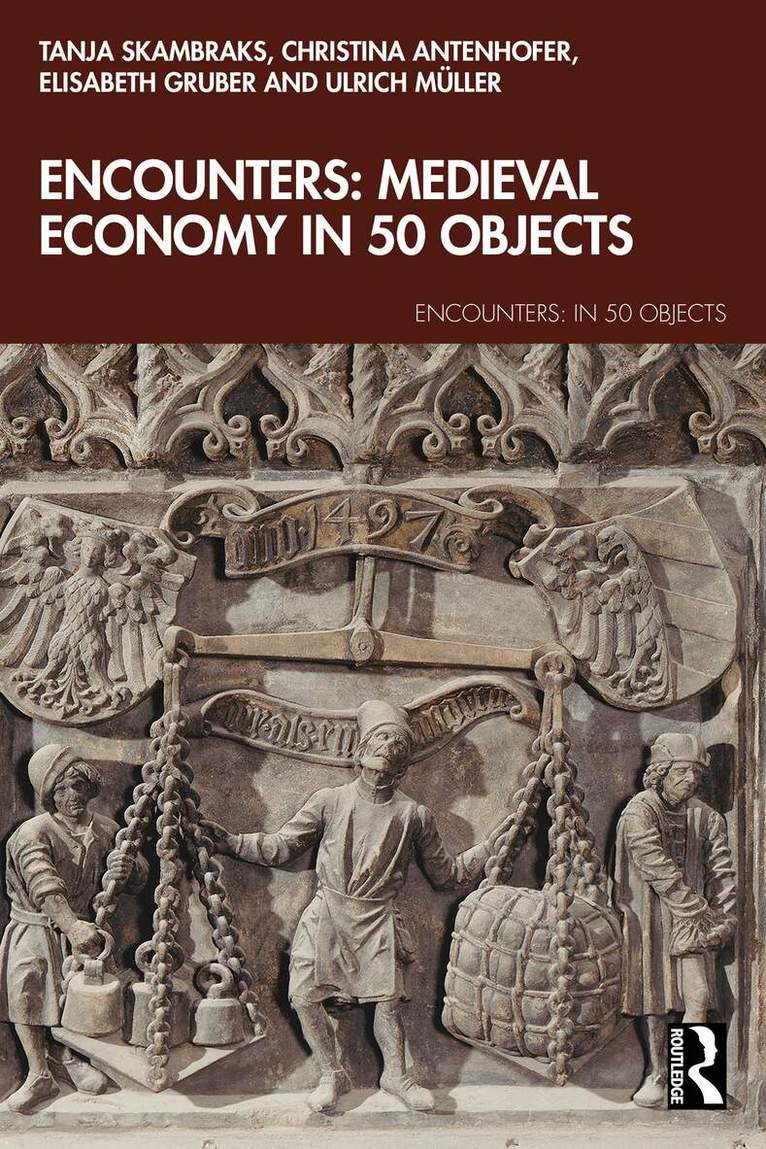
Exploring medieval economy through its artifacts, this book presents 50 object biographies that illuminate daily life, economic ethics, production, trade, and finance, offering a tangible perspective on the systems of the long medieval period.Combining the expertise of three historians and an archaeologist, this book bridges abstract theory with the material realities of the past. This volume examines fifty diverse artifacts, including tally sticks, tools, glassware, and coins, to provide a human-centered understanding of the commercial revolution, agricultural innovations, and the emergence of a consumer society between 500 and 1600. The content is organized into five parts, focusing on economic thought, production, distribution, finance, and everyday life. Empowering students to integrate material culture as a crucial primary source, the book reveals the evolving mentalities and innovative practices that shaped medieval economic behaviour and laid the foundations of our modern world.Encounters: Medieval Economy in 50 Objects is written for a broad audience, including undergraduate and postgraduate students in history, archaeology, and art history who are seeking a tangible, source-based approach to medieval economy. It is an essential resource for instructors looking for a modular, object-oriented teaching tool that connects material culture with economic theory, providing a refreshing alternative to traditional text-heavy histories. Museum professionals, heritage specialists, and history enthusiasts will also find its accessible narrative and focus on "object biographies" invaluable for contextualizing collections and understanding how everyday items drove the transition to a modern consumer society.
Häftad, Engelska, 2026
626 kr
Kommande
Exploring medieval economy through its artifacts, this book presents 50 object biographies that illuminate daily life, economic ethics, production, trade, and finance, offering a tangible perspective on the systems of the long medieval period.Combining the expertise of three historians and an archaeologist, this book bridges abstract theory with the material realities of the past. This volume examines fifty diverse artifacts, including tally sticks, tools, glassware, and coins, to provide a human-centered understanding of the commercial revolution, agricultural innovations, and the emergence of a consumer society between 500 and 1600. The content is organized into five parts, focusing on economic thought, production, distribution, finance, and everyday life. Empowering students to integrate material culture as a crucial primary source, the book reveals the evolving mentalities and innovative practices that shaped medieval economic behaviour and laid the foundations of our modern world.Encounters: Medieval Economy in 50 Objects is written for a broad audience, including undergraduate and postgraduate students in history, archaeology, and art history who are seeking a tangible, source-based approach to medieval economy. It is an essential resource for instructors looking for a modular, object-oriented teaching tool that connects material culture with economic theory, providing a refreshing alternative to traditional text-heavy histories. Museum professionals, heritage specialists, and history enthusiasts will also find its accessible narrative and focus on "object biographies" invaluable for contextualizing collections and understanding how everyday items drove the transition to a modern consumer society.
Häftad, Tyska, 2015
340 kr
Skickas inom 3-6 vardagar
E-bok
Tyska, 2016340 kr
Läs direkt efter köp
Beiträge zur Geschichte der Städte Mitteleuropas, Band 26Das Gedenkjahr 2014 gab vielfältigen Anlass, über Ursachen, Ablauf und Auswirkungen des Ersten Weltkriegs zu reflektieren. Der vorliegende Band thematisiert verschiedenste Formen der Instrumentalisierung von Gewalt im städtischen Kontext als Medium von Herrschaftsrepräsentation, Konfliktlösung und öffentlicher Meinungsbildung im historischen Längsschnitt. Den regionalen Referenzrahmen bieten dabei die Habsburgermonarchie und angrenzende Territorien. Für die Diskussion der spezifischen Formen von Gewalt im Krieg im städtischen Raum bietet die Hauptstadt Wien ein anschauliches Beispiel.Beiträge:Gerhard AmmererÖffentliche Hinrichtungen inner- und außerhalb der StadtmauernPeter BeckerMacht, Gewalt und deren Kontrolle im Ersten Weltkrieg:Theorie und Praxis des Ausnahmezustandes in der HabsburgermonarchieHans-Georg HoferStröme der Gewalt.Über ärztliches Handeln im industrialisierten KriegHelmut KonradKriegsende – Ende der Gewalt?Wolfgang MaderthanerEnthusiasmus und Regression – Der Große Krieg und die urbanen Intellektuellen: das Beispiel WienKatharina MikoSubjektive Wahrnehmung von Sicherheit und Unsicherheit im öffentlichen RaumVerena MoritzKriegsgefangene als "Sicherheitsproblem":Zur Kontrolle von "Feindsoldaten" im urbanen Raum (1914–1920) Alfred PfoserDer Mythos von der allgemeinen Kriegsbegeisterung:Wien im Juli und August 1914Martin ScheutzStadt und Gewalt im Blick historischer ForschungAndreas WeiglHungerproteste und Hungerpsychosen:Wien 1916–1918Susana ZapkeDie sanfte Gewalt von Prozessionen und Kunstparaden im Wiener StadtraumDie Stadt als Bühne