Elisheva Carlebach – författare
Visar alla böcker från författaren Elisheva Carlebach. Handla med fri frakt och snabb leverans.
5 produkter
5 produkter
864 kr
Skickas inom 3-6 vardagar
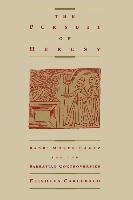
Rabbi Moses Hagiz, one of the most prominent and influential Jewish leaders of seventeenth-century Amsterdam, devoted his career to restoring rabbinic authority. His most prominent talent was as a polemicist, and he campaigned ceaselessly against Jewish heresy in an attempt to unify the rabbinate. During Hagiz's lifetime there was an overall decline in rabbinic authority, which the author argues was the result of migration and assimilation. Elisheva Carlebach focuses on three of the most important episodes in Hagiz's organized campaigns against heresy: the Haylon controversy in Amsterdam, 1713-1715; a campaign against Sabbatian emissaries in 1725-1726; and the Luzatto controversy of 1730-1736. Each episode, Carlebach argues, illuminates the struggle for control of the Jewish community between rabbinate and lay leaders.
517 kr
Skickas inom 5-8 vardagar
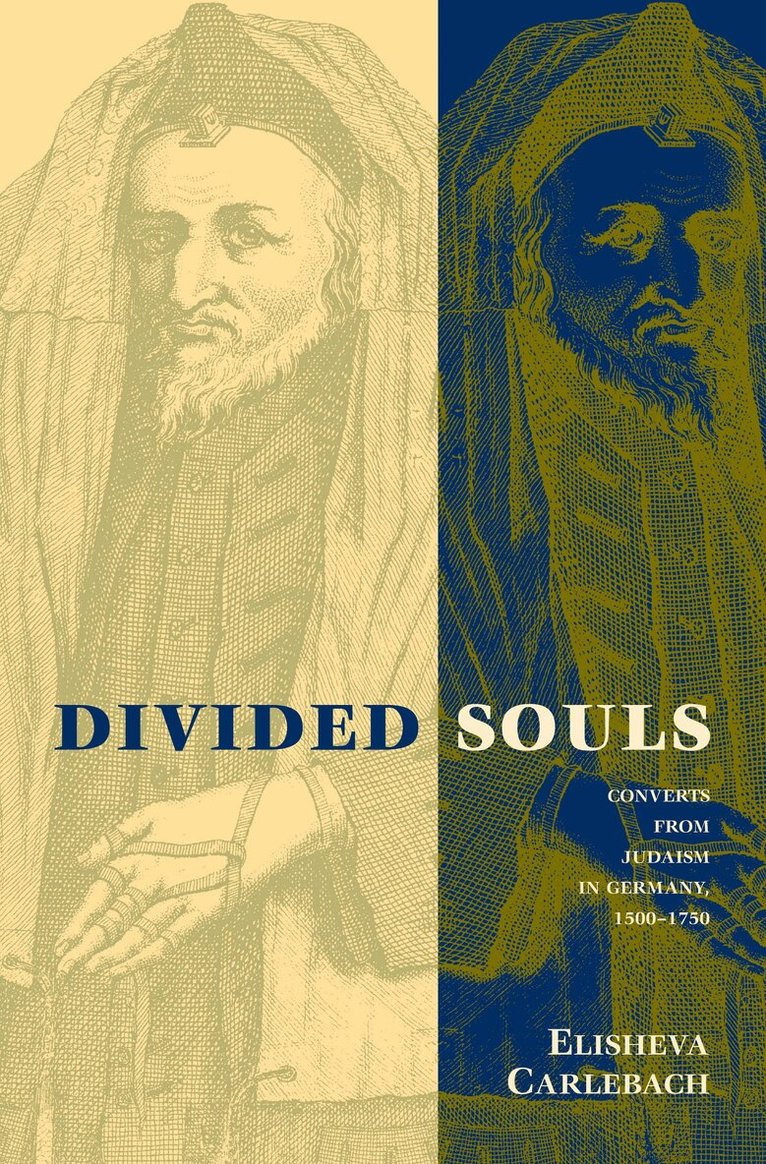
This pioneering book reevaluates the place of converts from Judaism in the narrative of Jewish history. Long considered beyond the pale of Jewish historiography, converts played a central role in shaping both noxious and positive images of Jews and Judaism for Christian readers. Focusing on German Jews who converted to Christianity in the sixteenth through mid-eighteenth centuries, Elisheva Carlebach explores an extensive and previously unexamined trove of their memoirs and other writings. These fascinating original sources illuminate the Jewish communities that the converts left, the Christian society they entered, and the unabating tensions between the two worlds in early modern German history. The book begins with the medieval images of converts from Judaism and traces the hurdles to social acceptance that they encountered in Germany through early modern times. Carlebach examines the converts’ complicated search for community, a quest that was to characterize much of Jewish modernity, and she concludes with a consideration of the converts’ painful legacies to the Jewish experience in German lands.“Carlebach’s reading of autobiographical texts by converts from Judaism is careful, intelligent, and skeptical--a model of how to treat spiritual memoirs.”--Todd M. Endelman, University of Michigan“This superb book highlights the ambiguous identities of these boundary crossers and their impact on both German and Jewish self-definitions.”--Paula E. Hyman, Yale UniversityElisheva Carlebach is professor of history at Queens College and the Graduate Center, City University of New York. She is the author of The Pursuit of Heresy: Rabbi Moses Hagiz and the Sabbatian Controversies, winner of the National Jewish Book Award for Jewish History, and coeditor of Jewish History and Jewish Memory.
283 kr
Skickas inom 5-8 vardagar
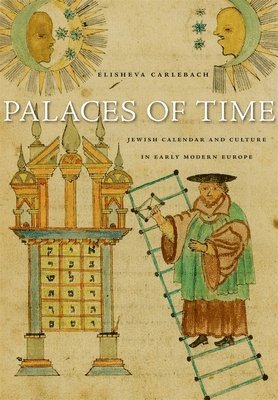
From one of the leading historians of the Jewish past comes a stunning look into a previously unexamined dimension of Jewish life and culture: the calendar. In the late sixteenth century, Pope Gregory XIII instituted a momentous reform of Western timekeeping, and with it a period of great instability. Jews, like all minority cultures in Europe, had to realign their time-keeping to accord with the new Christian calendar.Elisheva Carlebach shows that the calendar is a complex and living system, constantly modified as new preoccupations emerge and old priorities fade. Calendars serve to structure time and activities and thus become mirrors of experience. Through this seemingly mundane and all-but-overlooked document, we can reimagine the quotidian world of early modern Jewry, of market days and sacred days, of times to avoid Christian gatherings and times to secure communal treasures. In calendars, we see one of the central paradoxes of Jewish existence: the need to encompass the culture of the other while retaining one’s own unique culture. Carlebach reveals that Jews have always lived in multiple time scales, and demonstrates how their accounting for time, as much as any cultural monument, has shaped Jewish life.After exploring Judaica collections around the world, Carlebach brings to light these textually rich and beautifully designed repositories of Jewish life. With color illustrations throughout, this is an evocative illumination of how early modern Jewish men and women marked the rhythms and realities of time and filled it with anxieties and achievements.
332 kr
Skickas inom 5-8 vardagar
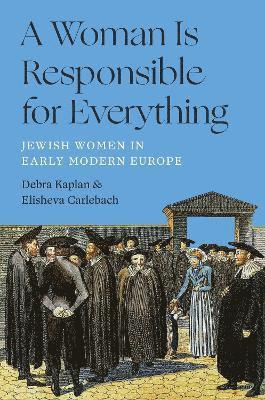
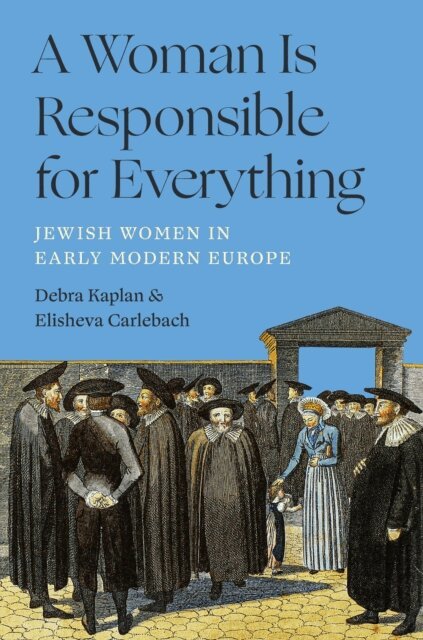
A groundbreaking look at the integral role of women in early modern Jewish communal lifeIn small villages, bustling cities, and crowded ghettos across early modern Europe, Jewish women were increasingly active participants in the daily life of their communities, managing homes and professions, leading institutions and sororities, and crafting objects and texts of exquisite beauty. A Woman Is Responsible for Everything marshals a dazzling array of previously untapped archival sources to tell the stories of these woman for the first time.Debra Kaplan and Elisheva Carlebach focus their lens on the kehillah, a lively and thriving form of communal life that sustained European Jews for three centuries. They paint vibrant portraits of Jewish women of all walks of life, from those who wielded their wealth and influence in and out of their communities to the poorest maidservants and vagrants, from single and married women to the widowed and divorced. We follow them into their homes and learn about the possessions they valued and used, the books they read, and the writings they composed. Speaking to us in their own voices, these women reveal tremendous economic initiative in the rural marketplace and the princely court, and they express their profound spirituality in the home as well as the synagogue.Beautifully illustrated, A Woman Is Responsible for Everything lifts the veil of silence that has obscured the lives of these women for too long, contributing a new chapter to the history of Jewish women and a new understanding of the Jewish past.
Del 33 - Brill Reference Library of Judaism
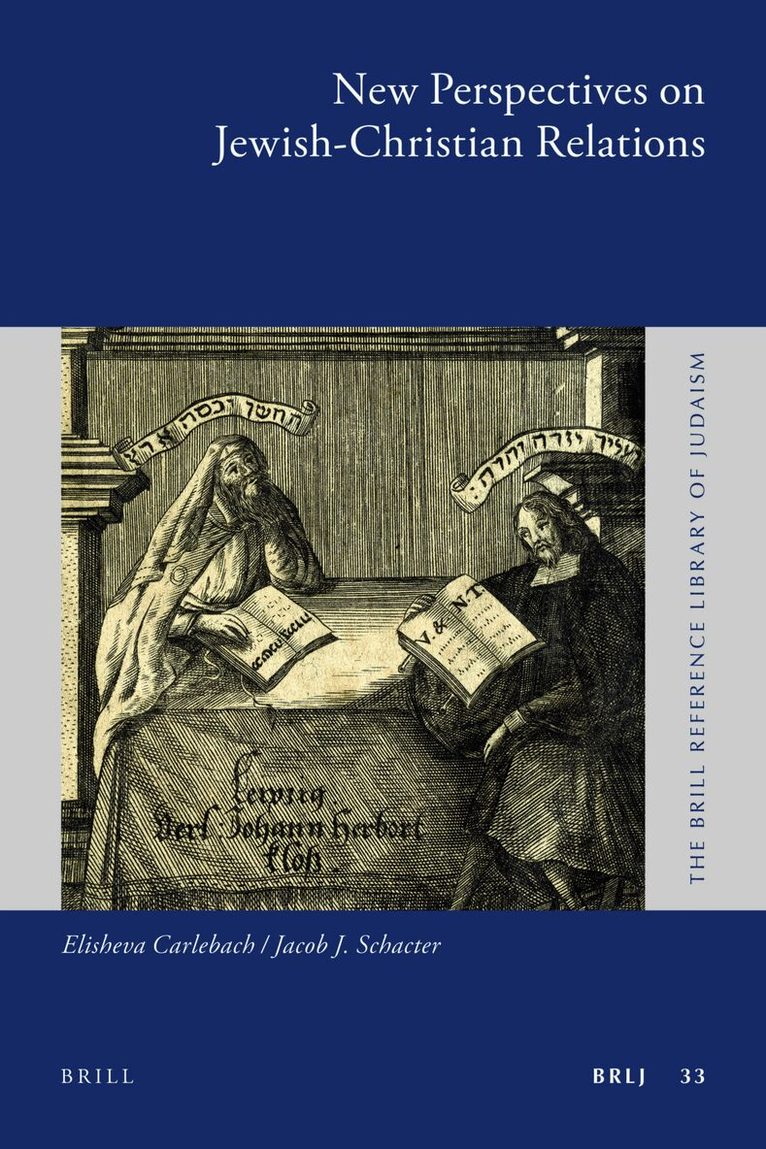
New Perspectives on Jewish-Christian Relations
Inbunden, Engelska, 2011
4 237 kr
Skickas inom 3-6 vardagar
The delicate balance between toleration and repulsion of the Jews, a tiny minority living within the Christian world, stands at the center of studies of religion and society. The development of this difficult relationship on many levels, theological, institutional, and individual, is a matter of continuing relevance in religious history from ancient to contemporary contexts. This volume, written by the leading scholars of Jewish-Christian engagement, seeks to revisit the question in light of new sources and re-readings of older sources. The old view of two implacable enemies battling for their version of truth, of Jews living as insular pariahs within a hostile world, the tale of persecution by the mighty of the weak, has given way to a much more nuanced understanding of areas of congruence, of cultural, economic, and social interchange. The volume examines changes in the Christian posture toward the Jews occurring in a time and place of tremendous cultural and religious creativity in Western European society. It seeks to understand how Jews integrated elements of Christian culture into their own. The volume spans some of the key turning points in the Jewish-Christian relationship and re-examines critical texts, religious disputations, and cultural interactions.