Elizabeth Craik – författare
Visar alla böcker från författaren Elizabeth Craik. Handla med fri frakt och snabb leverans.
11 produkter
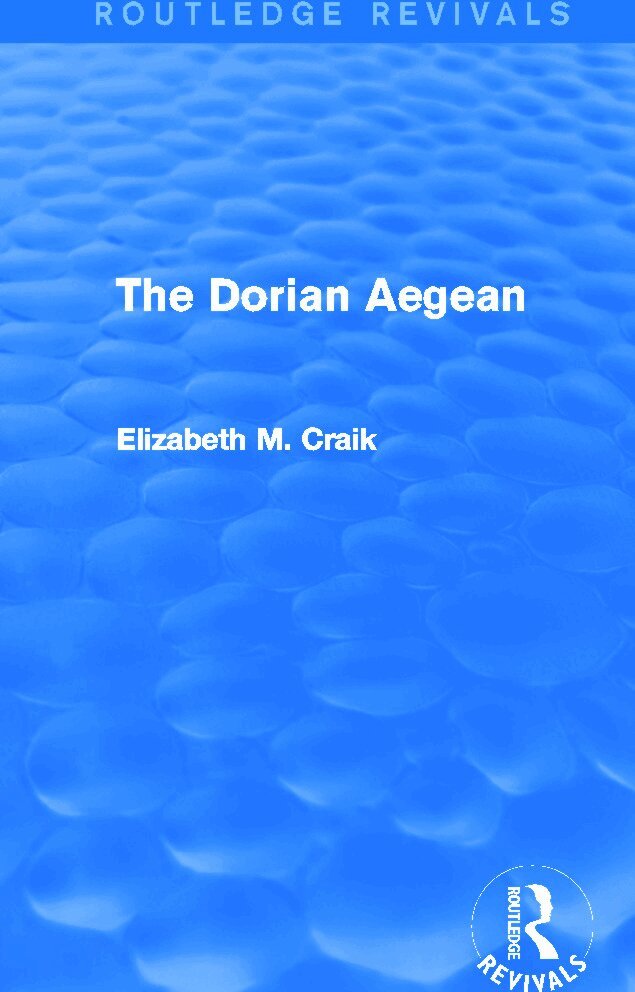
Dorian Aegean (Routledge Revivals)
Inbunden, 2014
3156 kr
Lägg i varukorg
This wide-ranging yet detailed study describes and assesses the many-faceted cultural achievement of an area remote from Athens, the Dorian islands. Elizabeth Craik’s scholarship sets this lively outlying region of the ancient Greek world – which included Rhodes, Kos, Karpathos, Melos, and Thera – …
Dorian Aegean (Routledge Revivals)
Häftad, 2015
877 kr
Lägg i varukorg
This wide-ranging yet detailed study describes and assesses the many-faceted cultural achievement of an area remote from Athens, the Dorian islands. Elizabeth Craik’s scholarship sets this lively outlying region of the ancient Greek world – which included Rhodes, Kos, Karpathos, Melos, and Thera – …
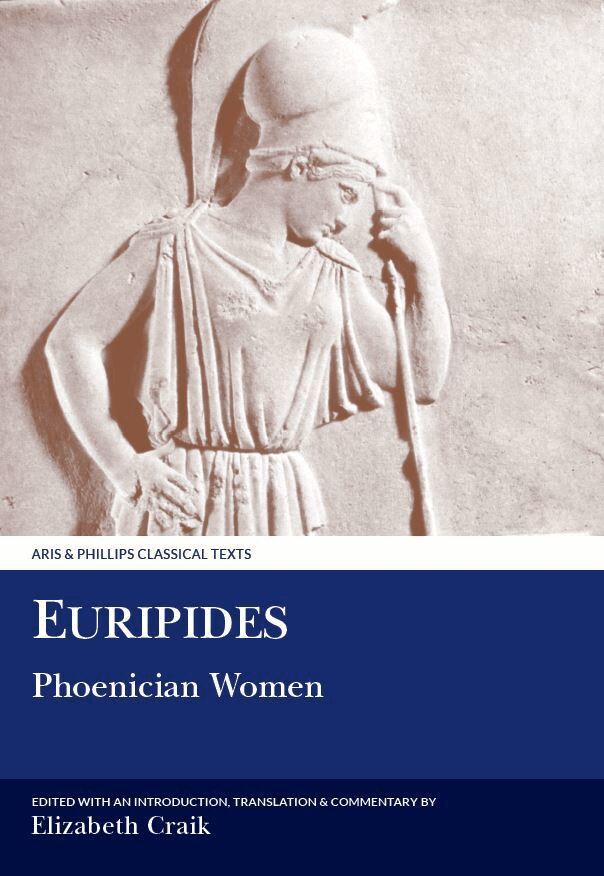
Euripides: Phoenician Women
Häftad, 1988
585 kr
Lägg i varukorg
This rich and challenging play ranges over the supreme myth of Oidipous and his doomed family. With its brooding imagery, extravagant language, ebullient rhetoric and scenic display it is quintessential Euripides. With its broad, yet unified, thematic sweep it offers important points of comparison …
'Hippocratic' Corpus
Content and Context
Inbunden, 2014
2586 kr
Lägg i varukorg
The Hippocratic Corpus comprises some sixty medical works of varying length, style and content. Collectively, this is the largest surviving body of early Greek prose. As such, it is an invaluable resource for scholars and students not only of ancient medicine but also of Greek life in …
'Hippocratic' Corpus
Content and Context
Häftad, 2014
847 kr
Lägg i varukorg
The Hippocratic Corpus comprises some sixty medical works of varying length, style and content. Collectively, this is the largest surviving body of early Greek prose. As such, it is an invaluable resource for scholars and students not only of ancient medicine but also of Greek life in …
'Hippocratic' Corpus
Content and Context
E-bok, 2014
1091 kr
Lägg i varukorg
The Hippocratic Corpus comprises some sixty medical works of varying length, style and content. Collectively, this is the largest surviving body of early Greek prose. As such, it is an invaluable resource for scholars and students not only of ancient medicine but also of Greek life in general. …
'Hippocratic' Corpus
Content and Context
E-bok, 2014
1115 kr
Lägg i varukorg
The Hippocratic Corpus comprises some sixty medical works of varying length, style and content. Collectively, this is the largest surviving body of early Greek prose. As such, it is an invaluable resource for scholars and students not only of ancient medicine but also of Greek life in general. …
Dorian Aegean (Routledge Revivals)
E-bok, 2015
1130 kr
Lägg i varukorg
This wide-ranging yet detailed study describes and assesses the many-faceted cultural achievement of an area remote from Athens, the Dorian islands. Elizabeth Craik’s scholarship sets this lively outlying region of the ancient Greek world – which included Rhodes, Kos, Karpathos, Melos, and …
Dorian Aegean (Routledge Revivals)
E-bok, 2015
1155 kr
Lägg i varukorg
This wide-ranging yet detailed study describes and assesses the many-faceted cultural achievement of an area remote from Athens, the Dorian islands. Elizabeth Craik’s scholarship sets this lively outlying region of the ancient Greek world – which included Rhodes, Kos, Karpathos, Melos, and …
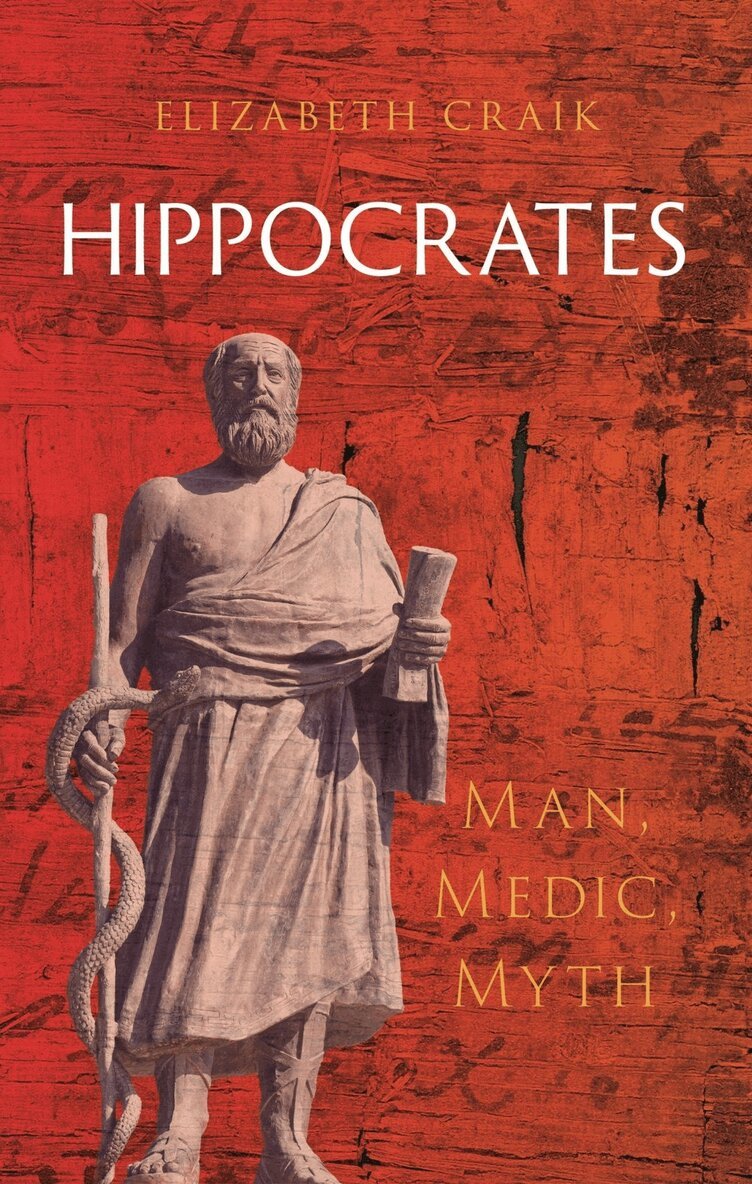
Hippocrates
Man, Medic, Myth
Inbunden, 2026
192 kr
Lägg i varukorg
Who was the so-called ‘father of medicine’, commonly associated with the celebrated Hippocratic Oath? Elizabeth Craik explores evidence for the historical Hippocrates, who lived in the fifth century bce, and combines it with documentation and compelling excerpts from the ‘Hippocratic Corpus’, a …
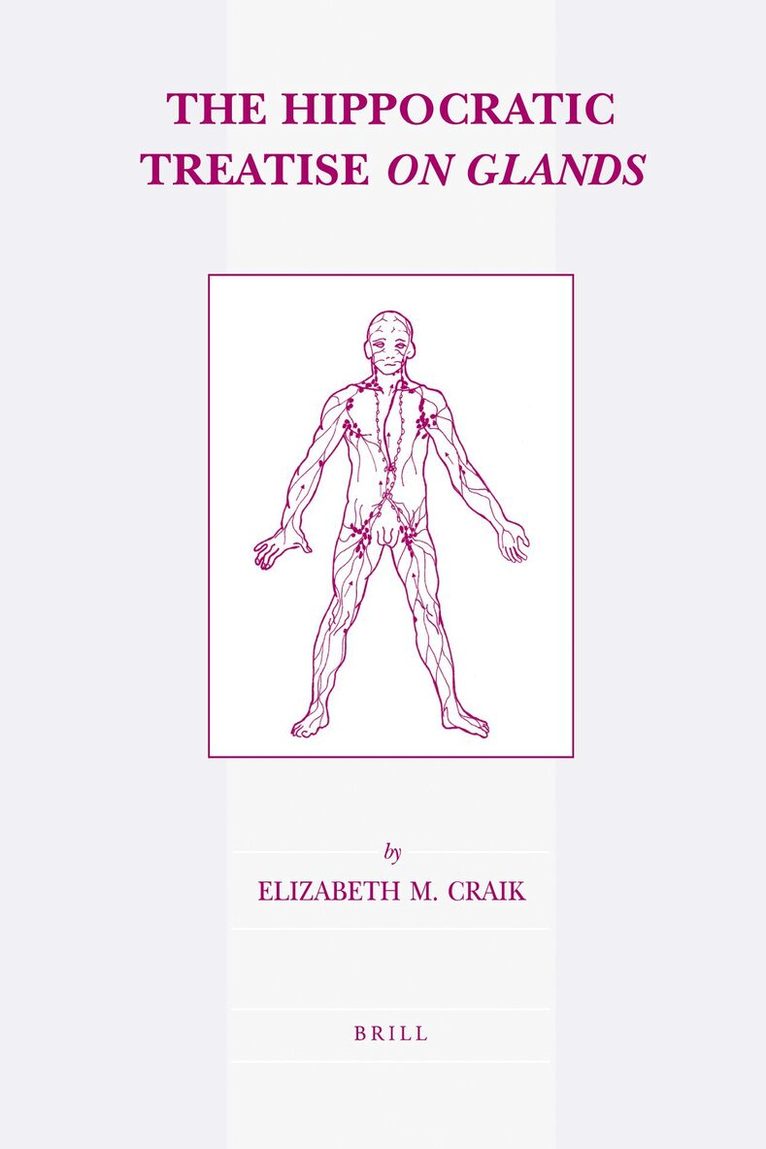
Hippocratic Treatise On Glands
Edited and Translated with Introduction and Commentary
Inbunden, 2009
2257 kr
Lägg i varukorg
This is a new edition, with translation, introduction and commentary, of the Hippocratic treatise On Glands. Through a close analysis of both content and expression, the text is interpreted and situated in the wider context of ancient medical writing.