Ellen Braae - Böcker
Visar alla böcker från författaren Ellen Braae. Handla med fri frakt och snabb leverans.
4 produkter
4 produkter
691 kr
Skickas inom 10-15 vardagar
The Routledge Research Companion to Landscape Architecture considers landscape architecture’s increasingly important cultural, aesthetic, and ecological role. The volume reflects topical concerns in theoretical, historical, philosophical, and practice-related research in landscape architecture – research that reflects our relationship with what has traditionally been called ‘nature’. It does so at a time when questions about the use of global resources and understanding the links between human and non-human worlds are more crucial than ever. The twenty-five chapters of this edited collection bring together significant positions in current landscape architecture research under five broad themes – History, Sites and Heritage, City and Nature, Ethics and Sustainability, Knowledge and Practice – supplemented with a discussion of landscape architecture education. Prominent as well as up-and-coming contributors from landscape architecture and adjacent fields including Tom Avermaete, Peter Carl, Gareth Doherty, Ottmar Ette, Matthew Gandy, Christophe Girot, Anne Whiston Spirn, Ian H. Thompson and Jane Wolff seek to widen, fuel, and frame critical discussion in this growing area. A significant contribution to landscape architecture research, this book will be beneficial not only to students and academics in landscape architecture, but also to scholars in related fields such as history, architecture, and social studies.
3 257 kr
Skickas inom 10-15 vardagar
The Routledge Research Companion to Landscape Architecture considers landscape architecture’s increasingly important cultural, aesthetic, and ecological role. The volume reflects topical concerns in theoretical, historical, philosophical, and practice-related research in landscape architecture – research that reflects our relationship with what has traditionally been called ‘nature’. It does so at a time when questions about the use of global resources and understanding the links between human and non-human worlds are more crucial than ever. The twenty-five chapters of this edited collection bring together significant positions in current landscape architecture research under five broad themes – History, Sites and Heritage, City and Nature, Ethics and Sustainability, Knowledge and Practice – supplemented with a discussion of landscape architecture education. Prominent as well as up-and-coming contributors from landscape architecture and adjacent fields including Tom Avermaete, Peter Carl, Gareth Doherty, Ottmar Ette, Matthew Gandy, Christophe Girot, Anne Whiston Spirn, Ian H. Thompson and Jane Wolff seek to widen, fuel, and frame critical discussion in this growing area. A significant contribution to landscape architecture research, this book will be beneficial not only to students and academics in landscape architecture, but also to scholars in related fields such as history, architecture, and social studies.
653 kr
Skickas
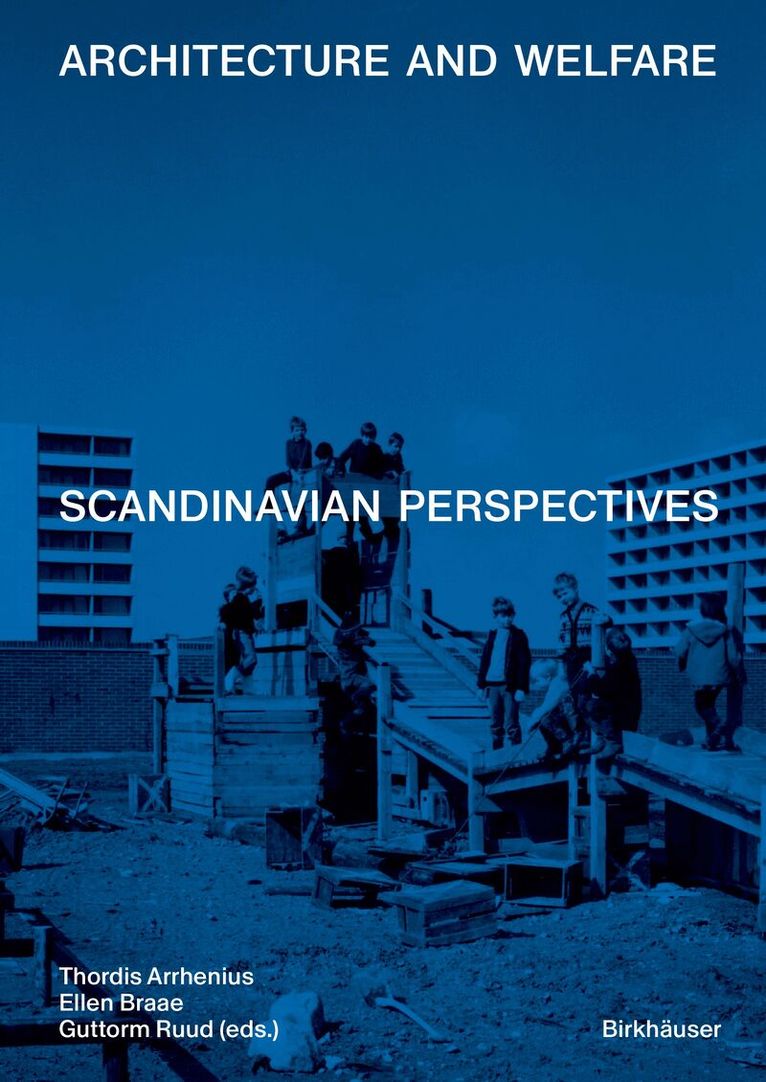
Architecture was fundamental to the realization of welfare state policy in the Nordic countries, translating democratic ideals into concrete spatial materializations. An inclusive notion of “welfare for all” was embraced by a generation of architects, landscape architects, and planners, who labored to give physical form to ideas of equality, collectivity, anddemocracy, producing a vast architectural output in Scandinavia during the postwar years. Today, however, the architectural legacy of this era is contested. Welfare for all no longer enjoys the social or political consensus it once did.This publication critically engages with this contested architectural legacy and provides a nuanced portrait of postwar welfare architecture coming to terms with a contentious past and facing an uncertain future With newly commissioned photographic work by contemporary Nordic artists Based on an interdisciplinary research project by KTH Stockholm, Oslo School of Architecture, University of Copenhagen Internationally renown contributors shed light on aspects of the relationship between architecture and welfare
143 kr
Skickas inom 7-10 vardagar
Urban planning is a keystone in the materialization of the Nordic welfare states. That is not to say that there is one particular city form or planning practice that is synonymous with the emerging welfare city, as welfare per se is far from normative. On the contrary, welfare is a highly ambiguous and contested notion that has changed over the postwar decades, which is also reflected in the development of the welfare city. However, welfare in urban planning has mainly been associated with ideas of “the good life” and egalitarianism. In a Nordic context, the state has taken the lead in providing the social engineering “hardware” for advancing this universal aim. Social demographic welfare is economically based on full employment, and in this regard housing and caregiving support are key components. Yet education, infrastructure, and leisure facilities are also basic features in the distribution of universal welfare services for citizens’ entire lives. The results, ideally, are green and spacious welfare cities. This book outlines the origins, development, challenges, and lived realities of the changing welfare city, focusing primarily on Denmark. Strategies have changed over the decades as models of development have shifted and as the needs of society and a warming planet have come into focus. The current welfare city can be described as an urban landscape characterized by, on the one hand, a division of functions and, on the other, mutual competition. The role of the state has been minimized, turning municipalities into the new major agents in attracting taxpayers and providing goods—both by means of urban planning.