Ellen F. Arnold - Böcker
Visar alla böcker från författaren Ellen F. Arnold. Handla med fri frakt och snabb leverans.
5 produkter
5 produkter
414 kr
Skickas inom 7-10 vardagar
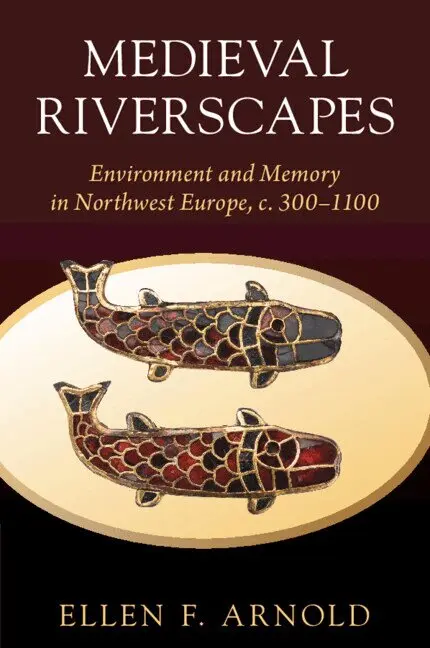
Fishermen, monks, saints, and dragons met in medieval riverscapes; their interactions reveal a rich and complex world. Using religious narrative sources to evaluate the environmental mentalities of medieval communities, Ellen F. Arnold explores the cultural meanings applied to rivers over a broad span of time, ca. 300-1100 CE. Hagiographical material, poetry, charters, chronicles, and historiographical works are explored to examine the medieval environmental imaginations about rivers, and how storytelling and memory are connected to lived experiences in riverscapes. She argues that rivers provided unique opportunities for medieval communities to understand and respond to ecological and socio-cultural transformations, and to connect their ideas about the shared religious past to hopes about the future.
536 kr
Skickas inom 10-15 vardagar
This book takes a thematic approach to the global history of water, covering a wide range of human interactions with water and the ways in which it carries both life and death.Water is one of the most common and valuable natural resources for the survival of individual people and civilizations. As the Anthropocene brings the unpredictable challenges of climate change, population growth, and global industrialization and urbanism, issues of water scarcity and availability will be ever-growing, and both the presence and absence of water can be sources of far-reaching disaster. The book argues that a deeper understanding of water’s history is essential for navigating these changes. The chapters discuss water and religion, floods and disasters, water engineering and waterpower, the history of drinking water, water parks and leisure, the history of underwater exploration, and the history of drought and water scarcity. Each chapter is global in scope and is told over a broad chronology, with complementary case studies.Water in World History is an accessible introduction to water history and is an ideal resource for undergraduate students in environmental history and world history courses.
2 027 kr
Skickas inom 10-15 vardagar
This book takes a thematic approach to the global history of water, covering a wide range of human interactions with water and the ways in which it carries both life and death.Water is one of the most common and valuable natural resources for the survival of individual people and civilizations. As the Anthropocene brings the unpredictable challenges of climate change, population growth, and global industrialization and urbanism, issues of water scarcity and availability will be ever-growing, and both the presence and absence of water can be sources of far-reaching disaster. The book argues that a deeper understanding of water’s history is essential for navigating these changes. The chapters discuss water and religion, floods and disasters, water engineering and waterpower, the history of drinking water, water parks and leisure, the history of underwater exploration, and the history of drought and water scarcity. Each chapter is global in scope and is told over a broad chronology, with complementary case studies.Water in World History is an accessible introduction to water history and is an ideal resource for undergraduate students in environmental history and world history courses.
Negotiating the Landscape
Environment and Monastic Identity in the Medieval Ardennes
Inbunden, Engelska, 2012
965 kr
Skickas inom 10-15 vardagar
Negotiating the Landscape explores the question of how medieval religious identities were shaped and modified by interaction with the natural environment. Focusing on the Benedictine monastic community of Stavelot-Malmedy in the Ardennes, Ellen F. Arnold draws upon a rich archive of charters, property and tax records, correspondence, miracle collections, and saints' lives from the seventh to the mid-twelfth century to explore the contexts in which the monks' intense engagement with the natural world was generated and refined.Arnold argues for a broad cultural approach to medieval environmental history and a consideration of a medieval environmental imagination through which people perceived the nonhuman world and their own relation to it. Concerned to reassert medieval Christianity's vitality and variety, Arnold also seeks to oppose the historically influential view that the natural world was regarded in the premodern period as provided by God solely for human use and exploitation. The book argues that, rather than possessing a single unifying vision of nature, the monks drew on their ideas and experience to create and then manipulate a complex understanding of their environment. Viewing nature as both wild and domestic, they simultaneously acted out several roles, as stewards of the land and as economic agents exploiting natural resources. They saw the natural world of the Ardennes as a type of wilderness, a pastoral haven, and a source of human salvation, and actively incorporated these differing views of nature into their own attempts to build their community, understand and establish their religious identity, and relate to others who shared their landscape.
1 160 kr
Skickas inom 7-10 vardagar
Fishermen, monks, saints, and dragons met in medieval riverscapes; their interactions reveal a rich and complex world. Using religious narrative sources to evaluate the environmental mentalities of medieval communities, Ellen F. Arnold explores the cultural meanings applied to rivers over a broad span of time, ca. 300-1100 CE. Hagiographical material, poetry, charters, chronicles, and historiographical works are explored to examine the medieval environmental imaginations about rivers, and how storytelling and memory are connected to lived experiences in riverscapes. She argues that rivers provided unique opportunities for medieval communities to understand and respond to ecological and socio-cultural transformations, and to connect their ideas about the shared religious past to hopes about the future.