Ellen Lust - Böcker
Visar alla böcker från författaren Ellen Lust. Handla med fri frakt och snabb leverans.
4 produkter
4 produkter
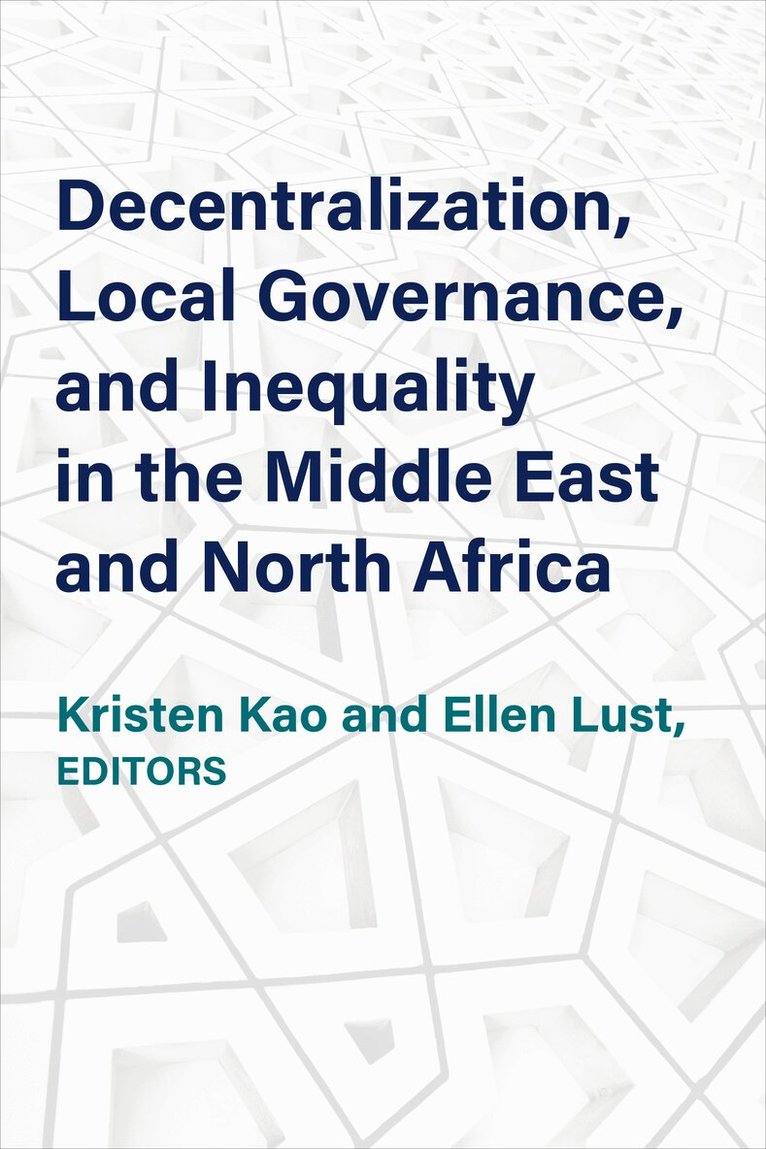
Decentralization, Local Governance, and Inequality in the Middle East and North Africa
Häftad, Engelska, 2025
474 kr
Skickas inom 7-10 vardagar
While many scholars, policymakers, and development practitioners view decentralization as a way to increase participation, strengthen political representation, and improve social welfare, little is known about the experiences of communities in the context of decentralization – particularly in the Middle East and North Africa. This volume directs our attention toward the ways in which decentralization is “lived locally” by citizens of the MENA region, underscoring the simultaneous influences of individual-level factors (e.g., gender, education) and local context (e.g., development levels, electoral institutions) on governance processes and outcomes. A group of international scholars brings together methodologically diverse, original research in Lebanon, Morocco, Syria, and Tunisia to expand the literature on decentralization. Following a preface by Hicham Alaoui, the empirical chapters are arranged into three thematic sections. These focus on subnational variations in the relationships between central and local actors, citizen engagement with state and non-state institutions, and the extent to which representatives reflect their local communities. Together, these chapters provide important insights into governance, participation, and representation in the MENA and open new questions for furthering the study of governance and local development. Only by unpacking perspectives and governance experiences at the micro-level can we understand how decentralization policies affect citizens’ everyday lives.
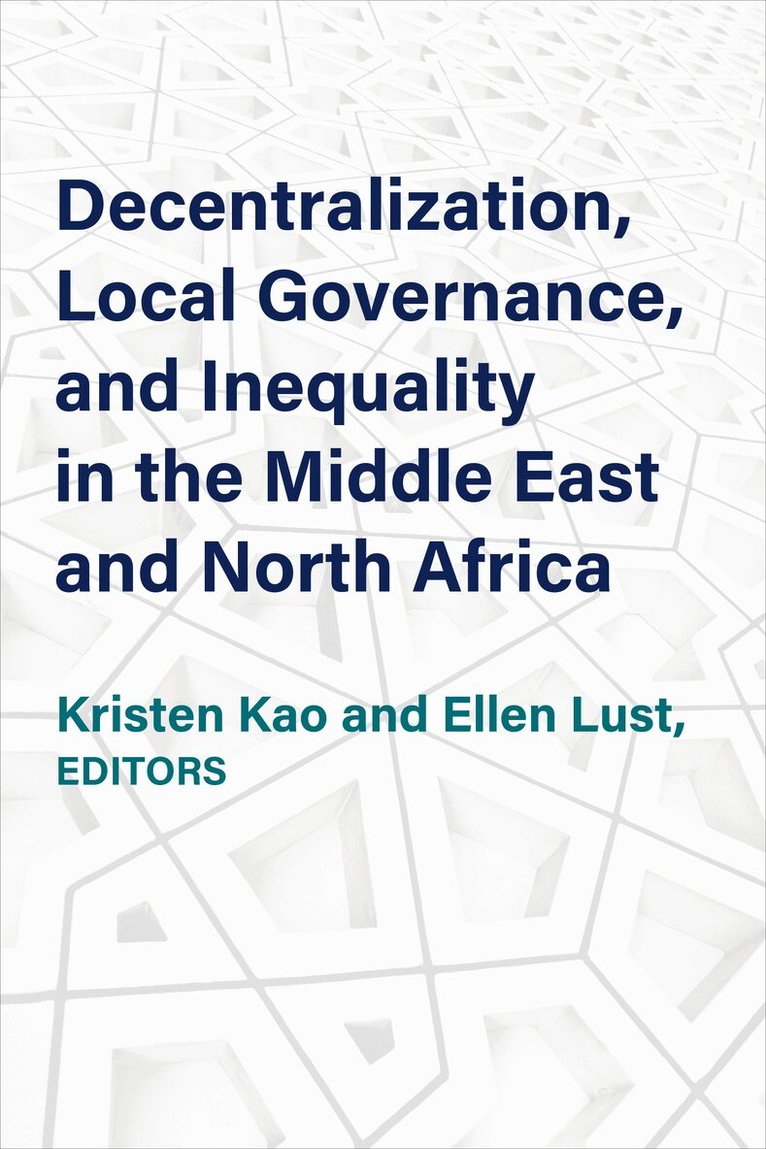
Decentralization, Local Governance, and Inequality in the Middle East and North Africa
Inbunden, Engelska, 2025
1 123 kr
Skickas inom 7-10 vardagar
While many scholars, policymakers, and development practitioners view decentralization as a way to increase participation, strengthen political representation, and improve social welfare, little is known about the experiences of communities in the context of decentralization – particularly in the Middle East and North Africa. This volume directs our attention toward the ways in which decentralization is “lived locally” by citizens of the MENA region, underscoring the simultaneous influences of individual-level factors (e.g., gender, education) and local context (e.g., development levels, electoral institutions) on governance processes and outcomes. A group of international scholars brings together methodologically diverse, original research in Lebanon, Morocco, Syria, and Tunisia to expand the literature on decentralization. Following a preface by Hicham Alaoui, the empirical chapters are arranged into three thematic sections. These focus on subnational variations in the relationships between central and local actors, citizen engagement with state and non-state institutions, and the extent to which representatives reflect their local communities. Together, these chapters provide important insights into governance, participation, and representation in the MENA and open new questions for furthering the study of governance and local development. Only by unpacking perspectives and governance experiences at the micro-level can we understand how decentralization policies affect citizens’ everyday lives.
587 kr
Tillfälligt slut
Taking to the Streets critically examines the conventional wisdom that the 2011 Arab Spring uprisings happened spontaneously and were directed by tech-savvy young revolutionaries. Pairing first-hand observations from activists with the critical perspectives of scholars, the book illuminates the concept of activism as an ongoing process, rather than a sudden burst of defiance. The contributors examine case studies from uprisings in Tunisia, Egypt, Libya, Yemen, Syria, Bahrain, Morocco, Jordan, Kuwait, and Saudi Arabia, evaluating the various manifestations of political activism within the context of each country's distinct sociopolitical landscape. The chapters include a country-specific timeline of the first year following the uprisings and conclude with lessons learned. First-hand observations include those of Libyan activist Rihab Elhaj, who reflects on how the revolution gave birth to Libyan civil society, as well as Syrian writer and human rights activist Khawla Dunia, who discusses how Syrians have tried to remain steadfast in their commitment to nonviolent resistance.A foreword by Prince Hicham Ben Abdallah El Alaoui-third in succession to the Moroccan throne and consulting professor at Stanford University's Center on Democracy, Development, and the Rule of Law (CDDRL)-provides a historical overview of activism in the Middle East and North Africa. A postscript from CDDRL director Larry Diamond distinguishes the study of activism from that of democratization. Taking to the Streets will be used in courses on Middle East politics and will be relevant to scholars and the general public interested in democratization, political change, and activism.
353 kr
Skickas inom 7-10 vardagar
Taking to the Streets critically examines the conventional wisdom that the 2011 Arab Spring uprisings happened spontaneously and were directed by tech-savvy young revolutionaries. Pairing first-hand observations from activists with the critical perspectives of scholars, the book illuminates the concept of activism as an ongoing process, rather than a sudden burst of defiance. The contributors examine case studies from uprisings in Tunisia, Egypt, Libya, Yemen, Syria, Bahrain, Morocco, Jordan, Kuwait, and Saudi Arabia, evaluating the various manifestations of political activism within the context of each country's distinct sociopolitical landscape. The chapters include a country-specific timeline of the first year following the uprisings and conclude with lessons learned. First-hand observations include those of Libyan activist Rihab Elhaj, who reflects on how the revolution gave birth to Libyan civil society, as well as Syrian writer and human rights activist Khawla Dunia, who discusses how Syrians have tried to remain steadfast in their commitment to nonviolent resistance.A foreword by Prince Hicham Ben Abdallah El Alaoui-third in succession to the Moroccan throne and consulting professor at Stanford University's Center on Democracy, Development, and the Rule of Law (CDDRL)-provides a historical overview of activism in the Middle East and North Africa. A postscript from CDDRL director Larry Diamond distinguishes the study of activism from that of democratization. Taking to the Streets will be used in courses on Middle East politics and will be relevant to scholars and the general public interested in democratization, political change, and activism.