Ellen Moodie - Böcker
Visar alla böcker från författaren Ellen Moodie. Handla med fri frakt och snabb leverans.
4 produkter
4 produkter
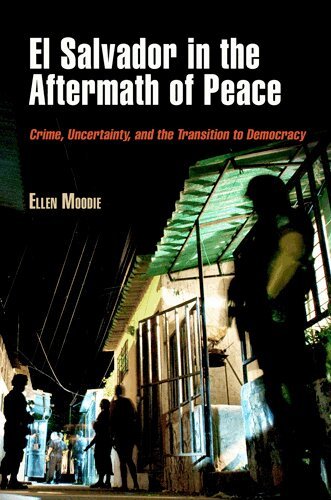
El Salvador in the Aftermath of Peace
Crime, Uncertainty, and the Transition to Democracy
Häftad, Engelska, 2012
371 kr
Skickas inom 7-10 vardagar
El Salvador's civil war, which left at least 75,000 people dead and displaced more than a million, ended in 1992. The accord between the government and the Farabundo MartÍ National Liberation Front (FMLN) has been lauded as a model post-Cold War peace agreement. But after the conflict stopped, crime rates shot up. The number of murder victims surpassed wartime death tolls. Those who once feared the police and the state became frustrated by their lack of action. Peace was not what Salvadorans had hoped it would be. Citizens began saying to each other, "It's worse than the war."El Salvador in the Aftermath of Peace: Crime, Uncertainty, and the Transition to Democracy challenges the pronouncements of policy analysts and politicians by examining Salvadoran daily life as told by ordinary people who have limited influence or affluence. Anthropologist Ellen Moodie spent much of the decade after the war gathering crime stories from various neighborhoods in the capital city of San Salvador. True accounts of theft, assaults, and murders were shared across kitchen tables, on street corners, and in the news media. This postconflict storytelling reframed violent acts, rendering them as driven by common criminality rather than political ideology. Moodie shows how public dangers narrated in terms of private experience shaped a new interpretation of individual risk. These narratives of postwar violence-occurring at the intersection of self and other, citizen and state, the powerful and the powerless-offered ways of coping with uncertainty during a stunted transition to democracy.
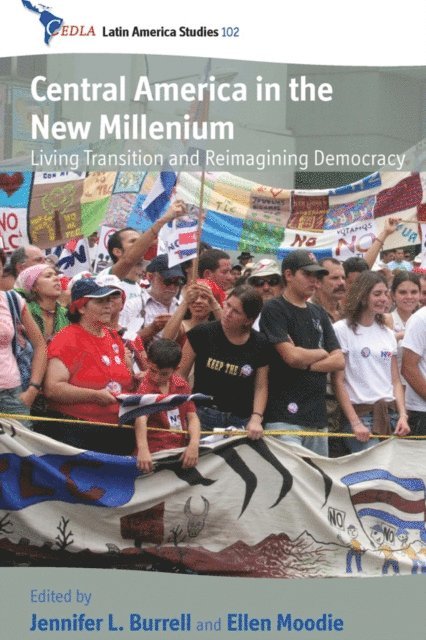
Central America in the New Millennium
Living Transition and Reimagining Democracy
Inbunden, Engelska, 2012
1 956 kr
Skickas inom 3-6 vardagar
Most non-Central Americans think of the narrow neck between Mexico and Colombia in terms of dramatic past revolutions and lauded peace agreements, or sensational problems of gang violence and natural disasters. In this volume, the contributors examine regional circumstances within frames of democratization and neoliberalism, as they shape lived experiences of transition. The authors—anthropologists and social scientists from the United States, Europe, and Central America—argue that the process of regions and nations “disappearing” (being erased from geopolitical notice) is integral to upholding a new, post-Cold War world order—and that a new framework for examining political processes must be accessible, socially collaborative, and in dialogue with the lived processes of suffering and struggle engaged by people in Central America and the world in the name of democracy.
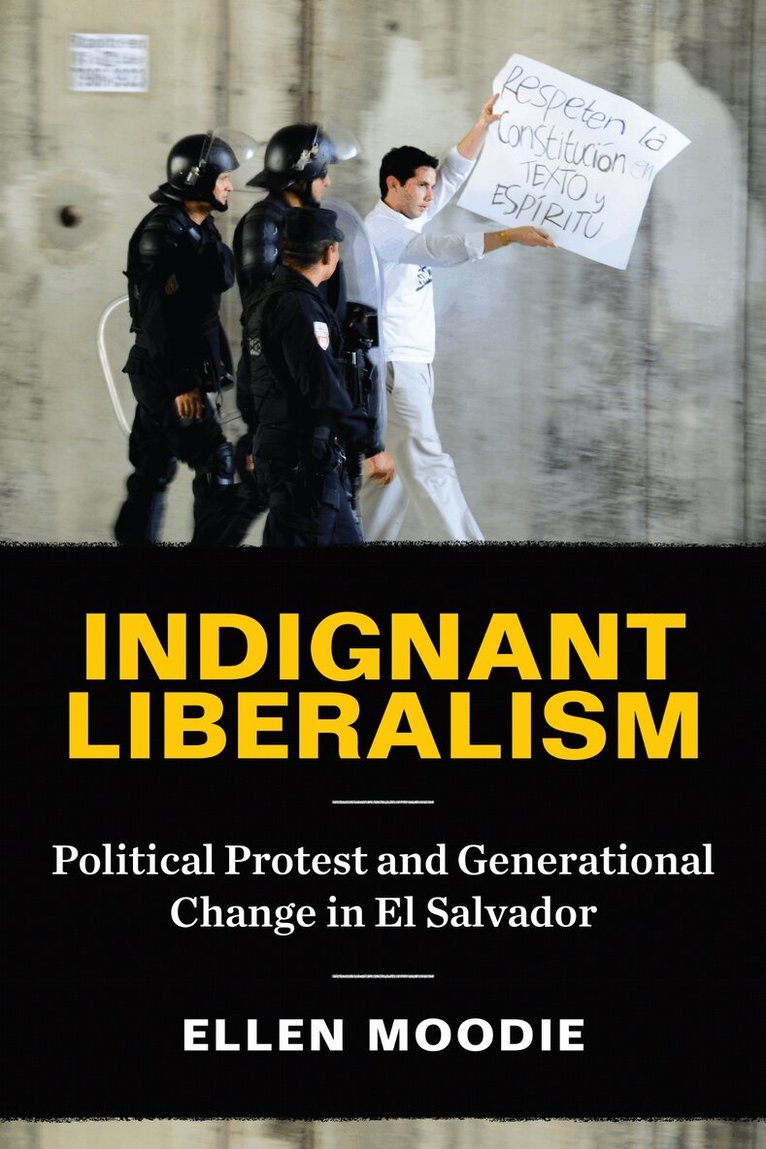
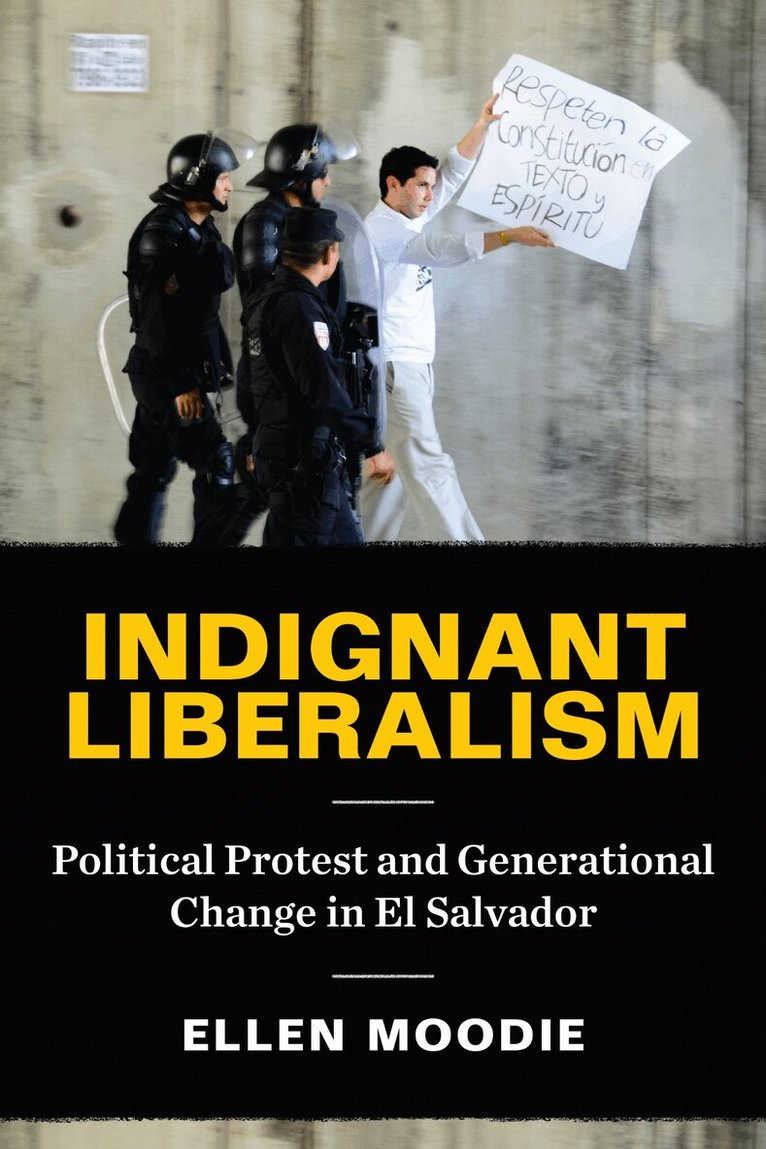
Indignant Liberalism
Political Protest and Generational Change in El Salvador
Inbunden, Engelska, 2026
1 146 kr
Kommande
Documenting the rise and disillusionment of El Salvador’s postwar activists in the face of populist authoritarian politics.The conclusion of El Salvador’s long civil war, in 1992, was supposed to bring about equality and political freedom. Leftist insurgents laid down arms, and the government formally embraced liberal ideals. Yet today, El Salvador is ruled by an authoritarian president who came to power via unconstitutional means. What went wrong? Anthropologist and journalist Ellen Moodie embedded with indignados—young middle-class protestors, demanding that the government live up to its liberal commitments—to better understand the course of political change since the civil war. Yet the “post-postwar” generation is only the latest demographic disappointed with liberalism in practice. Their revolutionary predecessors responded to a twentieth-century “racial liberalism” that saw descendants of colonists “civilizing” Indigenous people while dispossessing them of lands and mobilizing them for labor. Today, the failure to make good on the promises of postwar liberalism has inspired robust support for strongman Nayib Bukele. Moodie argues that El Salvador’s case, though inflected by local concerns, is not unique. Rather, it is another stark demonstration of how liberalism’s imaginary social contract gives rise to populist authoritarianism.
347 kr
Kommande
Documenting the rise and disillusionment of El Salvador’s postwar activists in the face of populist authoritarian politics.The conclusion of El Salvador’s long civil war, in 1992, was supposed to bring about equality and political freedom. Leftist insurgents laid down arms, and the government formally embraced liberal ideals. Yet today, El Salvador is ruled by an authoritarian president who came to power via unconstitutional means. What went wrong? Anthropologist and journalist Ellen Moodie embedded with indignados—young middle-class protestors, demanding that the government live up to its liberal commitments—to better understand the course of political change since the civil war. Yet the “post-postwar” generation is only the latest demographic disappointed with liberalism in practice. Their revolutionary predecessors responded to a twentieth-century “racial liberalism” that saw descendants of colonists “civilizing” Indigenous people while dispossessing them of lands and mobilizing them for labor. Today, the failure to make good on the promises of postwar liberalism has inspired robust support for strongman Nayib Bukele. Moodie argues that El Salvador’s case, though inflected by local concerns, is not unique. Rather, it is another stark demonstration of how liberalism’s imaginary social contract gives rise to populist authoritarianism.