Ellen T. Harris - Böcker
Visar alla böcker från författaren Ellen T. Harris. Handla med fri frakt och snabb leverans.
5 produkter
5 produkter
1 989 kr
Skickas inom 5-8 vardagar
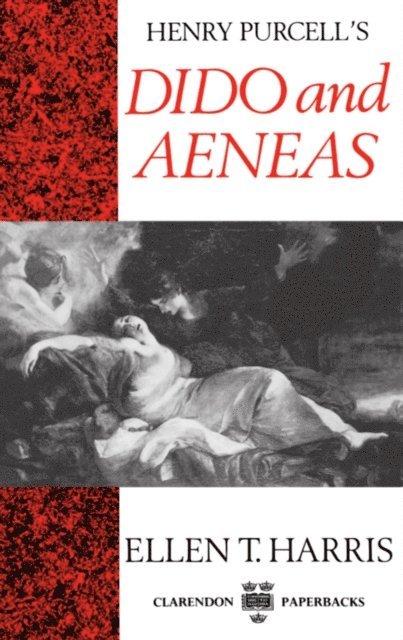
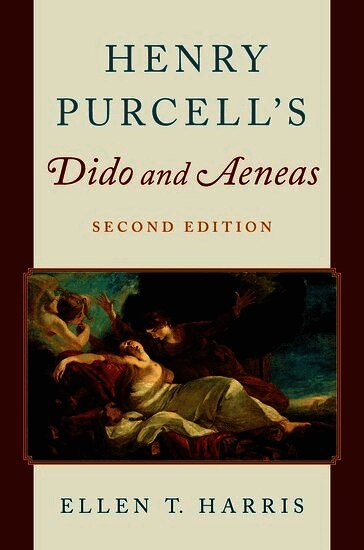
Purcell's Dido and Aeneas stands as the greatest operatic achievement of seventeenth-century England, and yet, despite its global renown, it remains cloaked in mystery. The date and place of its first performance cannot be fixed with precision, and the absolute accuracy of the surviving scores, which date from almost 100 years after the work was written, cannot be assumed.In this thirtieth-anniversary new edition of her book, Ellen Harris closely examines the many theories that have been proposed for the opera's origin and chronology, considering the opera both as political allegory and as a positive exemplar for young women. Her study explores the work's historical position in the Restoration theater, revealing its roots in seventeenth-century English theatrical and musical traditions, and carefully evaluates the surviving sources for the various readings they offer-of line designations in the text (who sings what), the vocal ranges of the soloists, the use of dance and chorus, and overall layout. It goes on to provide substantive analysis of Purcell's musical declamation and use of ground bass.In tracing the performance history of Dido and Aeneas, Harris presents an in-depth examination of the adaptations made by the Academy of Ancient Music at the end of the eighteenth century based on the surviving manuscripts. She then follows the growing interest in the creation of an "authentic" version in the nineteenth and early twentieth centuries through published editions and performance reviews, and considers the opera as an important factor in the so-called English Musical Renaissance. To a significant degree, the continuing fascination with Purcell's Dido and Aeneas rests on its apparent mutability, and Harris shows this has been inherent in the opera effectively from its origin.
706 kr
Skickas inom 5-8 vardagar
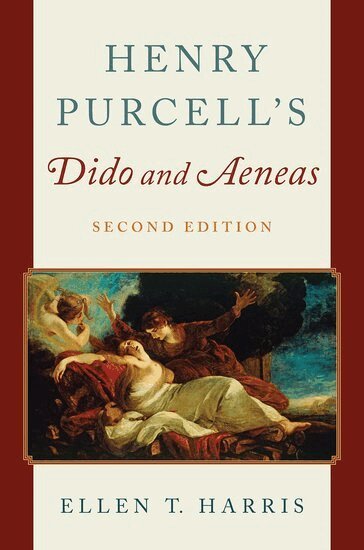
Purcell's Dido and Aeneas stands as the greatest operatic achievement of seventeenth-century England, and yet, despite its global renown, it remains cloaked in mystery. The date and place of its first performance cannot be fixed with precision, and the absolute accuracy of the surviving scores, which date from almost 100 years after the work was written, cannot be assumed.In this thirtieth-anniversary new edition of her book, Ellen Harris closely examines the many theories that have been proposed for the opera's origin and chronology, considering the opera both as political allegory and as a positive exemplar for young women. Her study explores the work's historical position in the Restoration theater, revealing its roots in seventeenth-century English theatrical and musical traditions, and carefully evaluates the surviving sources for the various readings they offer-of line designations in the text (who sings what), the vocal ranges of the soloists, the use of dance and chorus, and overall layout. It goes on to provide substantive analysis of Purcell's musical declamation and use of ground bass.In tracing the performance history of Dido and Aeneas, Harris presents an in-depth examination of the adaptations made by the Academy of Ancient Music at the end of the eighteenth century based on the surviving manuscripts. She then follows the growing interest in the creation of an "authentic" version in the nineteenth and early twentieth centuries through published editions and performance reviews, and considers the opera as an important factor in the so-called English Musical Renaissance. To a significant degree, the continuing fascination with Purcell's Dido and Aeneas rests on its apparent mutability, and Harris shows this has been inherent in the opera effectively from its origin.
949 kr
Skickas inom 5-8 vardagar
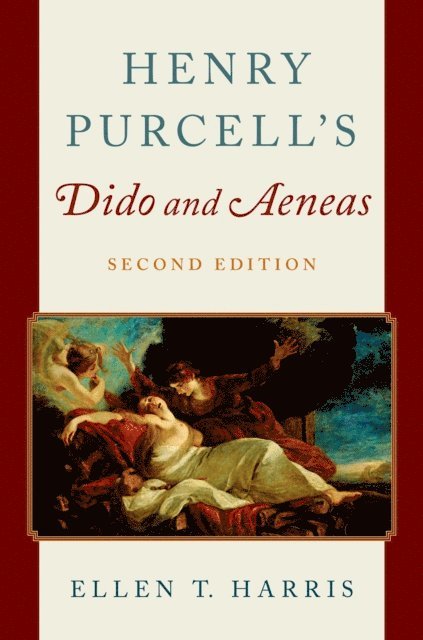
Purcell's Dido and Aeneas stands as the greatest operatic achievement of seventeenth-century England. Ellen Harris's comprehensive study examines the work in its historical and cultural context, with detailed coverage of contemporary performance practice and of the work's performance history and critical reception. The author examines the various surviving sources - all of which postdate the first performance by at least 80 years - and discusses their inconsistencies with Nahum Tate's original libretto. A useful reference section includes a critical discography and appendices charting a historical survey of national premieres and of editions.
376 kr
Skickas inom 7-10 vardagar
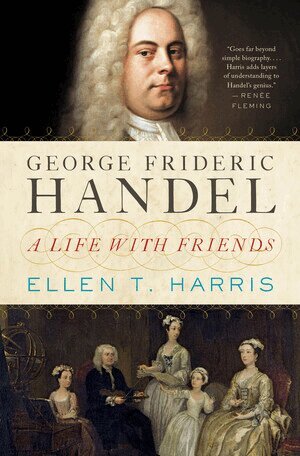
During his lifetime, the sounds of Handel’s music reached from court to theatre, echoed in cathedrals and filled crowded taverns. But the man himself is a mystery. Though he took meticulous care of his musical manuscripts and provided for their preservation in his will, very little of an intimate nature survives. In search of the private man behind the public persona, Ellen T. Harris has tracked down the letters, diaries, financial accounts, court cases and other documents connected with the composer’s closest friends. The result is a tightly woven tapestry of London life in the first half of the eighteenth century, one that weaves together vibrant descriptions of Handel’s music with stories of loyalty, cunning and betrayal. With this new approach, Harris reveals an ambitious, shrewd, generous, brilliant and flawed man.
362 kr
Skickas inom 10-15 vardagar
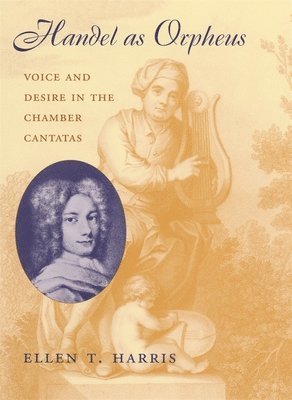
Handel wrote over 100 cantatas, compositions for voice and instruments that describe the joy and pain of love. In Handel as Orpheus, the first comprehensive study of the cantatas, Ellen Harris investigates their place in Handel's life as well as their extraordinary beauty.The cantatas were written between 1706 and 1723--from the time Handel left his home in Germany, through the years he spent in Florence and Rome, and into the early part of his London career. In this period he lived as a guest in aristocratic homes, and composed these chamber works for his patrons and hosts, primarily for private entertainments. In both Italy and England his patrons moved in circles in which same-sex desire was commonplace--a fact that is not without significance, Harris reveals, for the cantatas exhibit a clear homosexual subtext.Addressing questions about style and form, dating, the relation of music to text, rhythmic and tonal devices, and voicing, Handel as Orpheus is an invaluable resource for the study and enjoyment of the cantatas, which have too long been neglected. This innovative study brings greater understanding of Handel, especially his development as a composer, and new insight into the role of sexuality in artistic expression.