Emanuele Bardone - Böcker
Visar alla böcker från författaren Emanuele Bardone. Handla med fri frakt och snabb leverans.
4 produkter
4 produkter
Del 14785 - Lecture Notes in Computer Science
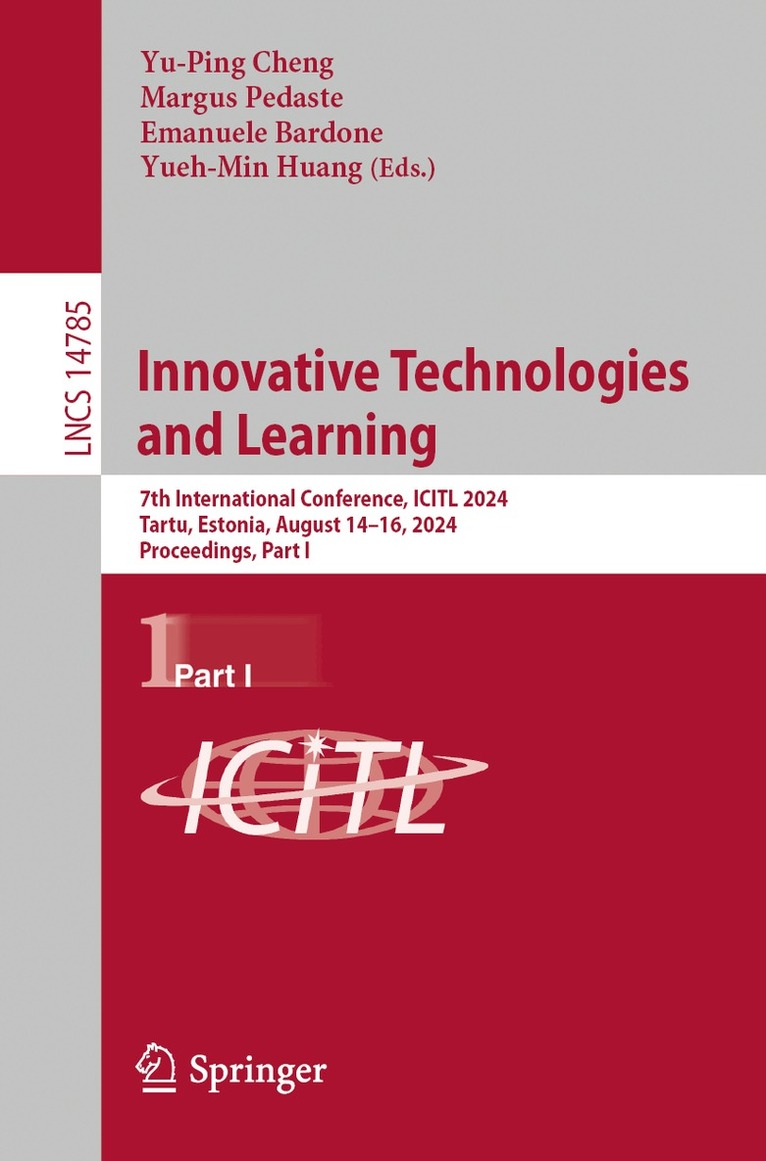
Innovative Technologies and Learning
7th International Conference, ICITL 2024, Tartu, Estonia, August 14–16, 2024, Proceedings, Part I
Häftad, Engelska, 2024
917 kr
Skickas inom 5-8 vardagar
The two-volume set LNCS 14785 and 14786 constitutes the refereed post-conference proceedings of the 7th International Conference on Innovative Technologies and Learning, ICITL 2024, Tartu, Estonia, during August 14 -16, 2024.
Del 14786 - Lecture Notes in Computer Science
Innovative Technologies and Learning
7th International Conference, ICITL 2024, Tartu, Estonia, August 14–16, 2024, Proceedings, Part II
Häftad, Engelska, 2024
675 kr
Skickas inom 10-15 vardagar
The two-volume set LNCS 14785 and 14786 constitutes the refereed conference proceedings of the 7th International Conference on Innovative Technologies and Learning, ICITL 2024, Tartu, Estonia, during August 14 -16, 2024.
1 064 kr
Skickas inom 10-15 vardagar
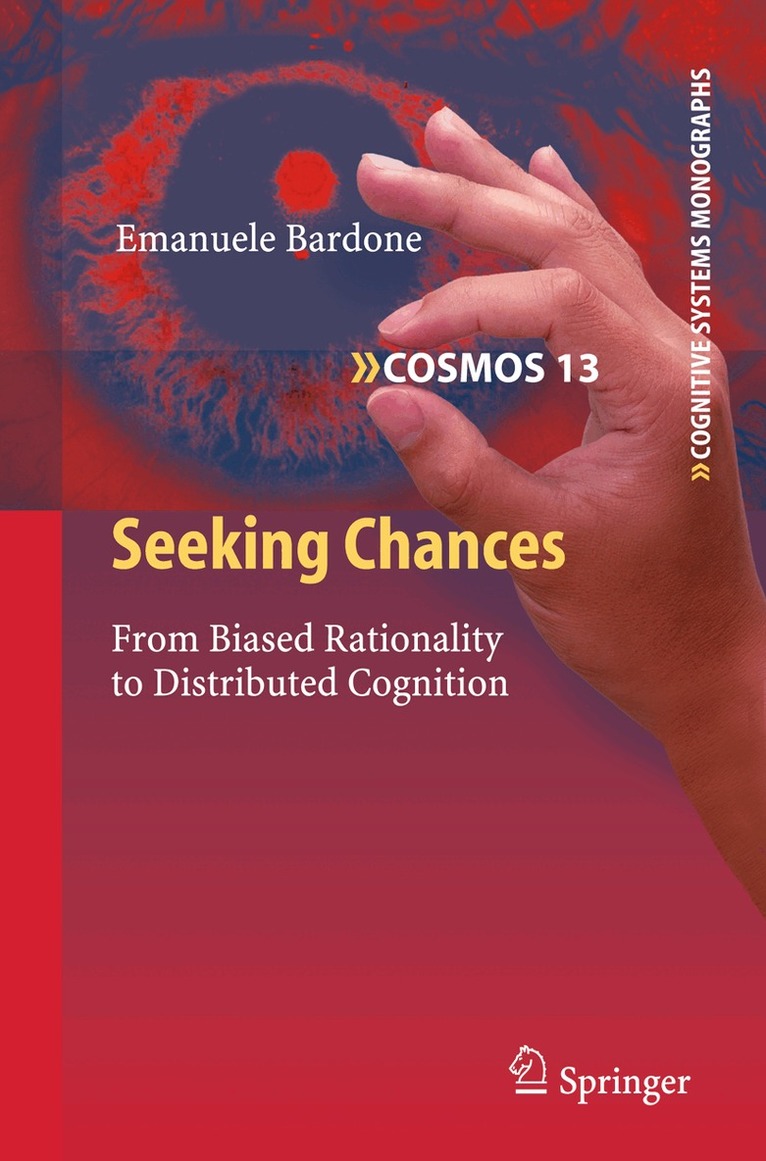
One of the most distinguishing abilities that human beings display is the ability of turning almost everything into a clue to make a problem affordable in relation to what one knows and, most of all, to what one does not know. That is what characterizes humans as chance seekers. A poor pattern of reasoning and even our ignorance may help us make a decision, and eventually solve a problem. This is the rationale of biased rationality. However, not everything leads us always to a good decision. Some people are not satisfied with weak arguments or it-is-just-so strategies. They want something better. This second attitude points to a different form of rationality that takes advantage of the idea of distributed cognition. Basically, human beings improve their survival strategies by building cognitive niches capable of delivering potentially ever more symptomatic information. It is through various manipulations of the environment that we gain new and more reliable chances which can be used to de-bias our rationality. Through the laborious activity of cognitive niche construction, we come up with situations in which we are better afforded by our environment, and thus biases or fallacies cease to be appealing.
1 064 kr
Skickas inom 10-15 vardagar
One of the most distinguishing abilities that human beings display is the ability of turning almost everything into a clue to make a problem affordable in relation to what one knows and, most of all, to what one does not know. That is what characterizes humans as chance seekers. A poor pattern of reasoning and even our ignorance may help us make a decision, and eventually solve a problem. This is the rationale of biased rationality. However, not everything leads us always to a good decision. Some people are not satisfied with weak arguments or it-is-just-so strategies. They want something better. This second attitude points to a different form of rationality that takes advantage of the idea of distributed cognition. Basically, human beings improve their survival strategies by building cognitive niches capable of delivering potentially ever more symptomatic information. It is through various manipulations of the environment that we gain new and more reliable chances which can be used to de-bias our rationality. Through the laborious activity of cognitive niche construction, we come up with situations in which we are better afforded by our environment, and thus biases or fallacies cease to be appealing.