Emanuele Maria Carluccio – författare
Visar alla böcker från författaren Emanuele Maria Carluccio. Handla med fri frakt och snabb leverans.
3 produkter
3 produkter
Inbunden, Engelska, 2006
1 681 kr
Skickas inom 10-15 vardagar
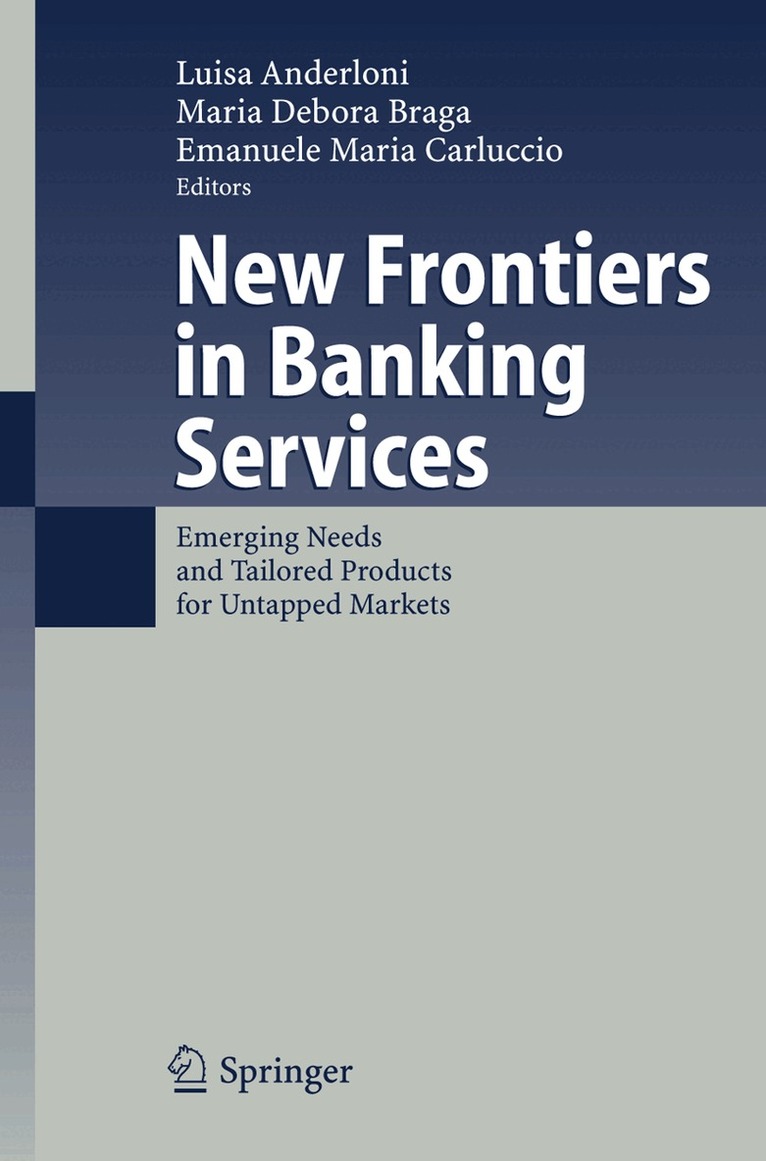
This book is devoted to an issue that is the subject of growing interest amongst policy makers, financial providers and academics. That issue is the problem of unbanking or underbanking in developed countries. The issue has arisen because, faced with an ever more sophisticated and efficient financial system, an increasing number of people have found themselves in danger of being excluded from it. The goal of the papers that follow is to draw attention, both through a theoretical framework and through field study, to the need for banks, financial institutions, public authorities and non profit associations to increase their efforts to understand the process of financial exclusion, so that they can develop approaches to help people on low to moderate incomes to gain access to the whole range of financial services, from payment to savings, and from loans to investment. Some farsighted banks and financial institutions have already developed strategies, and introduced new products and services, to promote financial inclusion in these untapped markets. The research group is international and multi-disciplinary. The authors are grateful to the Italian Ministry for University Research (MIUR) for financial assistance provided under the “PRIN 2003” programme. The volume has been produced thanks to support from the University of Valle d’Aosta – Université de la Vallée d’Aoste (Italy), which has an leading reputation for encouraging research on financial innovation aimed at marginalised groups.
E-bok
PDF, Engelska, 20072 036 kr
Läs direkt efter köp
This book is devoted to an issue that is the subject of growing interest amongst policy makers, financial providers and academics. That issue is the problem of unbanking or underbanking in developed countries. The issue has arisen because, faced with an ever more sophisticated and efficient financial system, an increasing number of people have found themselves in danger of being excluded from it. The goal of the papers that follow is to draw attention, both through a theoretical framework and through field study, to the need for banks, financial institutions, public authorities and non profit associations to increase their efforts to understand the process of financial exclusion, so that they can develop approaches to help people on low to moderate incomes to gain access to the whole range of financial services, from payment to savings, and from loans to investment. Some farsighted banks and financial institutions have already developed strategies, and introduced new products and services, to promote financial inclusion in these untapped markets. The research group is international and multi-disciplinary. The authors are grateful to the Italian Ministry for University Research (MIUR) for financial assistance provided under the “PRIN 2003” programme. The volume has been produced thanks to support from the University of Valle d’Aosta – Université de la Vallée d’Aoste (Italy), which has an leading reputation for encouraging research on financial innovation aimed at marginalised groups.
Häftad, Engelska, 2010
1 603 kr
Skickas inom 5-8 vardagar
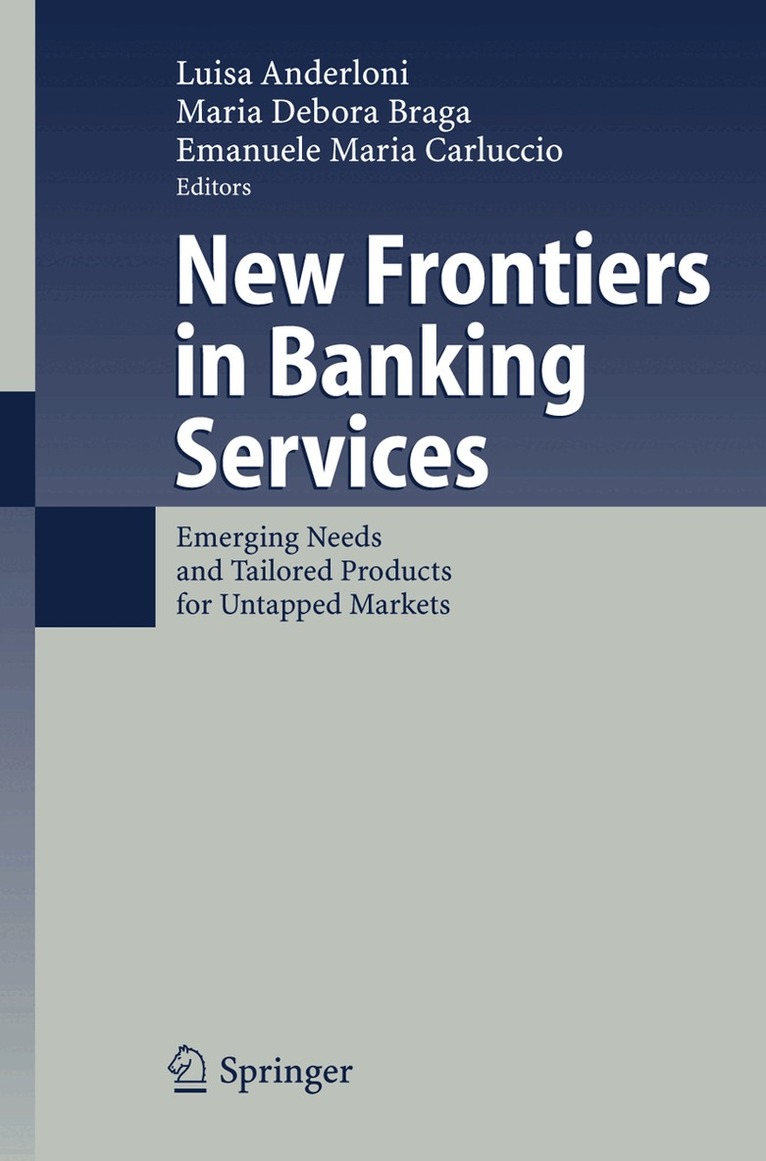
This book is devoted to an issue that is the subject of growing interest amongst policy makers, financial providers and academics. That issue is the problem of unbanking or underbanking in developed countries. The issue has arisen because, faced with an ever more sophisticated and efficient financial system, an increasing number of people have found themselves in danger of being excluded from it. The goal of the papers that follow is to draw attention, both through a theoretical framework and through field study, to the need for banks, financial institutions, public authorities and non profit associations to increase their efforts to understand the process of financial exclusion, so that they can develop approaches to help people on low to moderate incomes to gain access to the whole range of financial services, from payment to savings, and from loans to investment. Some farsighted banks and financial institutions have already developed strategies, and introduced new products and services, to promote financial inclusion in these untapped markets. The research group is international and multi-disciplinary. The authors are grateful to the Italian Ministry for University Research (MIUR) for financial assistance provided under the “PRIN 2003” programme. The volume has been produced thanks to support from the University of Valle d’Aosta – Université de la Vallée d’Aoste (Italy), which has an leading reputation for encouraging research on financial innovation aimed at marginalised groups.