Maria Debora Braga – författare
Visar alla böcker från författaren Maria Debora Braga. Handla med fri frakt och snabb leverans.
5 produkter
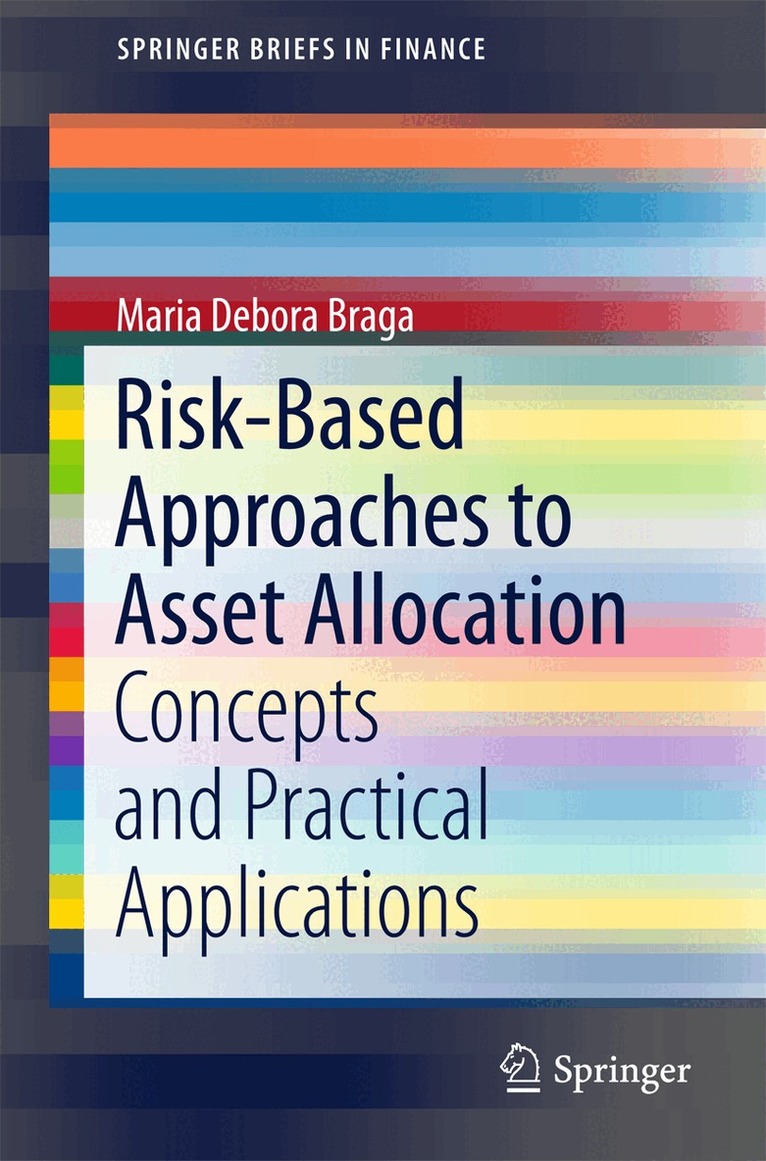
Risk-Based Approaches to Asset Allocation
Concepts and Practical Applications
Häftad, 2015
736 kr
Lägg i varukorg
This book focuses on the concepts and applications of risk-based asset allocation. Markowitz’s traditional approach to asset allocation suffers from serious drawbacks when implemented. These mainly arise from the estimation risk associated with the necessary input the most critical being expected …
Risk-Based Approaches to Asset Allocation
Concepts and Practical Applications
E-bok, 2015
903 kr
Lägg i varukorg
This book focuses on the concepts and applications of risk-based asset allocation. Markowitz’s traditional approach to asset allocation suffers from serious drawbacks when implemented. These mainly arise from the estimation risk associated with the necessary input the most critical being expected …
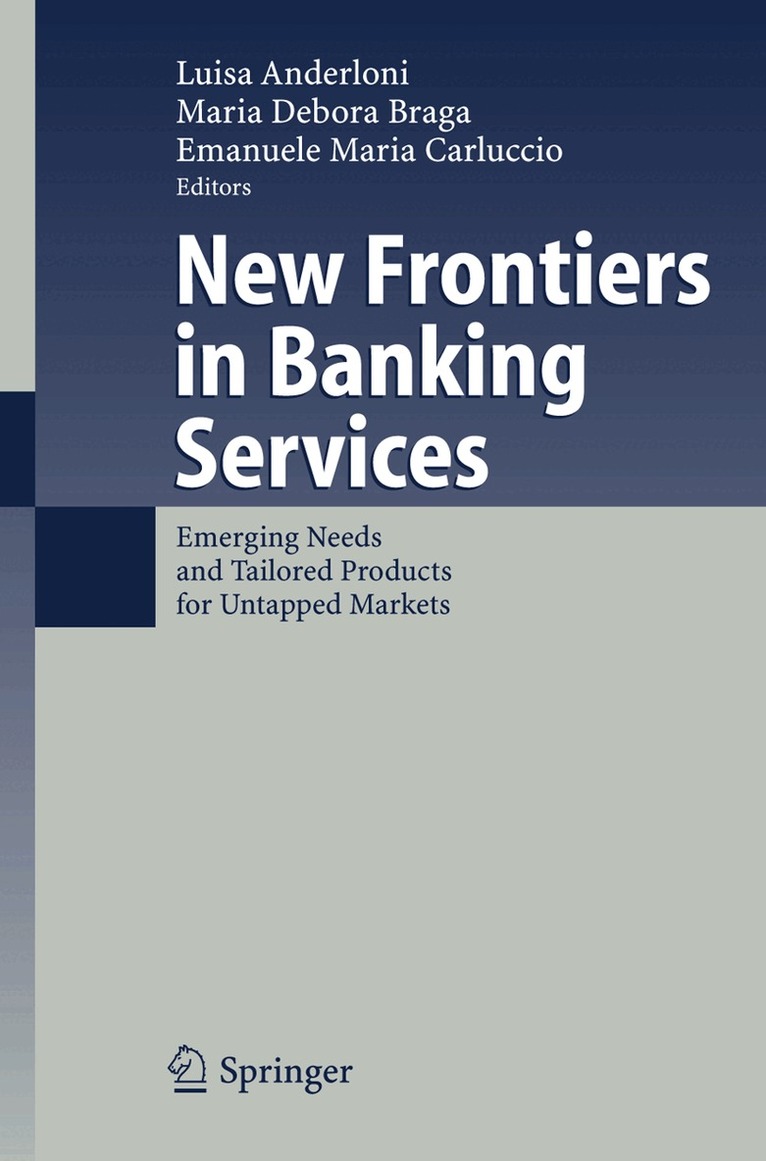
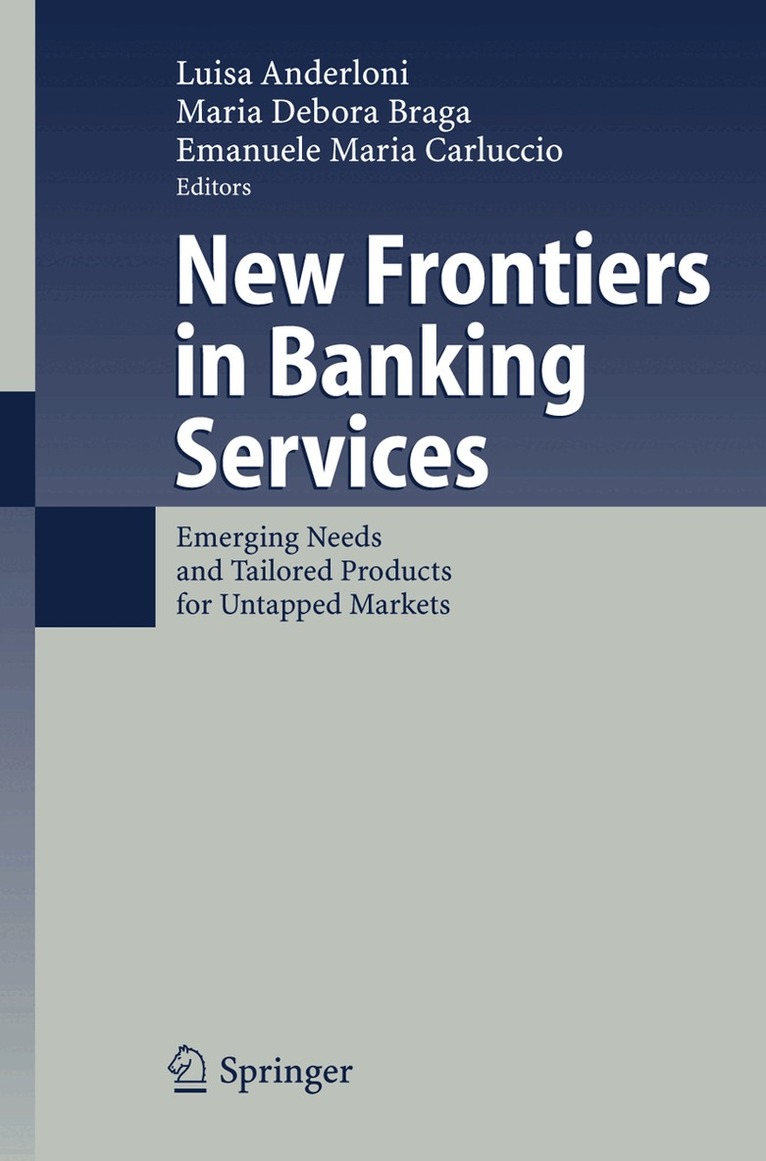
New Frontiers in Banking Services
Emerging Needs and Tailored Products for Untapped Markets
Av Luisa Anderloni, Maria Debora Braga m. fl.
Inbunden, 2006
1688 kr
Lägg i varukorg
This book is devoted to an issue that is the subject of growing interest amongst policy makers, financial providers and academics. That issue is the problem of unbanking or underbanking in developed countries. The issue has arisen because, faced with an ever more sophisticated and efficient …
New Frontiers in Banking Services
Emerging Needs and Tailored Products for Untapped Markets
Av Emanuele Maria Carluccio, Maria Debora Braga m. fl.
E-bok, 2007
2174 kr
Lägg i varukorg
This book is devoted to an issue that is the subject of growing interest amongst policy makers, financial providers and academics. That issue is the problem of unbanking or underbanking in developed countries. The issue has arisen because, faced with an ever more sophisticated and efficient …
New Frontiers in Banking Services
Emerging Needs and Tailored Products for Untapped Markets
Av Luisa Anderloni, Maria Debora Braga m. fl.
Häftad, 2010
1688 kr
Lägg i varukorg
This book is devoted to an issue that is the subject of growing interest amongst policy makers, financial providers and academics. That issue is the problem of unbanking or underbanking in developed countries. The issue has arisen because, faced with an ever more sophisticated and efficient …