Emma Bridges - Böcker
Visar alla böcker från författaren Emma Bridges. Handla med fri frakt och snabb leverans.
5 produkter
5 produkter
399 kr
Skickas inom 5-8 vardagar
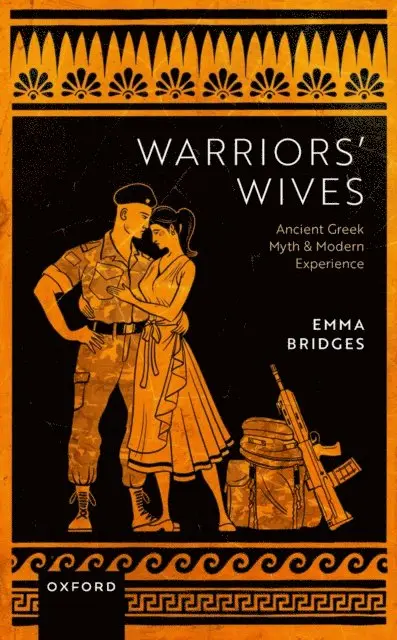
"This is an open access title available under the terms of a CC BY-NC-ND 4.0 International license. It is free to read at [Oxford Scholarship Online and offered as a free PDF download from OUP and selected open access locations."Epic poetry and tragic drama provide us with some of the richest ancient Greek depictions of women who are married to soldiers. In tales of the Trojan War, as told by Homer, Aeschylus, Sophocles, and Euripides, we encounter these mythical warriors' wives: Penelope, isolated but resourceful as she awaits the return of Odysseus after his lengthy absence; the war widow Andromache, enslaved and displaced from her homeland after the fall of Troy; the unfaithful and murderous Clytemnestra; and Tecmessa, a war captive who witnesses her partner's breakdown and suicide in the aftermath of battle. Warriors' Wives compares the experiences of these mythical characters with those of contemporary military spouses. Emma Bridges traces aspects of the lives of warriors' wives--mythical and real, ancient and modern--from the moment of farewell, through periods of separation and reunion, to the often traumatic aftermath of war, to consider the emotional, psychological, and social impacts of life as a military spouse. By unearthing a wealth of contemporary evidence for the lives of the often silenced and unacknowledged partners of those who serve in the military, and by examining this alongside the ancient stories of warriors' wives, Warriors' Wives sheds fresh light on the experience of being married to the military.
3 624 kr
Skickas inom 5-8 vardagar
Cultural Responses to the Persian Wars addresses the huge impact on subsequent culture made by the wars fought between ancient Persia and Greece in the early fifth century BC. It brings together sixteen interdisciplinary essays, mostly by classical scholars, on individual trends within the reception of this period of history, extending from the wars' immediate impact on ancient Greek history to their reception in literature and thought both in antiquity and in the post-Renaisssance world. Extensively illustrated and accessibly written, with a detailed Introduction and bibliographies, this book will interest historians, classicists, and students of both comparative and modern literatures.
197 kr
Skickas inom 5-8 vardagar
1 888 kr
Skickas inom 10-15 vardagar
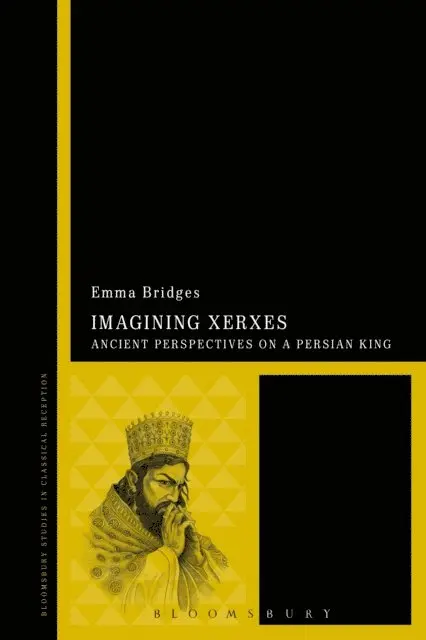
Xerxes, the Persian king who invaded Greece in 480 BC, quickly earned a notoriety that endured throughout antiquity and beyond. The Greeks’ historical encounter with this eastern king – which resulted, against overwhelming odds, in the defeat of the Persian army – has inspired a series of literary responses to Xerxes in which he is variously portrayed as the archetypal destructive and enslaving aggressor, as the epitome of arrogance and impiety, or as a figure synonymous with the exoticism and luxury of the Persian court. Imagining Xerxes is a transhistorical analysis that explores the richness and variety of Xerxes’ afterlives within the ancient literary tradition. It examines the earliest representations of the king, in Aeschylus’ tragic play Persians and Herodotus’ historiographical account of the Persian Wars, before tracing the ways in which the image of Xerxes was revisited and adapted in later Greek and Latin texts. The author also looks beyond the Hellenocentric viewpoint to consider the construction of Xerxes’ image in the Persian epigraphic record and the alternative perspectives on the king found in the Jewish written tradition.Analysing these diverse representations of Xerxes, this title explores the reception of a key figure in the ancient world and the reinvention of his image in a remarkable array of cultural and historical contexts.
475 kr
Skickas inom 10-15 vardagar
Hailed by Tom Holland as a 'fascinating and compendious survey of ancient attitudes to Xerxes' and now available in paperback, Imagining Xerxes is a transhistorical analysis that explores the richness and variety of Xerxes’ afterlives within the ancient literary tradition and the reinvention of his image in a remarkable array of cultural and historical contexts.This Persian king, who invaded Greece in 480 BC, quickly earned a notoriety that endured throughout antiquity and beyond. The Greeks’ historical encounter with Xerxes – which resulted, against overwhelming odds, in the defeat of the Persian army – has inspired a series of literary responses to the king in which he is variously portrayed as the archetypal destructive and enslaving aggressor, as the epitome of arrogance and impiety, or as a figure synonymous with the exoticism and luxury of the Persian court. Emma Bridges examines the earliest representations of the king, in Aeschylus’ tragic play Persians and Herodotus’ historiographical account of the Persian Wars, before tracing the ways in which the image of Xerxes was revisited and adapted in later Greek and Latin texts. The author also looks beyond the Hellenocentric viewpoint to consider the construction of Xerxes’ image in the Persian epigraphic record and the alternative perspectives on the king found in the Jewish written tradition.