Enrico Marani – författare
Visar alla böcker från författaren Enrico Marani. Handla med fri frakt och snabb leverans.
8 produkter
8 produkter
Inbunden, Engelska, 2018
1 651 kr
Skickas inom 10-15 vardagar
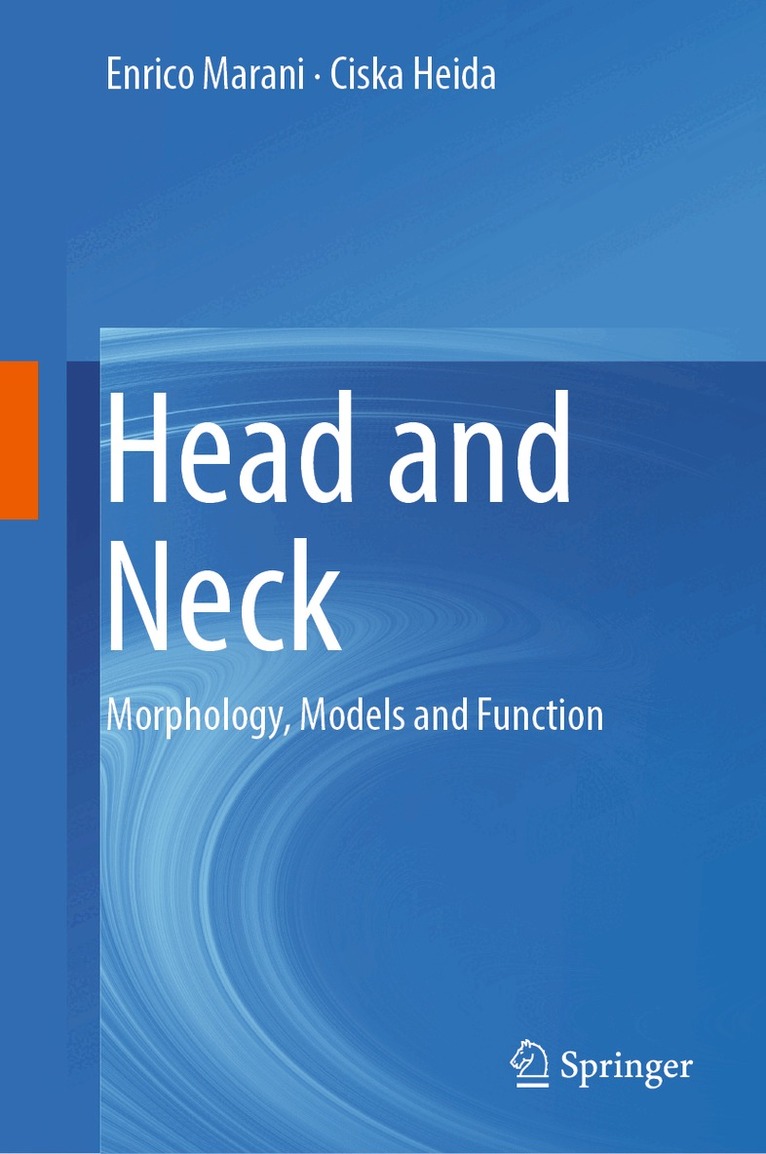
This book offers a critical review of the head and neck from an anatomical, physiological and clinical perspective. It begins by providing essential anatomical and physiological information, then discusses historical and current views on specific aspects in subsequent chapters. For example, the anatomy of the skull cap or cranial vault provided in the first chapter is discussed in the context of malformation and identity, as well as the development of the bony skull, in the following chapters. These chapters provide stepping-stones to guide readers through the book. There are new fields of research and technological developments in which Anatomy and Physiology lose track of progress. One of the examples discussed is the automated face recognition. In some respects, e.g. when it comes to cancers and malformations, our understanding of the head and neck – and the resulting therapeutic outcomes – have been extremely disappointing. In others, such as injuries following car accidents, there have been significant advances in our understanding of head and neck dysfunctions and their treatment. Therefore head movements, also during sleep, and head and neck reflexes are discussed. The book makes unequivocal distinctions between correct and incorrect assumptions and provides a critical review of alternative clinical methods for head and neck dysfunctions, such as physiotherapy and lymphatic drainage for cancers. Moreover, it discusses the consequences of various therapeutic measures for physiological and biomechanical conditions, as well as puberty and aging. Lastly, it addresses important biomedical engineering developments for hearing e.g. cochlear implants and for applying vestibular cerebellar effects for vision.
Häftad, Engelska, 2005
1 104 kr
Skickas inom 10-15 vardagar
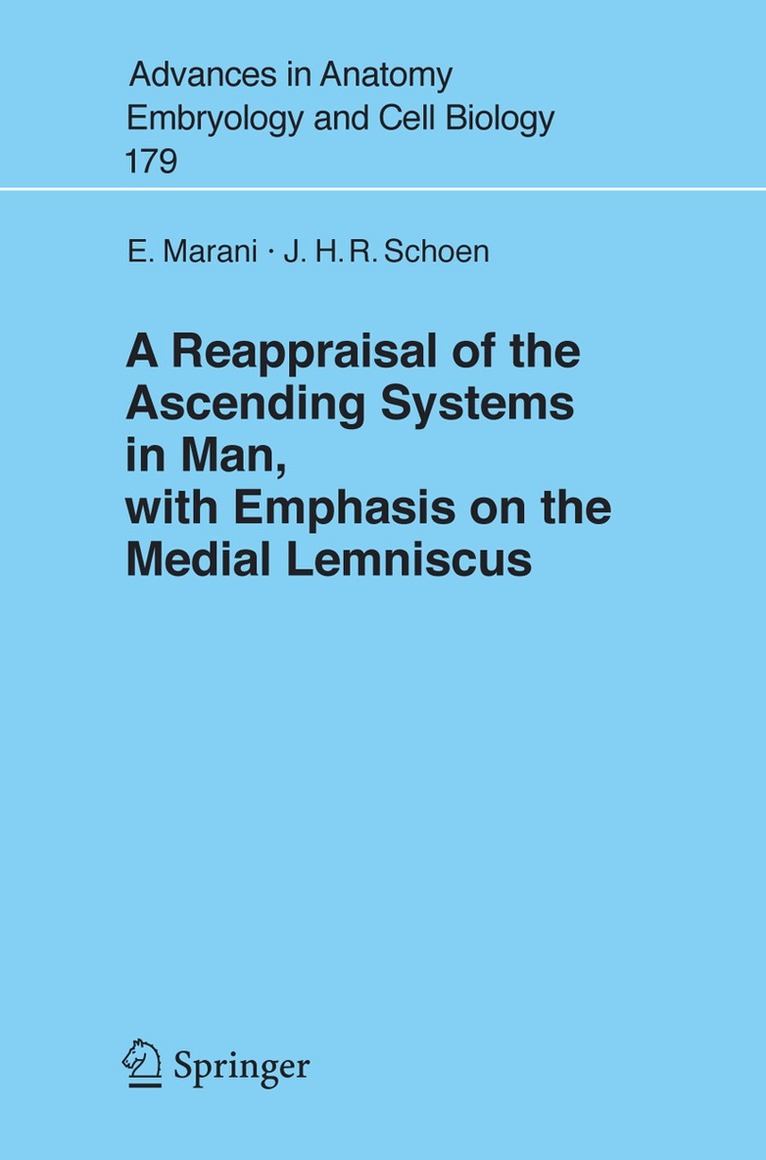
This volume of Advances in Anatomy, Embryology and Cell Biology is based on material assembled by Dr. Jaap H.R. Schoen. Jaap Schoen published his results only partially himself (see Schoen's references in the preface of Usunoff et al. 1997). After his sudden death, due to a diving accident, Jan Voogd and Hans Feirabend of our Neuroregulation group encompassed his cerebellar results in the chapter on the cerebellum and precerebellar nuclei in Paxinos' The Human Nervous System (Voogd et al. 1990), while Kamen Usunoff and myself grouped Schoen's trigeminal results and presented them together with the background of the outcome of recent animal trigeminal experiments in Advances in Anatomy, Embryology and Cell Biology 136 (Usunoff et al. 1997). Jaap Schoen described his series thoroughly and worked them out in serial drawings of the most important sections. Numerous scientists have consulted this material. Together with the abstracts of the Dutch Anatomical Society and ha- ?nished descriptions of the different parts of the central nervous system for his thesis,the patternofhis resultsemerged. A large series of results are available that still have to be published.Since Jaap Schoen "was one of the few neuroanatomists to apply the Nauta method to - man material" (Voogd et al. 1990), his results are highly important for human neuroanatomy. This monograph contains part of his material. Some repetition, - pecially of ?gures, is inevitably due to the dispersed publication of Schoen's results in various books, monographs, articles, and abstracts (see Usunoff et al. 1997).
Del 129 - Advances in Anatomy, Embryology and Cell Biology
Development of the Rat Spinal Cord: Immuno- and Enzyme Histochemical Approaches
Häftad, Engelska, 1993
1 104 kr
Skickas inom 10-15 vardagar
The studies described here were carried out in the Neuroregul ation Group, Department of Physiology, University of Leiden, the Netherlands. Over the last decade, this group, in close collaboration with the Department of Neurosurgery of the Academic Hospital of Leiden, has studied the development of the central nervous system from a neuroanatomical as well as a clinical perspective. During this period, the expression of several morphore gulators in the developing rat spinal cord was extensively investigated. Parallel studies focused on the development of the spinal cord fiber systems, which was studied by means of the intrauterine use of neuronal tracers. The main goal of these studies was to extend our knowledge about the (normal) generation of the spinal cord and to contribute to the under standing of clinical problems related to regeneration and degeneration in the mammalian central nervous system. The studies on morphoregulators, in particular, appeared to benefit two different scientific areas. Firstly, the correlation between morphoregulator expression patterns and known anatomy contributed to our knowledge about spinal cord development. Secondly, the correlation between morpho regulator expression patterns and known developmental processes may help to understand their precise function(s). This volume of Advances in Anatomy, Embryology and Cell Biology presents these particular studies on the development of the rat spinal cord performed over the last decade. As well as integrating the results of the tracer studies, this volume also provides an update on the development of the rat spinal cord.
Häftad, Engelska, 1997
1 433 kr
Skickas inom 10-15 vardagar
This work is an update of trigeminal research of the 1980s and 1990s. The authors are known neurocytologists for brainstem and cerebellar structures, and here they bring together their knowledge and focus on the trigeminal system. They present findings on the normal structure of trigeminal nuclei and trigeminal pathways, schematic drawings of serial sections, and a series of data that relate animal experiments to the human trigeminal system.
Del 198 - Advances in Anatomy, Embryology and Cell Biology
Subthalamic Nucleus
Part I: Development, Cytology, Topography and Connections
Häftad, Engelska, 2008
1 072 kr
Skickas inom 10-15 vardagar
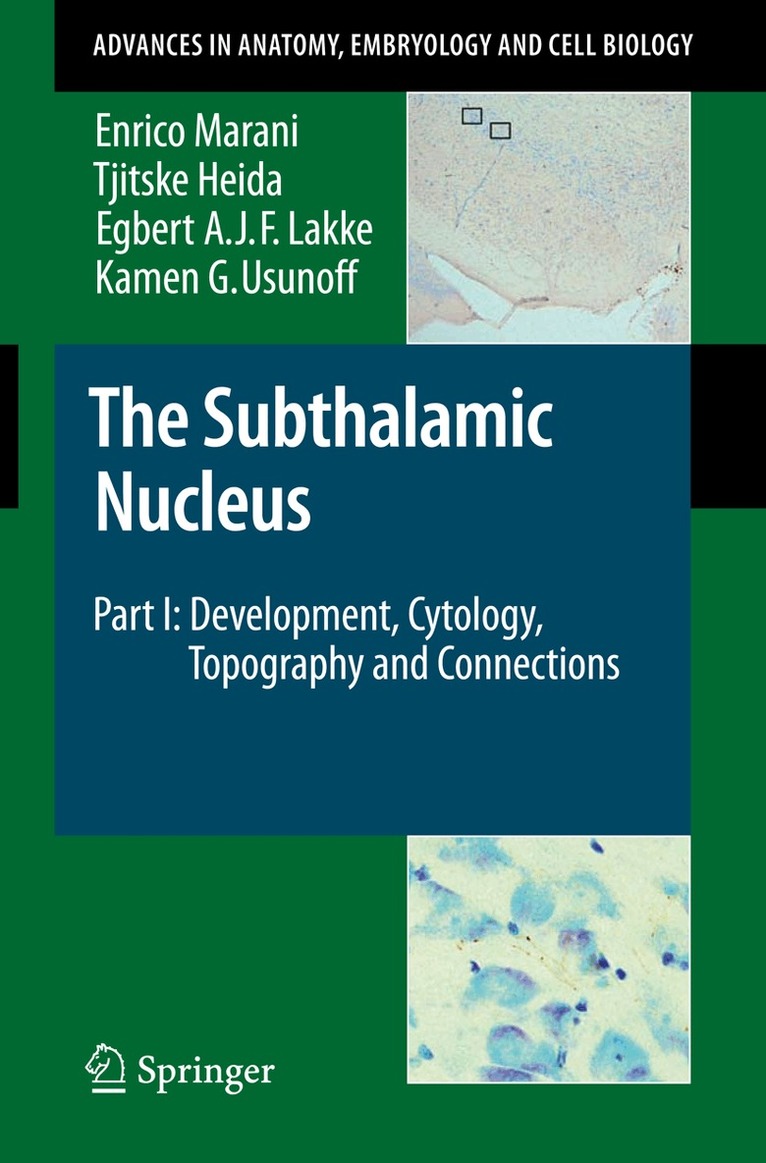
1 Introduction 1.1 Hemiballism Hemiballism or hemichorea is a rare neurological disorder, but the crucial invol- ment of the subthalamic nucleus (STN) in its pathophysiology has been app- ciated for decades (Jakob 1923; Martin 1927; Glees and Wall 1946; Whittier and Mettler 1949; Carpenter and Carpenter 1951; Crossman 1987). Only recently have serious doubts come forward. Postuma and Lang (2003) have described the STN as being involved in only a minority of cases, and indicated unrecognized causes such as non-ketotic hyperosmolar hyperglycaemia and complications of human immunodeficiency virus (HIV) infections. Moreover, the crucial involvement of a lesion of the STN is in doubt (Guridi and Obeso 2001; Postuma and Lang 2003). On the other hand, idiopathic Parkinson's disease (Battistin et al. 1996; Usunoff et al. 2002) is a common neurodegenerative disorder, but the key role of the STN in the pathophysiological origin of the parkinsonian state has become evident only recently (Miller and DeLong 1987; Mitchell et al. 1989; Bergman et al. 1990, 1994; Hollerman and Grace 1992; Guridi et al. 1993; Parent and Hazrati 1995b; Hassani et al. 1996; Levy et al. 1997, 2002; Blandini et al.2000; Hirsch et al. 2000; Ni et al.
Häftad, Engelska, 2008
1 392 kr
Skickas inom 10-15 vardagar
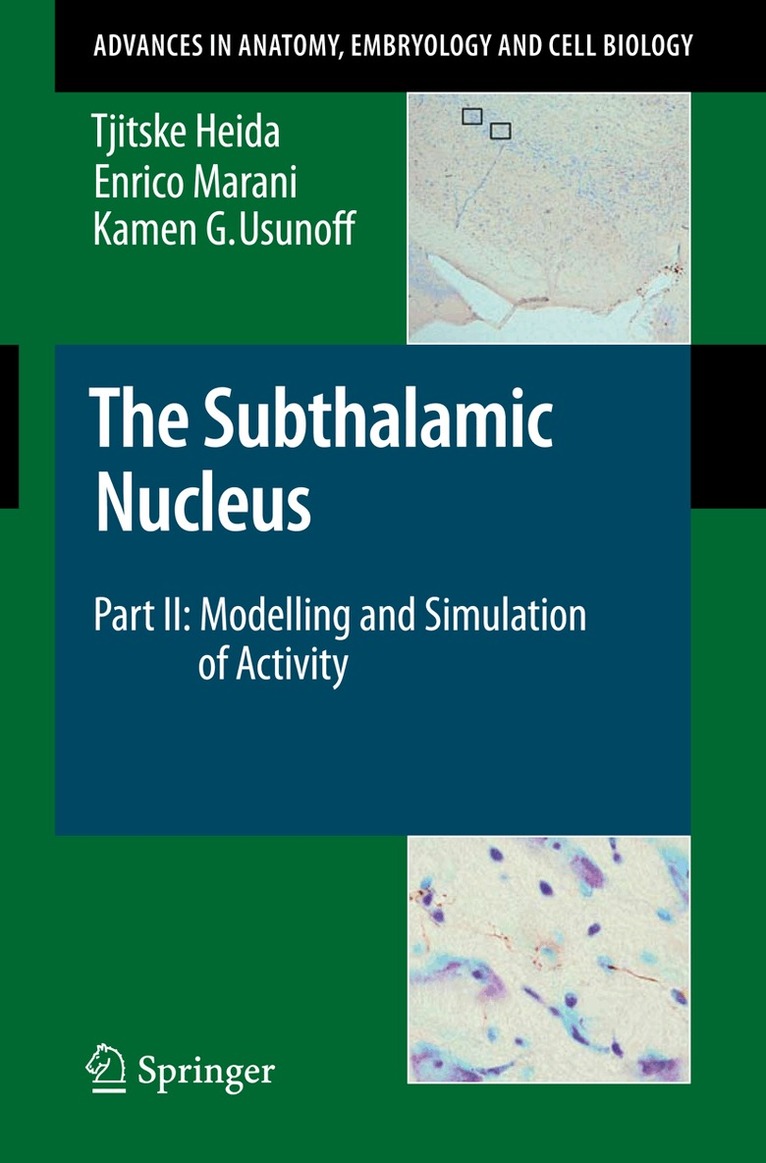
Part II starts with a systemic model of the basal ganglia to evaluate the position of the STN in the direct, indirect and hyperdirect pathways. A summary of in vitro studies is given, describing STN spontaneous activity as well as responses to depolarizing and hyperpolarizing inputs, and high frequency stimulation. STN bursting activity and the underlying ionic mechanisms are investigated. Deep brain stimulation used for symptomatic treatment of Parkinson’s disease is discussed in terms of the elements that are influenced and its hypothesized mechanisms. This part of the monograph pays attention to the pedunculopontine-subthalamic connections and tries in cell cultures to mimic neurotransmitter actions of the pedunculopontine nucleus and high frequency stimulation on cultured dissociated rat subthalamic neurons. STN cell models: single and multi compartment, and system level models are discussed in relation to subthalamic function and dysfunction. Part I and II are mutually compared.
Inbunden, Engelska, 2014
2 199 kr
Skickas inom 10-15 vardagar
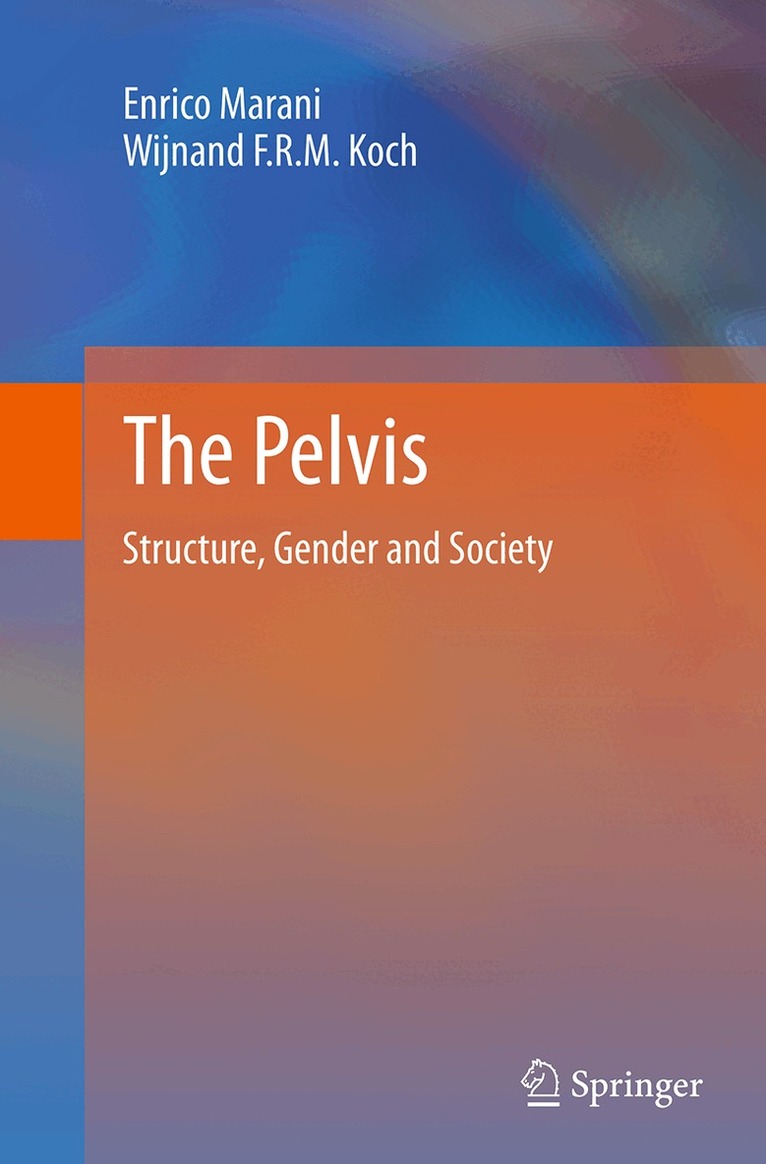
This book offers a critical review of the pelvic sciences—past, present and future—from an anatomical and physiological perspective and is intended for researchers, medical practitioners and paramedical therapists in the fields of urology, gynecology and obstetrics, proctology, physiotherapy, as well as for patients. The book starts with a “construction plan” of the pelvis and shows its structural consequences. The historical background of pelvic studies proceeds from medieval and early Italian models to the definitive understanding of the pelvic anatomy in the Seventeenth century. During these eras of pelvic research, concepts and approaches developed that are illustrated with examples from comparative anatomy and from mutations, also with regard to the biomechanics of pelvic structures. Perceptions of the pelvis as an important element in sexual arousal and mating conduct are discussed, as well as attitudes to circumcision, castration and other mutilations, in its anthropological, social context. The anatomy and physiology of the pelvic wall and its organs as well as the development of these pelvic organs are covered as a prerequisite to understanding, for example, the spread of pelvic carcinoma and male and female bladder muscle function. Connective pelvic tissue is examined in its reinforcing capacity for pelvic structures, but also as a “hiding place” for infections. Innervations and reflexes relayed through the pelvic nerves are discussed in order to explain incontinence, sphincter function and the control of smooth and striated muscles in the pelvis. Catheters and drugs acting on pelvic function are described, and a critical review of alternative clinical methods for treating pelvic dysfunctions is provided.
Häftad, Engelska, 2016
2 199 kr
Skickas inom 10-15 vardagar
This book offers a critical review of the pelvic sciences—past, present and future—from an anatomical and physiological perspective and is intended for researchers, medical practitioners and paramedical therapists in the fields of urology, gynecology and obstetrics, proctology, physiotherapy, as well as for patients. The book starts with a “construction plan” of the pelvis and shows its structural consequences. The historical background of pelvic studies proceeds from medieval and early Italian models to the definitive understanding of the pelvic anatomy in the Seventeenth century. During these eras of pelvic research, concepts and approaches developed that are illustrated with examples from comparative anatomy and from mutations, also with regard to the biomechanics of pelvic structures. Perceptions of the pelvis as an important element in sexual arousal and mating conduct are discussed, as well as attitudes to circumcision, castration and other mutilations, in its anthropological, social context. The anatomy and physiology of the pelvic wall and its organs as well as the development of these pelvic organs are covered as a prerequisite to understanding, for example, the spread of pelvic carcinoma and male and female bladder muscle function. Connective pelvic tissue is examined in its reinforcing capacity for pelvic structures, but also as a “hiding place” for infections. Innervations and reflexes relayed through the pelvic nerves are discussed in order to explain incontinence, sphincter function and the control of smooth and striated muscles in the pelvis. Catheters and drugs acting on pelvic function are described, and a critical review of alternative clinical methods for treating pelvic dysfunctions is provided.