Erella Hovers - Böcker
Visar alla böcker från författaren Erella Hovers. Handla med fri frakt och snabb leverans.
7 produkter
7 produkter
760 kr
Skickas inom 5-8 vardagar
This book presents the first comprehensive description of the lithic assemblages from Qafzeh Cave, one of only two Middle Paleolithic sites in the Levant that has yielded multiple burials of early anatomically modern Homo sapiens (AMHs). The record from this region raises the question of possible long-term temporal overlap between early AMHs and Neanderthals. For this reason, Qafzeh has long been one of the pivotal sites in debates on the origins of AMHs and in attempts to compare and contrast the two species' adaptations and behavior. Although the hominin fossils from the site were published years ago, until now the associated archaeological assemblages were incompletely described, often leading to conflicting interpretations. This monograph includes a thorough technological analysis of the lithic assemblages, incorporated in their geological and sedimentological contexts. This description serves as a springboard for regional comparisons as well as a more general discussion about Middle Paleolithic behavior, which is relevant to important and as yet unresolved questions on the origins of "modern" behavior patterns. The volume includes a wide-ranging and up-to-date bibliography that provides the middle-range for discussing the ecological context and behavioral complexity of the Middle Paleolithic period, and ends with some thought-provoking conclusions about the dynamic human interactions that existed in the region during this time.
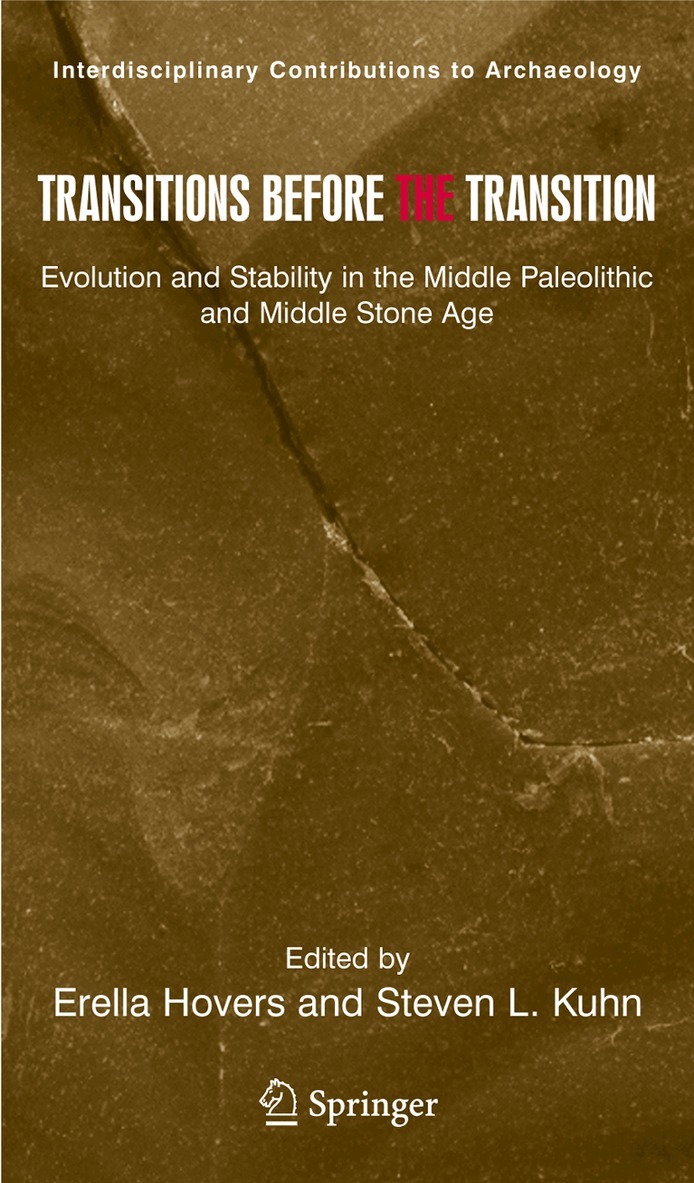
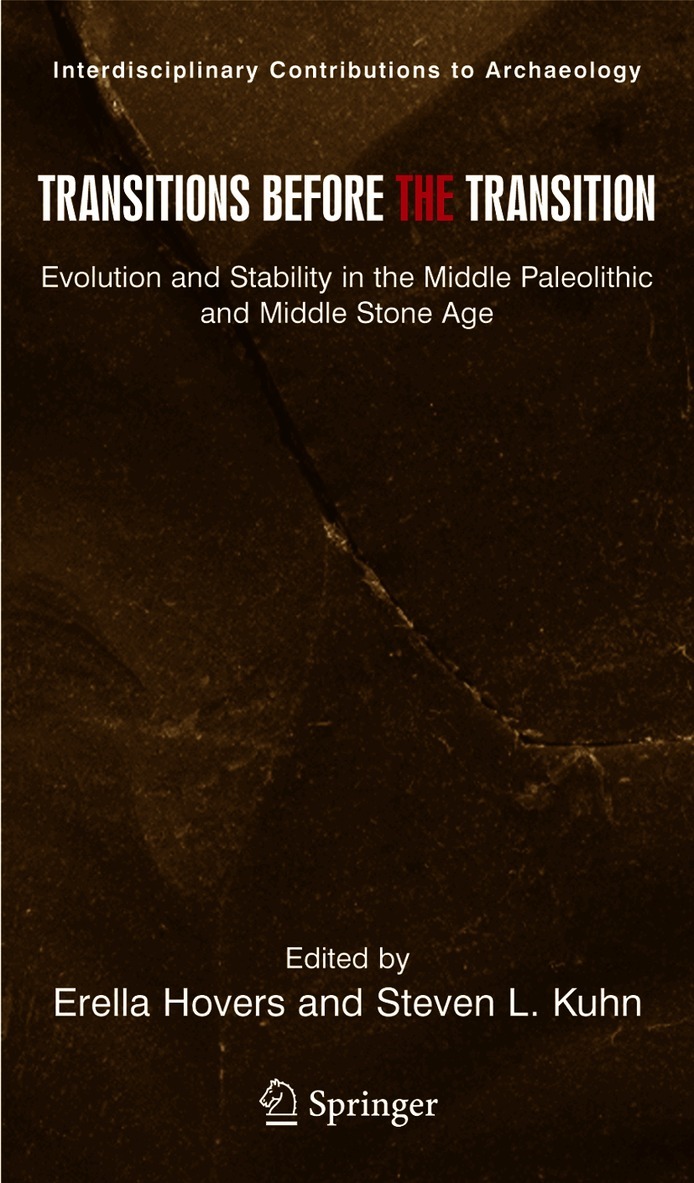
Transitions Before the Transition
Evolution and Stability in the Middle Paleolithic and Middle Stone Age
Inbunden, Engelska, 2005
1 096 kr
Skickas inom 10-15 vardagar
Modern human origins and the fate of the Neanderthals are arguably the most compelling and contentious arenas in paleoanthropology. The much-discussed split between advocates of a single, early emergence of anatomically modern humans in sub-Saharan Africa and supporters of various regional continuity positions is only part of the picture. Equally if not more important are questions surrounding the origins of modern behavior, and the relationships between anatomical and behavioral changes that occurred during the past 200,000 years. Although modern humans as a species may be defined in terms of their skeletal anatomy, it is their behavior, and the social and cognitive structures that support that behavior, which most clearly distinguish Homo sapiens from earlier forms of humans.This book assembles researchers working in Eurasia and Africa to discuss the archaeological record of the Middle Paleolithic and the Middle Stone Age. This is a time period when Homo sapiens last shared the world with other species, and during which patterns of behavior characteristic of modern humans developed and coalesced. Contributions to this volume query and challenge some current notions about the tempo and mode of cultural evolution, and about the processes that underlie the emergence of modern behavior. The papers focus on several fundamental questions. Do typical elements of "modern human behavior" appear suddenly, or are there earlier archaeological precursors of them? Are the archaeological records of the Middle Paleolithic and Middle Stone Age unchanging and monotonous, or are there detectable evolutionary trends within these periods? Coming to diverse conclusions, the papers in this volume open up new avenues to thinking about this crucial interval in human evolutionary history.
552 kr
Skickas inom 10-15 vardagar
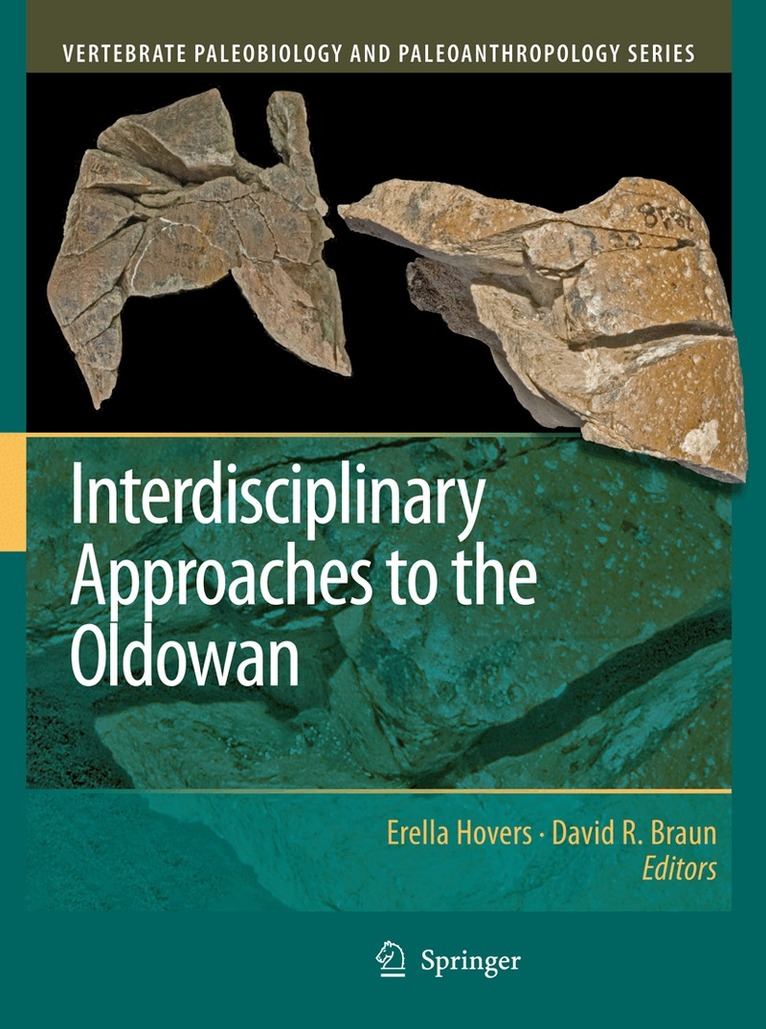
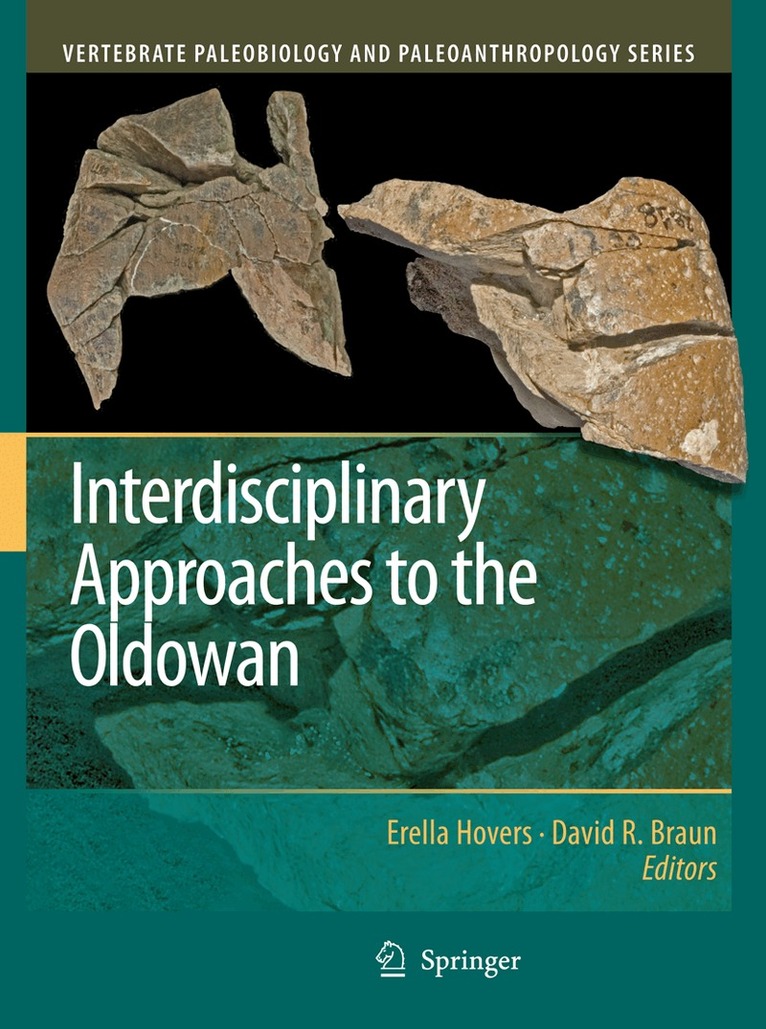
An understanding of the uniquely human behavior of stone tool making tackles questions about hominins’ ability to culturally transmit and expand their base of social and practical knowledge and their cognitive capacities for advanced planning. The appearance of stone tools has often been viewed as a threshold event, impacting directly and profoundly the later course of cultural and social evolution. Alternatively, it has been understood as a prelude to significant succeeding changes in behavioral, social and biological evolution of hominins. This book presents a series of recent enquiries into the technological and adaptive significance of Oldowan stone tools. While anchored in a long research tradition, these studies rely on recent discoveries and innovative analyses of the archaeological record of ca. 2.6–1.0 million years ago in Africa and Eurasia, dealing with the earliest lithic industries as manifestations of hominin adaptations and as expressions of hominin cognitive abilities.
Transitions Before the Transition
Evolution and Stability in the Middle Paleolithic and Middle Stone Age
Häftad, Engelska, 2010
1 422 kr
Skickas inom 10-15 vardagar
Modern human origins and the fate of the Neanderthals are arguably the most compelling and contentious arenas in paleoanthropology. The much-discussed split between advocates of a single, early emergence of anatomically modern humans in sub-Saharan Africa and supporters of various regional continuity positions is only part of the picture. Equally if not more important are questions surrounding the origins of modern behavior, and the relationships between anatomical and behavioral changes that occurred during the past 200,000 years. Although modern humans as a species may be defined in terms of their skeletal anatomy, it is their behavior, and the social and cognitive structures that support that behavior, which most clearly distinguish Homo sapiens from earlier forms of humans.This book assembles researchers working in Eurasia and Africa to discuss the archaeological record of the Middle Paleolithic and the Middle Stone Age. This is a time period when Homo sapiens last shared the world with other species, and during which patterns of behavior characteristic of modern humans developed and coalesced. Contributions to this volume query and challenge some current notions about the tempo and mode of cultural evolution, and about the processes that underlie the emergence of modern behavior. The papers focus on several fundamental questions. Do typical elements of "modern human behavior" appear suddenly, or are there earlier archaeological precursors of them? Are the archaeological records of the Middle Paleolithic and Middle Stone Age unchanging and monotonous, or are there detectable evolutionary trends within these periods? Coming to diverse conclusions, the papers in this volume open up new avenues to thinking about this crucial interval in human evolutionary history.
1 314 kr
Skickas inom 10-15 vardagar
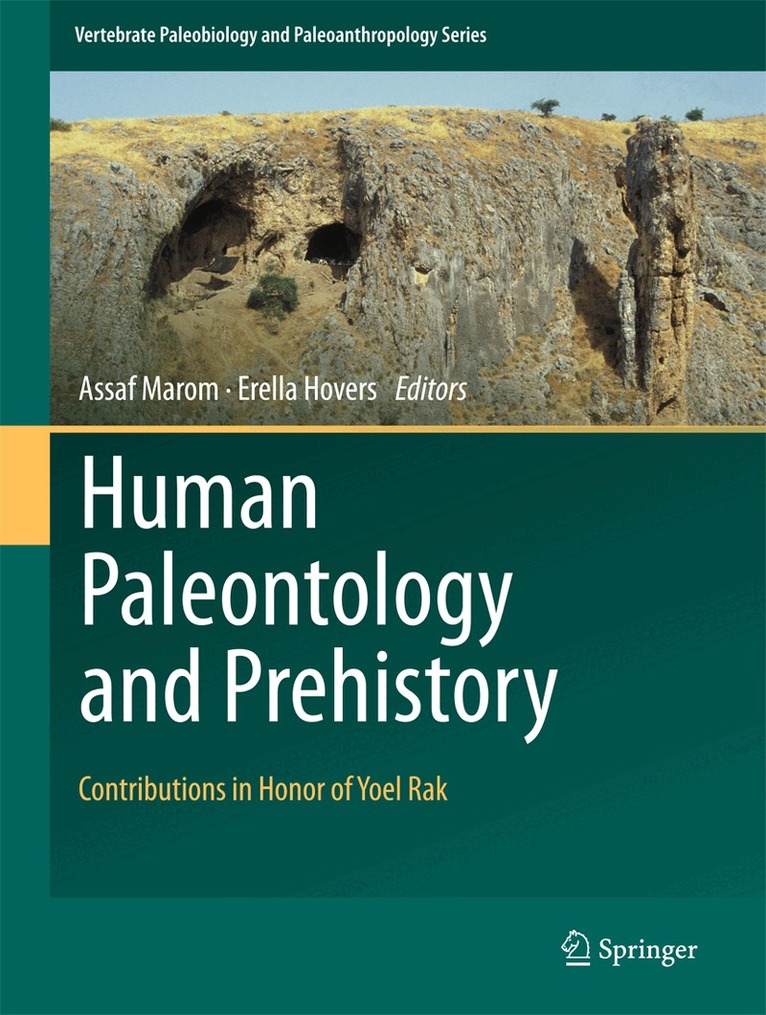
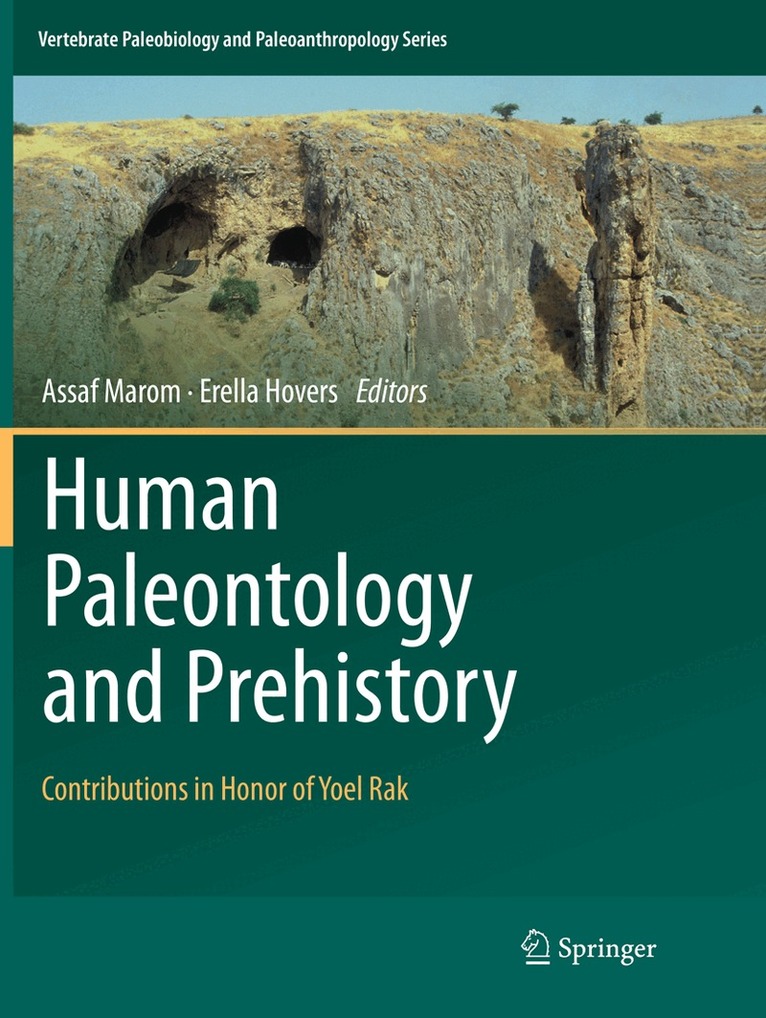
The aim of the book is to present original and though-provoking essays in human paleontology and prehistory, which are at the forefront of human evolutionary research, in honor of Professor Yoel Rak (a leading scholar in paleoanthropology). The volume presents a collection of original papers contributed by many of Yoel's friends and colleagues from all over the globe. Contributions from experts around the globe fall roughly into three broad categories: Reflections on some of the broad theoretical questions of evolution, and especially about human evolution; the early hominins, with special emphasis on Australopithecus afarensis and Paranthropus; and the Neanderthals, that contentious group of our closest extinct relatives. Within and across these categories, nearly every paper addresses combinations of methodological, analytical and theoretical questions that are pertinent to the whole human evolutionary time span. This book will appeal most to scholars and advanced students in paleoanthropology, human paleontology and prehistoric archaeology.
933 kr
Skickas inom 10-15 vardagar
The aim of the book is to present original and though-provoking essays in human paleontology and prehistory, which are at the forefront of human evolutionary research, in honor of Professor Yoel Rak (a leading scholar in paleoanthropology). The volume presents a collection of original papers contributed by many of Yoel's friends and colleagues from all over the globe. Contributions from experts around the globe fall roughly into three broad categories: Reflections on some of the broad theoretical questions of evolution, and especially about human evolution; the early hominins, with special emphasis on Australopithecus afarensis and Paranthropus; and the Neanderthals, that contentious group of our closest extinct relatives. Within and across these categories, nearly every paper addresses combinations of methodological, analytical and theoretical questions that are pertinent to the whole human evolutionary time span. This book will appeal most to scholars and advanced students in paleoanthropology, human paleontology and prehistoric archaeology.
552 kr
Skickas inom 10-15 vardagar
An understanding of the uniquely human behavior of stone tool making tackles questions about hominins’ ability to culturally transmit and expand their base of social and practical knowledge and their cognitive capacities for advanced planning. The appearance of stone tools has often been viewed as a threshold event, impacting directly and profoundly the later course of cultural and social evolution. Alternatively, it has been understood as a prelude to significant succeeding changes in behavioral, social and biological evolution of hominins. This book presents a series of recent enquiries into the technological and adaptive significance of Oldowan stone tools. While anchored in a long research tradition, these studies rely on recent discoveries and innovative analyses of the archaeological record of ca. 2.6–1.0 million years ago in Africa and Eurasia, dealing with the earliest lithic industries as manifestations of hominin adaptations and as expressions of hominin cognitive abilities.