Eric Hoyt - Böcker
Visar alla böcker från författaren Eric Hoyt. Handla med fri frakt och snabb leverans.
7 produkter
7 produkter
360 kr
Skickas inom 7-10 vardagar
Over seventy-five million Americans listen to podcasts every month, and the average weekly listener spends over six hours tuning into podcasts from the more than thirty million podcast episodes currently available. Yet despite the excitement over podcasting, the sounds of podcasting’s nascent history are vulnerable and they remain mystifyingly difficult to research and preserve. Podcast feeds end abruptly, cease to be maintained, or become housed in proprietary databases, which are difficult to search with any rigor. Podcasts might seem to be highly available everywhere, but it’s necessary to preserve and analyze these resources now, or scholars will find themselves writing, researching, and thinking about a past they can’t fully see or hear.This collection gathers the expertise of leading and emerging scholars in podcasting and digital audio in order to take stock of podcasting’s recent history and imagine future directions for the format. Essays trace some of the less amplified histories of the format and offer discussions of some of the hurdles podcasting faces nearly twenty years into its existence. Using their experiences building and using the PodcastRE database—one of the largest publicly accessible databases for searching and researching podcasts—the volume editors and contributors reflect on how they, as media historians and cultural researchers, can best preserve podcasting’s booming audio cultures and the countless voices and perspectives podcasting adds to our collective soundscape.
776 kr
Skickas inom 7-10 vardagar
Hollywood Vault is the story of how the business of film libraries emerged and evolved, spanning the silent era to the sale of feature libraries to television. Eric Hoyt argues that film libraries became valuable not because of the introduction of new technologies but because of the emergence and growth of new markets, and suggests that studying the history of film libraries leads to insights about their role in the contemporary digital marketplace. The history begins in the mid-1910s, when the star system and other developments enabled a market for old films that featured current stars. After the transition to films with sound, the reissue market declined but the studios used their libraries for the production of remakes and other derivatives. The turning point in the history of studio libraries occurred during the mid to late 1940s, when changes in American culture and an industry-wide recession convinced the studios to employ their libraries as profit centers through the use of theatrical reissues. In the 1950s, intermediary distributors used the growing market of television to harness libraries aggressively as foundations for cross-media expansion, a trend that continues today.By the late 1960s, the television marketplace and the exploitation of film libraries became so lucrative that they prompted conglomerates to acquire the studios. The first book to discuss film libraries as an important and often underestimated part of Hollywood history, Hollywood Vault presents a fascinating trajectory that incorporates cultural, legal, and industrial history.
609 kr
Skickas inom 3-6 vardagar
Hollywood Vault is the story of how the business of film libraries emerged and evolved, spanning the silent era to the sale of feature libraries to television. Eric Hoyt argues that film libraries became valuable not because of the introduction of new technologies but because of the emergence and growth of new markets, and suggests that studying the history of film libraries leads to insights about their role in the contemporary digital marketplace. The history begins in the mid-1910s, when the star system and other developments enabled a market for old films that featured current stars. After the transition to films with sound, the reissue market declined but the studios used their libraries for the production of remakes and other derivatives. The turning point in the history of studio libraries occurred during the mid to late 1940s, when changes in American culture and an industry-wide recession convinced the studios to employ their libraries as profit centers through the use of theatrical reissues. In the 1950s, intermediary distributors used the growing market of television to harness libraries aggressively as foundations for cross-media expansion, a trend that continues today.By the late 1960s, the television marketplace and the exploitation of film libraries became so lucrative that they prompted conglomerates to acquire the studios. The first book to discuss film libraries as an important and often underestimated part of Hollywood history, Hollywood Vault presents a fascinating trajectory that incorporates cultural, legal, and industrial history.
290 kr
Skickas inom 7-10 vardagar
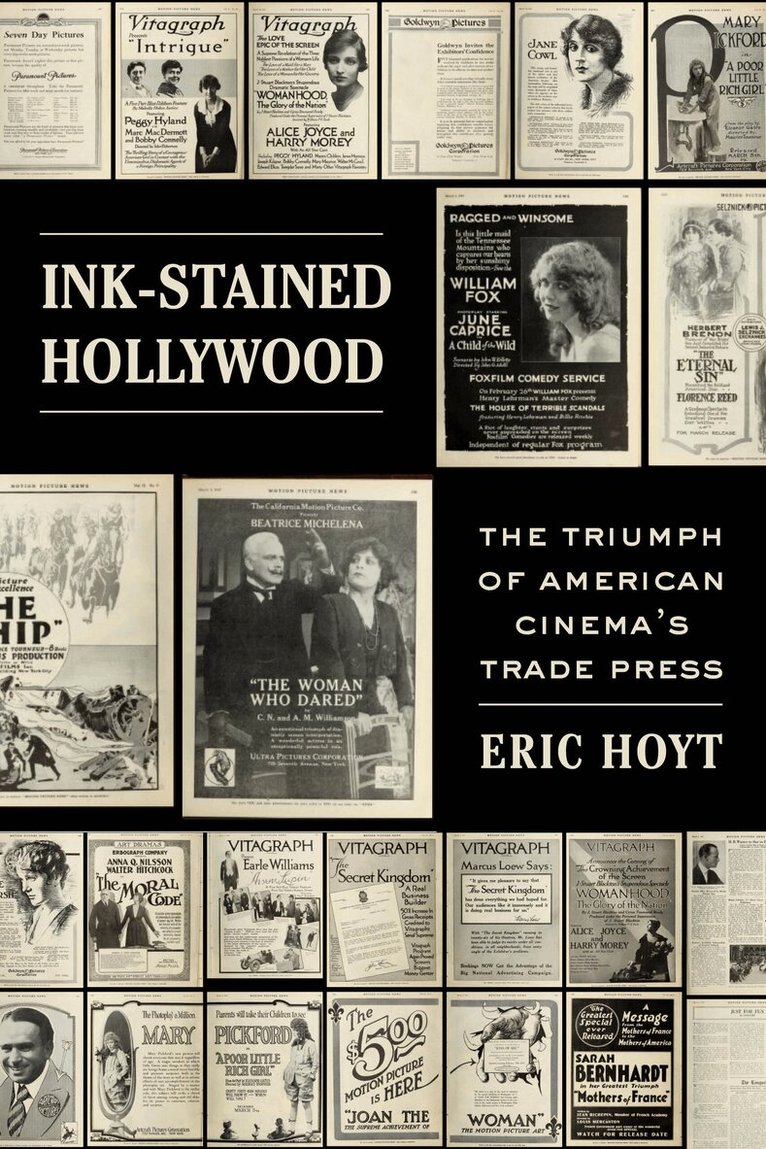
A free open access ebook is available upon publication. Learn more at www.luminosoa.org.For the first half of the twentieth century, no American industry boasted a more motley and prolific trade press than the movie business—a cutthroat landscape that set the stage for battle by ink. In 1930, Martin Quigley, publisher of Exhibitors Herald, conspired with Hollywood studios to eliminate all competing trade papers, yet this attempt and each one thereafter collapsed. Exploring the communities of exhibitors and creative workers that constituted key subscribers, Ink-Stained Hollywood tells the story of how a heterogeneous trade press triumphed by appealing to the foundational aspects of industry culture—taste, vanity, partisanship, and exclusivity. In captivating detail, Eric Hoyt chronicles the histories of well-known trade papers (Variety, Motion Picture Herald) alongside important yet forgotten publications (Film Spectator, Film Mercury, and Camera!), and challenges the canon of film periodicals, offering new interpretative frameworks for understanding print journalism’s relationship with the motion picture industry and its continued impact on creative industries today.
282 kr
Skickas inom 7-10 vardagar
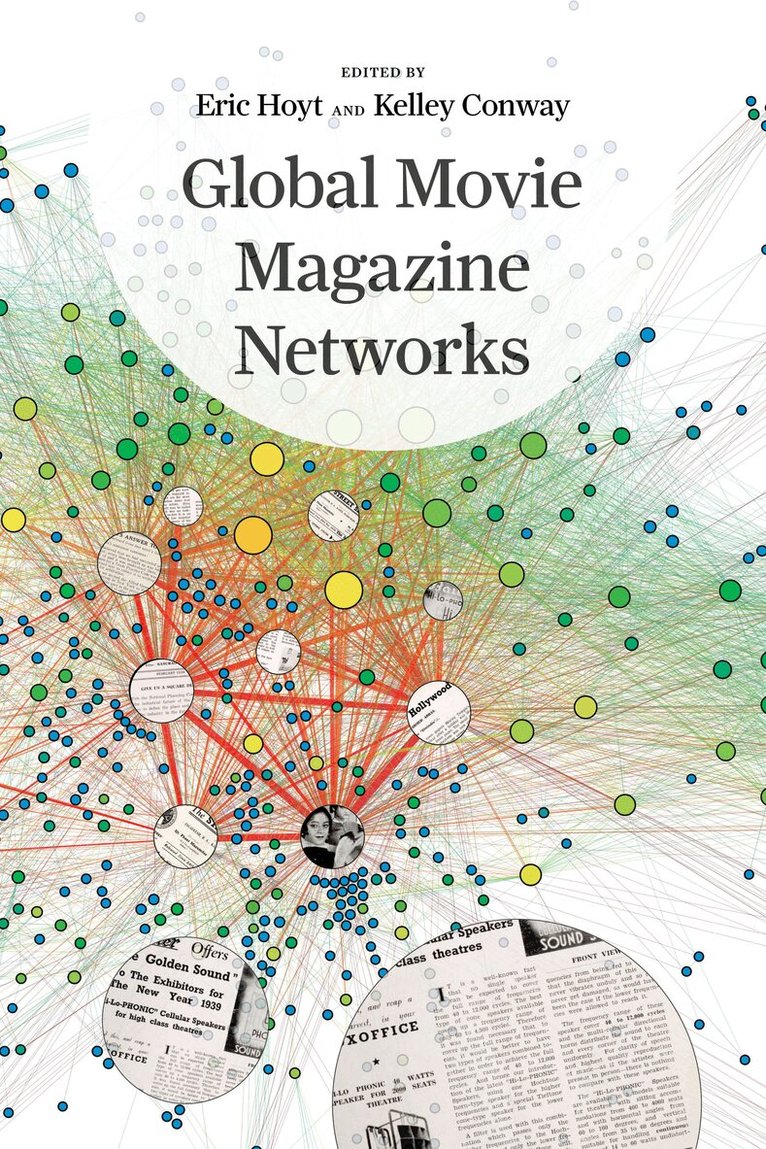
A free ebook version of this title is available through Luminos, University of California Press’s Open Access publishing program. Visit www.luminosoa.org to learn more. This groundbreaking collection of essays from leading film historians features original research on movie magazines published in China, France, Germany, India, Iran, Latin America, South Korea, the U.S., and beyond. Vital resources for the study of film history and culture, movie magazines are frequently cited as sources, but rarely centered as objects of study. Global Movie Magazine Networks does precisely that, revealing the hybridity, heterogeneity, and connectivity of movie magazines and the important role they play in the intercontinental exchange of information and ideas about cinema. Uniquely, the contributors in this book have developed their critical analysis alongside the collaborative work of building digital resources, facilitating the digitization of more than a dozen of these historic magazines on an open-access basis.
449 kr
Skickas inom 10-15 vardagar
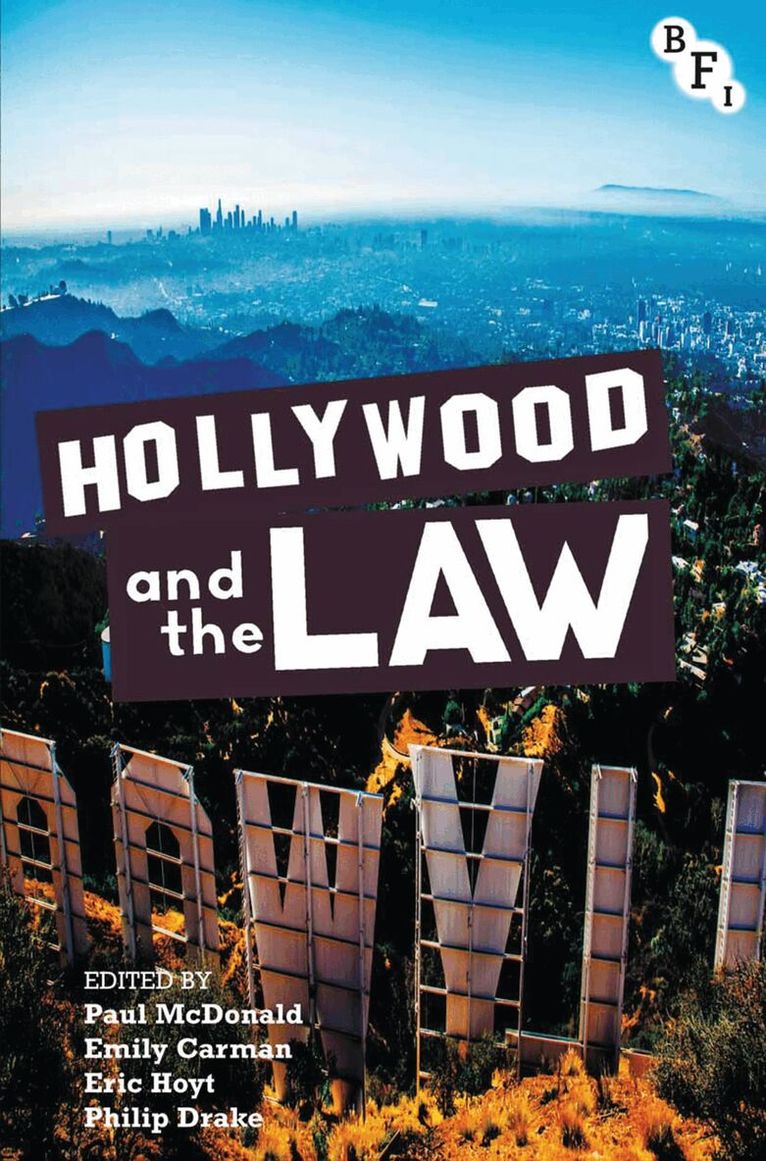
Since the earliest days of cinema the law has influenced the conditions in which Hollywood films are made, sold, circulated or presented – from the talent contracts that enable a film to go into production, to the copyright laws that govern its distribution and the censorship laws that may block exhibition. Equally, Hollywood has left its own impression on the American legal system by lobbying to expand the duration of copyright, providing a highly visible stage for contract disputes and representing the legal system on screen. In this comprehensive collection, international experts offer chapters on key topics, including copyright, trademark, piracy, antitrust, censorship, international exhibition, contracts, labour and tax. Drawing on historical and contemporary case studies, Hollywood and the Law provides readers with a wide range of perspectives on how legal frameworks shape the culture and commerce of popular film.
1 358 kr
Skickas inom 10-15 vardagar
Since the earliest days of cinema the law has influenced the conditions in which Hollywood films are made, sold, circulated or presented – from the talent contracts that enable a film to go into production, to the copyright laws that govern its distribution and the censorship laws that may block exhibition. Equally, Hollywood has left its own impression on the American legal system by lobbying to expand the duration of copyright, providing a highly visible stage for contract disputes and representing the legal system on screen. In this comprehensive collection, international experts offer chapters on key topics, including copyright, trademark, piracy, antitrust, censorship, international exhibition, contracts, labour and tax. Drawing on historical and contemporary case studies, Hollywood and the Law provides readers with a wide range of perspectives on how legal frameworks shape the culture and commerce of popular film.