Eric Morier-Genoud – författare
Visar alla böcker från författaren Eric Morier-Genoud. Handla med fri frakt och snabb leverans.
5 produkter
5 produkter
Del 84 - Rochester Studies in African History and the Diaspora
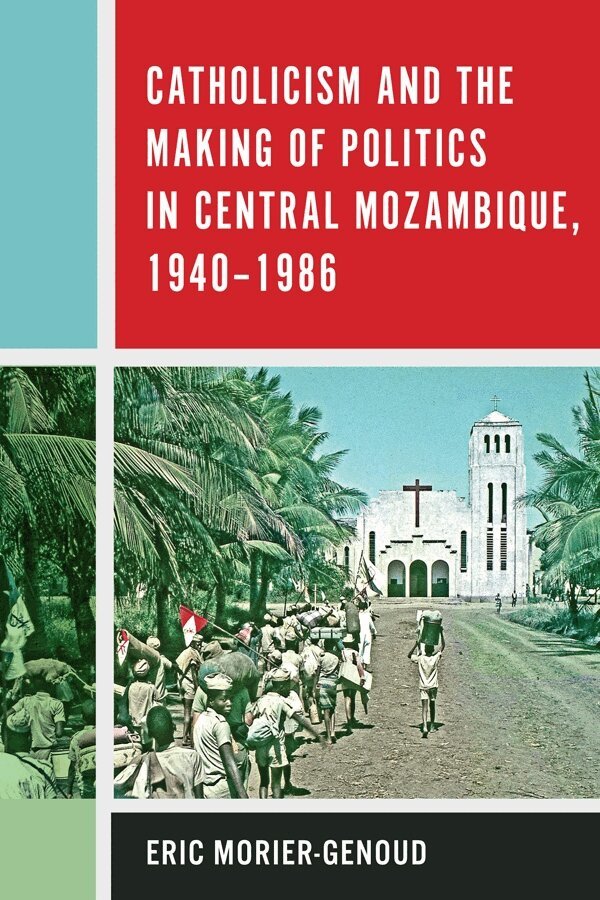
Catholicism and the Making of Politics in Central Mozambique, 1940-1986
Inbunden, Engelska, 2019
1 177 kr
Skickas inom 10-15 vardagar
Looks at the politics of the Catholic Church during a turbulent period in central MozambiqueThis book is concerned with the internal diversity and complexity of the Roman Catholic Church. It aims at exploring, unpacking, and explaining how the Roman Catholic institution works, how its politics are made, and how the latter impact its environment. Using the diocese of Beira in central Mozambique as a case study, and following insights by Max Weber, author Eric Morier-Genoud takes the novel "horizontal" approach of looking at congregations within the Church as a series of autonomous entities, rather than focusing on the hierarchical structure of the institution.Between 1940 and 1980, the diocese of Beira was home to some fifteen different congregations rangingfrom Jesuits to Franciscans, from Burgos to Picpus fathers. As in many areas of the world, the 1960s brought conflict to Catholic congregations in central Mozambique, with African nationalism and the reforms of Vatican II playinga part. The conflict manifested in many ways: a bishop's flight from his diocese, a congregation abandoning the territory in protest against the collusion between church and state, and a declaration of class struggle in the church. All of these events, occurring against the backdrop of the war for Mozambican independence, make the region an especially fruitful location for the pioneering analysis proffered in this important study.ERIC MORIER-GENOUD is Senior Lecturer in African History at Queen's University Belfast.
523 kr
Skickas inom 7-10 vardagar
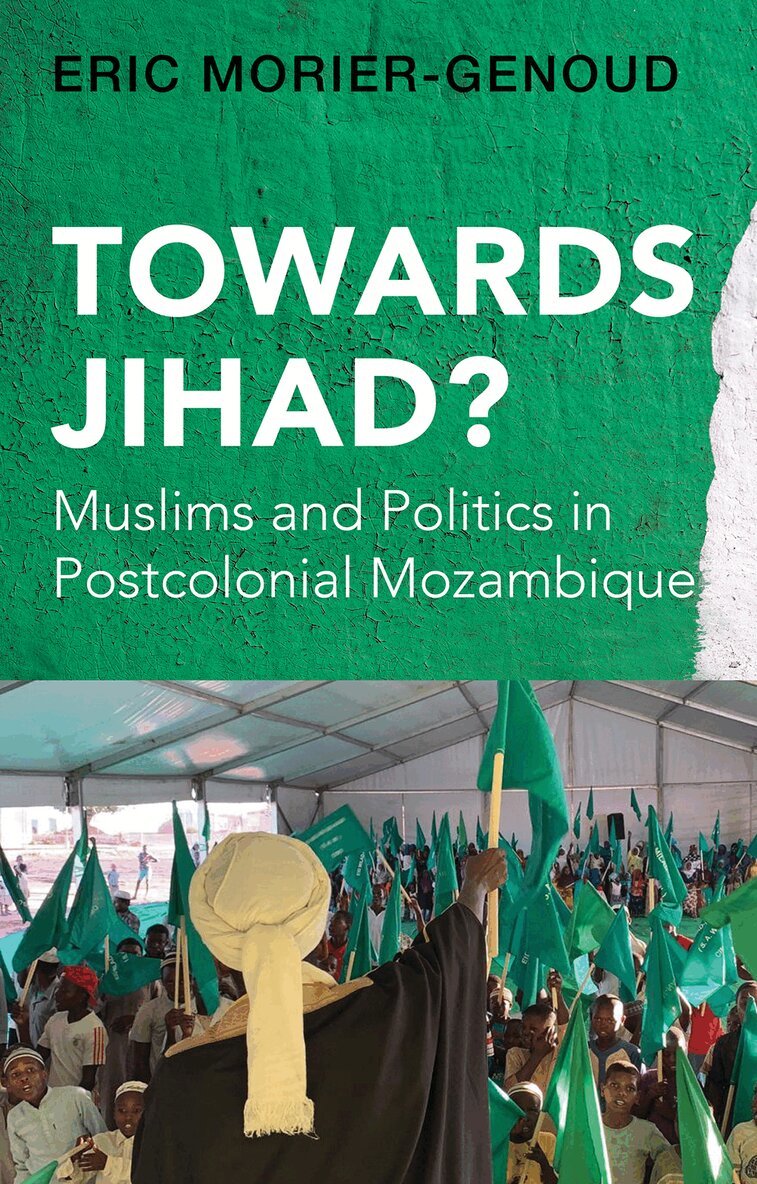
Since 2017, Mozambique has been confronted with a jihadi insurgency. This book looks at the origins of that insurgency, and the broader and longer history of the relationship between Islam and politics in the country. Did Mozambique's Muslim politics always point towards jihad? Eric Morier-Genoud examines the period immediately after independence, when the state engaged in anticlericalism; he then moves across the decades to the 2000s, when the ruling party and the opposition alike courted Muslims for electoral purposes, before reaching the 2010s, when tensions between 'mosque and state' returned. Along the way, he explores a wide variety of phenomena, including the rise of Wahhabism, religious competition, state mediation, secularism, the alleged growth and radicalisation of Islam, and the origins of the ongoing insurgency. What emerges is a rich history, attentive to different branches and elements of the Muslim community, looking far beyond the narrow perspective of jihad. Taking a socio-historical perspective, 'Towards Jihad?' unpacks a complex dynamic, which the jihadi insurgency is in fact now disrupting. Understanding the long history of Muslims' engagement with politics in Mozambique sheds light on where the country has come from, where it stands now amidst violent unrest, and where it might go next.
1 195 kr
Skickas inom 5-8 vardagar
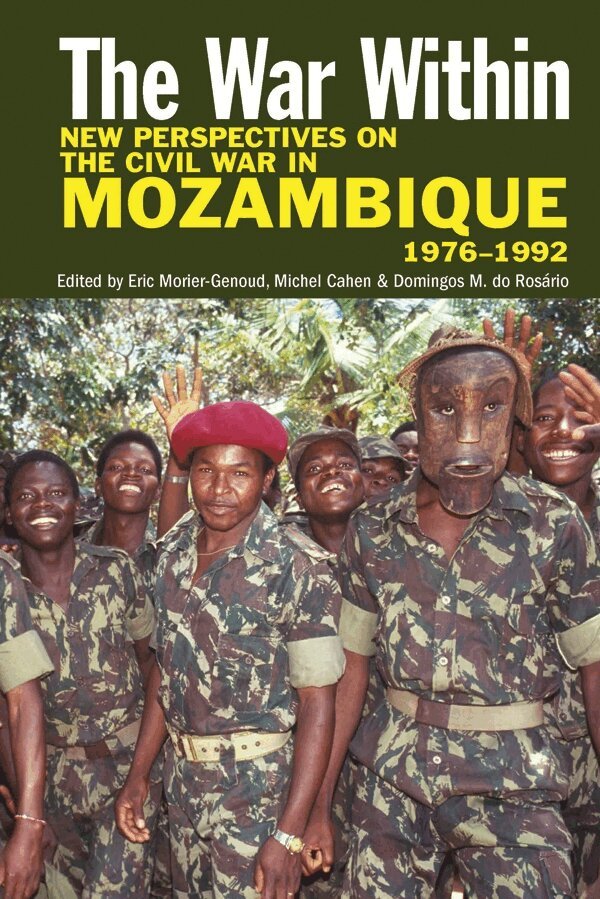
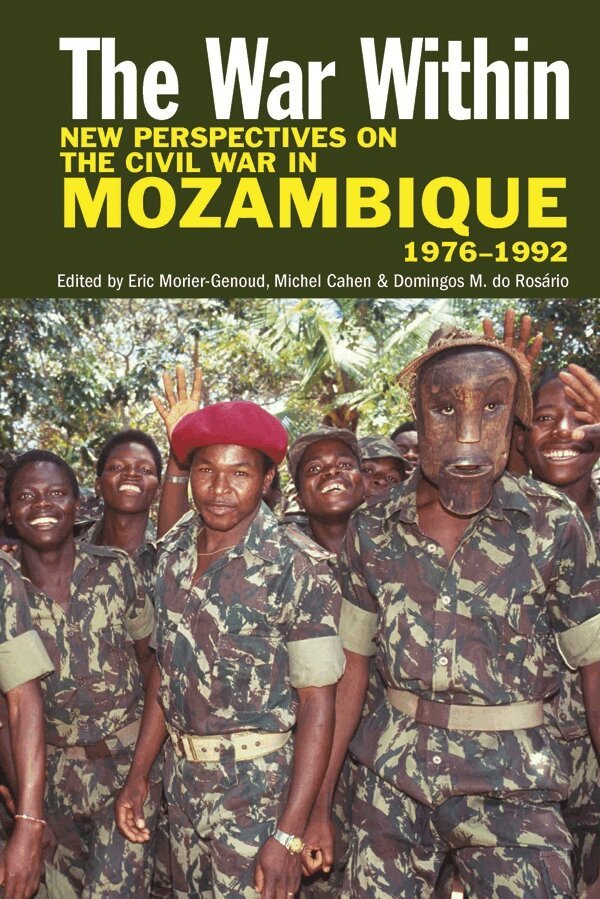
A fresh analysis of the post-colonial war in Mozambique that contributes to debates about conflict, peacebuilding, development and nationalism and offers insights into the nature of contemporary politics and the current conflict.The 1976-1992 civil war which opposed the Government of Frelimo and the Renamo guerrillas (among other actors) is a central event in the history of Mozambique. Aiming to open up a new era of studies of the war, this book re-evaluates this period from a number of different local perspectives in an attempt to better understand the history, complexity and multiple dynamics of the armed conflict. Focusing at local level on either a province or a single village, the authors analyse the conflict as a "total social phenomena" involving all elements of society and impacting on every aspect of life across the country. The chapters examine Frelimo and Renamo as well as private, popular and state militias, the Catholic Church, NGOs and traders. Drawing on previously unexamined sources such as local and provincial state archives, religious archives, the guerrilla's own documentation and interviews, the authors uncoveralternative dimensions of the civil war. The book thus enables a deeper understanding of the conflict and its actors as well as offering an explanatory framework for understanding peacemaking, the nature of contemporary politics,and the current conflict in the country.Eric Morier-Genoud is a Lecturer in African history at Queen's University Belfast; Domingos Manuel do Rosário is Lecturer in electoral sociology and electoral governance at Eduardo Mondlane University, Maputo, Mozambique; Michel Cahen is a Senior Researcher at the Centre National de la Recherche Scientifique (CNRS) at Bordeaux Political Studies Institute and at the Casa de Velázquez in Madrid.
213 kr
Skickas inom 5-8 vardagar
A fresh analysis of the post-colonial war in Mozambique that contributes to debates about conflict, peacebuilding, development and nationalism and offers insights into the nature of contemporary politics and the current conflict.The 1976-1992 civil war which opposed the Government of Frelimo and the Renamo guerrillas (among other actors) is a central event in the history of Mozambique. Aiming to open up a new era of studies of the war, this book re-evaluates this period from a number of different local perspectives in an attempt to better understand the history, complexity and multiple dynamics of the armed conflict. Focusing at local level on either a province or a single village, the authors analyse the conflict as a "total social phenomena" involving all elements of society and impacting on every aspect of life across the country. The chapters examine Frelimo and Renamo as well as private, popular and state militias, the Catholic Church, NGOs and traders. Drawing on previously unexamined sources such as local and provincial state archives, religious archives, the guerrilla's own documentation and interviews, the authors uncoveralternative dimensions of the civil war. The book thus enables a deeper understanding of the conflict and its actors as well as offering an explanatory framework for understanding peacemaking, the nature of contemporary politics,and the current conflict in the country.Eric Morier-Genoud is a Lecturer in African history at Queen's University Belfast; Domingos Manuel do Rosário is Lecturer in electoral sociology and electoral governance at Eduardo Mondlane University, Maputo, Mozambique; Michel Cahen is a Senior Researcher at the Centre National de la Recherche Scientifique (CNRS) at Bordeaux Political Studies Institute and at the Casa de Velázquez in Madrid.
Del 28 - African Social Studies Series
Sure Road? Nationalisms in Angola, Guinea-Bissau and Mozambique
Häftad, Engelska, 2012
1 255 kr
Skickas inom 3-6 vardagar
This book brings together new research on the subject of nations and nationalisms in Angola, Guinea-Bissau and Mozambique. It explores the history and politics of diverse nationalist discourses and ideologies, and it revisits the formation and contemporary developments of national imagined communities in Portuguese-speaking Africa. It does so by drawing on several disciplines and by exploring themes as diverse as Frelimo’s liberation literature, UNITA’s moral economy and the disaggregation of Guinea-Bissau. The authors provide novel insights in the hope of contributing to the academic and public debate on the subject, not least in those countries where, in the face of liberalisation, ruling parties and their opponents have been arguing intensively over, and have sometime struggled to re-invent, a sense of national community. Through their engagement with the subject, authors also make a contribution to the general discussion of the concepts of nations and nationalism.