• Fri frakt över 249 kr
  • •
  • Snabba leveranser
  • •
  • Billiga böcker
Kundservice

Du är på sajten för privatpersoner.

Företag, bibliotek eller offentlig verksamhet?

Du handlar på classic.bokus.com, där alla dina funktioner finns intakta.
Till classic.bokus.com
Bokus logotyp. Gå till startsidan.
  • Erbjudanden
  • Nyheter
  • Student
  • Topplistor
  • Barn & ungdom
  • Bokus Play
  • E-böcker
  • Pocketböcker
  • Spel & pussel

10% studentrabatt med kod TERM26

Sidfot

Mina sidor

    Hjälp

    • Kundservice
    • Vanliga frågor och svar
    • Frakt och leverans
    • Retur vid ångerrätt
    • Reklamera vara
    • Betalning
    • Köpvillkor
    • Allmänna villkor
    • Information om webbplatsens tillgänglighet

    Om Bokus

    • Om oss
    • Pressrum
    • För studenter
    • För företag
    • För bibliotek och offentlig verksamhet
    • För leverantörer
    • Hållbarhet

    Populärt

    • Aktuella erbjudanden
    • Presentkort
    • Studentlitteratur
    • Nya böcker
    • Topplistor
    • Signerade böcker
    • Engelska böcker

    Inspiration

    • Boktips
    • BookTok
    • Populära bokserier
    • Barnbokskaraktärer
    • Populära författare
    Logotyp för Bokus
    Följ oss på Facebook (extern länk)Följ oss på Instagram (extern länk)Följ oss på YouTube (extern länk)Följ oss på TikTok (extern länk)
    bokus @ CookiesAnpassa cookiesIntegritetspolicyKöpvillkor
    Till Citymail hemsida (extern länk)Till Budbee hemsida (extern länk)Till Postnord hemsida (extern länk)Till Schenker hemsida (extern länk)Till Early Bird hemsida (extern länk)Till Walleys hemsida (extern länk)
    1. Samhälle och politik
    2. Politik och statsskick
    3. Politiska ideologier och rörelser
    4. Nationalism

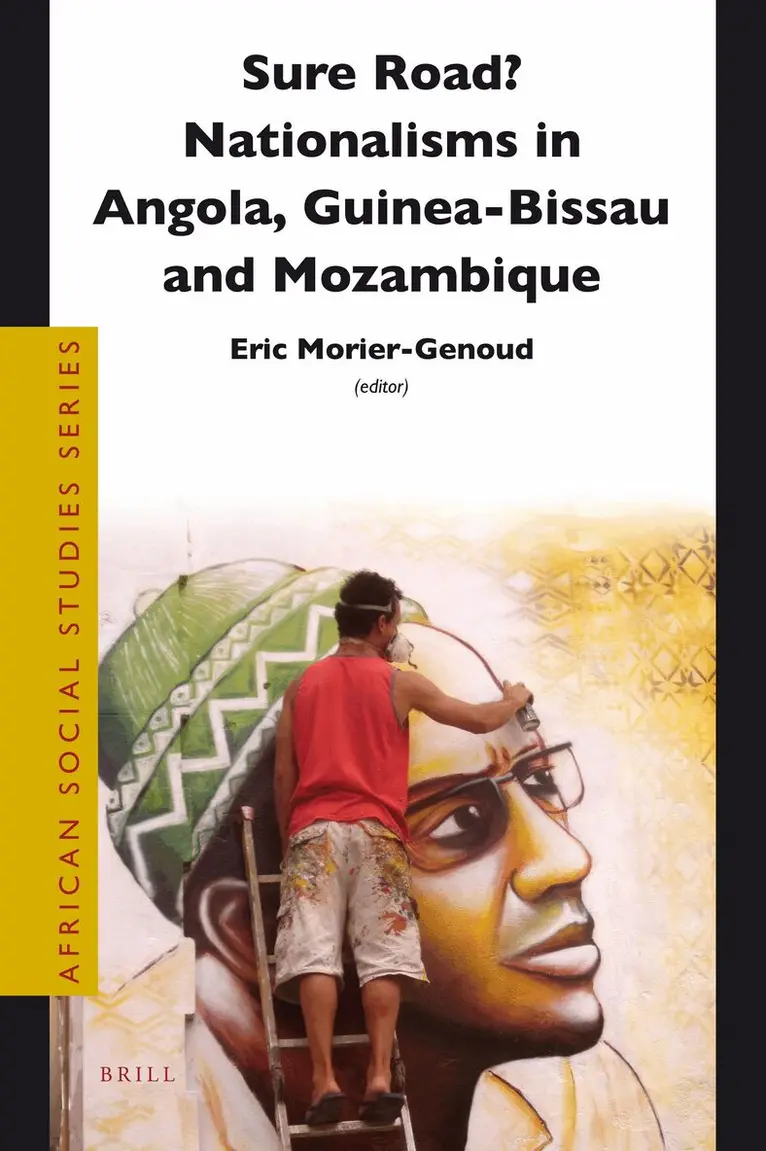
    Sure Road? Nationalisms in Angola, Guinea-Bissau and Mozambique

    AvEric Morier-Genoud

    Häftad, Engelska, 2012

    Del 28 i serien African Social Studies Series

    1 239 kr

    Beställningsvara. Skickas inom 5-8 vardagar. Fri frakt över 249 kr.

    Beskrivning

    This book brings together new research on the subject of nations and nationalisms in Angola, Guinea-Bissau and Mozambique. It explores the history and politics of diverse nationalist discourses and ideologies, and it revisits the formation and contemporary developments of national imagined communities in Portuguese-speaking Africa. It does so by drawing on several disciplines and by exploring themes as diverse as Frelimo’s liberation literature, UNITA’s moral economy and the disaggregation of Guinea-Bissau. The authors provide novel insights in the hope of contributing to the academic and public debate on the subject, not least in those countries where, in the face of liberalisation, ruling parties and their opponents have been arguing intensively over, and have sometime struggled to re-invent, a sense of national community. Through their engagement with the subject, authors also make a contribution to the general discussion of the concepts of nations and nationalism.

    Produktinformation

    • Utgivningsdatum:2012-04-19
    • Mått:155 x 235 x 16 mm
    • Vikt:456 g
    • Format:Häftad
    • Språk:Engelska
    • Serie:African Social Studies Series
    • Antal sidor:270
    • Förlag:Brill
    • ISBN:9789004222618

    Utforska kategorier

    • Nationalism inom Samhälle och politik

    Mer om författaren

    Eric Morier-Genoud, Ph.D. (2006) in Historical Sociology, State University of New York at Binghamton, is Lecturer in African History at Queen's University Belfast. He has published extensively on the history, religion and politics of Mozambique and South Africa.

    Recensioner i media

    'This admirable book sets out to explain what nationalism and nationality has meant, and means today, for the people of the former Portuguese colonies of Angola, Guinea-Bissau, and Mozambique. It is a multi-authored volume made up of papers delivered at a workshop in 2007 and, if the passage of five years and the different perspectives and styles of eleven authors suggest a volume that is blurred in focus and partially out of date, this is remedied by a masterly summary of the main themes by Gavin Williams and an introduction by the editor, Eric Morier-Genoud, which restores the contemporary relevance of what has been written...'Malyn Newitt, in: H-Luso-Africa, H-Net Reviews. December, 2012.'In this book’s Introduction, the rhetorical question posed in the title gets a prompt answer: no, there was no ‘sure road’ to fulfilling nationalist ambitions for these countries, now independent of Portugal for nearly forty years. Yet that answer may not satisfy everyone, least of all those African officials who in recent years have commissioned the writing of national liberation histories. Those are projects largely of patriotic historiography – a resurgent intellectual current that this book opposes. The editor’s misgivings about that kind of history concern its teleology; that is, the interpretation and even re-invention of the past in terms of present-day outcomes. ... This book’s aim, however, is not to rehearse the critique of official narratives. That would be an anti-climax for readers already aware of the many pre- and post-mortems of nationalist projects in these countries. Rather, the editor has sought to assemble new facts and theoretical approaches. To these ends, the book pays attention to such things as conflicting sub-nationalisms, cultural politics, and the eclipse of ‘Marxist’ development ambitions by high modernist models that serve the happy few.David Sogge, Transnational Institute, Amsterdam, in African Affairs, Volume 112, Issue 449, October 2013 'Edited volumes resulting from conferences (like this one from a workshop on ‘The Politics of Nations and Nationalisms in Lusophone Africa’ in 2007 at Oxford University) often feel disjointed and lack a coherent theme. This is decidedly not the case in Sure Road? Nationalisms in Angola, Guinea-Bissau and Mozambique, edited by Eric Morier-Genoud. Morier-Genoud, a scholar of Mozambique, makes a compelling case for examining nationalisms in these three disparate former Portuguese colonies based on a shared colonial history, late and contested paths to independence, and the opening (to varying degrees) of authoritarian political systems in recent years. The editor highlights a glaring lacuna of studies of nationalism in these three countries and argues that now is a propitious time to examine nationalism due to a growing interest among the young, and to the aging and dying of those who participated directly in the creation of these nations in the 1960s and 1970s. The book will be of interest to scholars because of its high calibre and the original insights of the individual chapters. A general audience will appreciate the analyses of contemporary nationalism in these PALOP (Países Africanos de Língua Oficial Portuguesa) countries'.Jeremy Ball, Dickinson College, in Kronos 39.1, 2013

    Innehållsförteckning

    • CONTENTSList of Illustrations ..................................................................................................viiList of Contributors ................................................................................................. ixIntroduction. Thinking about Nationalisms & Nations in Angola, Guinea-Bissau and Mozambique ...............xiiiEric Morier-GenoudI Anticolonialism & Nationalism: Deconstructing Synonymy, Investigating Historical Processes. Notes on the Heterogeneity of Former African Colonial Portuguese Areas ........................................... 1Michel CahenII Virtual Nations and Failed States: Making Sense of the Labyrinth ............................... 31Philip J. HavikIII The Social Origins of Good and Bad Governance: Re-interpreting the 1968 Schism in Frelimo ............ 79Georgi DerluguianIV Writing a Nation or Writing a Culture? Frelimo and Nationalism During the Mozambican Liberation War ...103Maria-Benedita BastoV ‘An Imaginary Nation’. Nationalism, Ideology & the Mozambican National Elite ..............................127Jason SumichVI UNITA and the Moral Economy of Exclusion in Angola, 1966–1977 ..................................................149Didier PéclardVII Angola’s Euro-African Nationalism: The United Angolan Front ..........................................................177Fernando Tavares PimentaChanging Nationalisms: From War to Peace in Angola......................199Justin PearceIX Is ‘Nationalism’ a Feature of Angola’s Cultural Identity? ...................217David BirminghamX Nationalisms, Nations and States: Concluding Reflections ...............231Gavin WilliamsThematic Bibliography .........................................................................................251Index.........................................................................................................................265