Erich Kasper - Böcker
Visar alla böcker från författaren Erich Kasper. Handla med fri frakt och snabb leverans.
3 produkter
3 produkter
2 946 kr
Skickas inom 3-6 vardagar
7 781 kr
Skickas inom 10-15 vardagar
The first two subvolumes III/34Cl and C2 on the Optical Properties of Semiconductor Quantum Structures have been well received by the scientific community. They concentrated on theoretical concepts (chapter 1), experimental methods (chapter 2), III-V semiconductors (chapter 4), I-VII semiconductors (chapter 6), and IV-VI semiconductors (chapter 7) in subvolume Cl. The II-VII materials (chapter 5) have been treated in subvolume C2. The present subvolume III/34C3 finishes the review on optical properties, by adding the chapter 3 on group IV materials. There are exhaustive data on bulk materials including optical properties, starting from diamond C and going over SiC, Si, Ge, to the semimetal grey Sn, and including their alloys—see e.g. Landolt-Börnstein, New Series, Group III, Vol. 41Al 1 and 2, and A2 1 and 2. Silicon is the backbone of the worldwide semiconductor industry. It is an indirect gap material, which seriously hampers its use in light emitting or even laser diodes. There aresome ideas to overcome this problem by forming group IV quantum structures like Si/Ge superlattices or nanocrystals. This hope triggers to a large extend the applied aspects of the research on the optical properties of group IV quantum structures. Though there are also relevant publications on the optical properties of group IV quantum structures involving C or Sn, the by far largest part of work in this field is devoted to the system Si/Ge. Therefore we concentrate here on this system.
1 295 kr
Skickas inom 10-15 vardagar
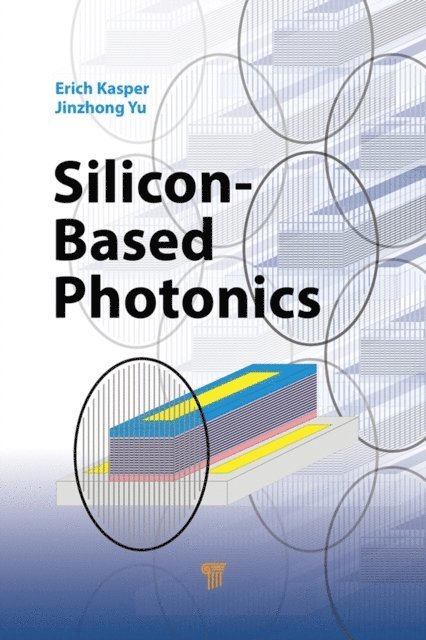
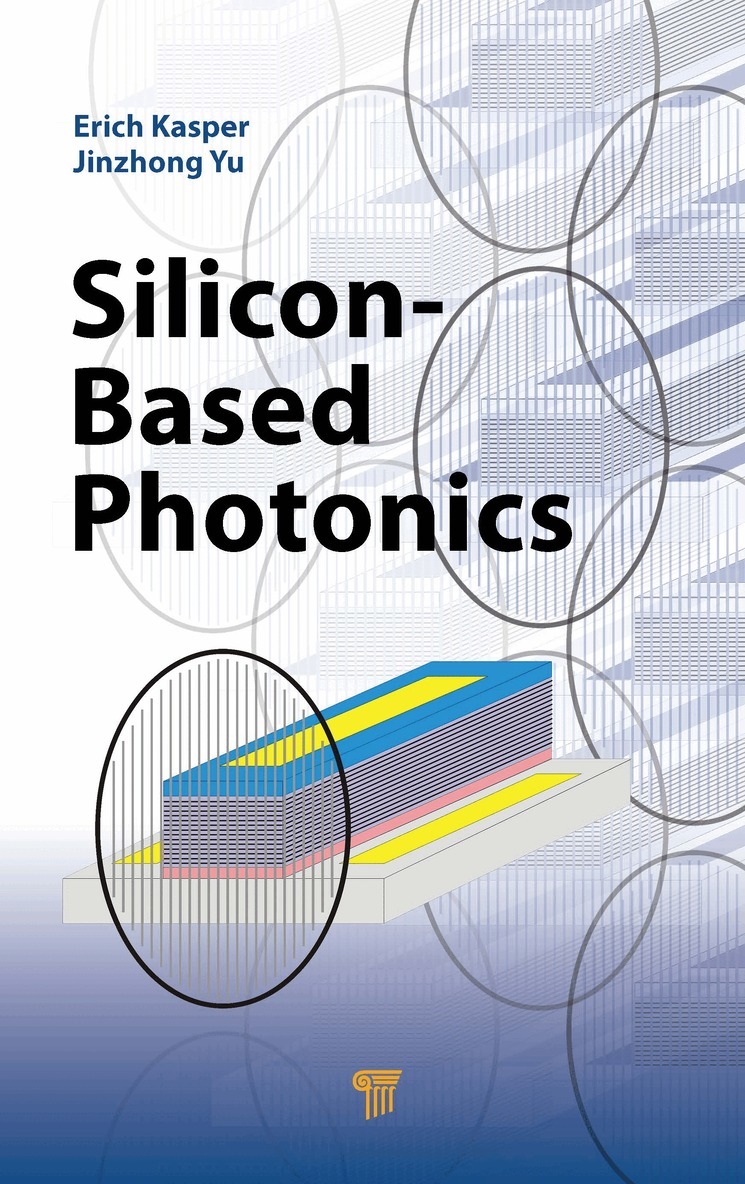
Silicon photonics has evolved rapidly as a research topic with enormous application potential. The high refractive index contrast of silicon-on-insulator (SOI) shows great promise for submicron waveguide structures suited for integration on the chip scale in the near-infrared region. Ge- and GeSn-Si heterostructures with different elastic strain levels already provide expansion of the spectral range, high-speed operation, efficient modulation and switching of optical signals, and enhanced light emission and lasing. This book focuses on the integration of heterostructure devices with silicon photonics. The authors have attempted to merge a concise treatment of classical silicon photonics with a description of principles, prospects, challenges, and technical solution paths of adding silicon-based heterostructures. The book discusses the basics of heterostructure-based silicon photonics, system layouts, and key device components, keeping in mind the application background. Special focus is placed on SOI-based waveguide configurations and Ge- and GeSn-Si heterostructure devices for light detection, modulation, and light emission and lasing. The book also provides an overview of the technological and materials science challenges connected with integration on silicon. The first half of the book is mainly for readers who are interested in the topic because of its increasing importance in different fields, while the latter half covers different device structures for light emission, detection, modulation, extension of the wavelength beyond 1.6 μm, and lasing, as well as future challenges.