Erik W. Davis - Böcker
Visar alla böcker från författaren Erik W. Davis. Handla med fri frakt och snabb leverans.
4 produkter
4 produkter
1 031 kr
Skickas inom 3-6 vardagar
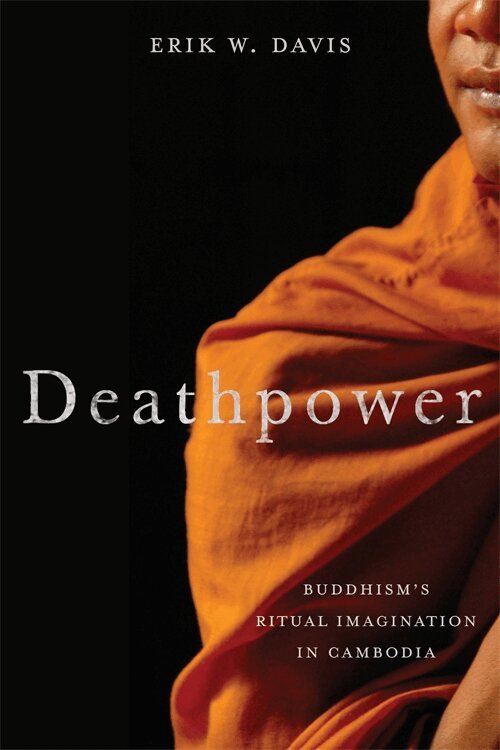
Drawing on extensive ethnographic fieldwork in Cambodia, Erik W. Davis radically reorients approaches toward the nature of Southeast Asian Buddhism's interactions with local religious practice and, by extension, reorients our understanding of Buddhism itself. Through a vivid study of contemporary Cambodian Buddhist funeral rites, he reveals the powerfully integrative role monks play as they care for the dead and negotiate the interplay of non-Buddhist spirits and formal Buddhist customs. Buddhist monks perform funeral rituals rooted in the embodied practices of Khmer rice farmers and the social hierarchies of Khmer culture. The monks' realization of death underwrites key components of the Cambodian social imagination: the distinction between wild death and celibate life, the forest and the field, and moral and immoral forms of power. By connecting the performative aspects of Buddhist death rituals to Cambodian history and everyday life, Davis undermines the theory that Buddhism and rural belief systems necessarily oppose each other. Instead, he shows Cambodian Buddhism to be a robust tradition with ethical and popular components extending throughout Khmer society.
768 kr
Skickas inom 7-10 vardagar
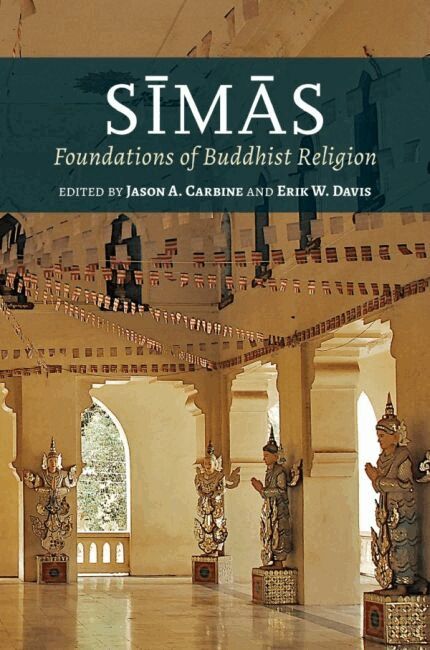
Human-fashioned boundaries transform spaces by introducing dualisms, bifurcations, creative symbioses, contradictions, and notions of inclusion and exclusion. The Buddhist boundaries considered in this book, sīmās—a term found in South and Southeast Asian languages and later translated into East Asian languages—come in various shapes and sizes and can be established on land or in bodies of water. Sometimes, the word sīmā refers not only to a ceremonial boundary, but the space enclosed by the boundary, or even the markers (when they are used) that denote the boundary.Sīmās were established early on as places where core legal acts (kamma), including ordination, of the monastic community (sangha) took place according to their disciplinary codes. Sīmās continue to be deployed in the creation of monastic lineages and to function in diverse ways for monastics and non-monastics alike. As foundations of Buddhist religion, sīmās are used to sustain, revitalize, or reform Buddhist practices, notions of identity, and conceptualizations of time and history. In the last few decades, scholarly awareness of and expertise on sīmās has developed to a point where a volume like this one, which examines sīmās across numerous cultural contexts and scholarly fields of inquiry, is both possible and needed. Sīmā traditions expressed in the Theravāda cultures of Myanmar, Thailand, Laos, Cambodia, Bangladesh, and Sri Lanka constitute the dominant focus of the work; a chapter on East Asia raises questions of historical transmission beyond these areas. Throughout contributors engage texts; history; archaeology; politics; art; ecology; economics; epigraphy; legal categories; mythic narratives; understandings of the cosmos; and conceptualizations of compassion, authority, and violence.Examining sīmās through multiple perspectives allows us to look at them in their contextual specificity, in a way that allows for discernment of variation as well as consistency. Sīmā spaces can be both simple and extremely intricate, and this book helps show why and how that is the case.
282 kr
Skickas inom 7-10 vardagar
Human-fashioned boundaries transform spaces by introducing dualisms, bifurcations, creative symbioses, contradictions, and notions of inclusion and exclusion. The Buddhist boundaries considered in this book, sīmās—a term found in South and Southeast Asian languages and later translated into East Asian languages—come in various shapes and sizes and can be established on land or in bodies of water. Sometimes, the word sīmā refers not only to a ceremonial boundary, but the space enclosed by the boundary, or even the markers (when they are used) that denote the boundary.Sīmās were established early on as places where core legal acts (kamma), including ordination, of the monastic community (sangha) took place according to their disciplinary codes. Sīmās continue to be deployed in the creation of monastic lineages and to function in diverse ways for monastics and non-monastics alike. As foundations of Buddhist religion, sīmās are used to sustain, revitalize, or reform Buddhist practices, notions of identity, and conceptualizations of time and history. In the last few decades, scholarly awareness of and expertise on sīmās has developed to a point where a volume like this one, which examines sīmās across numerous cultural contexts and scholarly fields of inquiry, is both possible and needed. Sīmā traditions expressed in the Theravāda cultures of Myanmar, Thailand, Laos, Cambodia, Bangladesh, and Sri Lanka constitute the dominant focus of the work; a chapter on East Asia raises questions of historical transmission beyond these areas. Throughout contributors engage texts; history; archaeology; politics; art; ecology; economics; epigraphy; legal categories; mythic narratives; understandings of the cosmos; and conceptualizations of compassion, authority, and violence.Examining sīmās through multiple perspectives allows us to look at them in their contextual specificity, in a way that allows for discernment of variation as well as consistency. Sīmā spaces can be both simple and extremely intricate, and this book helps show why and how that is the case.
716 kr
Kommande
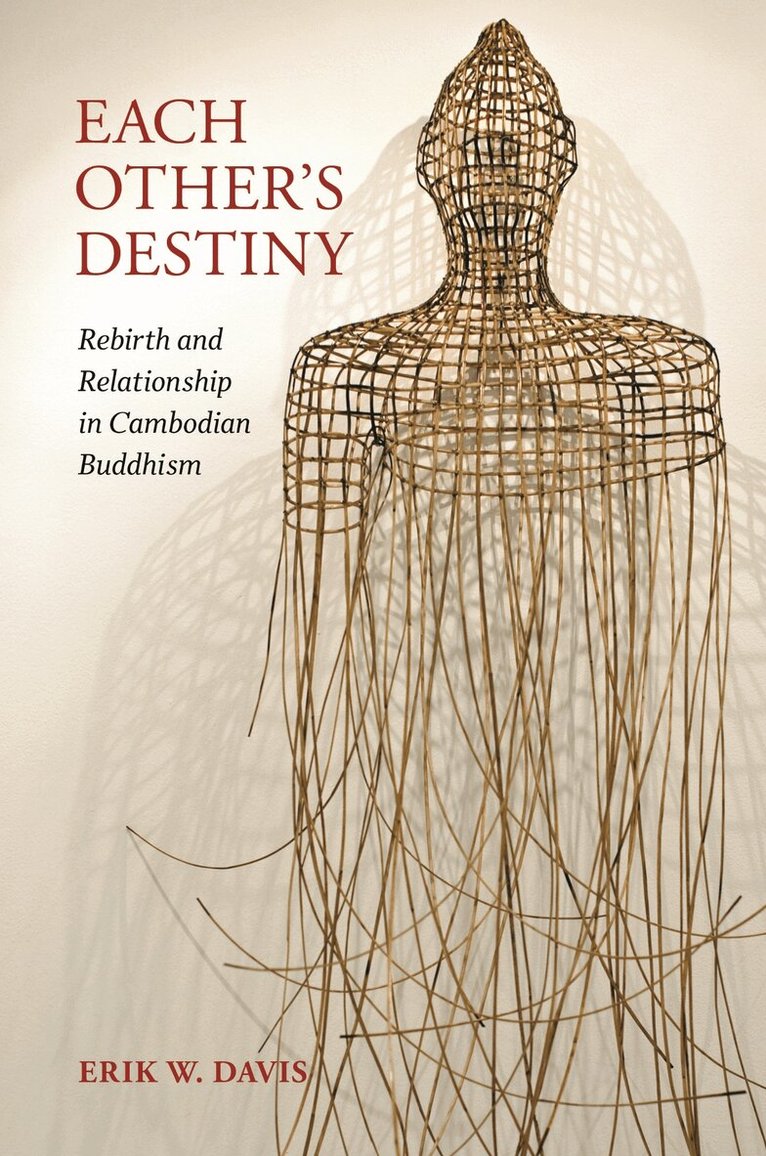
Each Other’s Destiny presents stories of contemporary Cambodians who remember past lives and explores how memories of these pasts shape their present. Erik Davis examines accounts from children, adults, and elders who have retained past-life memories and reveals how Cambodians understand karma to work across lifetimes, and the central role of relationships in Buddhist moral progress. He suggests a new way of answering long-standing questions within Buddhism: what is reborn, and what does that mean we are? The book focuses on six individuals Davis interviewed or researched extensively between 2003 and 2006. Two Cambodian women describe being kidnapped and taken to hell, revealing how Near-Death Experiences are shaped by cultural imagination and expectations. Children who remember past lives provide insight into normative understandings of rebirth, and the karmic and ethical processes that underlie them. In one striking case, a young girl recalls being her own uncle, who died fighting for the Khmer Rouge in the 1970s. Davis describes the attempt to ritually force past-life amnesia on the child, revealing the importance of relatedness and karmic debts. He identifies a view of the individual and their rebirths that centers on karmically significant relationships, described as sharing a nissăy, a word frequently translated as "destiny" or fate." This view, which appears normative in Cambodia, fundamentally shapes the way Cambodians think about relationships, family, maturation, and moral progress. Davis then turns to men who have deployed past-life memories for personal advantage, including former Cambodian Prime Minister Hun Sen, who claims identity with a past Khmer king, and a popular lay teacher professing to be Maitreya, the buddha of the future. These contrasting cases emphasize individual accomplishment and autonomy rather than relational obligations. The final chapter follows a devout elder Buddhist woman who, as a child, integrated her past-life and present-life families. Her account exemplifies the relationality of past lives, karma, and destiny while affirming Buddhism's ultimate goal: to end rebirth and relationality entirely. Through these interconnected stories, Davis argues that it is karmic relationships—not individuals—that are reborn, suggesting that we are, in a meaningful way, each other’s destiny.