Erin K. Jenne - Böcker
Visar alla böcker från författaren Erin K. Jenne. Handla med fri frakt och snabb leverans.
5 produkter
5 produkter
674 kr
Skickas inom 10-15 vardagar
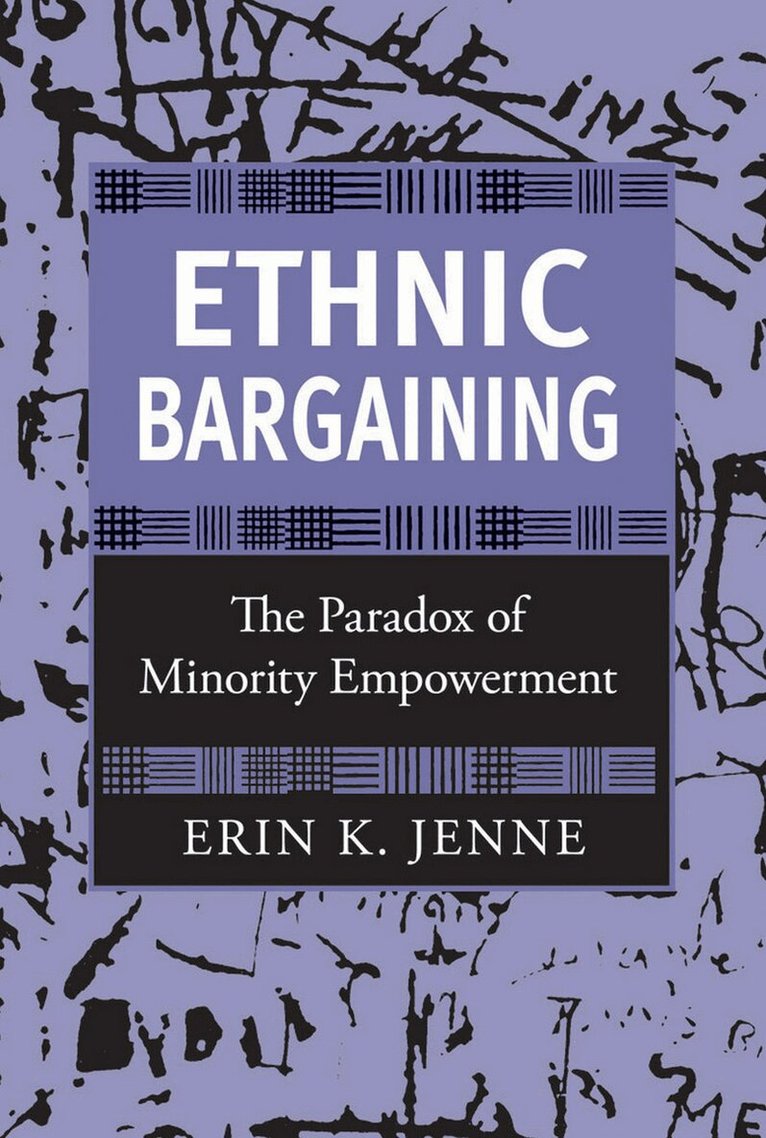
Ethnic Bargaining introduces a theory of minority politics that blends comparative analysis and field research in the postcommunist countries of East Central Europe with insights from rational choice. Erin K. Jenne finds that claims by ethnic minorities have become more frequent since 1945 even though nation-states have been on the whole more responsive to groups than in earlier periods. Minorities that perceive an increase in their bargaining power will tend to radicalize their demands, she argues, from affirmative action to regional autonomy to secession, in an effort to attract ever greater concessions from the central government. The language of self-determination and minority rights originally adopted by the Great Powers to redraw boundaries after World War I was later used to facilitate the process of decolonization. Jenne believes that in the 1960s various ethnic minorities began to use the same discourse to pressure national governments into transfer payments and power-sharing arrangements. Violence against minorities was actually in some cases fueled by this politicization of ethnic difference. Jenne uses a rationalist theory of bargaining to examine the dynamics of ethnic cleavage in the cases of the Sudeten Germans in interwar Czechoslovakia; Slovaks and Moravians in postcommunist Czechoslovakia; the Hungarians in Romania, Slovakia, and Vojvodina; and the Albanians in Kosovo. Throughout, she challenges the conventional wisdom that partisan intervention is an effective mechanism for protecting minorities and preventing or resolving internal conflict.
Nested Security
Lessons in Conflict Management from the League of Nations and the European Union
Inbunden, Engelska, 2015
572 kr
Skickas inom 7-10 vardagar
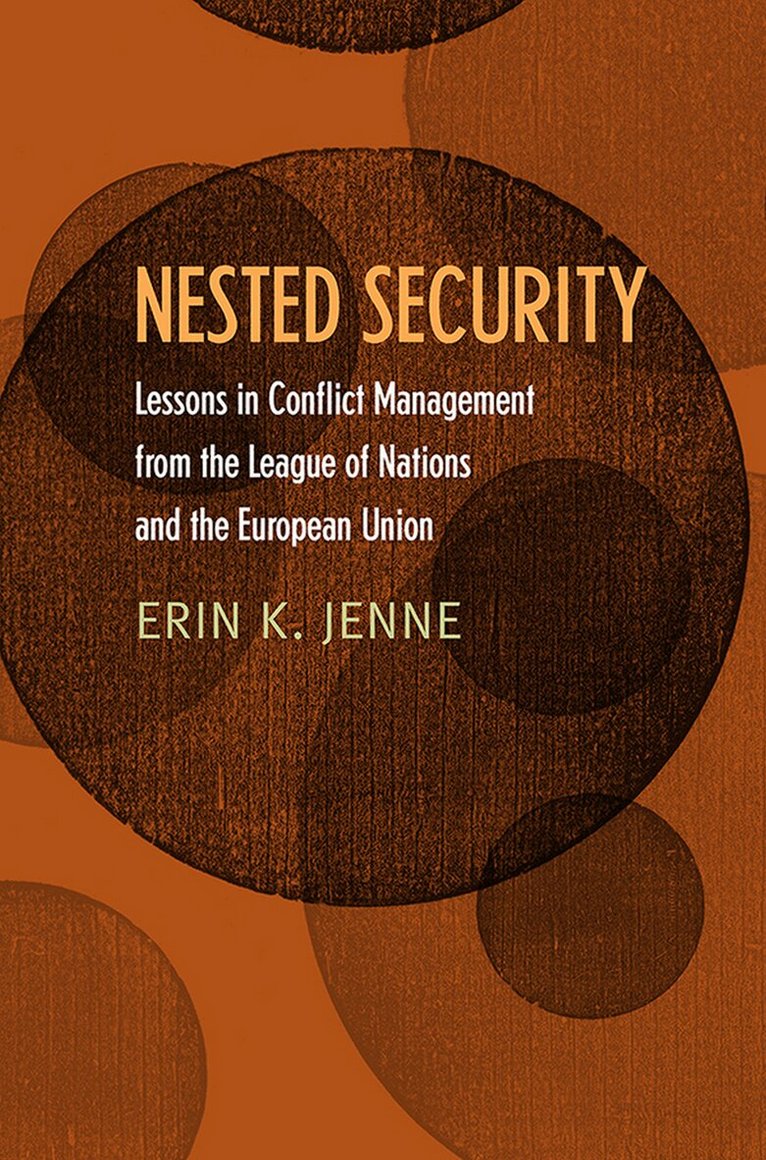
Why does soft power conflict management meet with variable success over the course of a single mediation? In Nested Security, Erin K. Jenne asserts that international conflict management is almost never a straightforward case of success or failure. Instead, external mediators may reduce communal tensions at one point but utterly fail at another point, even if the incentives for conflict remain unchanged. Jenne explains this puzzle using a "nested security" model of conflict management, which holds that protracted ethnic or ideological conflicts are rarely internal affairs, but rather are embedded in wider regional and/or great power disputes. Internal conflict is nested within a regional environment, which in turn is nested in a global environment. Efforts to reduce conflict on the ground are therefore unlikely to succeed without first containing or resolving inter-state or trans-state conflict processes.Nested security is neither irreversible nor static: ethnic relations may easily go from nested security to nested insecurity when the regional or geopolitical structures that support them are destabilized through some exogenous pressure or shocks, including kin state intervention, transborder ethnic ties, refugee flows, or other factors related to regional conflict processes. Jenne argues that regional security regimes are ideally suited to the management of internal conflicts, because neighbors that have a strong incentive to work for stability provide critical hard-power backing to soft-power missions. Jenne tests her theory against two regional security regimes in Central and Eastern Europe: the interwar minorities regime under the League of Nations (German minorities in Central Europe, Hungarian minorities in the Carpathian Basin, and disputes over the Åland Islands, Memel, and Danzig), and the ad hoc security regime of the post–Cold War period (focusing on Russian-speaking minorities in the Baltic States and Albanian minorities in Montenegro, Macedonia, and northern Kosovo).
340 kr
Skickas inom 10-15 vardagar
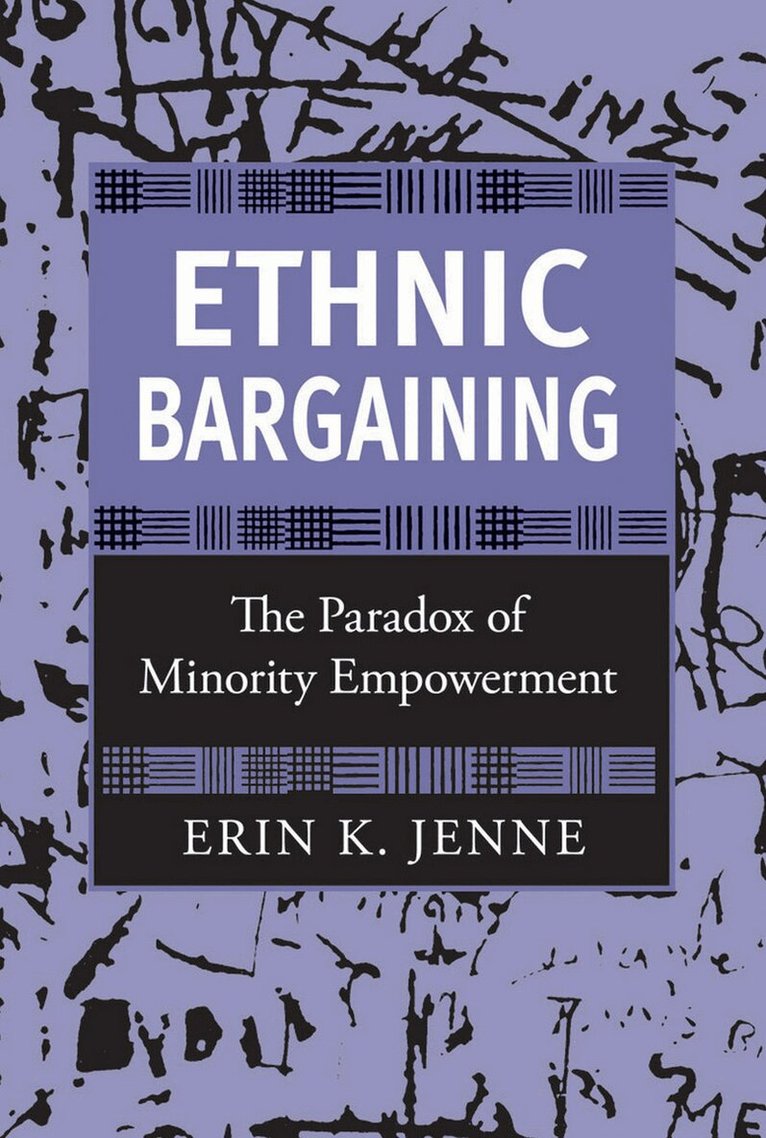
Ethnic Bargaining introduces a theory of minority politics that blends comparative analysis and field research in the postcommunist countries of East Central Europe with insights from rational choice. Erin K. Jenne finds that claims by ethnic minorities have become more frequent since 1945 even though nation-states have been on the whole more responsive to groups than in earlier periods. Minorities that perceive an increase in their bargaining power will tend to radicalize their demands, she argues, from affirmative action to regional autonomy to secession, in an effort to attract ever greater concessions from the central government. The language of self-determination and minority rights originally adopted by the Great Powers to redraw boundaries after World War I was later used to facilitate the process of decolonization. Jenne believes that in the 1960s various ethnic minorities began to use the same discourse to pressure national governments into transfer payments and power-sharing arrangements. Violence against minorities was actually in some cases fueled by this politicization of ethnic difference. Jenne uses a rationalist theory of bargaining to examine the dynamics of ethnic cleavage in the cases of the Sudeten Germans in interwar Czechoslovakia; Slovaks and Moravians in postcommunist Czechoslovakia; the Hungarians in Romania, Slovakia, and Vojvodina; and the Albanians in Kosovo. Throughout, she challenges the conventional wisdom that partisan intervention is an effective mechanism for protecting minorities and preventing or resolving internal conflict.
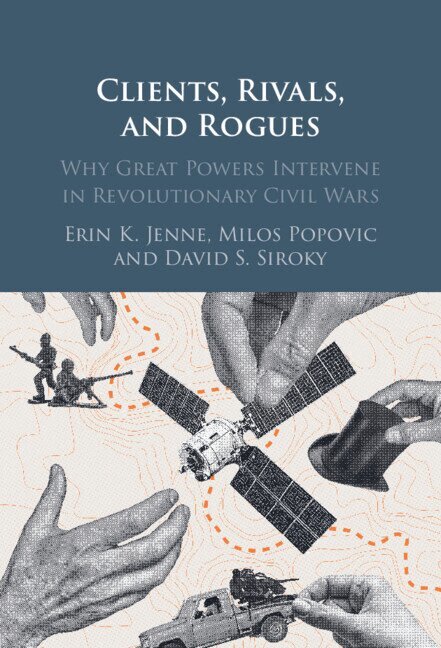
Clients, Rivals, and Rogues
Why Great Powers Intervene in Revolutionary Civil Wars
Häftad, Engelska, 2026
428 kr
Skickas inom 7-10 vardagar
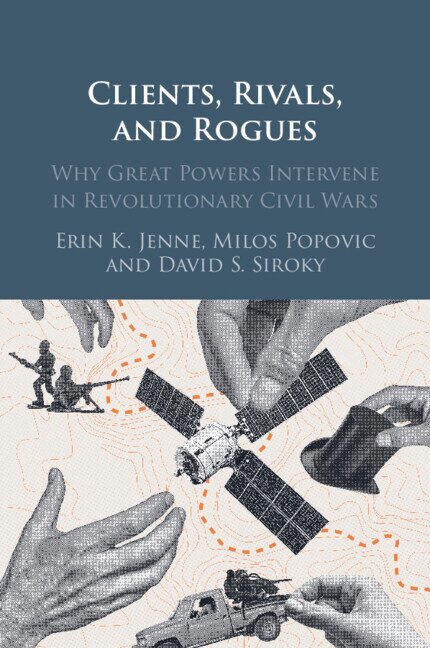
Why do great powers intervene militarily in revolutionary civil wars? This pivotal question in international relations is answered though a new theory of security hierarchies that emphasizes the role of clients, rivals and rogues in world politics. Employing a mixed-methods approach, integrating statistical analysis with comprehensive case studies of Afghanistan, Libya, and Syria, this book demonstrates that great power interventions are significantly more constrained and predictable than previously assumed. Role theory and frame analysis further exhibit how the status of other states within a great power's security hierarchy influences interventions. The findings provide a lucid account of great power behavior, offering critical insights for scholars and policymakers interested in the international dimensions of intrastate conflicts. Clients, Rivals and Rogues shows that the strategies that underpin great power interventions and provides crucial lessons for the management of regime conflicts, one of the most common and deadly forms of political instability today.
Clients, Rivals, and Rogues
Why Great Powers Intervene in Revolutionary Civil Wars
Inbunden, Engelska, 2026
1 258 kr
Skickas inom 7-10 vardagar
Why do great powers intervene militarily in revolutionary civil wars? This pivotal question in international relations is answered though a new theory of security hierarchies that emphasizes the role of clients, rivals and rogues in world politics. Employing a mixed-methods approach, integrating statistical analysis with comprehensive case studies of Afghanistan, Libya, and Syria, this book demonstrates that great power interventions are significantly more constrained and predictable than previously assumed. Role theory and frame analysis further exhibit how the status of other states within a great power's security hierarchy influences interventions. The findings provide a lucid account of great power behavior, offering critical insights for scholars and policymakers interested in the international dimensions of intrastate conflicts. Clients, Rivals and Rogues shows that the strategies that underpin great power interventions and provides crucial lessons for the management of regime conflicts, one of the most common and deadly forms of political instability today.