Ernesto Estrada - Böcker
Visar alla böcker från författaren Ernesto Estrada. Handla med fri frakt och snabb leverans.
8 produkter
8 produkter
1 564 kr
Skickas inom 5-8 vardagar
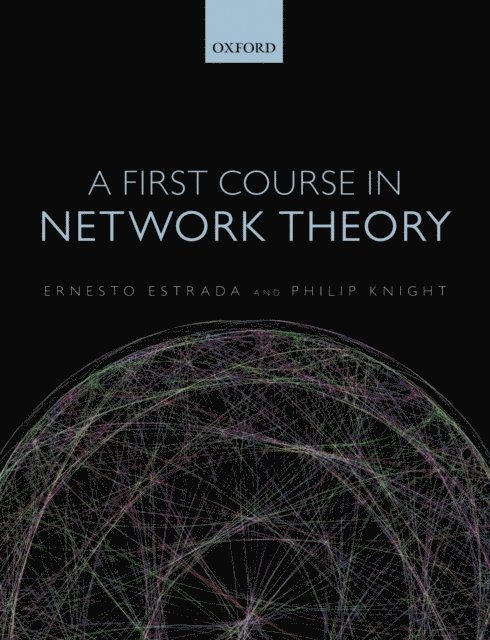
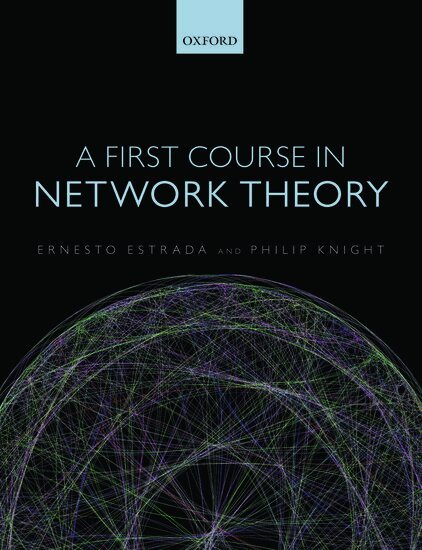
The study of network theory is a highly interdisciplinary field, which has emerged as a major topic of interest in various disciplines ranging from physics and mathematics, to biology and sociology. This book promotes the diverse nature of the study of complex networks by balancing the needs of students from very different backgrounds. It references the most commonly used concepts in network theory, provides examples of their applications in solving practical problems, and clear indications on how to analyse their results.In the first part of the book, students and researchers will discover the quantitative and analytical tools necessary to work with complex networks, including the most basic concepts in network and graph theory, linear and matrix algebra, as well as the physical concepts most frequently used for studying networks. They will also find instruction on some key skills such as how to proof analytic results and how to manipulate empirical network data. The bulk of the text is focused on instructing readers on the most useful tools for modern practitioners of network theory. These include degree distributions, random networks, network fragments, centrality measures, clusters and communities, communicability, and local and global properties of networks. The combination of theory, example and method that are presented in this text, should ready the student to conduct their own analysis of networks with confidence and allow teachers to select appropriate examples and problems to teach this subject in the classroom.
564 kr
Skickas inom 5-8 vardagar
The study of network theory is a highly interdisciplinary field, which has emerged as a major topic of interest in various disciplines ranging from physics and mathematics, to biology and sociology. This book promotes the diverse nature of the study of complex networks by balancing the needs of students from very different backgrounds. It references the most commonly used concepts in network theory, provides examples of their applications in solving practical problems, and clear indications on how to analyse their results.In the first part of the book, students and researchers will discover the quantitative and analytical tools necessary to work with complex networks, including the most basic concepts in network and graph theory, linear and matrix algebra, as well as the physical concepts most frequently used for studying networks. They will also find instruction on some key skills such as how to proof analytic results and how to manipulate empirical network data. The bulk of the text is focused on instructing readers on the most useful tools for modern practitioners of network theory. These include degree distributions, random networks, network fragments, centrality measures, clusters and communities, communicability, and local and global properties of networks. The combination of theory, example and method that are presented in this text, should ready the student to conduct their own analysis of networks with confidence and allow teachers to select appropriate examples and problems to teach this subject in the classroom.
610 kr
Skickas inom 7-10 vardagar
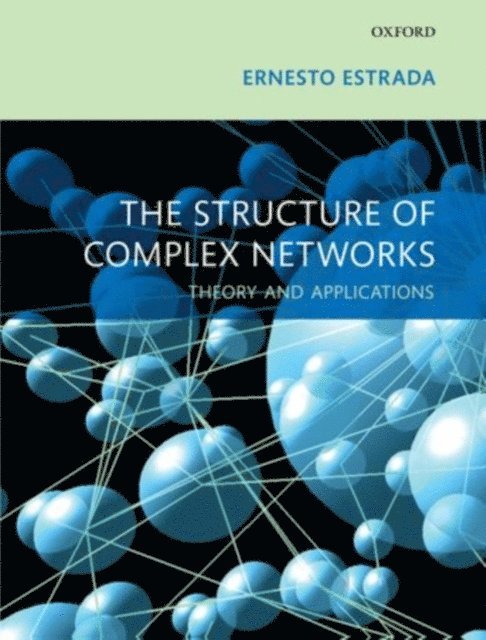
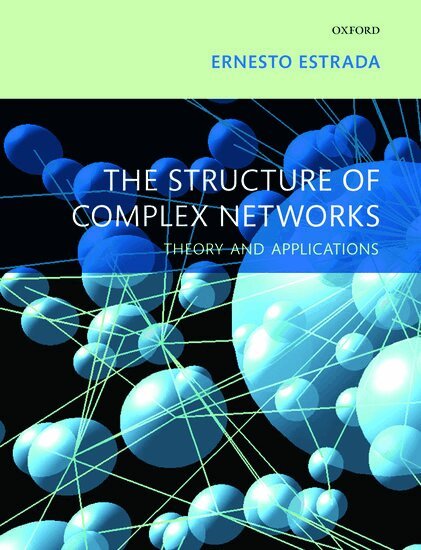
This book deals with the analysis of the structure of complex networks by combining results from graph theory, physics, and pattern recognition. The book is divided into two parts. 11 chapters are dedicated to the development of theoretical tools for the structural analysis of networks, and 7 chapters are illustrating, in a critical way, applications of these tools to real-world scenarios. The first chapters provide detailed coverage of adjacency and metric and topological properties of networks, followed by chapters devoted to the analysis of individual fragments and fragment-based global invariants in complex networks. Chapters that analyse the concepts of communicability, centrality, bipartivity, expansibility and communities in networks follow. The second part of this book is devoted to the analysis of genetic, protein residue, protein-protein interaction, intercellular, ecological and socio-economic networks, including important breakthroughs as well as examples of the misuse of structural concepts.
1 144 kr
Skickas inom 7-10 vardagar
This book deals with the analysis of the structure of complex networks by combining results from graph theory, physics, and pattern recognition. The book is divided into two parts. 11 chapters are dedicated to the development of theoretical tools for the structural analysis of networks, and 7 chapters are illustrating, in a critical way, applications of these tools to real-world scenarios. The first chapters provide detailed coverage of adjacency and metric and topological properties of networks, followed by chapters devoted to the analysis of individual fragments and fragment-based global invariants in complex networks. Chapters that analyse the concepts of communicability, centrality, bipartivity, expansibility and communities in networks follow. The second part of this book is devoted to the analysis of genetic, protein residue, protein-protein interaction, intercellular, ecological and socio-economic networks, including important breakthroughs as well as examples of the misuse of structural concepts.
1 073 kr
Skickas inom 10-15 vardagar
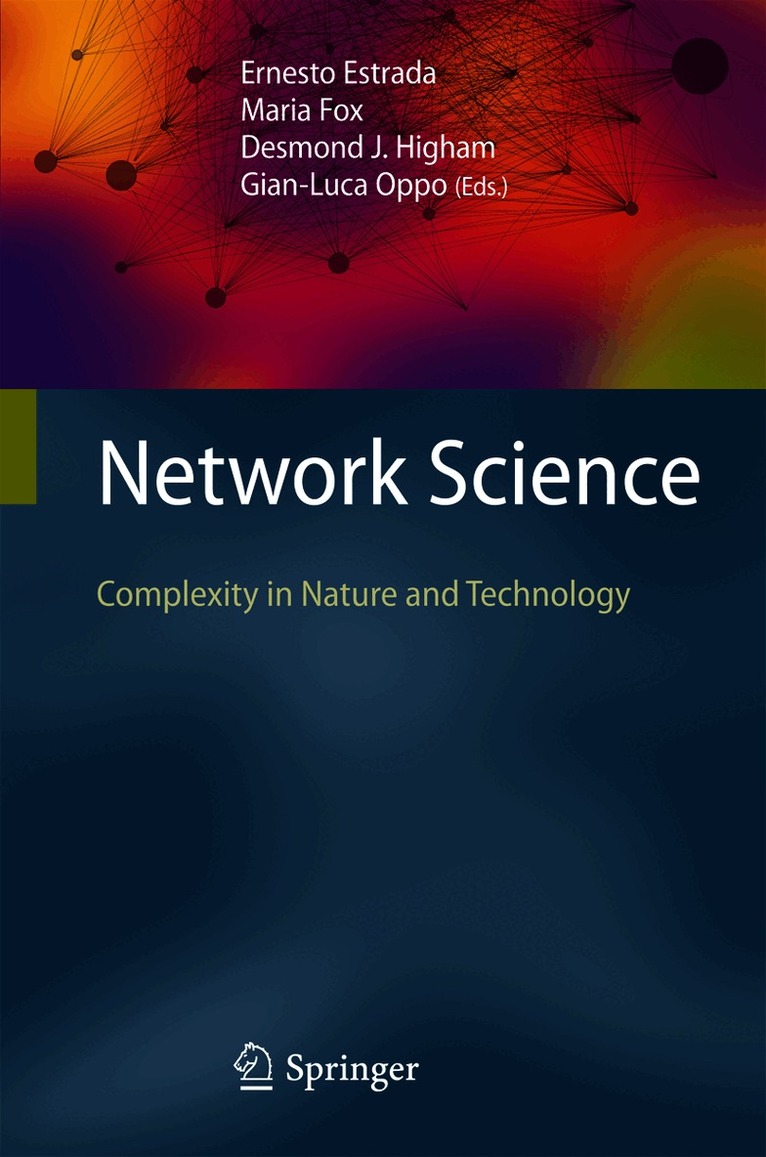
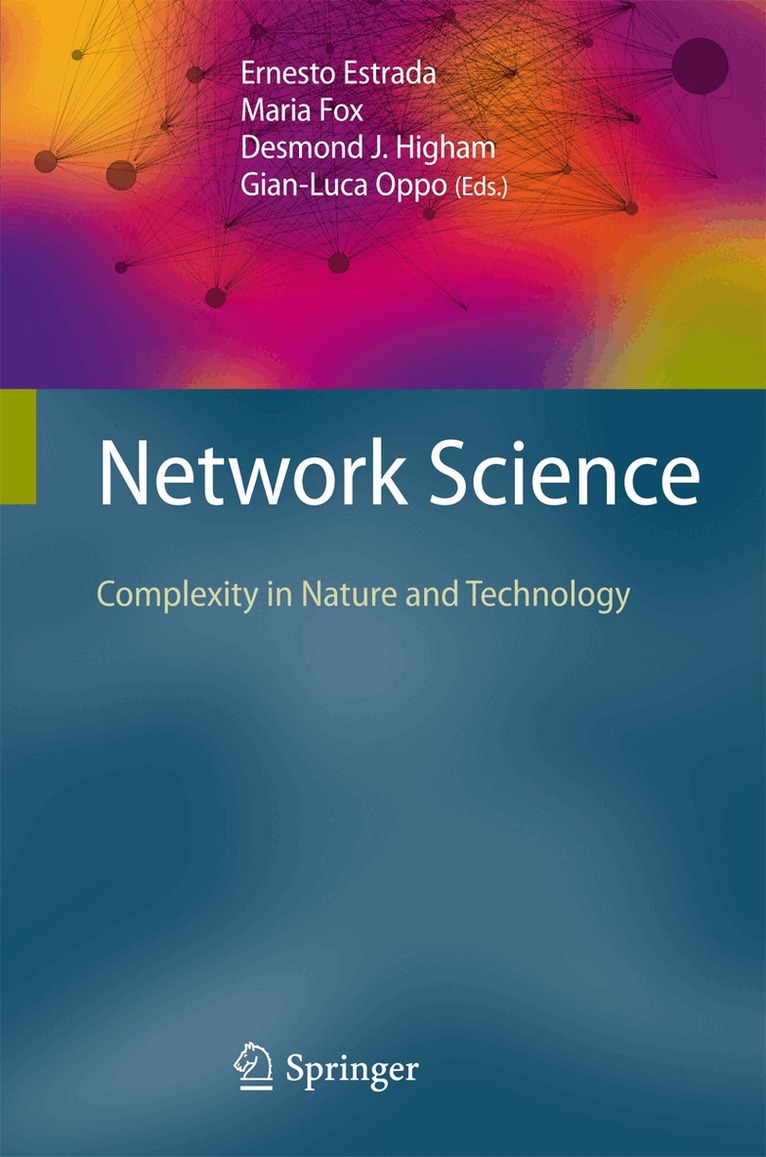
Network Science is the emerging field concerned with the study of large, realistic networks. This interdisciplinary endeavor, focusing on the patterns of interactions that arise between individual components of natural and engineered systems, has been applied to data sets from activities as diverse as high-throughput biological experiments, online trading information, smart-meter utility supplies, and pervasive telecommunications and surveillance technologies. This unique text/reference provides a fascinating insight into the state of the art in network science, highlighting the commonality across very different areas of application and the ways in which each area can be advanced by injecting ideas and techniques from another. The book includes contributions from an international selection of experts, providing viewpoints from a broad range of disciplines. It emphasizes networks that arise in nature—such as food webs, protein interactions, gene expression, and neural connections—and in technology—such as finance, airline transport, urban development and global trade.Topics and Features: begins with a clear overview chapter to introduce this interdisciplinary field; discusses the classic network science of fixed connectivity structures, including empirical studies, mathematical models and computational algorithms; examines time-dependent processes that take place over networks, covering topics such as synchronisation, and message passing algorithms; investigates time-evolving networks, such as the World Wide Web and shifts in topological properties (connectivity, spectrum, percolation); explores applications of complex networks in the physical and engineering sciences, looking ahead to new developments in the field.Researchers and professionals from disciplines as varied as computer science, mathematics, engineering, physics, chemistry, biology, ecology, neuroscience, epidemiology, and the social sciences will all benefit from this topical and broadoverview of current activities and grand challenges in the unfolding field of network science.
4 826 kr
Kommande
This volume of the Encyclopedia of Complexity and Systems Science Series describes the current state of the analysis of complexity in chemistry from a wide-ranging perspective. The volume covers not only the classical areas of molecular complexity and its implications in molecular design, QSAR, QSPR and molecular evolution, but also topics at the very forefront of development of this field in cross-disciplinary areas. The latter include for instance, chaotic systems in biochemistry as well as biological complexity and self-organization, topics related to organizational complexity at the nanoscale, as well as the structural and dynamical complexity of giant systems of interacting molecules, such as protein residue networks, protein-protein interaction networks and metabolic networks. All these topics are interwoven by a general overarching concept of complexity. Thus, from a theoretical point of view, the reader benefits from a broad view of the analysis of complexity in many different types of molecular and chemical systems. In addition, the reader gains insight into a series of modern techniques and tools that allow for a practical understanding of these complex chemical systems. Such modern techniques include the use of cellular automata, design of reaction sites, artificial intelligence methods, machine learning, quantum similarity techniques, network-theoretic, informational tools, QSAR, QSPR and molecular design, among others. Complexity in Computational Chemistry is a valuable reference for molecular biologists, chemists, molecular engineers, computer scientists and mathematicians interested in the study of chemical complexity at any scale, from the atomic to the intermolecular.
8 232 kr
Kommande
This volume of the Encyclopedia of Complexity and Systems Science Series describes the current state of the analysis of complexity in chemistry from a wide-ranging perspective. The volume covers not only the classical areas of molecular complexity and its implications in molecular design, QSAR, QSPR and molecular evolution, but also topics at the very forefront of development of this field in cross-disciplinary areas. The latter include for instance, chaotic systems in biochemistry as well as biological complexity and self-organization, topics related to organizational complexity at the nanoscale, as well as the structural and dynamical complexity of giant systems of interacting molecules, such as protein residue networks, protein-protein interaction networks and metabolic networks. All these topics are interwoven by a general overarching concept of complexity. Thus, from a theoretical point of view, the reader benefits from a broad view of the analysis of complexity in many different types of molecular and chemical systems. In addition, the reader gains insight into a series of modern techniques and tools that allow for a practical understanding of these complex chemical systems. Such modern techniques include the use of cellular automata, design of reaction sites, artificial intelligence methods, machine learning, quantum similarity techniques, network-theoretic, informational tools, QSAR, QSPR and molecular design, among others. Complexity in Computational Chemistry is a valuable reference for molecular biologists, chemists, molecular engineers, computer scientists and mathematicians interested in the study of chemical complexity at any scale, from the atomic to the intermolecular.
1 067 kr
Skickas inom 10-15 vardagar
Network Science is the emerging field concerned with the study of large, realistic networks. This interdisciplinary endeavor, focusing on the patterns of interactions that arise between individual components of natural and engineered systems, has been applied to data sets from activities as diverse as high-throughput biological experiments, online trading information, smart-meter utility supplies, and pervasive telecommunications and surveillance technologies. This unique text/reference provides a fascinating insight into the state of the art in network science, highlighting the commonality across very different areas of application and the ways in which each area can be advanced by injecting ideas and techniques from another. The book includes contributions from an international selection of experts, providing viewpoints from a broad range of disciplines. It emphasizes networks that arise in nature—such as food webs, protein interactions, gene expression, and neural connections—and in technology—such as finance, airline transport, urban development and global trade.Topics and Features: begins with a clear overview chapter to introduce this interdisciplinary field; discusses the classic network science of fixed connectivity structures, including empirical studies, mathematical models and computational algorithms; examines time-dependent processes that take place over networks, covering topics such as synchronisation, and message passing algorithms; investigates time-evolving networks, such as the World Wide Web and shifts in topological properties (connectivity, spectrum, percolation); explores applications of complex networks in the physical and engineering sciences, looking ahead to new developments in the field.Researchers and professionals from disciplines as varied as computer science, mathematics, engineering, physics, chemistry, biology, ecology, neuroscience, epidemiology, and the social sciences will all benefit from this topical and broadoverview of current activities and grand challenges in the unfolding field of network science.