Erwin V. Johanningmeier - Böcker
Visar alla böcker från författaren Erwin V. Johanningmeier. Handla med fri frakt och snabb leverans.
4 produkter
4 produkter
706 kr
Skickas inom 7-10 vardagar
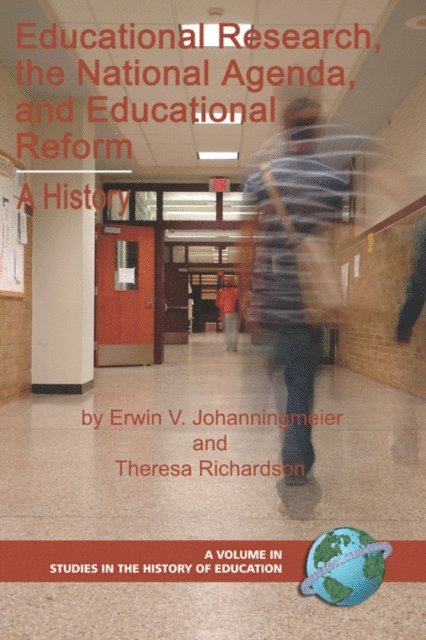
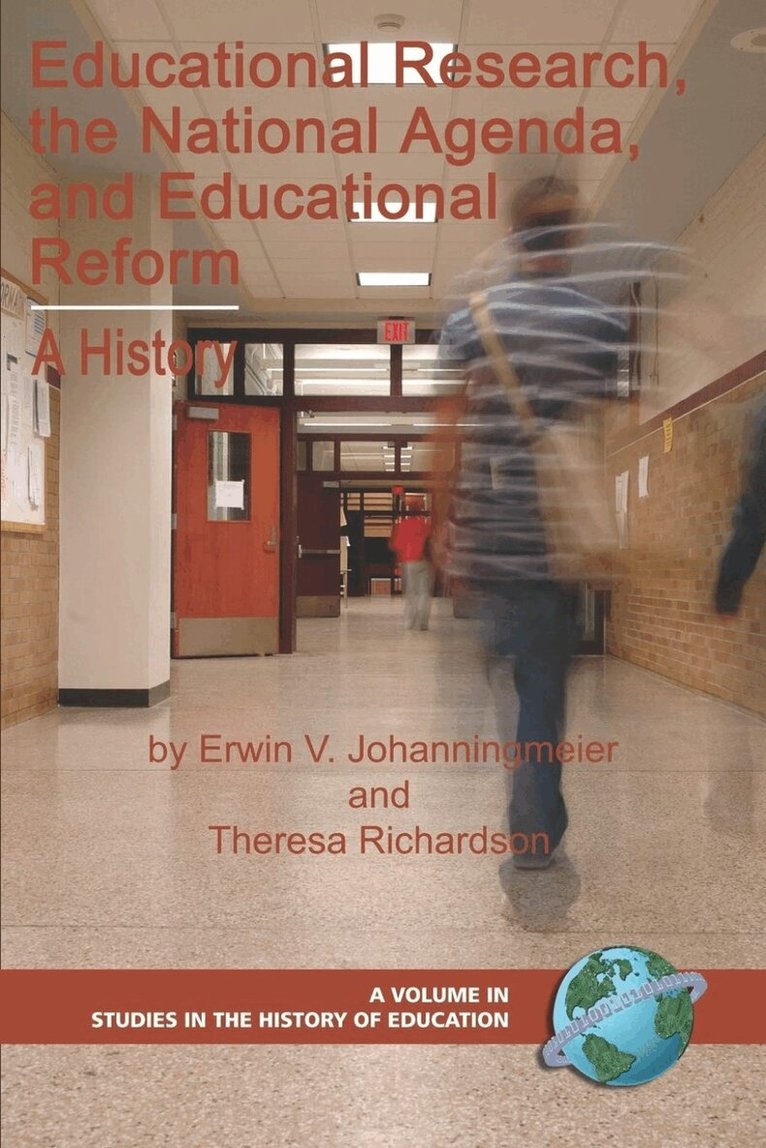
Educational Research, The National Agenda, and Educational Reform examines the origins, history, nature, purposes, and status of educational research by focusing on the relationships among educational research, the national agenda, educational reform, and the social and behavioral sciences. Its major claim is that the history of educational research is embedded in the nation’s social, political, intellectual, and economic histories. Attention is given to three significant periods: the Progressive Era when modern educational research began to assume its present form; the Post-World-War-II-Era when educators and educational researchers were directed to return to or turn to the academic disciplines; and the Civil Rights Era after the Supreme Court in Brown ended legal racial segregation and raised questions about equality of educational opportunity that are still with us. These were significant periods when there was a clear national agenda shaped by both public and private agencies. Educators and educational researchers adopted policies and strategies in response to concerns and interests expressed by the public, by government officials, and by philanthropies. Researchers’ responses have had long-term consequences as seen in the reaction to The Coleman Report, debates about the merits of quantitative research as opposed to qualitative research, the ongoing discussion about the merits of No Child Left Behind, the achievement gap, the creation of the Institute of Education Sciences, and the emphasis now placed on 'scientifically-based research.'The origins of the common school, the work of the philosopher Johann Friedrich Herbart and his followers, and the revolution in scientific method brought about by Charles Darwin’s work are included because they serve as the foundation for educational research. Educational researchers’ identification with and interest in individual performance and ability and their measurement is related to the close relationship educational researchers have had with psychology, a discipline that typically does not focus on social context. The significance of educational researchers’ borrowing from the behavioral sciences, especially psychology, is examined through a discussion of the mental hygiene movement, as supported by private philanthropy, and through consideration of contributors such as G. Stanley Hall, Arnold Gesell, Lewis M. Terman, Daniel Starch, and Stuart A. Courtis.
1 151 kr
Skickas inom 7-10 vardagar
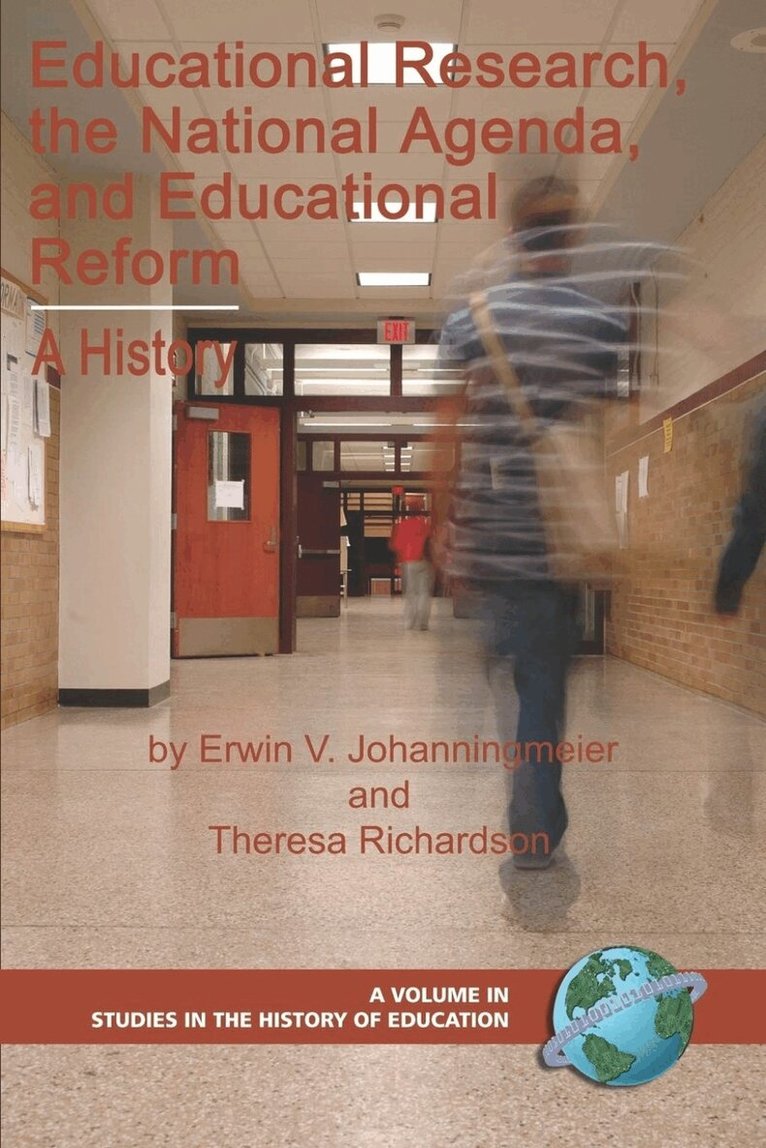
Educational Research, The National Agenda, and Educational Reform examines the origins, history, nature, purposes, and status of educational research by focusing on the relationships among educational research, the national agenda, educational reform, and the social and behavioral sciences. Its major claim is that the history of educational research is embedded in the nation’s social, political, intellectual, and economic histories. Attention is given to three significant periods: the Progressive Era when modern educational research began to assume its present form; the Post-World-War-II-Era when educators and educational researchers were directed to return to or turn to the academic disciplines; and the Civil Rights Era after the Supreme Court in Brown ended legal racial segregation and raised questions about equality of educational opportunity that are still with us. These were significant periods when there was a clear national agenda shaped by both public and private agencies. Educators and educational researchers adopted policies and strategies in response to concerns and interests expressed by the public, by government officials, and by philanthropies. Researchers’ responses have had long-term consequences as seen in the reaction to The Coleman Report, debates about the merits of quantitative research as opposed to qualitative research, the ongoing discussion about the merits of No Child Left Behind, the achievement gap, the creation of the Institute of Education Sciences, and the emphasis now placed on 'scientifically-based research.'The origins of the common school, the work of the philosopher Johann Friedrich Herbart and his followers, and the revolution in scientific method brought about by Charles Darwin’s work are included because they serve as the foundation for educational research. Educational researchers’ identification with and interest in individual performance and ability and their measurement is related to the close relationship educational researchers have had with psychology, a discipline that typically does not focus on social context. The significance of educational researchers’ borrowing from the behavioral sciences, especially psychology, is examined through a discussion of the mental hygiene movement, as supported by private philanthropy, and through consideration of contributors such as G. Stanley Hall, Arnold Gesell, Lewis M. Terman, Daniel Starch, and Stuart A. Courtis.
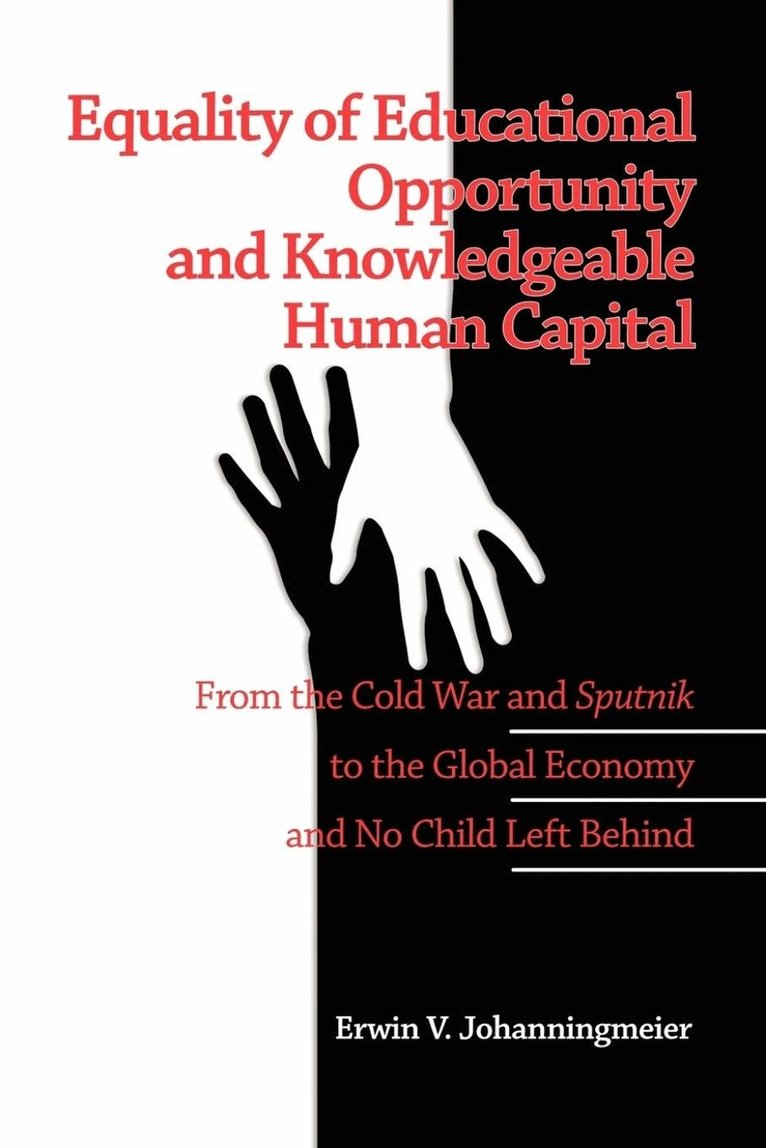
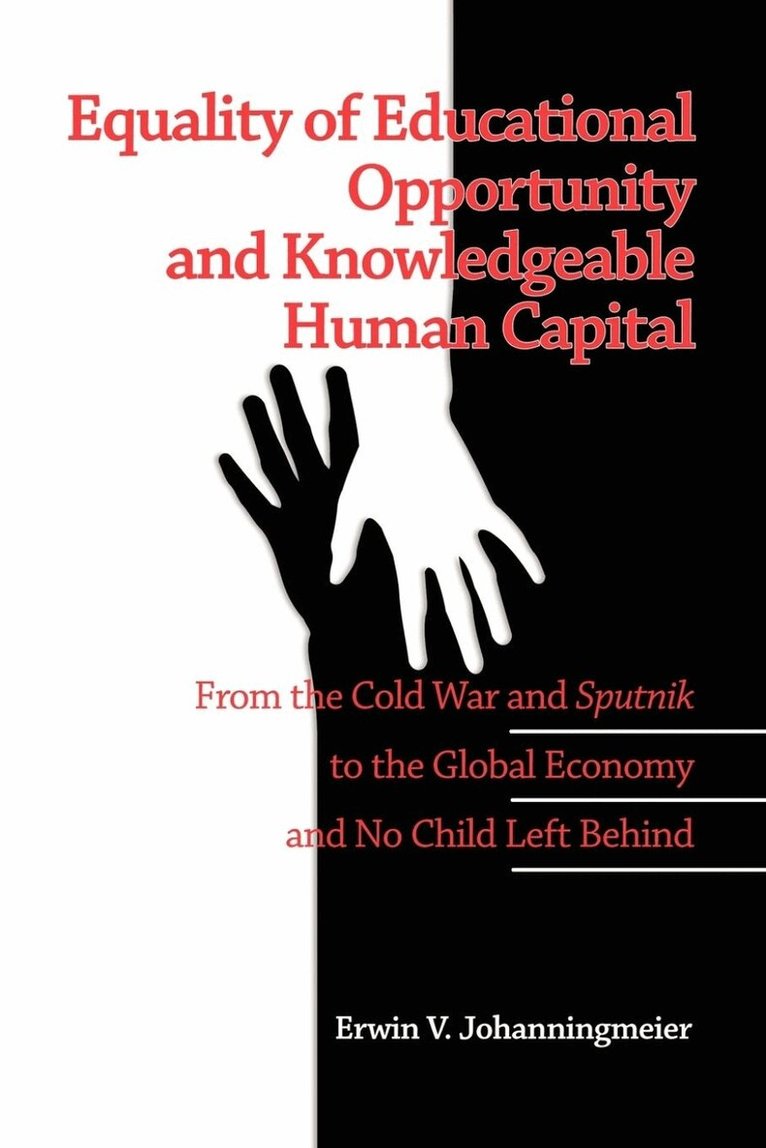
Equality of Educational Opportunity and Knowledgeable Human Capital
From the Cold War and Sputnik to The Global Economy and No Child Left Behind
Häftad, Engelska, 2009
515 kr
Skickas inom 7-10 vardagar
This work explores how the generally accepted definition or measure of equality of educational opportunity at the beginning of the twenty-first century differs from what it was in the immediate postwar era. While there have been differing definitions or measures of equality of educational opportunity, there has been a continual call from education critics and education reformers for more and better mathematics, science, and foreign language in the nation’s schools.This work maintains that public education acquired significance as a vital part of a national agenda in conjunction with three developments. First, the prosperity of the United States after World War II contributed to a consumer dominated culture and the phenomenon of the citizenconsumer. The nation had to expand educational opportunities in response to the increased birth rate in the postwar years and in response to the increased qualifications that the workplace required for entry and employment. Significantly, the nation had the resources to send its children and youth to school for longer and longer periods of time. Better-educated citizens soon took better jobs and they spent paychecks buying everything from new technologies to new and bigger houses and new and bigger cars. Increased household income allowed young members of the family to attend and even complete high school and increased the chance of affording the cost of attending college. Second, by the end of World War II the globalization of the international community was underway, and the United States’ position and role in the international community were clearly challenged by the Soviet Union. As the United States found itself in the Cold War, its national security required an ideological, a military, and a technological strategy. Each of these strategies ultimately depended on higher or post-secondary education, and that had lasting implications for the nation’s elementary and secondary schools. The nation’s engagement in the Cold War required well-educated professionals to secure intelligence and to develop effective propaganda. That engagement also required scientists, mathematicians, engineers to develop and to maintain the technology the nation required for its defense and subsequently for the space race with the Soviet Union. Third and perhaps most importantly, it was becoming increasingly clear in the Cold War Era that the nation would have to address its long history of denying civil rights to some of its citizens, especially but not exclusively, African Americans. As the Supreme Court’s 1954 Brown decision signified, public education was the initial venue where the struggle for racial equality took place.
Equality of Educational Opportunity and Knowledgeable Human Capital
From the Cold War and Sputnik to the Global Economy and No Child Left Behind
Inbunden, Engelska, 2009
950 kr
Skickas inom 7-10 vardagar
This work explores how the generally accepted definition or measure of equality of educational opportunity at the beginning of the twenty-first century differs from what it was in the immediate postwar era. While there have been differing definitions or measures of equality of educational opportunity, there has been a continual call from education critics and education reformers for more and better mathematics, science, and foreign language in the nation’s schools.This work maintains that public education acquired significance as a vital part of a national agenda in conjunction with three developments. First, the prosperity of the United States after World War II contributed to a consumer dominated culture and the phenomenon of the citizenconsumer. The nation had to expand educational opportunities in response to the increased birth rate in the postwar years and in response to the increased qualifications that the workplace required for entry and employment. Significantly, the nation had the resources to send its children and youth to school for longer and longer periods of time. Better-educated citizens soon took better jobs and they spent paychecks buying everything from new technologies to new and bigger houses and new and bigger cars. Increased household income allowed young members of the family to attend and even complete high school and increased the chance of affording the cost of attending college. Second, by the end of World War II the globalization of the international community was underway, and the United States’ position and role in the international community were clearly challenged by the Soviet Union. As the United States found itself in the Cold War, its national security required an ideological, a military, and a technological strategy. Each of these strategies ultimately depended on higher or post-secondary education, and that had lasting implications for the nation’s elementary and secondary schools. The nation’s engagement in the Cold War required well-educated professionals to secure intelligence and to develop effective propaganda. That engagement also required scientists, mathematicians, engineers to develop and to maintain the technology the nation required for its defense and subsequently for the space race with the Soviet Union. Third and perhaps most importantly, it was becoming increasingly clear in the Cold War Era that the nation would have to address its long history of denying civil rights to some of its citizens, especially but not exclusively, African Americans. As the Supreme Court’s 1954 Brown decision signified, public education was the initial venue where the struggle for racial equality took place.