
Esben Leifsen – författare
Visar alla böcker från författaren Esben Leifsen. Handla med fri frakt och snabb leverans.
3 produkter
3 produkter
Häftad, Engelska, 2020
643 kr
Skickas inom 10-15 vardagar
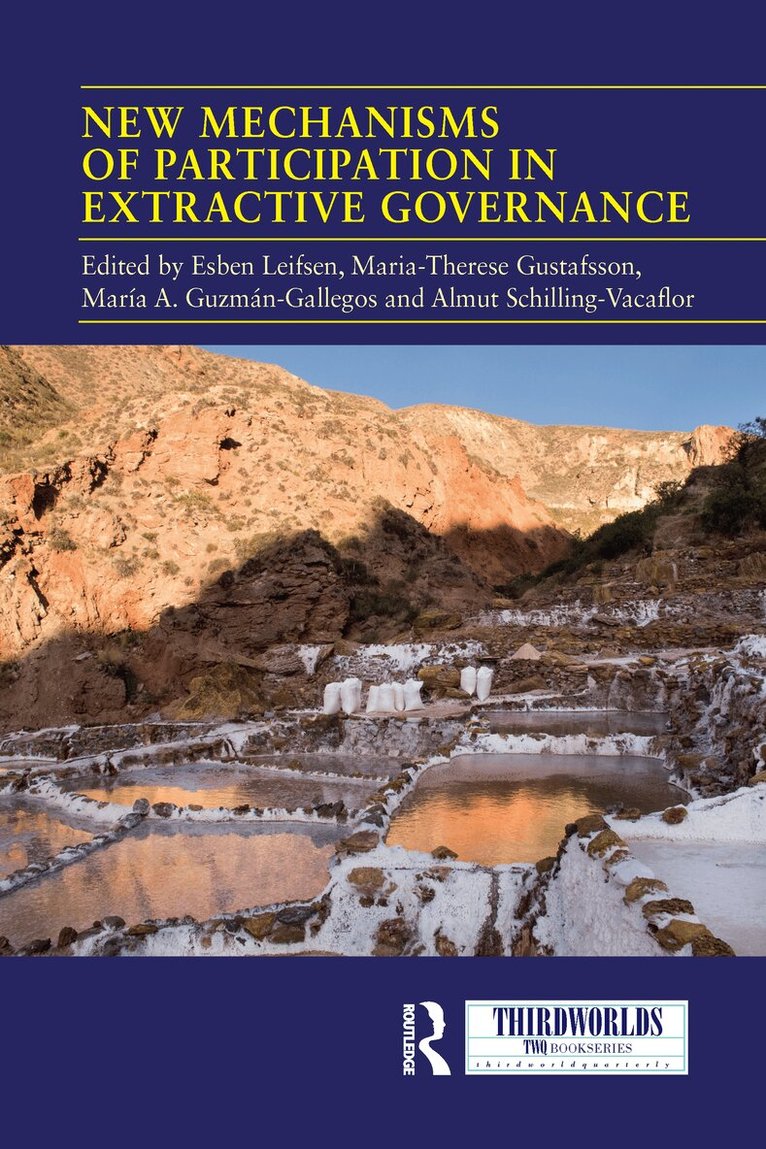
The scholarly debate on deliberative democracy often suggests that participatory processes will contribute to make environmental governance not only more legitimate and effective, but also lead to the empowerment of marginalized social groups. Critical studies, however, analyse how technologies of governance make use of participation to draw boundaries that separate technical knowledge from political concerns, direct the focus towards procedural aspects and contractual obligations, and reinforce hegemonic understandings of development and of local people’s relationships to their environment. This book focuses on the dynamics and use of participatory mechanisms related to the rapid expansion of the extractive industries worldwide and the ways it increasingly affects sensitive natural environments populated by indigenous and other marginalized populations. Nine empirically grounded case studies analyse a range of participatory practices ranging from state-led and corporation-led processes like prior consultation and Free Prior and Informed Consent (FPIC), compensation practices, participatory planning exercises and the participation in environmental impact assessments (EIAs), to community-led consultations, community-based FPIC and EIA processes and struggles for community-based governance of natural resource uses. The book provides new insights through a combination of different theoretical strands, which help to scrutinize the limits to deliberation and empowerment on the one hand, and on the other hand to understand the political resistance potential that alternative uses of participatory mechanisms can generate. The chapters originally published as a special issue of Third World Quarterly.
Inbunden, Engelska, 2018
2 198 kr
Skickas inom 10-15 vardagar
The scholarly debate on deliberative democracy often suggests that participatory processes will contribute to make environmental governance not only more legitimate and effective, but also lead to the empowerment of marginalized social groups. Critical studies, however, analyse how technologies of governance make use of participation to draw boundaries that separate technical knowledge from political concerns, direct the focus towards procedural aspects and contractual obligations, and reinforce hegemonic understandings of development and of local people’s relationships to their environment. This book focuses on the dynamics and use of participatory mechanisms related to the rapid expansion of the extractive industries worldwide and the ways it increasingly affects sensitive natural environments populated by indigenous and other marginalized populations. Nine empirically grounded case studies analyse a range of participatory practices ranging from state-led and corporation-led processes like prior consultation and Free Prior and Informed Consent (FPIC), compensation practices, participatory planning exercises and the participation in environmental impact assessments (EIAs), to community-led consultations, community-based FPIC and EIA processes and struggles for community-based governance of natural resource uses. The book provides new insights through a combination of different theoretical strands, which help to scrutinize the limits to deliberation and empowerment on the one hand, and on the other hand to understand the political resistance potential that alternative uses of participatory mechanisms can generate. The chapters originally published as a special issue of Third World Quarterly.
E-bok
PDF, Spanska, 2017168 kr
Läs direkt efter köp
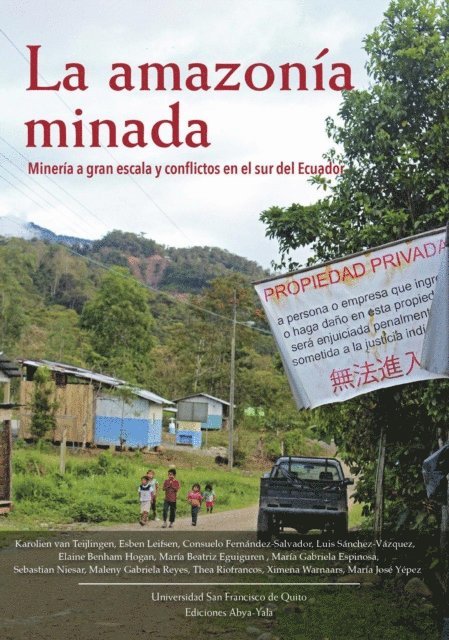
Durante los últimos diez años, entre el 2007 y el 2017, el gobierno liderado por Rafael Correa implementó una nueva política para facilitar el arranque de la minería a gran escala en el Ecuador y de esa manera insertar al país en el mapa minero mundial. Esta apuesta política fue acompañada por el resurgimiento de conflictos y cuestionamientos sobre los impactos ambientales y sociales que se generan alrededor de los procesos de extracción, tanto a nivel local como nacional. En este contexto, el proyecto de minería a gran escala con más avance en el Ecuador —el proyecto Mirador en la amazonía sur ecuatoriana— se ha convertido en una prueba de fuego tanto para esta nueva política estatal, como para quienes la cuestionan desde las comunidades locales, los movimientos sociales y la academia. Este libro tiene como objetivo indagar y profundizar en las características de este proyecto emblemático, así como en las dinámicas y respuestas locales que se han producido alrededor de él. Un trabajo colectivo que presenta un mosaico de contribuciones desde diferentes perspectivas inspiradas en la ecología política, con un fuerte componente empírico proveniente del trabajo de campo de los autores. En él se analizan conflictos ambientales y territoriales, así como las diversas experiencias de la población afectada— los colonos, los shuar, las mujeres— frente al proyecto, y las políticas de conocimiento y mecanismos de participación. A partir de estas indagaciones, los autores reflexionan críticamente sobre la política minera en el país, el papel que los actores involucrados juegan en ella y las relaciones de poder que esta política ha introducido y develado.