Etienne Wasmer – författare
Visar alla böcker från författaren Etienne Wasmer. Handla med fri frakt och snabb leverans.
5 produkter
5 produkter
E-bok
PDF, Engelska, 20071 753 kr
Läs direkt efter köp
While Europe is certainly one of the richest and most educated areas of the world, some of the challenges faced by the old continent are staggering: low economic growth, structural difficulties in the labour market, and increasing international competition. Politicians and policymakers may advocate different means of overcoming the potential economic decline of Europe, but most agree that Europe needs to strengthen human capital, its ultimate competitive advantage inthe world economy.This book looks at the accumulation of human capital from two perspectives, first through formal education and then professional training. It provides a useful summary of the key characteristics of education and training in Europe and also asks key questions about the fundamental problems with the current educational and training systems. More importantly, the book goes on to discuss which policies are necessary to make existing education and training systems more efficient, while also makinghigher skills available to a wider range of people.
Inbunden, Engelska, 2007
2 101 kr
Skickas inom 5-8 vardagar
While Europe is certainly one of the richest and most educated areas of the world, some of the challenges faced by the old continent are staggering: low economic growth, structural difficulties in the labour market, and increasing international competition. Politicians and policymakers may advocate different means of overcoming the potential economic decline of Europe, but most agree that Europe needs to strengthen human capital, its ultimate competitive advantage in the world economy.This book looks at the accumulation of human capital from two perspectives, first through formal education and then professional training. It provides a useful summary of the key characteristics of education and training in Europe and also asks key questions about the fundamental problems with the current educational and training systems. More importantly, the book goes on to discuss which policies are necessary to make existing education and training systems more efficient, while also making higher skills available to a wider range of people.
Inbunden, Engelska, 2017
899 kr
Skickas
Inbunden, Engelska, 2005
2 552 kr
Skickas inom 5-8 vardagar
>Labour Supply and Incentives to Work in Europe highlights recent developments in the labour supply in Europe and gives a detailed assessment of their link with economic policies and labour market institutions. Despite major changes in European labour supply during the past few decades, the existing literature still lacks a comprehensive study of the relationship between labour supply and labour market institutions from a macro perspective. The contributors, themselves from a variety of academic disciplines and backgrounds, consider aspects of labour supply such as incentives to work, determinants of labour force participation and new forms of employment relationships. Each original and specially written chapter has its own discussion chapter to follow it. The book ends with a valuable panel discussion on the topic of labour supply in an enlarged Europe.This book will be read with interest by scholars of economics and labour economics in particular, as well as those researching industrial relations.
E-bok
Franska, 2011179 kr
Läs direkt efter köp
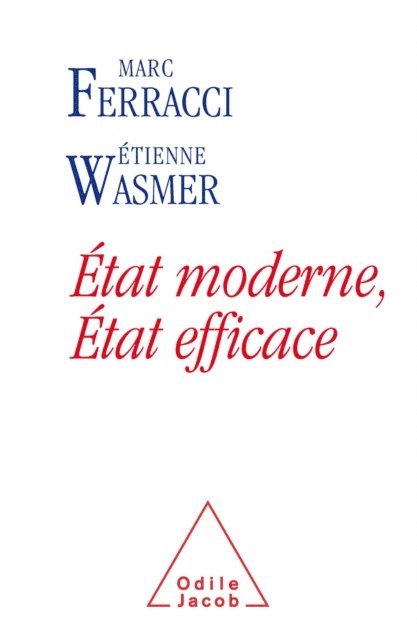
Qu’est-ce qu’un État moderne ? Un État capable de rendre des comptes au citoyen-contribuable. Comment mesurer son efficacité ? En évaluant rigoureusement ses dépenses selon les objectifs poursuivis. En France, on en est loin. Dans un contexte de crise aiguë pour les finances publiques, les intérêts corporatistes et les arguments idéologiques l’emportent encore à l’heure des choix. Pourtant, des travaux sérieux existent désormais sur des sujets aussi sensibles que le RSA, les 35 heures, la taxation des hauts revenus ou les zones d’éducation prioritaires. Faisant l’état des lieux critique de ces dispositifs, Marc Ferracci et Étienne Wasmer expliquent quels sont les critères auxquels doit répondre une évaluation digne de ce nom. Et, s’appuyant sur des exemples à l’étranger, ils font des propositions pour favoriser cette culture de l’évaluation. Une réflexion originale et abondamment illustrée sur la dépense publique. Avec un enjeu fort à la clé : celui de simplifier des procédures trop souvent opaques, pour que les citoyens puissent mieux se les approprier. Marc Ferracci est économiste, maître de conférences à l’université Paris-Est-Marne-la-Vallée et chercheur au CREST (Centre de recherche en économie et statistique). Il a réalisé de nombreux travaux d’évaluation portant sur les politiques d’emploi et de formation professionnelle. Étienne Wasmer est économiste, professeur des universités à Sciences Po, directeur du LIEPP (Laboratoire interdisciplinaire d’évaluation des politiques publiques). Il a reçu le Prix du meilleur jeune économiste 2006, décerné par Le Monde et le Cercle des économistes. Il est l’auteur de Principes de microéconomie qui a reçu le prix 2010 de l’AFSE (Association française de science économique).