Pietro Garibaldi – författare
Visar alla böcker från författaren Pietro Garibaldi. Handla med fri frakt och snabb leverans.
7 produkter
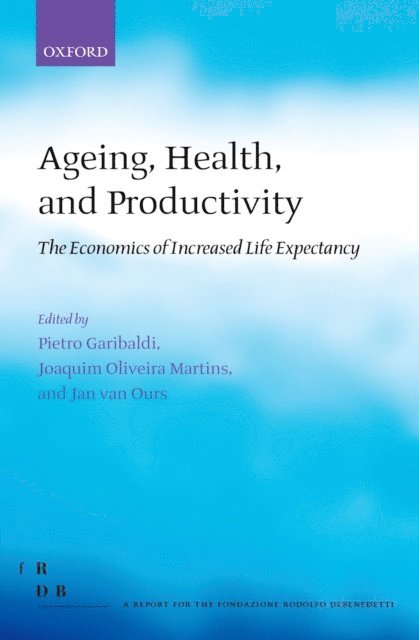
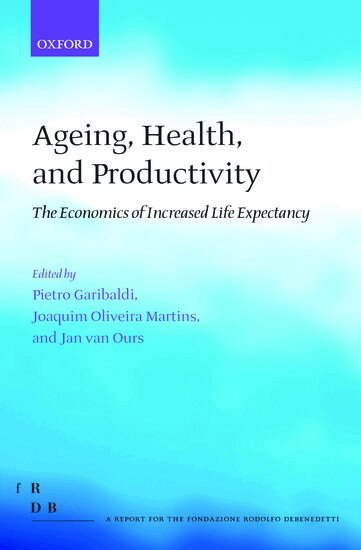
Ageing, Health, and Productivity
The Economics of Increased Life Expectancy
Av Jan van Ours, Joaquim Oliveira Martins m. fl.
E-bok, 2010
1813 kr
Lägg i varukorg
Increase in life expectancy is arguably the most remarkable by-product of modern economic growth. In the last 30 years we have gained roughly 2.5 years of longevity every decade, both in Europe and the United States. Successfully managing ageing and longevity over the next twenty years is one of …
Education and Training in Europe
Av Etienne Wasmer, Pietro Garibaldi m. fl.
E-bok, 2007
1871 kr
Lägg i varukorg
While Europe is certainly one of the richest and most educated areas of the world, some of the challenges faced by the old continent are staggering: low economic growth, structural difficulties in the labour market, and increasing international competition. Politicians and policymakers may advocate …
Personnel Economics in Imperfect Labour Markets
E-bok, 2006
638 kr
Lägg i varukorg
Personnel economics, the use of economics for studying human resource issues, is becoming a standard course in business and economics departments around the world. Indeed, after being successfully introduced in North American business schools, the teaching of personnel economics is now growing in …
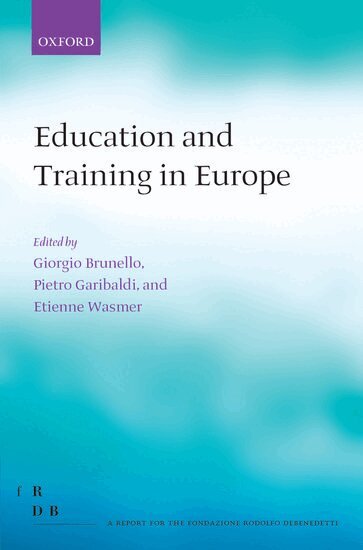
Education and Training in Europe
Av Giorgio Brunello, Pietro Garibaldi m. fl.
Inbunden, 2007
3310 kr
Lägg i varukorg
While Europe is certainly one of the richest and most educated areas of the world, some of the challenges faced by the old continent are staggering: low economic growth, structural difficulties in the labour market, and increasing international competition. Politicians and policymakers may advocate …
Personnel Economics in Imperfect Labour Markets
Inbunden, 2006
3555 kr
Lägg i varukorg
Personnel economics, the use of economics for studying human resource issues, is becoming a standard course in business and economics departments around the world. Indeed, after being successfully introduced in North American business schools, the teaching of personnel economics is now growing in …
Personnel Economics in Imperfect Labour Markets
Häftad, 2006
1129 kr
Lägg i varukorg
Personnel economics, the use of economics for studying human resource issues, is becoming a standard course in business and economics departments around the world. Indeed, after being successfully introduced in North American business schools, the teaching of personnel economics is now growing in …
Ageing, Health, and Productivity
The Economics of Increased Life Expectancy
Av Pietro Garibaldi, Pietro Garibaldi m. fl.
Inbunden, 2010
2933 kr
Lägg i varukorg
Increase in life expectancy is arguably the most remarkable by-product of modern economic growth. In the last 30 years we have gained roughly 2.5 years of longevity every decade, both in Europe and the United States. Successfully managing ageing and longevity over the next twenty years is one of …