Ettien Koffi - Böcker
Visar alla böcker från författaren Ettien Koffi. Handla med fri frakt och snabb leverans.
3 produkter
3 produkter
2 153 kr
Skickas inom 10-15 vardagar
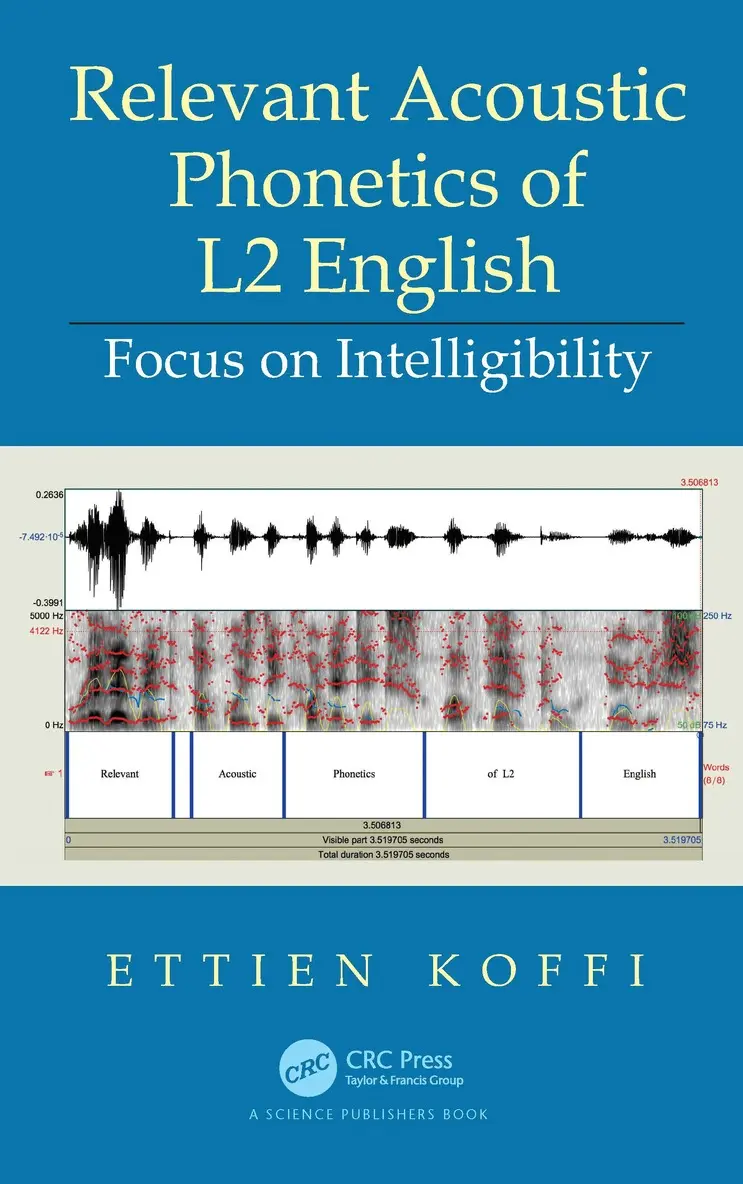
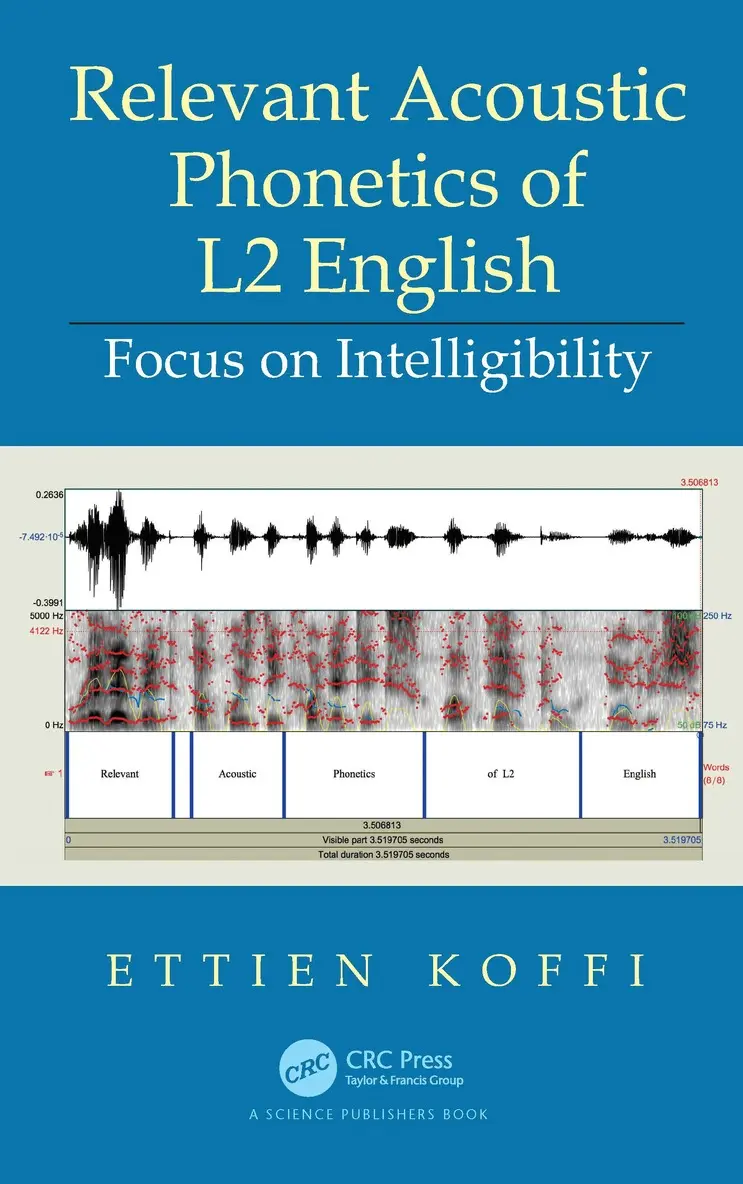
Intelligibility is the ultimate goal of human communication. However, measuring it objectively remained elusive until the 1940s when physicist Harvey Fletcher pioneered a psychoacoustic methodology for doing so. Another physicist, von Bekesy, demonstrated clinically that Fletcher’s theory of Critical Bands was anchored in anatomical and auditory reality. Fletcher’s and Bekesy’s approach to intelligibility has revolutionized contemporary understanding of the processes involved in encoding and decoding speech signals. Their insights are applied in this book to account for the intelligibility of the pronunciation of 67 non-native speakers from the following language backgrounds –10 Arabic, 10 Japanese, 10 Korean, 10 Mandarin, 11 Serbian and Croatian "the Slavic Group," 6 Somali, and 10 Spanish speakers who read the Speech Accent Archive elicitation paragraph. Their pronunciation is analyzed instrumentally and compared and contrasted with that of 10 native speakers of General American English (GAE) who read the same paragraph. The data-driven intelligibility analyses proposed in this book help answer the following questions: Can L2 speakers of English whose native language lacks a segment/segments or a suprasegment/ suprasegments manage to produce it/them intelligibly? If they cannot, what segments or suprasegments do they use to substitute for it/them? Do the compensatory strategies used interfere with intelligibility?The findings reported in this book are based on nearly 12,000 measured speech tokens produced by all the participants. This includes some 2,000 vowels, more than 500 stop consonants, over 3,000 fricatives, nearly 1,200 nasals, about 1,500 approximants, a over 1,200 syllables onsets, as many as 800 syllable codas, more than 1,600 measurement of F0/pitch, and duration measurements of no fewer than 539 disyllabic words. These measurements are in keeping with Baken and Orlikoff (2000:3) and in accordance with widely accepted Just Noticeable Difference thresholds, and relative functional load calculations provided by Catforda (1987).
804 kr
Skickas inom 10-15 vardagar
Intelligibility is the ultimate goal of human communication. However, measuring it objectively remained elusive until the 1940s when physicist Harvey Fletcher pioneered a psychoacoustic methodology for doing so. Another physicist, von Bekesy, demonstrated clinically that Fletcher’s theory of Critical Bands was anchored in anatomical and auditory reality. Fletcher’s and Bekesy’s approach to intelligibility has revolutionized contemporary understanding of the processes involved in encoding and decoding speech signals. Their insights are applied in this book to account for the intelligibility of the pronunciation of 67 non-native speakers from the following language backgrounds –10 Arabic, 10 Japanese, 10 Korean, 10 Mandarin, 11 Serbian and Croatian "the Slavic Group," 6 Somali, and 10 Spanish speakers who read the Speech Accent Archive elicitation paragraph. Their pronunciation is analyzed instrumentally and compared and contrasted with that of 10 native speakers of General American English (GAE) who read the same paragraph. The data-driven intelligibility analyses proposed in this book help answer the following questions: Can L2 speakers of English whose native language lacks a segment/segments or a suprasegment/ suprasegments manage to produce it/them intelligibly? If they cannot, what segments or suprasegments do they use to substitute for it/them? Do the compensatory strategies used interfere with intelligibility?The findings reported in this book are based on nearly 12,000 measured speech tokens produced by all the participants. This includes some 2,000 vowels, more than 500 stop consonants, over 3,000 fricatives, nearly 1,200 nasals, about 1,500 approximants, a over 1,200 syllables onsets, as many as 800 syllable codas, more than 1,600 measurement of F0/pitch, and duration measurements of no fewer than 539 disyllabic words. These measurements are in keeping with Baken and Orlikoff (2000:3) and in accordance with widely accepted Just Noticeable Difference thresholds, and relative functional load calculations provided by Catforda (1987).
2 127 kr
Skickas inom 5-8 vardagar
The book proposes a paradigm shift in language planning and language policy in Africa. For the past fifty years, the dominant model has been the hegemonic model whereby a language of wider communication (LWC) is imposed on minority languages. It is now time for a paradigm shift in favor of a more egalitarian model in which all the languages spoken in the same country, irrespective of their size, are planned. The paradigm shift concerns four critical areas: status planning, cost-benefit planning, acquisition planning, and corpus planning. Such a shift is justified for the following reasons: First, the hegemonic model has a dismal track record of success in Africa and elsewhere. Second, the hegemonic model exacerbates linguistic conflicts in many countries. Consequently, policy makers shun it for fear of jeopardizing the fragile social fabric in their respective countries. Last, a shift away from the hegemonic model is recommended because it is too costly to implement. The "democratic model" is undergirded by the Strategic Game Theory proposed by David Laitin. It forecasts a 3±1 language outcome for most African countries. This outcome supports the "three language formula" now called for by the United Nations Development Program (UNDP).