Eva Mantzourani – författare
Visar alla böcker från författaren Eva Mantzourani. Handla med fri frakt och snabb leverans.
8 produkter
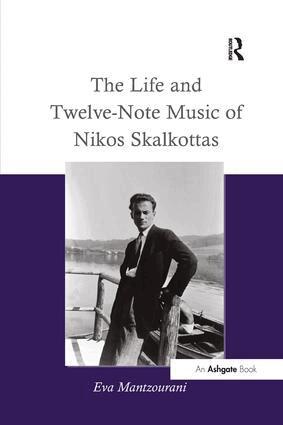
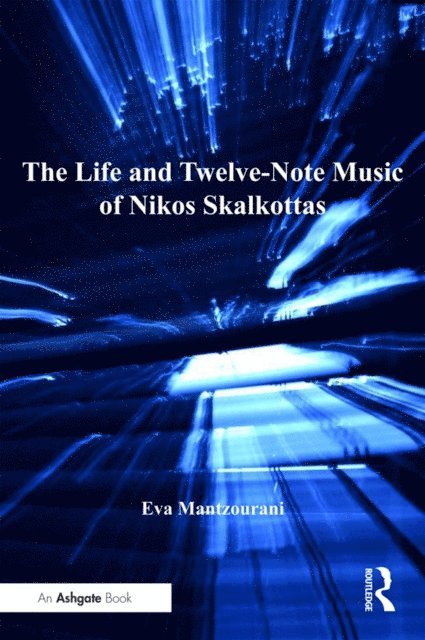
Life and Twelve-Note Music of Nikos Skalkottas
Inbunden, 2011
2818 kr
Lägg i varukorg
Nikos Skalkottas is perhaps the last great 'undiscovered' composer of the twentieth century. In the 1920s he was a promising young violinist and composer in Berlin, and a student of Schoenberg, who included him among his most gifted pupils. It was only after his return to Greece in 1933 that …
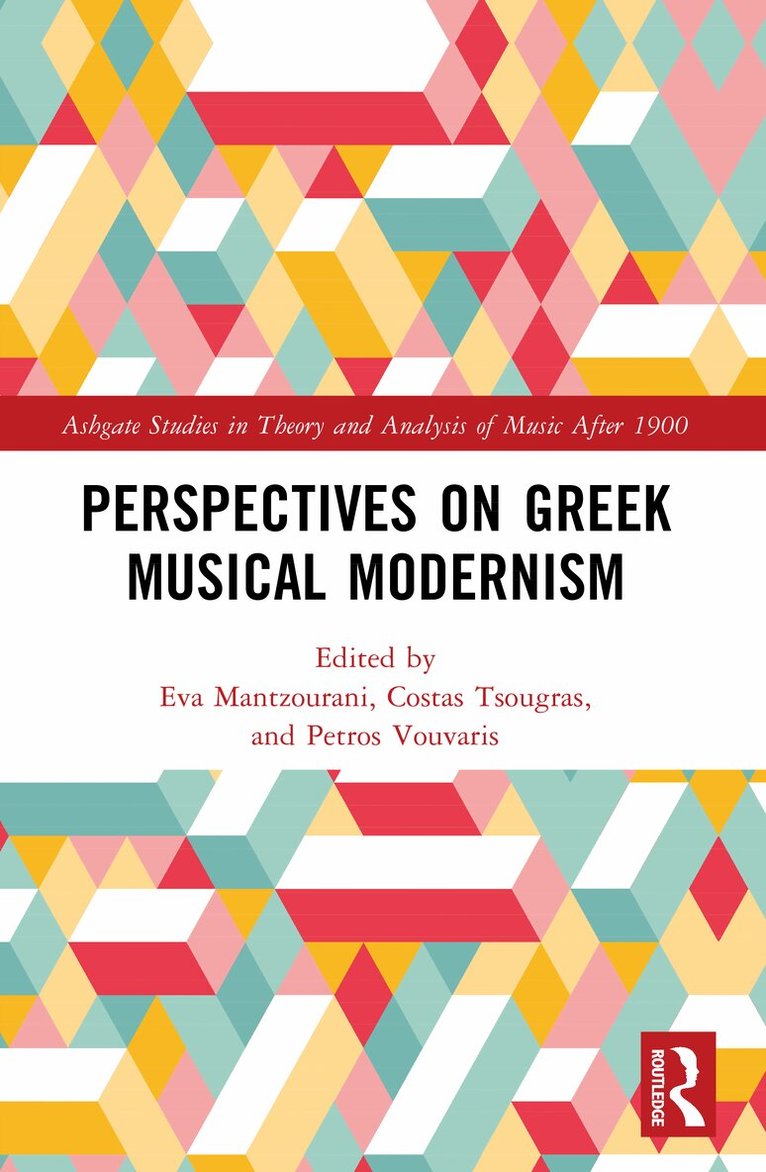
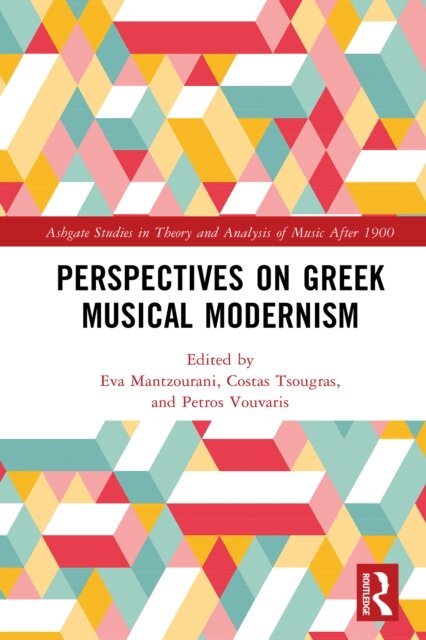
Perspectives on Greek Musical Modernism
Av Eva Mantzourani, Costas Tsougras m. fl.
Häftad, 2026
725 kr
Lägg i varukorg
This is the first book to investigate systematically the diverse aspects and compositional approaches of Greek musical modernism.The volume contributes to ongoing discussions about aesthetic modernism in general and the epistemological issues that pertain to its historiography, especially with …
Perspectives on Greek Musical Modernism
Av Eva Mantzourani, Costas Tsougras m. fl.
Inbunden, 2025
2578 kr
Lägg i varukorg
This is the first book to investigate systematically the diverse aspects and compositional approaches of Greek musical modernism.The volume contributes to ongoing discussions about aesthetic modernism in general and the epistemological issues that pertain to its historiography, especially with …
Life and Twelve-Note Music of Nikos Skalkottas
Häftad, 2016
917 kr
Lägg i varukorg
Nikos Skalkottas is perhaps the last great 'undiscovered' composer of the twentieth century. In the 1920s he was a promising young violinist and composer in Berlin, and a student of Schoenberg, who included him among his most gifted pupils. It was only after his return to Greece in 1933 that …
Life and Twelve-Note Music of Nikos Skalkottas
E-bok, 2016
1052 kr
Lägg i varukorg
Nikos Skalkottas is perhaps the last great ''undiscovered'' composer of the twentieth century. In the 1920s he was a promising young violinist and composer in Berlin, and a student of Schoenberg, who included him among his most gifted pupils. It was only after his return to Greece in 1933 that …
Life and Twelve-Note Music of Nikos Skalkottas
E-bok, 2016
1052 kr
Lägg i varukorg
Nikos Skalkottas is perhaps the last great ''undiscovered'' composer of the twentieth century. In the 1920s he was a promising young violinist and composer in Berlin, and a student of Schoenberg, who included him among his most gifted pupils. It was only after his return to Greece in 1933 that …
Perspectives on Greek Musical Modernism
Av Petros Vouvaris, Costas Tsougras m. fl.
E-bok, 2025
856 kr
Lägg i varukorg
This is the first book to investigate systematically the diverse aspects and compositional approaches of Greek musical modernism.The volume contributes to ongoing discussions about aesthetic modernism in general and the epistemological issues that pertain to its historiography, especially with …
Perspectives on Greek Musical Modernism
Av Petros Vouvaris, Costas Tsougras m. fl.
E-bok, 2025
829 kr
Lägg i varukorg
This is the first book to investigate systematically the diverse aspects and compositional approaches of Greek musical modernism.The volume contributes to ongoing discussions about aesthetic modernism in general and the epistemological issues that pertain to its historiography, especially with …