Evan Bourke – författare
Visar alla böcker från författaren Evan Bourke. Handla med fri frakt och snabb leverans.
4 produkter
4 produkter
Häftad, Engelska, 2025
237 kr
Skickas inom 7-10 vardagar
Deep maps capture complex relationships to place and help trace the relationship between the abstract spaces of traditional maps and the cultural and literary history of the places that they represent. Using early modern Ireland as a template, this Element explores how deep-mapping techniques and a decolonial data ethic can be used to assemble a more culturally and linguistically representative archive and create more inclusive literary histories. It shows how deep mapping can disrupt colonial teleology and counter the monophone (and, specifically, anglophone) colonial record by bringing the long-neglected voices of the colonised back into the conversation. In doing so, it recovers a pre-conquest cultural vibrancy which colonisation, the language shift from Irish to English, and scholarly inattention successively occluded. More broadly, it offers a model for engaging with decolonial literary deep maps by developing reading strategies for 'juxtapuntal' reading that has the potential to decolonise the canon.
Inbunden, Engelska, 2025
764 kr
Skickas inom 7-10 vardagar
Deep maps capture complex relationships to place and help trace the relationship between the abstract spaces of traditional maps and the cultural and literary history of the places that they represent. Using early modern Ireland as a template, this Element explores how deep-mapping techniques and a decolonial data ethic can be used to assemble a more culturally and linguistically representative archive and create more inclusive literary histories. It shows how deep mapping can disrupt colonial teleology and counter the monophone (and, specifically, anglophone) colonial record by bringing the long-neglected voices of the colonised back into the conversation. In doing so, it recovers a pre-conquest cultural vibrancy which colonisation, the language shift from Irish to English, and scholarly inattention successively occluded. More broadly, it offers a model for engaging with decolonial literary deep maps by developing reading strategies for 'juxtapuntal' reading that has the potential to decolonise the canon.
Häftad, Engelska, 2026
509 kr
Kommande
This volume presents selected correspondence of Katherine Jones, Viscountess Ranelagh (1615-1691), highlighting the important role she played in the intellectual and political circles of seventeenth-century England and Ireland. The letters chart Ranelagh's life, from her besiegement in Athlone in 1641 until her death in 1691. Ranelagh has often been considered alongside her famous brother, Robert Boyle (1627-1691), but the correspondence reveals that Ranelagh had a scholarly reputation in her own right. It showcases the varied nature of Ranelagh's writing. This includes prophetical discussions with Benjamin Worsley (1618-1673), theological discussions with John Beale (c.1608-1683), a discourse on the philosopher's stone, and discussions with Anthony Dopping (1643-1697) regarding the first version of the Old Testament in Irish. It also includes familial correspondence that engaged with political events of the time and illuminates Ranelagh's role in offering medical, educational, and financial advice to family members and friends.
Del 47 - Studies in Renaissance Literature
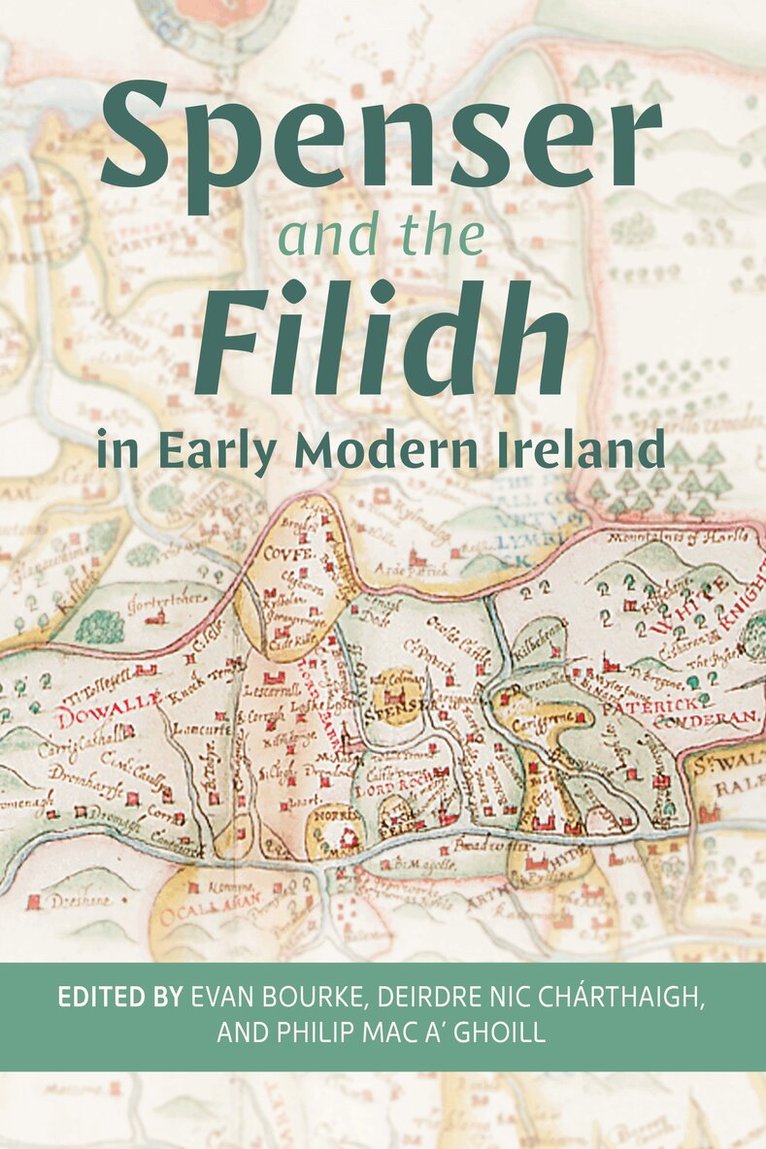
Spenser and the Filidh in Early Modern Ireland
Inbunden, Engelska, 2026
1 211 kr
Skickas inom 5-8 vardagar
Uncovers a vibrant literary culture often overlooked by colonial historiography and Anglocentric critical traditions. Reimagines Spenser's Munster through multilingual networks, bardic poetry, and digital methodologies.Long dominated by Anglocentric narratives, early modern literary studies have often cast Ireland as a backdrop to English self-fashioning. This volume reorients that perspective by foregrounding the multilingual, polyvocal literary culture of Munster in the late sixteenth century, situating Edmund Spenser not as an isolated colonial voice but as one writer among many-Gaelic, Old English, and New English-engaged in a contested cultural landscape. Drawing on archival, digital, and geospatial methodologies, the essays presented here explore bardic poetry, deep mapping, and the politics of language in texts by and about Spenser and his contemporaries. Case studies of bardic poetry, manuscript culture, and poetic networks reveal a vibrant and dynamic Gaelic literary tradition that responded to colonial violence.By integrating perspectives from Irish-language literature, English studies, and digital humanities, this collection offers a vital corrective to monolingual historiographies and opens new pathways for understanding the cultural entanglements of Spenser's Munster. It reconceptualises the idea of Spenser in Ireland by highlighting the region's cultural complexity and multilingualism, demonstrating how attention to this richness deepens our understanding of one of the most fraught and fateful periods in the shared history of Ireland and England.