F. R. Ankersmit - Böcker
Visar alla böcker från författaren F. R. Ankersmit. Handla med fri frakt och snabb leverans.
9 produkter
9 produkter
665 kr
Skickas inom 3-6 vardagar
"The chief business of twentieth-century philosophy” is “to reckon with twentieth-century history," claimed R. G. Collingwood. In this remarkable collection of essays, Frank Ankersmit demonstrates the prescience of that remark and goes a long way toward meeting its challenge. Responding to the work of Hayden White, Arthur Danto, and Hans-Georg Gadamer, he examines such issues as the difference between historical representation and artistic expression, the status of metaphor in historical description, and the relation of postmodernism to historicism. Ankersmit's fluent grasp of European thought and his ability to incorporate concepts from literary theory, art history, the philosophy of science, and political thought into his analyses assure that this collection will interest readers throughout the humanities. This title is part of UC Press's Voices Revived program, which commemorates University of California Press’s mission to seek out and cultivate the brightest minds and give them voice, reach, and impact. Drawing on a backlist dating to 1893, Voices Revived makes high-quality, peer-reviewed scholarship accessible once again using print-on-demand technology. This title was originally published in 1994.
1 469 kr
Skickas inom 3-6 vardagar
"The chief business of twentieth-century philosophy” is “to reckon with twentieth-century history," claimed R. G. Collingwood. In this remarkable collection of essays, Frank Ankersmit demonstrates the prescience of that remark and goes a long way toward meeting its challenge. Responding to the work of Hayden White, Arthur Danto, and Hans-Georg Gadamer, he examines such issues as the difference between historical representation and artistic expression, the status of metaphor in historical description, and the relation of postmodernism to historicism. Ankersmit's fluent grasp of European thought and his ability to incorporate concepts from literary theory, art history, the philosophy of science, and political thought into his analyses assure that this collection will interest readers throughout the humanities. This title is part of UC Press's Voices Revived program, which commemorates University of California Press’s mission to seek out and cultivate the brightest minds and give them voice, reach, and impact. Drawing on a backlist dating to 1893, Voices Revived makes high-quality, peer-reviewed scholarship accessible once again using print-on-demand technology. This title was originally published in 1994.
1 410 kr
Tillfälligt slut
Metaphor lies at the heart of the contemporary debate in aesthetics, semantics and the philosophy of science. It is generally recognized now that metaphor is not an obfuscation of the truth (as so many philosophers since Plato have argued); on the contrary, it is essential that we consider metaphor if we strive for an optimal understanding of how truth is gained both in science and in our everyday dealings with reality. Hence, metaphor is of interest not only for the literary theorists, but for all those who wish to understand science and how to grasp the structure of our social world. This volume presents 11 essays on the role of metaphor in philosophy, poetry, semiotics, art, literary criticism, economics, medical science and political theory.
1 601 kr
Skickas inom 10-15 vardagar
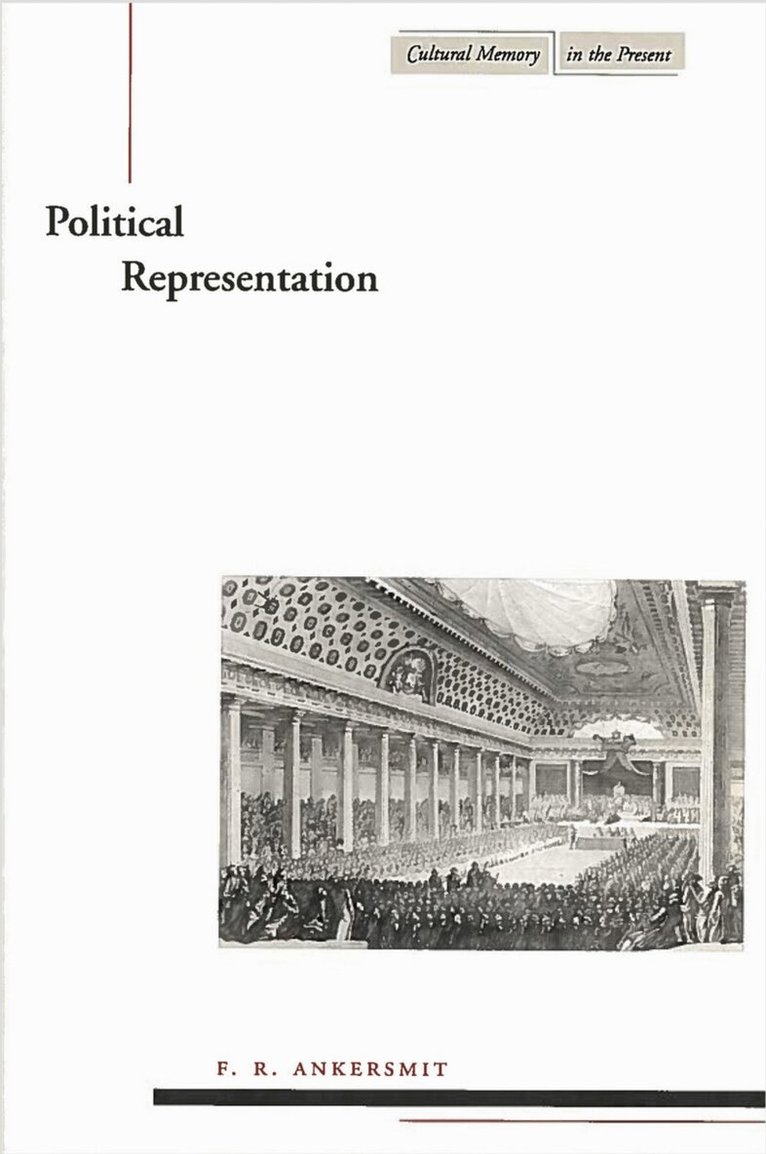
Taking as its point of departure a sharp critique of Rawls's influential A Theory of Justice—which, like most Western political philosophy since the seventeenth century, considers ethics to be foundational to a proper understanding of the political—this book looks at politics from an aesthetic perspective.To achieve this, it focuses on the notion of political "representation" as the heart of parliamentary democracy, openly welcoming and embracing all the aestheticist connotations of the term. Representation will always present us with an "aesthetic gap" between the represented and the representation; it is in this aesthetic gap that legitimate political power and all political creativity originate.In a representative democracy, this aesthetic gap appears in the fact that the representative is not a mandatary but a delegate of the voter (possessing a certain autonomy with regard to the voter, much in the same way that a painting has a certain autonomy vis-à-vis what it depicts). This was made clear by Burke more than two centuries ago and has been the practice of well-functioning representative democracies to the present day. The author sees totalitarianism as the inevitable consequence of the abandonment of aestheticism.This "brokenness" of the political world of representative democracy places an aesthetic political philosophy of democracy in the tradition of Machiavelli, Montesquieu, Tocqueville, and Schumpeter, by contrast to most of contemporary political philosophy. The aesthetic view enables us to develop a new and original account of the origins and nature of democracy, one that demonstrates how the present shortcomings of democracy can best be remedied to meet the challenges of the new century.
388 kr
Skickas inom 7-10 vardagar
Taking as its point of departure a sharp critique of Rawls's influential A Theory of Justice—which, like most Western political philosophy since the seventeenth century, considers ethics to be foundational to a proper understanding of the political—this book looks at politics from an aesthetic perspective.To achieve this, it focuses on the notion of political "representation" as the heart of parliamentary democracy, openly welcoming and embracing all the aestheticist connotations of the term. Representation will always present us with an "aesthetic gap" between the represented and the representation; it is in this aesthetic gap that legitimate political power and all political creativity originate.In a representative democracy, this aesthetic gap appears in the fact that the representative is not a mandatary but a delegate of the voter (possessing a certain autonomy with regard to the voter, much in the same way that a painting has a certain autonomy vis-à-vis what it depicts). This was made clear by Burke more than two centuries ago and has been the practice of well-functioning representative democracies to the present day. The author sees totalitarianism as the inevitable consequence of the abandonment of aestheticism.This "brokenness" of the political world of representative democracy places an aesthetic political philosophy of democracy in the tradition of Machiavelli, Montesquieu, Tocqueville, and Schumpeter, by contrast to most of contemporary political philosophy. The aesthetic view enables us to develop a new and original account of the origins and nature of democracy, one that demonstrates how the present shortcomings of democracy can best be remedied to meet the challenges of the new century.
1 539 kr
Skickas inom 10-15 vardagar
This book fully recognizes the aestheticism inherent in historical writing while acknowledging its claim to satisfy the demands of rational and scientific inquiry. Focusing on the notion of representation and on the necessity of distinguishing between representation and description, it argues that the traditional semantic apparatus of meaning, truth, and reference that we use for description must be redefined if we are to understand properly the nature of historical writing.The author shows that historical representation is essentially aesthetic, though its adequacy can be discussed rationally. He defines the criteria for representational adequacy, and examines the relationship between these criteria and value judgments. He also investigates the historicist conception of historical writing and the notions of identity and narrativity. This investigation takes place against the backdrop of the ideas of four of the most influential contemporary historical theorists: Erich Auerbach, Arthur Danto, Hayden White, and Jörn Rüsen.The book aims to identify and to explore for historical theory the juste milieu between the extravagances of the literary approach to historical writing and the narrow-mindedness of empiricists. The search for this juste milieu leads to a rationalist aesthetics of historical writing, a position that repeats both the aesthetic dimension of all historical writing and the criteria defining the rationality of the discipline of history.
371 kr
Skickas inom 7-10 vardagar
This book fully recognizes the aestheticism inherent in historical writing while acknowledging its claim to satisfy the demands of rational and scientific inquiry. Focusing on the notion of representation and on the necessity of distinguishing between representation and description, it argues that the traditional semantic apparatus of meaning, truth, and reference that we use for description must be redefined if we are to understand properly the nature of historical writing.The author shows that historical representation is essentially aesthetic, though its adequacy can be discussed rationally. He defines the criteria for representational adequacy, and examines the relationship between these criteria and value judgments. He also investigates the historicist conception of historical writing and the notions of identity and narrativity. This investigation takes place against the backdrop of the ideas of four of the most influential contemporary historical theorists: Erich Auerbach, Arthur Danto, Hayden White, and Jörn Rüsen.The book aims to identify and to explore for historical theory the juste milieu between the extravagances of the literary approach to historical writing and the narrow-mindedness of empiricists. The search for this juste milieu leads to a rationalist aesthetics of historical writing, a position that repeats both the aesthetic dimension of all historical writing and the criteria defining the rationality of the discipline of history.
1 430 kr
Skickas inom 10-15 vardagar
This ambitious work aims to reintroduce history into political theory. Contemporary political philosophy—liberalism, communitarianism, and republicanism—disregards history because it is irrelevant to the nature of politics and to what constitutes a political problem. The author argues that this view reduces politics and political philosophy to a vapid academic game that is insensitive to both the essence and practice of politics. He proposes that an indissoluble link between history and politics lies in the notion of representation.Since history represents the past, and the core of democratic politics resides in political representation, the author sees representation as the common ground of history and politics. He welcomes, analyzes, and elaborates all the aestheticist connotations of representation. The history of Machiavellianism demonstrates how influential the impact of history has been on political thought, ironically resulting in the repression of history from philosophical reflection on the nature of politics. Historicist political philosophy is distinguished from its anti-historicist rival in terms of the distinction between historicist compromise and anti-historicist consensus, as seen in the work of Rawls and Rorty. Compromise is shown to be politically creative and open-minded, whereas consensus is conservative and totalitarian.Finally, the author argues that respect is the supreme democratic virtue, and that historicist political philosophy respects "respect," while its anti-historicist rival has no rivals between disrespect and indifference.
332 kr
Skickas inom 7-10 vardagar
This ambitious work aims to reintroduce history into political theory. Contemporary political philosophy—liberalism, communitarianism, and republicanism—disregards history because it is irrelevant to the nature of politics and to what constitutes a political problem. The author argues that this view reduces politics and political philosophy to a vapid academic game that is insensitive to both the essence and practice of politics. He proposes that an indissoluble link between history and politics lies in the notion of representation.Since history represents the past, and the core of democratic politics resides in political representation, the author sees representation as the common ground of history and politics. He welcomes, analyzes, and elaborates all the aestheticist connotations of representation. The history of Machiavellianism demonstrates how influential the impact of history has been on political thought, ironically resulting in the repression of history from philosophical reflection on the nature of politics. Historicist political philosophy is distinguished from its anti-historicist rival in terms of the distinction between historicist compromise and anti-historicist consensus, as seen in the work of Rawls and Rorty. Compromise is shown to be politically creative and open-minded, whereas consensus is conservative and totalitarian.Finally, the author argues that respect is the supreme democratic virtue, and that historicist political philosophy respects "respect," while its anti-historicist rival has no rivals between disrespect and indifference.