F. Stewart – författare
Visar alla böcker från författaren F. Stewart. Handla med fri frakt och snabb leverans.
15 produkter
War and Underdevelopment: Volume 2: Country Experiences
Av F. Stewart, V. Fitzgerald m. fl.
Häftad, 2000
1041 kr
Lägg i varukorg
Wars, especially civil wars, are among the most serious causes of human suffering and underdevelopment. Yet economic analysis of developing countries at war is relatively rare. These volumes aim to reverse this neglect, tracing the economic and social consequences of conflict both theoretically and …
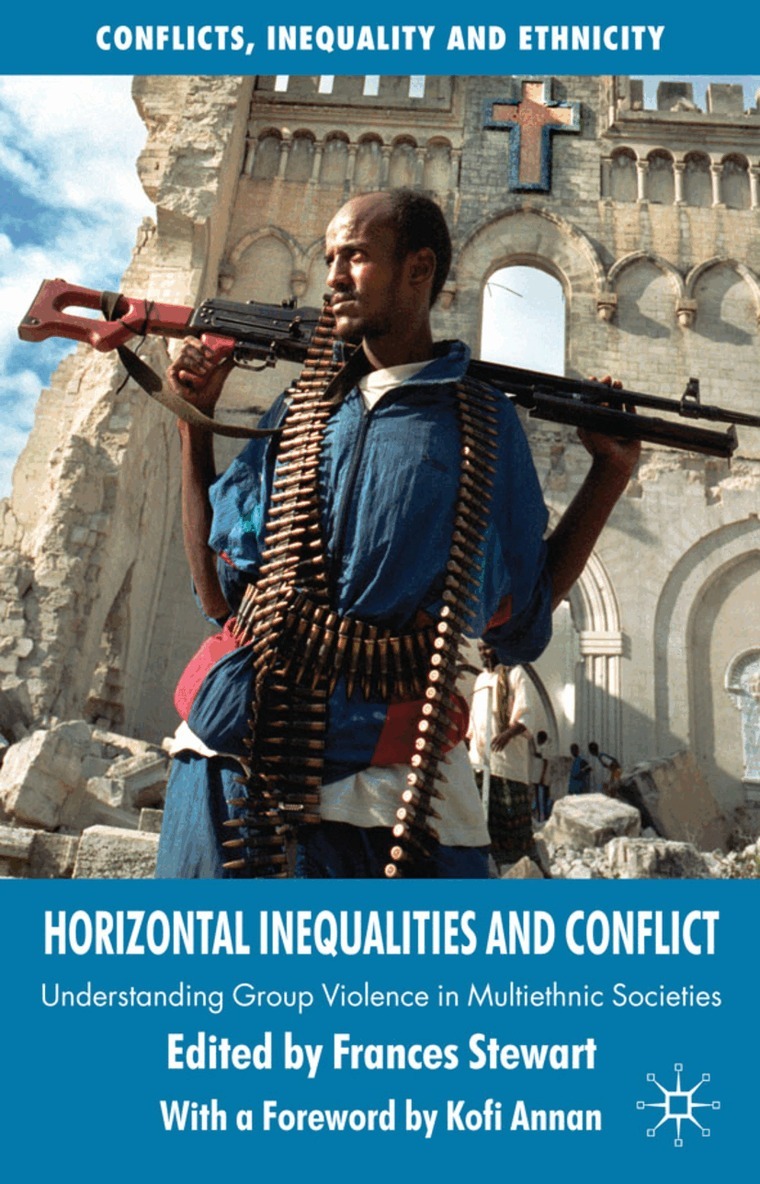
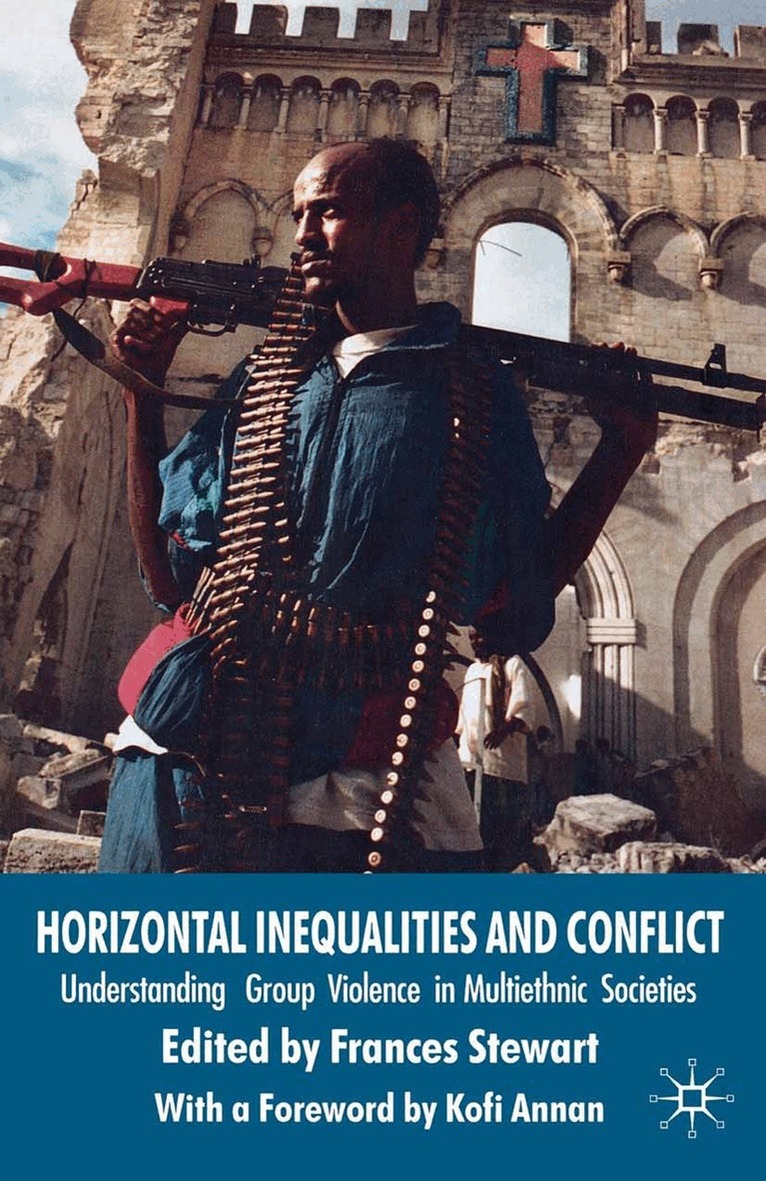
Horizontal Inequalities and Conflict
Understanding Group Violence in Multiethnic Societies
Av F. Stewart
Häftad, 2008
1095 kr
Lägg i varukorg
Drawing on econometric evidence and in-depth studies of West Africa, Latin America and Southeast Asia, this book explores how horizontal inequalities - ethnic, religious or racial - are a source of violent conflict and how political, economic and cultural status inequalities have contributed. …
North-South and South-South
Essays on International Economics
Av F. Stewart
E-bok, 1991
1596 kr
Lägg i varukorg
''...an important and timely contribution to the study of South-South economic relations. It provides a cogent and detailed analysis...''-Henock Kifle, South Letter ''...provides some interesting insights into the determinants and consequences of South-South trade.''- Frances Stewart, The World …
Globalization, Self-Determination and Violent Conflict
Av R. Venugopal, F. Stewart m. fl.
E-bok, 2006
1516 kr
Lägg i varukorg
The authors show that with violent conflict in the developing world as the critical issue for the twenty-first century, and conflict prevention a central security problem for the developed and developing world, self-determination movements can only be understood, and conflict prevented, in the …
Horizontal Inequalities and Conflict
Understanding Group Violence in Multiethnic Societies
Av F. Stewart
Inbunden, 2008
1095 kr
Lägg i varukorg
Drawing on econometric evidence and in-depth studies of West Africa, Latin America and Southeast Asia, this book explores how horizontal inequalities - ethnic, religious or racial - are a source of violent conflict and how political, economic and cultural status inequalities have contributed. …
Horizontal Inequalities and Conflict
Understanding Group Violence in Multiethnic Societies
Av F. Stewart
E-bok, 2016
1550 kr
Lägg i varukorg
Drawing on econometric evidence and in-depth studies of West Africa, Latin America and Southeast Asia, this book explores how horizontal inequalities - ethnic, religious or racial - are a source of violent conflict and how political, economic and cultural status inequalities have contributed. …
North-South and South-South
Essays on International Economics
Av F. Stewart
Inbunden, 1991
1128 kr
Lägg i varukorg
'...an important and timely contribution to the study of South-South economic relations. It provides a cogent and detailed analysis...'-Henock Kifle, South Letter '...provides some interesting insights into the determinants and consequences of South-South trade.'- Frances Stewart, The World Economy …
Alternative Development Strategies in Subsaharan Africa
Av F. Stewart, S. Wangwe
Häftad, 1994
551 kr
Lägg i varukorg
The World Bank and the IMF dominate policy-making in Africa today. This book considers the consistency between their adjustment policies and long-term development needs, with detailed analyses of country experience. An alternative development strategy is proposed. Important elements include rural …
Preventing Violent Conflict in Africa
Inequalities, Perceptions and Institutions
Av Y. Mine, F. Stewart m. fl.
Inbunden, 2013
551 kr
Lägg i varukorg
Horizontal inequalities are root causes of violent conflict in Africa. Yet, people take actions not because of statistical data on inequalities, of which they might not be aware, but because of injustices they perceive. This volume analyses the results of original surveys with over 3,000 …
Preventing Violent Conflict in Africa
Inequalities, Perceptions and Institutions
Av T. Mkandawire, S. Fukuda-Parr m. fl.
E-bok, 2013
763 kr
Lägg i varukorg
Horizontal inequalities are root causes of violent conflict in Africa. Yet, people take actions not because of statistical data on inequalities, of which they might not be aware, but because of injustices they perceive. This volume analyses the results of original surveys with over 3,000 …
Horizontal Inequalities and Conflict
Understanding Group Violence in Multiethnic Societies
Av F. Stewart
Häftad, 2008
1199 kr
Lägg i varukorg
Drawing on econometric evidence and in-depth studies of West Africa, Latin America and Southeast Asia, this book explores how horizontal inequalities - ethnic, religious or racial - are a source of violent conflict and how political, economic and cultural status inequalities have contributed. …
Preventing Violent Conflict in Africa
Inequalities, Perceptions and Institutions
Av Y. Mine, F. Stewart m. fl.
Häftad, 2013
551 kr
Lägg i varukorg
Horizontal inequalities are root causes of violent conflict in Africa. Yet, people take actions not because of statistical data on inequalities, of which they might not be aware, but because of injustices they perceive. This volume analyses the results of original surveys with over 3,000 …
Globalization, Self-Determination and Violent Conflict
Av V. FitzGerald, F. Stewart m. fl.
Häftad, 2006
1095 kr
Lägg i varukorg
The authors show that with violent conflict in the developing world as the critical issue for the twenty-first century, and conflict prevention a central security problem for the developed and developing world, self-determination movements can only be understood, and conflict prevented, in the …
Globalization, Self-Determination and Violent Conflict
Av V. FitzGerald, F. Stewart m. fl.
Inbunden, 2006
1098 kr
Lägg i varukorg
The authors show that with violent conflict in the developing world as the critical issue for the twenty-first century, and conflict prevention a central security problem for the developed and developing world, self-determination movements can only be understood, and conflict prevented, in the …