T. Mkandawire – författare
Visar alla böcker från författaren T. Mkandawire. Handla med fri frakt och snabb leverans.
5 produkter
5 produkter
E-bok
PDF, Engelska, 20041 138 kr
Läs direkt efter köp
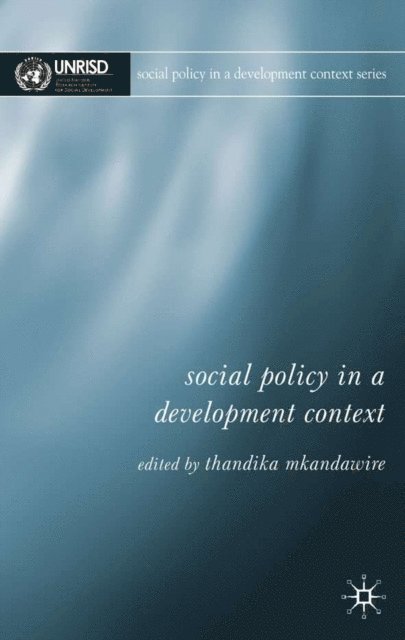
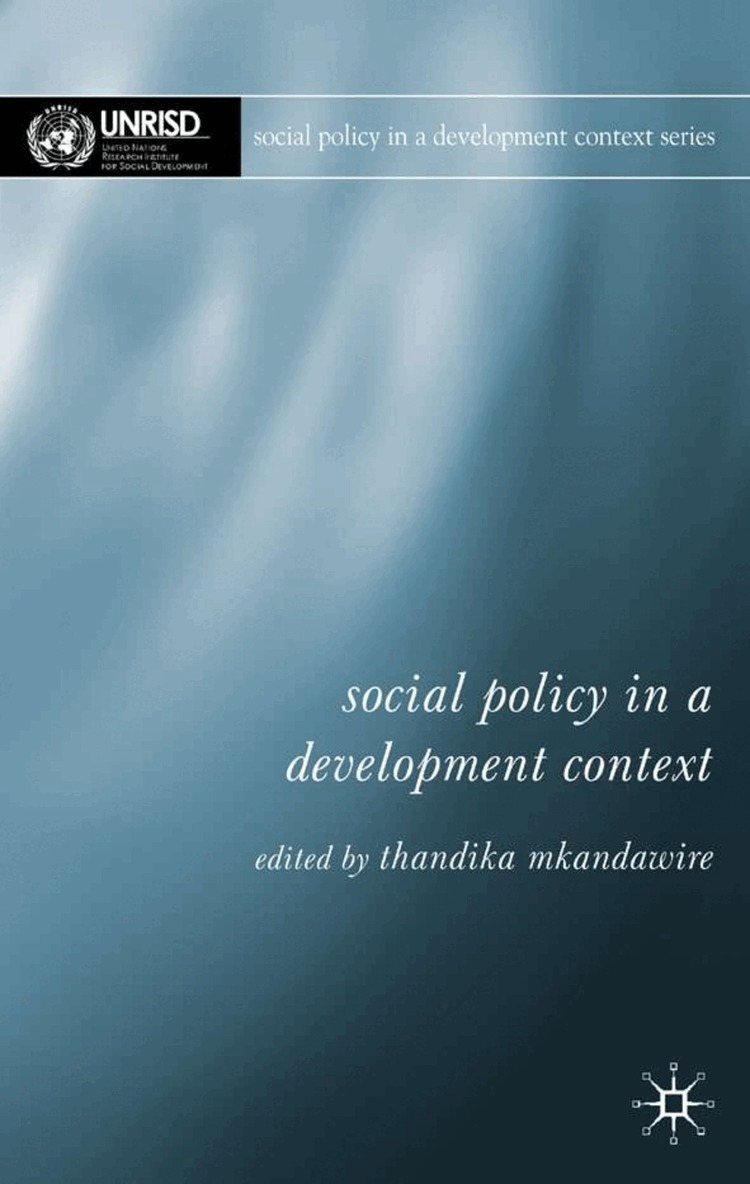
Drawing upon both conceptual and empirical evidence, this volume argues the case for the centrality of social policy in development, focusing particularly on the message that social policy needs to be closely intertwined with economic policy. It is argued that social policy can provide the crucial link between economic development poverty eradication and equity. This volume is a significant contribution to thinking about social policy in a development context.
Inbunden, Engelska, 2013
549 kr
Skickas inom 10-15 vardagar
Horizontal inequalities are root causes of violent conflict in Africa. Yet, people take actions not because of statistical data on inequalities, of which they might not be aware, but because of injustices they perceive. This volume analyses the results of original surveys with over 3,000 respondents in African cities and towns, exposing clear discrepancies between objective inequalities and people's subjective perceptions. The contributors examine experiences in country pairs and probe into the reasons why neighbouring countries, sharing common historical traits, sometimes took contrasting pathways of peace and violent conflict. Combining quantitative analysis and qualitative anatomy of historical experiences of conflict and reconciliation in Rwanda, Burundi, Ghana, Côte d'Ivoire, South Africa, Zimbabwe, Uganda, Tanzania, Kenya and Nigeria, the study brings forward a set of policy recommendations for development practitioners. This work further addresses the issue of institutional choice and reveals how sustainable power-sharing and decentralisation contribute to political stability in Africa.
E-bok
PDF, Engelska, 2013687 kr
Läs direkt efter köp
Horizontal inequalities are root causes of violent conflict in Africa. Yet, people take actions not because of statistical data on inequalities, of which they might not be aware, but because of injustices they perceive. This volume analyses the results of original surveys with over 3,000 respondents in African cities and towns, exposing clear discrepancies between objective inequalities and people''s subjective perceptions. The contributors examine experiences in country pairs and probe into the reasons why neighbouring countries, sharing common historical traits, sometimes took contrasting pathways of peace and violent conflict. Combining quantitative analysis and qualitative anatomy of historical experiences of conflict and reconciliation in Rwanda, Burundi, Ghana, Côte d''Ivoire, South Africa, Zimbabwe, Uganda, Tanzania, Kenya and Nigeria, the study brings forward a set of policy recommendations for development practitioners. This work further addresses the issue of institutional choice and reveals how sustainable power-sharing and decentralisation contribute to political stability in Africa.
Häftad, Engelska, 2013
548 kr
Skickas inom 10-15 vardagar
Horizontal inequalities are root causes of violent conflict in Africa. Yet, people take actions not because of statistical data on inequalities, of which they might not be aware, but because of injustices they perceive. This volume analyses the results of original surveys with over 3,000 respondents in African cities and towns, exposing clear discrepancies between objective inequalities and people's subjective perceptions. The contributors examine experiences in country pairs and probe into the reasons why neighbouring countries, sharing common historical traits, sometimes took contrasting pathways of peace and violent conflict. Combining quantitative analysis and qualitative anatomy of historical experiences of conflict and reconciliation in Rwanda, Burundi, Ghana, Côte d'Ivoire, South Africa, Zimbabwe, Uganda, Tanzania, Kenya and Nigeria, the study brings forward a set of policy recommendations for development practitioners. This work further addresses the issue of institutional choice and reveals how sustainable power-sharing and decentralisation contribute to political stability in Africa.
Häftad, Engelska, 2004
928 kr
Skickas inom 10-15 vardagar
Drawing upon both conceptual and empirical evidence, this volume argues the case for the centrality of social policy in development, focusing particularly on the message that social policy needs to be closely intertwined with economic policy. It is argued that social policy can provide the crucial link between economic development poverty eradication and equity. This volume is a significant contribution to thinking about social policy in a development context.