Fariba Zarinebaf – författare
Visar alla böcker från författaren Fariba Zarinebaf. Handla med fri frakt och snabb leverans.
6 produkter
Crime and Punishment in Istanbul
1700-1800
Häftad, 2011
382 kr
Lägg i varukorg
This vividly detailed revisionist history exposes the underworld of the largest metropolis of the early modern Mediterranean and through it the entire fabric of a complex, multicultural society. Fariba Zarinebaf maps the history of crime and punishment in Istanbul over more than one hundred years, …
Mediterranean Encounters
Trade and Pluralism in Early Modern Galata
Inbunden, 2018
1190 kr
Lägg i varukorg
Mediterranean Encounters traces the layered history of Galata—a Mediterranean and Black Sea port—to the Ottoman conquest, and its transformation into a hub of European trade and diplomacy as well as a pluralist society of the early modern period. Framing the history of Ottoman-European encounters …
Mediterranean Encounters
Trade and Pluralism in Early Modern Galata
Häftad, 2018
360 kr
Lägg i varukorg
Mediterranean Encounters traces the layered history of Galata—a Mediterranean and Black Sea port—to the Ottoman conquest, and its transformation into a hub of European trade and diplomacy as well as a pluralist society of the early modern period. Framing the history of Ottoman-European encounters …
Crime and Punishment in Istanbul
1700-1800
E-bok, 2011
437 kr
Lägg i varukorg
This vividly detailed revisionist history exposes the underworld of the largest metropolis of the early modern Mediterranean and through it the entire fabric of a complex, multicultural society. Fariba Zarinebaf maps the history of crime and punishment in Istanbul over more than one hundred years, …
Mediterranean Encounters
Trade and Pluralism in Early Modern Galata
E-bok, 2018
607 kr
Lägg i varukorg
Mediterranean Encounters traces the layered history of Galata—a Mediterranean and Black Sea port—to the Ottoman conquest, and its transformation into a hub of European trade and diplomacy as well as a pluralist society of the early modern period. Framing the history of Ottoman-European encounters …
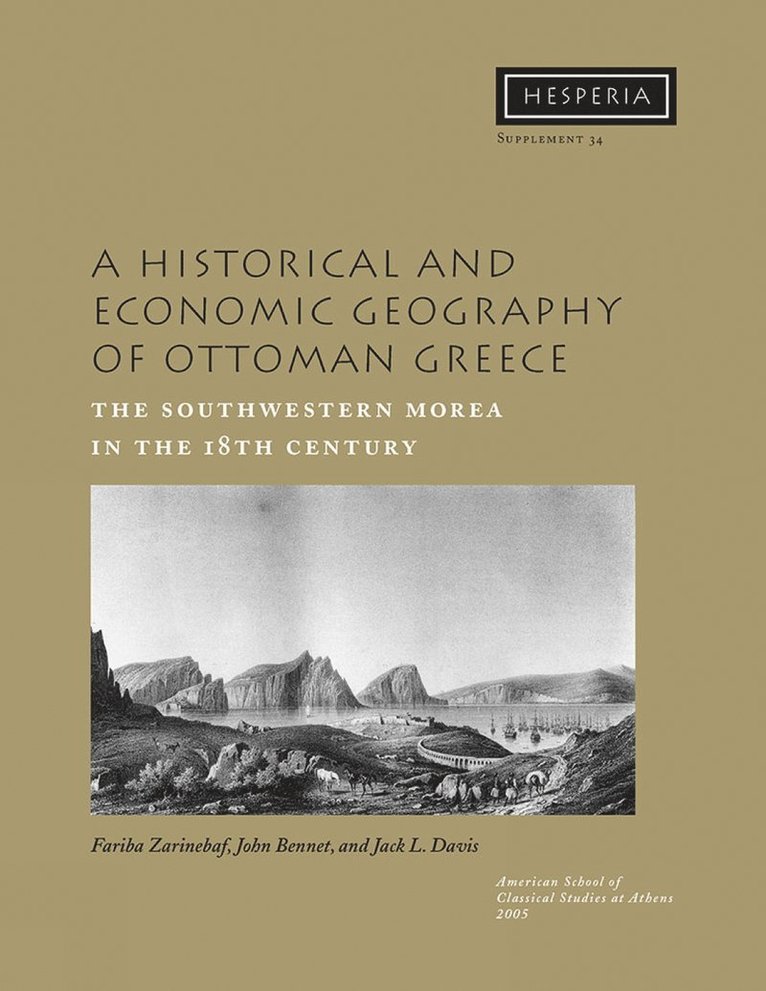
Historical and Economic Geography of Ottoman Greece
The Southwestern Morea in the 18th Century
Av Fariba Zarinebaf, John Bennet m. fl.
Häftad, 2005
1135 kr
Lägg i varukorg
This innovative study of the southwestern Peloponnese or Morea combines the study of unpublished Ottoman documents, other historical sources, and the results of archaeological fieldwork to explore the historical and economic geography of a particular region of Greece in the early 18th century, the …