Fayçal Falaky - Böcker
Visar alla böcker från författaren Fayçal Falaky. Handla med fri frakt och snabb leverans.
4 produkter
4 produkter
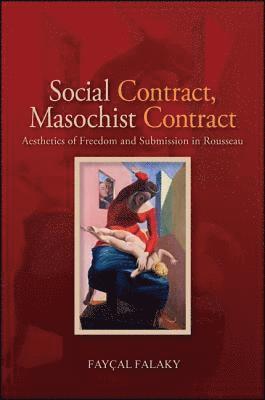
Social Contract, Masochist Contract
Aesthetics of Freedom and Submission in Rousseau
Inbunden, Engelska, 2014
1 215 kr
Skickas inom 5-8 vardagar
Provocative reading of the role masochism plays in structuring the aesthetics and political philosophy of Jean-Jacques Rousseau.Theorization of sensual desire was not uncommon in the eighteenth century; like many materialists of the French Enlightenment, Jean-Jacques Rousseau rejected imperatives founded on metaphysical suppositions and viewed the senses as the only valid source of philosophical knowledge. In Social Contract, Masochist Contract, Fayçal Falaky demonstrates that what distinguishes Rousseau is that the foundational measure on which he bases his materialist philosophy is a sexual instinct endowed, paradoxically, with the same sublime, self-abnegating attributes historically associated with Christian, metaphysical desire. To understand the aesthetics of Rousseau's masochism is, Falaky argues, to understand how ideals of Christian morality and spiritual ennoblement survived the Enlightenment, and how God died, only to be repackaged in new fetishes. Whether it is the imperious mistress of his erotic fantasies, the Arcadian nature of his philosophical reveries, or the sublime Law designed to elevate the citizen from enslaving appetite, Rousseau's fetishes herald the new regulative Ideals of the modern secular state.
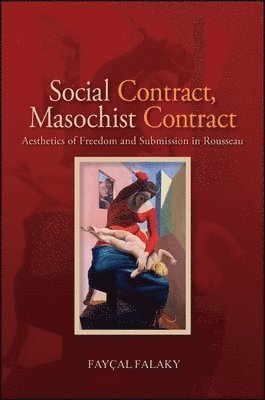
Social Contract, Masochist Contract
Aesthetics of Freedom and Submission in Rousseau
Häftad, Engelska, 2015
440 kr
Tillfälligt slut
Provocative reading of the role masochism plays in structuring the aesthetics and political philosophy of Jean-Jacques Rousseau.Theorization of sensual desire was not uncommon in the eighteenth century; like many materialists of the French Enlightenment, Jean-Jacques Rousseau rejected imperatives founded on metaphysical suppositions and viewed the senses as the only valid source of philosophical knowledge. In Social Contract, Masochist Contract, Fayçal Falaky demonstrates that what distinguishes Rousseau is that the foundational measure on which he bases his materialist philosophy is a sexual instinct endowed, paradoxically, with the same sublime, self-abnegating attributes historically associated with Christian, metaphysical desire. To understand the aesthetics of Rousseau's masochism is, Falaky argues, to understand how ideals of Christian morality and spiritual ennoblement survived the Enlightenment, and how God died, only to be repackaged in new fetishes. Whether it is the imperious mistress of his erotic fantasies, the Arcadian nature of his philosophical reveries, or the sublime Law designed to elevate the citizen from enslaving appetite, Rousseau's fetishes herald the new regulative Ideals of the modern secular state.
504 kr
Skickas inom 7-10 vardagar
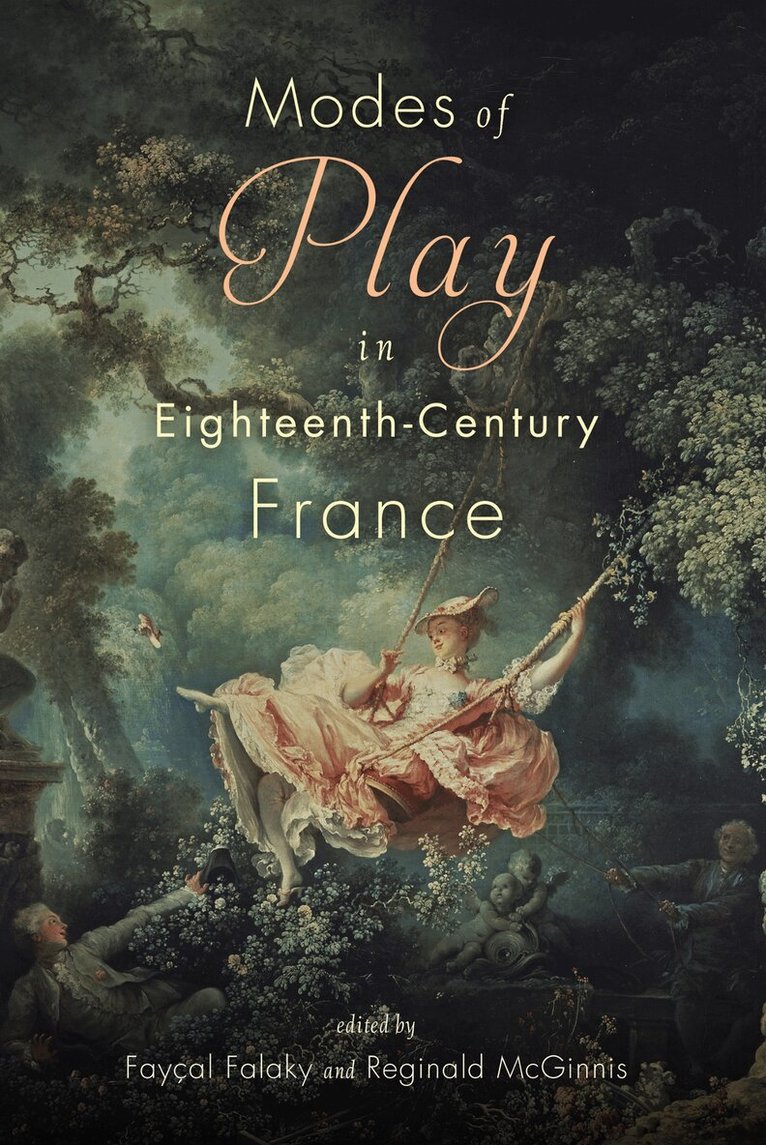
Collecting diverse critical perspectives on the topic of play—from dolls, bilboquets, and lotteries, to writing itself—this volume offers new insights into how play was used to represent and reimagine the world in eighteenth-century France. In documenting various modes of play, contributors theorize its relation to law, religion, politics, and economics. Equally important was the role of "play" in plays, and the function of theatrical performance in mirroring, and often contesting, our place in the universe. These essays remind us that the spirit of play was very much alive during the "Age of Reason," providing ways for its practitioners to consider more "serious" themes such as free will and determinism, illusions and equivocations, or chance and inequality. Standing at the intersection of multiple intellectual avenues, this is the first comprehensive study in English devoted to the different guises of play in Enlightenment France, certain to interest curious readers across disciplinary backgrounds.
1 812 kr
Skickas inom 7-10 vardagar
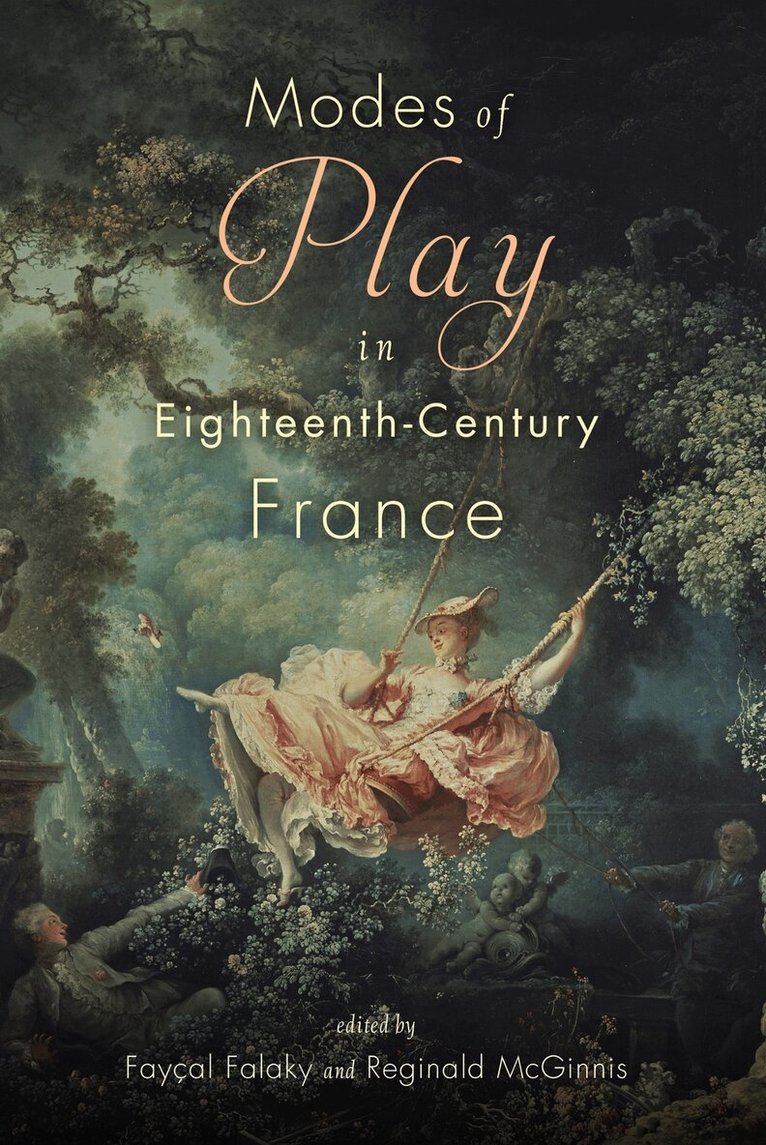
Collecting diverse critical perspectives on the topic of play—from dolls, bilboquets, and lotteries, to writing itself—this volume offers new insights into how play was used to represent and reimagine the world in eighteenth-century France. In documenting various modes of play, contributors theorize its relation to law, religion, politics, and economics. Equally important was the role of "play" in plays, and the function of theatrical performance in mirroring, and often contesting, our place in the universe. These essays remind us that the spirit of play was very much alive during the "Age of Reason," providing ways for its practitioners to consider more "serious" themes such as free will and determinism, illusions and equivocations, or chance and inequality. Standing at the intersection of multiple intellectual avenues, this is the first comprehensive study in English devoted to the different guises of play in Enlightenment France, certain to interest curious readers across disciplinary backgrounds.