Federal Facilities Council – författare
Visar alla böcker från författaren Federal Facilities Council. Handla med fri frakt och snabb leverans.
37 produkter
Deferred Maintenance Reporting for Federal Facilities
Meeting the Requirements of Federal Accounting Standards Advisory Board Standard Number 6, as Amended
Av Federal Facilities Council, Federal Facilities Council Standing Committee on Operations and Maintenance
Häftad, 2001
729 kr
Lägg i varukorg
In 1996 the Federal Accounting Standards Advisory Board (FASAB) 1 enacted Standard Number 6, Accounting for Property, Plant, and Equipment (PP&E), the first government-wide initiative requiring federal agencies to report dollar amounts of deferred maintenance annually. The FASAB has identified four …
Key Performance Indicators for Federal Facilities Portfolios
Federal Facilities Council Technical Report Number 147
Av John H. Cable, Jocelyn S. Davis m. fl.
E-bok, 2005
416 kr
Lägg i varukorg
More than 30 federal departments and agencies with a wide range of missions and programs manage large inventories of facilities, also called portfolios. These portfolios range in size from a few hundred to more than a hundred thousand individual structures, buildings, and their supporting …
Starting Smart
Key Practices for Developing Scopes of Work for Facility Projects
Av Jr. G. Edward Gibson, Michael P. Pappas m. fl.
E-bok, 2004
416 kr
Lägg i varukorg
Although most federal facilities projects are successfully completed (i.e., they reasonably meet the agency''s requirements and expectations), the perception is that development of the scope of work for design for these projects is challenging and in some cases poorly performed. Based on this …
Learning from Our Buildings
A State-of-the-Practice Summary of Post-Occupancy Evaluation
Av Federal Facilities Council, Board on Infrastructure and the Constructed Environment m. fl.
E-bok, 2002
847 kr
Lägg i varukorg
In 1986, the FFC requested that the NRC appoint a committee to examine the field and propose ways by which the POE process could be improved to better serve public and private sector organizations. The resulting report, Post-Occupancy Evaluation Practices in the Building Process: Opportunities for …
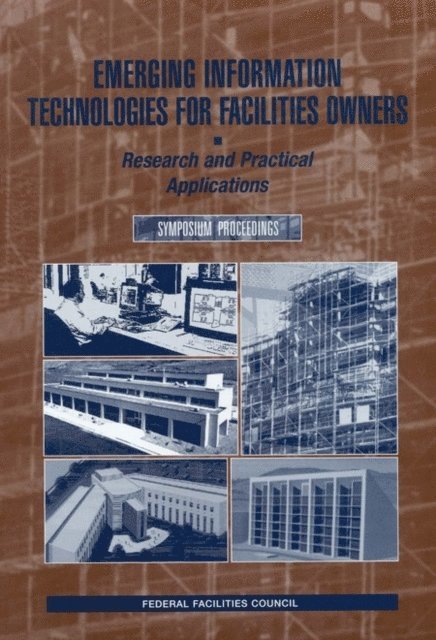
Emerging Information Technologies for Facilities Owners
Research and Practical Applications: Symposium Proceedings
Av Federal Facilities Council, National Research Council
E-bok, 2001
295 kr
Lägg i varukorg
Available and emerging information technologies hold the promise of enhancing the quality of federal workplaces; supporting worker productivity; improving capital asset management, programming, and decision making; reducing project delivery time; and changing how buildings are constructed and …
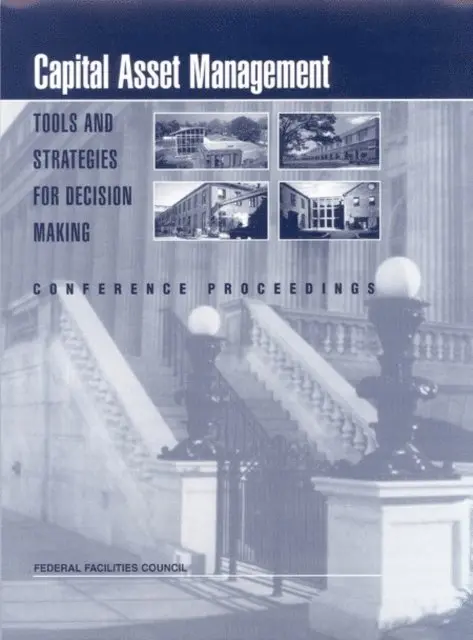
Capital Asset Management
Tools and Strategies for Decision Making: Conference Proceedings
Av Federal Facilities Council Technical Report No. 143, Federal Facilities Council
E-bok, 2001
295 kr
Lägg i varukorg
Federally owned capital assets include some 500,000 buildings and similar facilities worldwide acquired during 200 years of government operations. Government facilities are used to defend the national interest; conduct foreign policy; house historic, cultural and educational artifacts; pursue …
Deferred Maintenance Reporting for Federal Facilities
Meeting the Requirements of Federal Accounting Standards Advisory Board Standard Number 6, as Amended
Av Federal Facilities Council Standing Committee on Operations and Maintenance, Federal Facilities Council
E-bok, 2001
658 kr
Lägg i varukorg
In 1996 the Federal Accounting Standards Advisory Board (FASAB) 1 enacted Standard Number 6, Accounting for Property, Plant, and Equipment (PP&E), the first government-wide initiative requiring federal agencies to report dollar amounts of deferred maintenance annually. The FASAB has identified four …
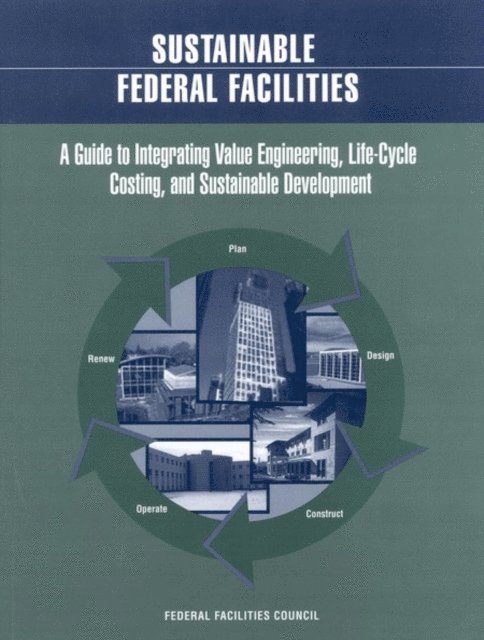
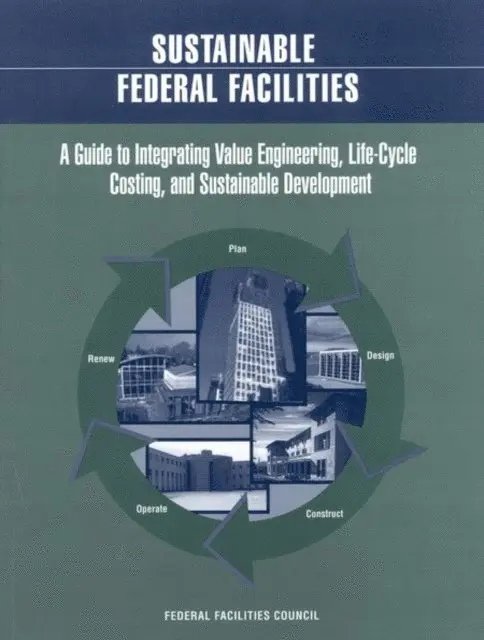
Sustainable Federal Facilities
A Guide to Integrating Value Engineering, Life-Cycle Costing, and Sustainable Development
Av and Value Engineering into Facilities Acquisition The Federal Facilities Council Ad Hoc Task Group on Integrating Sustainable Design, Life-Cycle Costing, Federal Facilities Council
E-bok, 2001
866 kr
Lägg i varukorg
In the late 1990s, several of the sponsor agencies of the Federal Facilities Council began developing and implementing initiatives and policies related to sustainable development. Guidance related to life-cycle costing and value engineering was recognized as being supportive of sustainable …
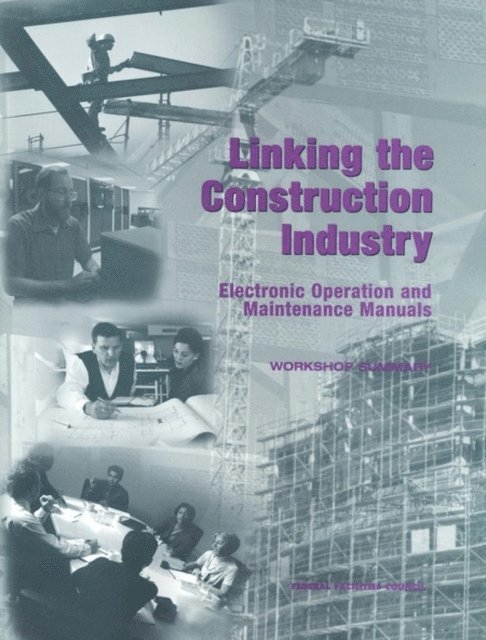
Linking the Construction Industry
Electronic Operation and Maintenance Manuals: Workshop Summary
Av Board on Infrastructure and the Constructed Environment, Federal Facilities Council m. fl.
E-bok, 2000
404 kr
Lägg i varukorg
Public agencies, private corporations, nonprofit institutions, and other organizations regularly invest millions of dollars in acquiring buildings and other constructed facilities to support their lines of business. For this investment, the owner receives a complex structure composed of hundreds of …
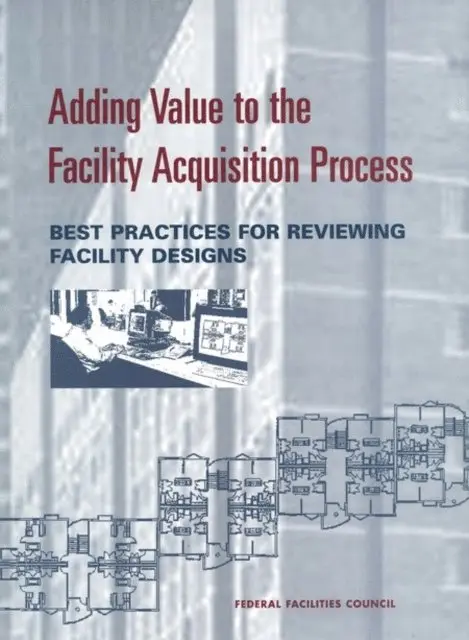
Adding Value to the Facility Acquisition Process
Best Practices for Reviewing Facility Designs
Av Ralph S. Spillinger, Federal Facilities Council m. fl.
E-bok, 2000
644 kr
Lägg i varukorg
The federal government, like private corporations and other organizations, acquires buildings and other facilities to support specific functions and missions and the general conduct of its business. The federal government is, in fact, the nation''s largest owner of buildings and spends more than …
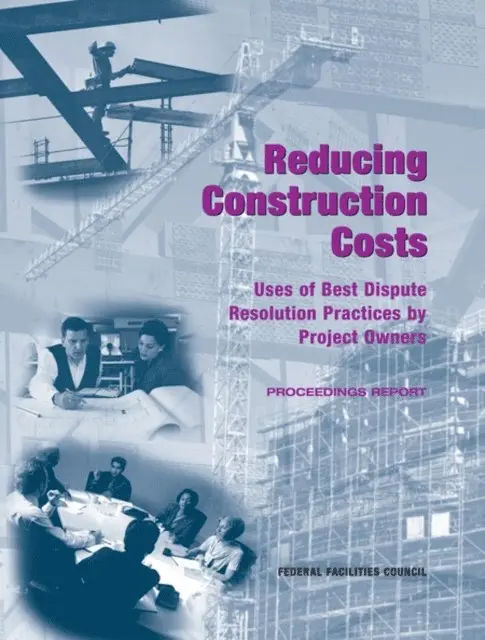
Reducing Construction Costs
Uses of Best Dispute Resolution Practices by Project Owners: Proceedings Report
Av Federal Facilities Council, Board on Infrastructure and the Constructed Environment m. fl.
E-bok, 2007
347 kr
Lägg i varukorg
The National Academy of Construction (NAC) has determined that disputes, and their accompanying inefficiencies and costs, constitute a significant problem for the industry. In 2002, the NAC assessed the industry''s progress in attacking this problem and determined that although the tools, …
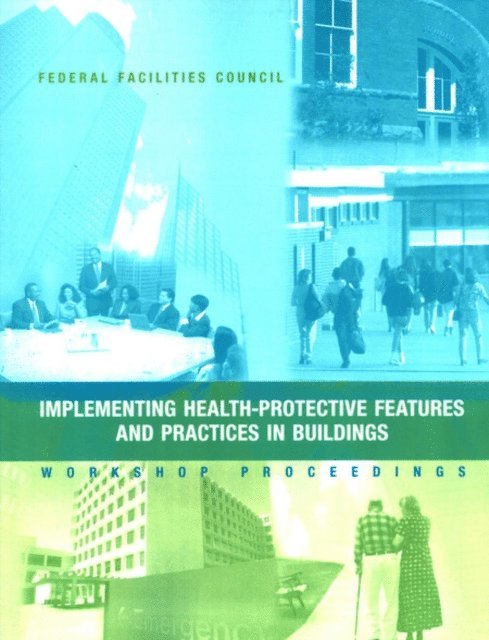
Implementing Health-Protective Features and Practices in Buildings
Workshop Proceedings: Federal Facilities Council Technical Report #148
Av Federal Facilities Council, Board on Infrastructure and the Constructed Environment m. fl.
E-bok, 2005
428 kr
Lägg i varukorg
Indoor environmental quality (IEQ) is influenced by building design; heating, ventilation, and air-conditioning systems; and construction materials, as well as by building operations, maintenance, and housekeeping procedures. Increasing evidence suggests that adverse health outcomes in employees, …
Environmental Management Systems and ISO 14001
Federal Facilities Council Report No. 138
Av Federal Facilities Council, Commission on Engineering and Technical Systems m. fl.
E-bok, 1999
502 kr
Lägg i varukorg
In 1996, the Federal Facilities Council (FFC), which operates under the aegis of the National Research Council, established a standing committee on Environmental Engineering with the express purpose of providing a forum where federal environmental engineers and program managers could meet on a …
Starting Smart
Key Practices for Developing Scopes of Work for Facility Projects
Av Jr. G. Edward Gibson, Michael P. Pappas m. fl.
E-bok, 2004
286 kr
Lägg i varukorg
Although most federal facilities projects are successfully completed (i.e., they reasonably meet the agency''s requirements and expectations), the perception is that development of the scope of work for design for these projects is challenging and in some cases poorly performed. Based on this …
Learning from Our Buildings
A State-of-the-Practice Summary of Post-Occupancy Evaluation
Av Federal Facilities Council, Board on Infrastructure and the Constructed Environment m. fl.
E-bok, 2002
593 kr
Lägg i varukorg
In 1986, the FFC requested that the NRC appoint a committee to examine the field and propose ways by which the POE process could be improved to better serve public and private sector organizations. The resulting report, Post-Occupancy Evaluation Practices in the Building Process: Opportunities for …
Linking the Construction Industry
Electronic Operation and Maintenance Manuals: Workshop Summary
Av Board on Infrastructure and the Constructed Environment, Federal Facilities Council m. fl.
E-bok, 2000
278 kr
Lägg i varukorg
Public agencies, private corporations, nonprofit institutions, and other organizations regularly invest millions of dollars in acquiring buildings and other constructed facilities to support their lines of business. For this investment, the owner receives a complex structure composed of hundreds of …
Adding Value to the Facility Acquisition Process
Best Practices for Reviewing Facility Designs
Av Ralph S. Spillinger, Federal Facilities Council m. fl.
E-bok, 2000
458 kr
Lägg i varukorg
The federal government, like private corporations and other organizations, acquires buildings and other facilities to support specific functions and missions and the general conduct of its business. The federal government is, in fact, the nation''s largest owner of buildings and spends more than …
Key Performance Indicators for Federal Facilities Portfolios
Federal Facilities Council Technical Report Number 147
Av John H. Cable, Jocelyn S. Davis m. fl.
E-bok, 2005
286 kr
Lägg i varukorg
More than 30 federal departments and agencies with a wide range of missions and programs manage large inventories of facilities, also called portfolios. These portfolios range in size from a few hundred to more than a hundred thousand individual structures, buildings, and their supporting …
Implementing Health-Protective Features and Practices in Buildings
Workshop Proceedings: Federal Facilities Council Technical Report #148
Av Federal Facilities Council, Board on Infrastructure and the Constructed Environment m. fl.
E-bok, 2005
295 kr
Lägg i varukorg
Indoor environmental quality (IEQ) is influenced by building design; heating, ventilation, and air-conditioning systems; and construction materials, as well as by building operations, maintenance, and housekeeping procedures. Increasing evidence suggests that adverse health outcomes in employees, …
Deferred Maintenance Reporting for Federal Facilities
Meeting the Requirements of Federal Accounting Standards Advisory Board Standard Number 6, as Amended
Av Federal Facilities Council Standing Committee on Operations and Maintenance, Federal Facilities Council
E-bok, 2001
468 kr
Lägg i varukorg
In 1996 the Federal Accounting Standards Advisory Board (FASAB) 1 enacted Standard Number 6, Accounting for Property, Plant, and Equipment (PP&E), the first government-wide initiative requiring federal agencies to report dollar amounts of deferred maintenance annually. The FASAB has identified four …
Sustainable Federal Facilities
A Guide to Integrating Value Engineering, Life-Cycle Costing, and Sustainable Development
Av and Value Engineering into Facilities Acquisition The Federal Facilities Council Ad Hoc Task Group on Integrating Sustainable Design, Life-Cycle Costing, Federal Facilities Council
E-bok, 2001
624 kr
Lägg i varukorg
In the late 1990s, several of the sponsor agencies of the Federal Facilities Council began developing and implementing initiatives and policies related to sustainable development. Guidance related to life-cycle costing and value engineering was recognized as being supportive of sustainable …
Expansion Joints in Buildings
Technical Report No. 65
Av Standing Committee on Structural Engineering of the Federal Construction Council, Building Research Advisory Board m. fl.
E-bok, 1974
468 kr
Lägg i varukorg
Many factors affect the amount of temperature-induced movement that occurs in a building and the extent to which this movement can occur before serious damage develops or extensive maintenance is required. In some cases joints are being omitted where they are needed, creating a risk of structural …
Capital Asset Management
Tools and Strategies for Decision Making: Conference Proceedings
Av Federal Facilities Council Technical Report No. 143, Federal Facilities Council
E-bok, 2001
200 kr
Lägg i varukorg
Federally owned capital assets include some 500,000 buildings and similar facilities worldwide acquired during 200 years of government operations. Government facilities are used to defend the national interest; conduct foreign policy; house historic, cultural and educational artifacts; pursue …
Competition in the Electric Industry
Emerging Issues, Opportunities, and Risks for Facility Operators
Av Federal Facilities Council Standing Committee on Operations and Maintenance, Federal Facilities Council m. fl.
E-bok, 1996
482 kr
Lägg i varukorg
Electronic Commerce for the Procurement of Construction and Architect-Engineer Services
Implementing the Federal Acquisition Streamlining Act
Av Standing Committee on Procurement and Contracting, Federal Facilities Council m. fl.
E-bok, 1997
295 kr
Lägg i varukorg
Government/Industry Forum on Capital Facilities and Core Competencies
Summary Report
Av Federal Facilities Council, Commission on Engineering and Technical Systems m. fl.
E-bok, 1998
195 kr
Lägg i varukorg
Federal Facilities Beyond the 1990s: Ensuring Quality in an Era of Limited Resources
Summary of a Symposium
Av Federal Facilities Council, Commission on Engineering and Technical Systems m. fl.
E-bok, 1997
736 kr
Lägg i varukorg
Reducing Construction Costs
Uses of Best Dispute Resolution Practices by Project Owners: Proceedings Report
Av Federal Facilities Council, Board on Infrastructure and the Constructed Environment m. fl.
E-bok, 2007
243 kr
Lägg i varukorg
The National Academy of Construction (NAC) has determined that disputes, and their accompanying inefficiencies and costs, constitute a significant problem for the industry. In 2002, the NAC assessed the industry''s progress in attacking this problem and determined that although the tools, …
Electronic Commerce for the Procurement of Construction and Architect-Engineer Services
Implementing the Federal Acquisition Streamlining Act
Av National Research Council, Division on Engineering and Physical Sciences m. fl.
Häftad, 1997
1241 kr
Tillfälligt slut
Government/Industry Forum on Capital Facilities and Core Competencies
Summary Report
Av National Research Council, Division on Engineering and Physical Sciences m. fl.
Häftad, 1998
1165 kr
Tillfälligt slut