
Federico Mayor – författare
Visar alla böcker från författaren Federico Mayor. Handla med fri frakt och snabb leverans.
4 produkter
4 produkter
E-bok
PDF, Engelska, 2016756 kr
Läs direkt efter köp
Scientific Research and Social Goals: Towards a New Development Model is designed to contribute to the task of producing a development model, based on human needs, social goals, and the value of research. The book is organized into three sections: concepts and philosophy; methodological approaches; and practicalprograms in different parts of the world. These sections consist of a total of 19 chapters that discuss topics on national policy implications of the basic needs model; scientific progress and the social goals of science; an International Program on research and human needs; and the role of methodology in the research and human needs program. The contribution of research to human needs and an action program on research and human needs are also described.
Häftad, Engelska, 2001
485 kr
Skickas inom 10-15 vardagar
Will humanity survive the coming century? Are we threatened by a demographic time-bomb? Will there be food for all? Can we eliminate poverty? Are we, in our cities, heading for a kind of apartheid between the affluent and the socially excluded? Will new information technologies increase the gap between rich and poor - or, on the contrary, open up opportunities for lifelong distance education for all? Are women going to win their legitimate place in society? Is it true that many languages are in danger of extinction? How can we forestall global warming and the onward march of the world's deserts? Will there be wars over access to shrinking supplies of water? What are the prospects of running out of affordable oil and gas; and can we harness solar energy?This book looks at the major challenges of the future. Packed with the latest information and scientific understandings, it traverses a rich tapestry of crucial issues, threats and choices confronting humanity and proposes a new start based on four broad contracts: social, natural, cultural and ethical.In a world where problems are taking on increasingly global dimensions, we must come up with global solutions. We need to turn a culture of violence into a culture of peace. The choice is stark: either a 21st century with a human face or the grimacing mask of a 'Brave New World'.
E-bok
Franska, 1999207 kr
Läs direkt efter köp
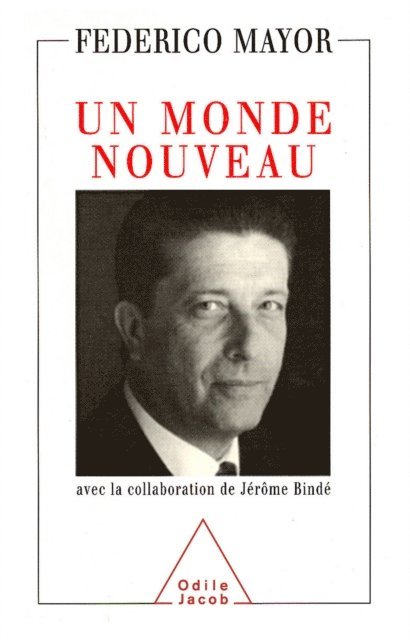
L''humanité survivra-t-elle au siècle qui vient ? Est-elle menacée par une « bombe démographique » ? Y aura-t-il à manger pour tous ? Pourra-t-on éradiquer la pauvreté ? Allons-nous vers un apartheid urbain généralisé ? Les nouvelles technologies creuseront-elles un abîme entre riches et pauvres ? Ou permettront-elles l''éducation pour tous, à distance et tout au long de la vie ? Les femmes trouveront-elles toute leur place ? Comment lutter contre le réchauffement de la planète et la désertification ? Fera-t-on la guerre pour l''eau ? Saura-t-on maîtriser l''énergie solaire ? Y aura-t-il un miracle africain ? Dans un monde où les problèmes se mondialisent, quelles solutions globales proposer ? Comment passer d''une culture de violence à une culture de paix, et de la tyrannie de l''urgence à une éthique du futur ? Le XXIe siècle aura-t-il un visage humain, ou celui, grimaçant, du « meilleur des mondes » ? Cet ouvrage éclaire les grands enjeux du futur et propose un « nouveau départ », fondé sur quatre contrats : social, naturel, culturel et éthique. N''attendons rien du XXIe siècle : c''est le XXIe siècle qui attend tout de nous. Federico Mayor est directeur général de l''UNESCO. Il a été ministre de l''Éducation et de la Science de l''Espagne, recteur de l''Université de Grenade et député au Parlement européen. Jérôme Bindé est directeur de l’Office d’analyse et de prévision de l’UNESCO. Normalien et agrégé, il a été maître de conférences à l’École polytechnique.
E-bok
PDF, Engelska, 20238 418 kr
Läs direkt efter köp
The arrival of the International Law: Achievements and Prospects can fairly be described as a major event in international legal publishing. It has been written by international lawyers from the North, the South, the East and the West, whose differing origins and different, or even opposed, academic backgrounds have ensured that the book encapsulates and brings into focus `the main forms of civilization' and `the principal legal systems of the world'. The book's most distinctive feature is its international, multi-cultural and polyphonic nature. International Law: Achievements and Prospects aims to inform and to educate, to make the discipline of international law accessible to a very broad public, and to promote a meeting of minds on fundamental notions, key concepts, and the guiding principles of international law, over and beyond frontiers, ideologies and doctrines. In addition, it is intended to provide a framework for thought, to describe what international law is today, to specify its nature, define its purpose and show its strengths, and also to point out its weaknesses. All the contributing authors are or have been practitioners of international law. Their contributions express a global view of international law which helps to unravel the complex reality of the contemporary world. International Law: Achievements and Prospects has been produced under the auspices of UNESCO; its content also aspires to reflect, in some measure, the imprint of that Organization's sponsorship.