Federico Rosei - Böcker
Visar alla böcker från författaren Federico Rosei. Handla med fri frakt och snabb leverans.
6 produkter
6 produkter
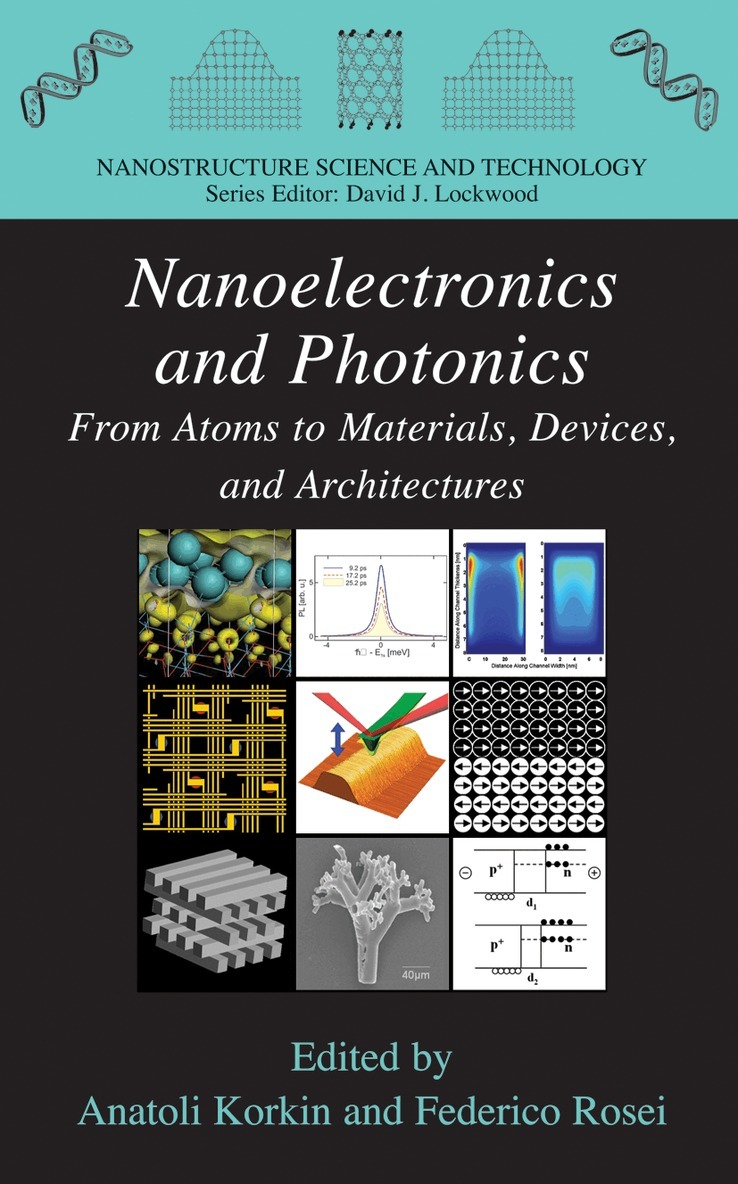
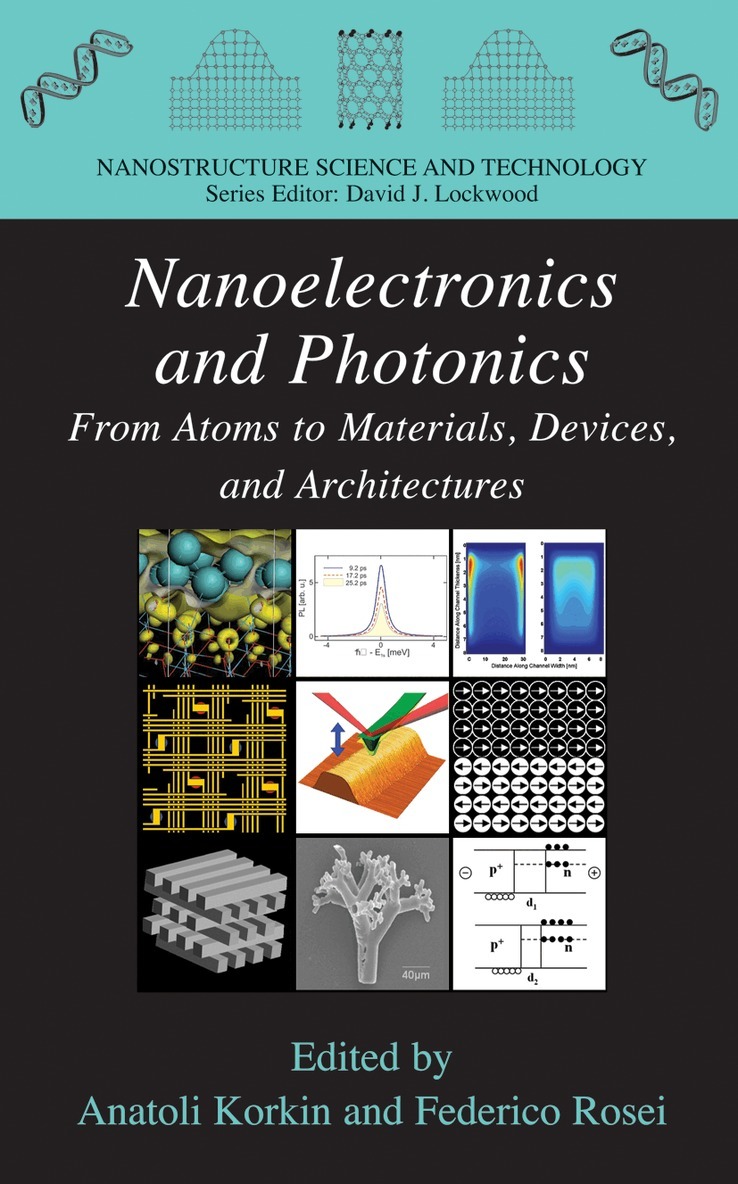
Nanoelectronics and Photonics
From Atoms to Materials, Devices, and Architectures
Inbunden, Engelska, 2008
1 064 kr
Skickas inom 10-15 vardagar
Nanoelectronics and Photonics: From Atoms to Materials, Devices, and Architectures provides a description of the core elements and challenges of advanced and future information technology. Tutorial chapters from leaders in the field cover fundamental topics ranging from materials to devices to system architecture. By linking the materials physics and chemistry at the atomic scale with device and circuit design and performance requirements, the book presents a coherent picture of theoretical and experimental research efforts and technology development in this highly interdisciplinary area. Short visionary articles by Nicolaas Bloembergen, Nobel Laureate in Physics (1981), Konstantin Likharev, distinguished professor at Stony Brook University, and Stanley Williams, senior fellow and director of the Quantum Science Research group at Hewlett-Packard, offer unique perspectives and insights. Nanoelectronics and Photonics is essential reading for researchers and graduate students in materials science, device physics, and electrical and computer engineering.Key Features:Provides an authoritative overview of the current status and future trends of nanoelectronics and photonicsPresents broad-ranging tutorials on both theoretical and experimental aspects of key topics in nanotechnologyWritten by recognized international experts in each areaAddresses the needs of both graduate students and nanotechnology “gurus”
Nanoelectronics and Photonics
From Atoms to Materials, Devices, and Architectures
Häftad, Engelska, 2010
1 064 kr
Skickas inom 10-15 vardagar
Nanoelectronics and Photonics: From Atoms to Materials, Devices, and Architectures provides a description of the core elements and challenges of advanced and future information technology. Tutorial chapters from leaders in the field cover fundamental topics ranging from materials to devices to system architecture. By linking the materials physics and chemistry at the atomic scale with device and circuit design and performance requirements, the book presents a coherent picture of theoretical and experimental research efforts and technology development in this highly interdisciplinary area. Short visionary articles by Nicolaas Bloembergen, Nobel Laureate in Physics (1981), Konstantin Likharev, distinguished professor at Stony Brook University, and Stanley Williams, senior fellow and director of the Quantum Science Research group at Hewlett-Packard, offer unique perspectives and insights. Nanoelectronics and Photonics is essential reading for researchers and graduate students in materials science, device physics, and electrical and computer engineering.Key Features:Provides an authoritative overview of the current status and future trends of nanoelectronics and photonicsPresents broad-ranging tutorials on both theoretical and experimental aspects of key topics in nanotechnologyWritten by recognized international experts in each areaAddresses the needs of both graduate students and nanotechnology “gurus”
916 kr
Skickas inom 7-10 vardagar
Symposium S, 'Nanostructured Metal Oxides for Advanced Applications', was held April 1-5 at the 2013 MRS Spring Meeting in San Francisco, California. Metal oxides represent an appealing and assorted class of materials, whose properties cover the entire range from metals to semiconductors to insulators and almost all aspects of material science, chemistry and physics in a very broad application area. In the past few years, progress has been made on the synthesis, structural, physical, and chemical characterization of self-assembled and hierarchically assembled metal oxide nanostructures that exhibit size-dependent properties. In these proceedings, attention is paid to the synthesis, structural and functional characterization of self-assembled nanostructures and architectures of all metal oxides with application potentials, with particular consideration given to the capability to tailor and control material properties via surface and structural modifications.
2 402 kr
Tillfälligt slut
Within nanoscience, an emerging discipline is the study of the physics and chemistry of single molecules. Molecules may be considered as the ultimate building blocks, and are therefore interesting for the development of molecular devices and for surface functionalization. Thus, it is interesting to study their properties when adsorbed on a suitable substrate such as a solid or crystal surface, and also for their potential applications in nano- or molecular-electronics and nanosensing. Investigations have been made possible by the advent of high resolution surface imaging and characterization techniques, commonly referred to as Scanning Probe Microscopes.This book focuses on the fascinating properties of the single molecules, and the difference between single molecules and ensembles of molecules is emphasized. As the first book intended for graduate courses in the field, after each chapter, students should be able to answer the question: “What physical or chemical properties do you learn from a single molecule in this particular context?” Contributed by experts across the disciplines, the book provides useful reference material for specialized practitioners in surface science, nanoscience and nanoelectronics.
806 kr
Tillfälligt slut
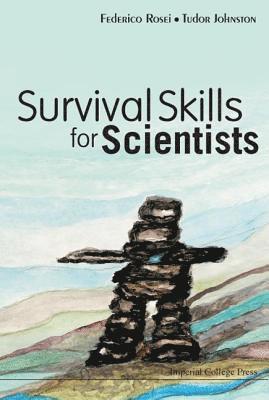
This book provides young scientists, from physicists through to sociologists, the counsel and tools that are needed to be their own agents and planners, to survive and succeed, hopefully even thrive in science. Making a good career based on peer-reviewed science means navigating many stressful phases from graduate school through to permanent employment. Performing artists pay agents to help them in this effort. In effect, this book is designed to allow you to act as your own agent. You are counseled to analyze yourself deeply to know clearly what you want and whether you can live with it, how to make career choices and what you should then keep in mind, when to fight and when to yield. The unwritten rules of the “science game” are explained, including how to become published and known, the pitfalls of peer review and how to evade them, papers and posters, job interviews and getting your science funded. Interspersed with this are illustrative anecdotes and a fair amount of humor. While the book is aimed at young scientists, from graduate students and beyond, more senior scientists will benefit from seeing the world from the point of view of rising scientists and become aware of the preoccupations of people in a system which has changed much from when the present senior scientists were rather younger.
650 kr
Skickas inom 5-8 vardagar
This book provides young scientists, from physicists through to sociologists, the counsel and tools that are needed to be their own agents and planners, to survive and succeed, hopefully even thrive in science. Making a good career based on peer-reviewed science means navigating many stressful phases from graduate school through to permanent employment. Performing artists pay agents to help them in this effort. In effect, this book is designed to allow you to act as your own agent. You are counseled to analyze yourself deeply to know clearly what you want and whether you can live with it, how to make career choices and what you should then keep in mind, when to fight and when to yield. The unwritten rules of the “science game” are explained, including how to become published and known, the pitfalls of peer review and how to evade them, papers and posters, job interviews and getting your science funded. Interspersed with this are illustrative anecdotes and a fair amount of humor. While the book is aimed at young scientists, from graduate students and beyond, more senior scientists will benefit from seeing the world from the point of view of rising scientists and become aware of the preoccupations of people in a system which has changed much from when the present senior scientists were rather younger.