Anatoli Korkin - Böcker
Visar alla böcker från författaren Anatoli Korkin. Handla med fri frakt och snabb leverans.
12 produkter
12 produkter
1 578 kr
Skickas inom 10-15 vardagar
The high level of attention and interest of the global community to NANO science and technology to a large extent is linked to the GIGAntic challenges for the c- tinuing growth of information technology, which sparked an unprecedented level of interdisciplinary and international cooperation among industrial and academic researchers, companies, IT market rivals, and countries, including former political and military rivals . Microelectronics technologies have reached a new stage in their development: The latest miniaturization of electronic devices is approaching atomic dimensions, interconnect bottlenecks are limiting circuit speeds, new ma- rials are being introduced into microelectronics manufacture at an unprecedented rate , and alternative technologies to mainstream complementary metal-oxide sem- conductors (CMOSs) are being considered . The very dynamic stage of science and technology related to the advanced and future electronics and photonics creates a growing gap between the large number of rapid publications and nanotechnology highlights in media on one side and fundamental understanding of underlying phenomena and an adequate evaluation of scientific discoveries and technological innovations on the other side. Writing a tutorial book on fundamentals of science and technology for electronics at this time is almost the same level of challenge as writing a history book during a revolution.
Nanoelectronics and Photonics
From Atoms to Materials, Devices, and Architectures
Inbunden, Engelska, 2008
1 064 kr
Skickas inom 10-15 vardagar
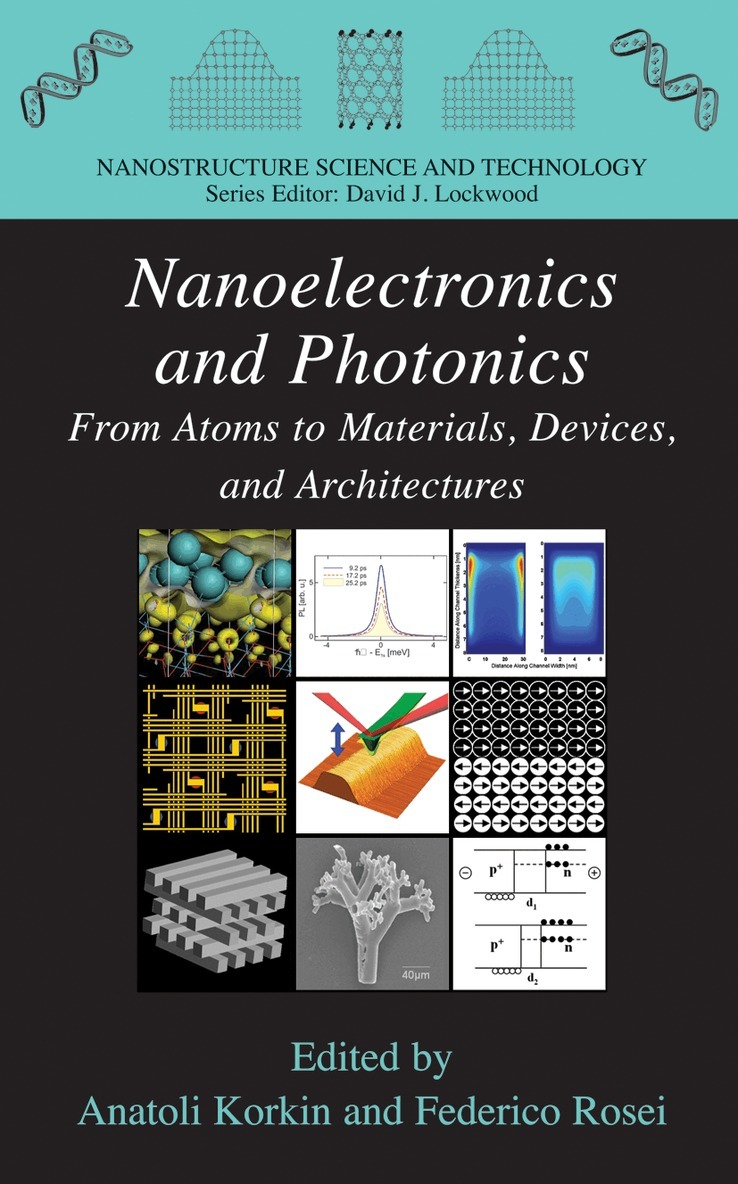
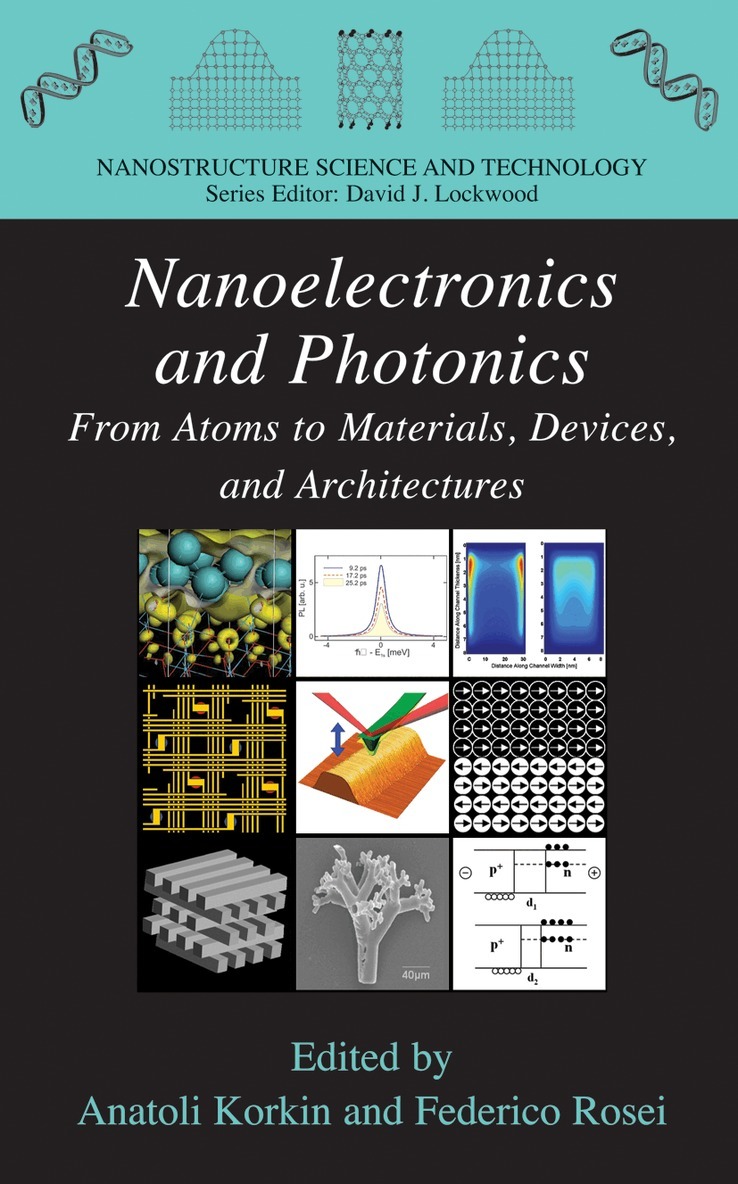
Nanoelectronics and Photonics: From Atoms to Materials, Devices, and Architectures provides a description of the core elements and challenges of advanced and future information technology. Tutorial chapters from leaders in the field cover fundamental topics ranging from materials to devices to system architecture. By linking the materials physics and chemistry at the atomic scale with device and circuit design and performance requirements, the book presents a coherent picture of theoretical and experimental research efforts and technology development in this highly interdisciplinary area. Short visionary articles by Nicolaas Bloembergen, Nobel Laureate in Physics (1981), Konstantin Likharev, distinguished professor at Stony Brook University, and Stanley Williams, senior fellow and director of the Quantum Science Research group at Hewlett-Packard, offer unique perspectives and insights. Nanoelectronics and Photonics is essential reading for researchers and graduate students in materials science, device physics, and electrical and computer engineering.Key Features:Provides an authoritative overview of the current status and future trends of nanoelectronics and photonicsPresents broad-ranging tutorials on both theoretical and experimental aspects of key topics in nanotechnologyWritten by recognized international experts in each areaAddresses the needs of both graduate students and nanotechnology “gurus”
Nanoelectronics and Photonics
From Atoms to Materials, Devices, and Architectures
Häftad, Engelska, 2010
1 064 kr
Skickas inom 10-15 vardagar
Nanoelectronics and Photonics: From Atoms to Materials, Devices, and Architectures provides a description of the core elements and challenges of advanced and future information technology. Tutorial chapters from leaders in the field cover fundamental topics ranging from materials to devices to system architecture. By linking the materials physics and chemistry at the atomic scale with device and circuit design and performance requirements, the book presents a coherent picture of theoretical and experimental research efforts and technology development in this highly interdisciplinary area. Short visionary articles by Nicolaas Bloembergen, Nobel Laureate in Physics (1981), Konstantin Likharev, distinguished professor at Stony Brook University, and Stanley Williams, senior fellow and director of the Quantum Science Research group at Hewlett-Packard, offer unique perspectives and insights. Nanoelectronics and Photonics is essential reading for researchers and graduate students in materials science, device physics, and electrical and computer engineering.Key Features:Provides an authoritative overview of the current status and future trends of nanoelectronics and photonicsPresents broad-ranging tutorials on both theoretical and experimental aspects of key topics in nanotechnologyWritten by recognized international experts in each areaAddresses the needs of both graduate students and nanotechnology “gurus”
1 578 kr
Skickas inom 10-15 vardagar
The high level of attention and interest of the global community to NANO science and technology to a large extent is linked to the GIGAntic challenges for the c- tinuing growth of information technology, which sparked an unprecedented level of interdisciplinary and international cooperation among industrial and academic researchers, companies, IT market rivals, and countries, including former political and military rivals . Microelectronics technologies have reached a new stage in their development: The latest miniaturization of electronic devices is approaching atomic dimensions, interconnect bottlenecks are limiting circuit speeds, new ma- rials are being introduced into microelectronics manufacture at an unprecedented rate , and alternative technologies to mainstream complementary metal-oxide sem- conductors (CMOSs) are being considered . The very dynamic stage of science and technology related to the advanced and future electronics and photonics creates a growing gap between the large number of rapid publications and nanotechnology highlights in media on one side and fundamental understanding of underlying phenomena and an adequate evaluation of scientific discoveries and technological innovations on the other side. Writing a tutorial book on fundamentals of science and technology for electronics at this time is almost the same level of challenge as writing a history book during a revolution.
1 064 kr
Skickas inom 10-15 vardagar
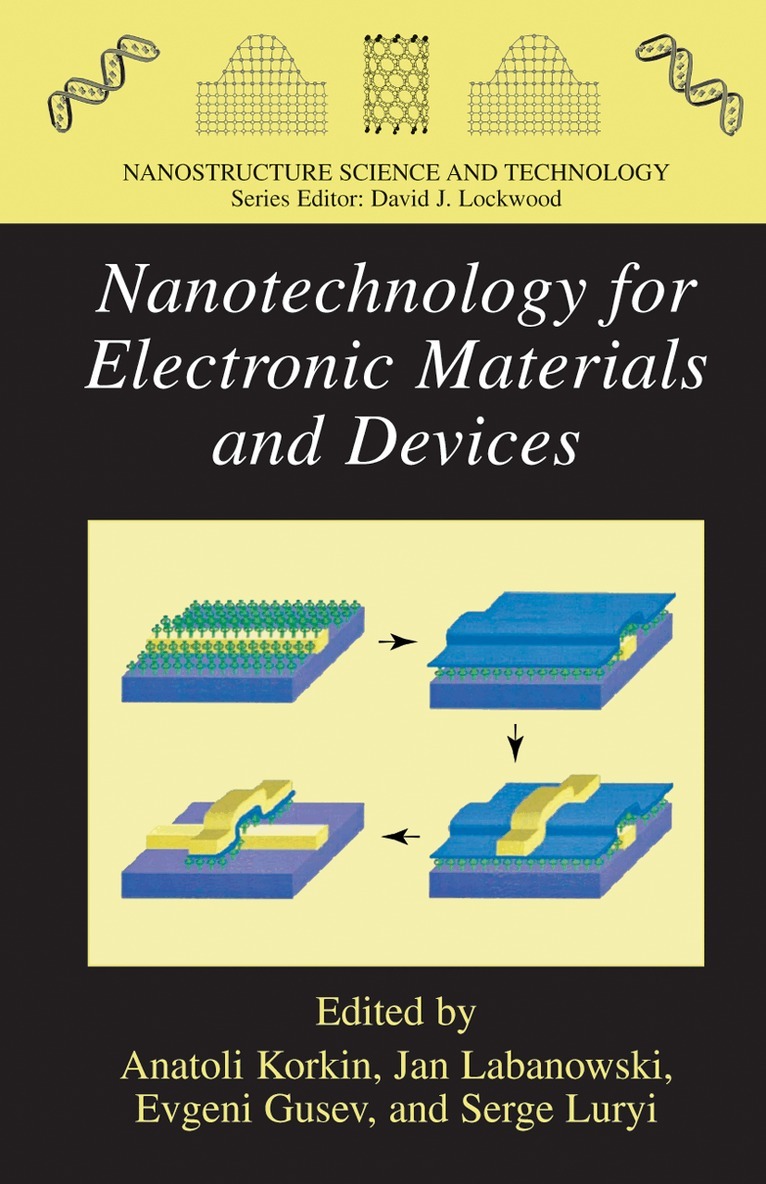
Tutorial lectures given by world-renowned researchers have become one of the important traditions of the Nano and Giga Challenges (NGC) conference series. 1 Soon after preparations had begun for the rst forum, NGC2002, in Moscow, Russia, the organizers realized that publication of the lectures notes would be a va- able legacy of the meeting and a signi cant educational resource and knowledge base for students, young researchers, and senior experts. Our rst book was p- lished by Elsevier and received the same title as the meeting itself—Nano and Giga 2 Challenges in Microelectronics. Our second book, Nanotechnology for Electronic 3 4 Materials and Devices, based on the tutorial lectures at NGC2004 in Krakow, 5 Poland, the third book from NGC2007 in Phoenix, Arizona, and the current book 6 from joint NGC2009 and CSTC2009 meeting in Hamilton, Ontario, have been published in Springer’s Nanostructure Science and Technology series. Hosted by McMaster University, the meeting NGC/CSTC 2009 was held as a joint event of two conference series, Nano and Giga Challenges (Nano & Giga Forum) and Canadian Semiconductor Technology Conferences (CSTC), bringing together the networks and expertise of both professional forums. Informational (electronics and photonics), renewable energy (solar systems, fuel cells, and batteries), and sensor (nano and bio) technologies have reached a new stage in their development in terms of engineering limits to cost-effective impro- ment of current technological approaches. The latest miniaturization of electronic devices is approaching atomic dimensions.
1 064 kr
Skickas inom 10-15 vardagar
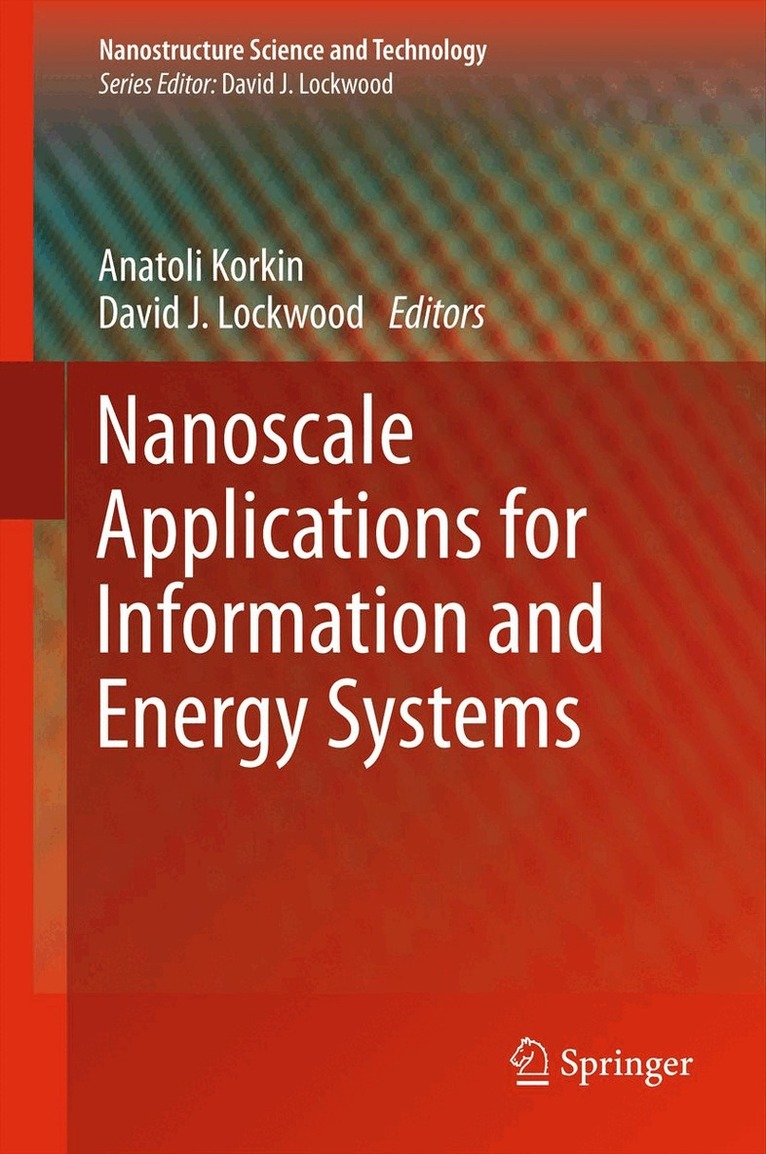
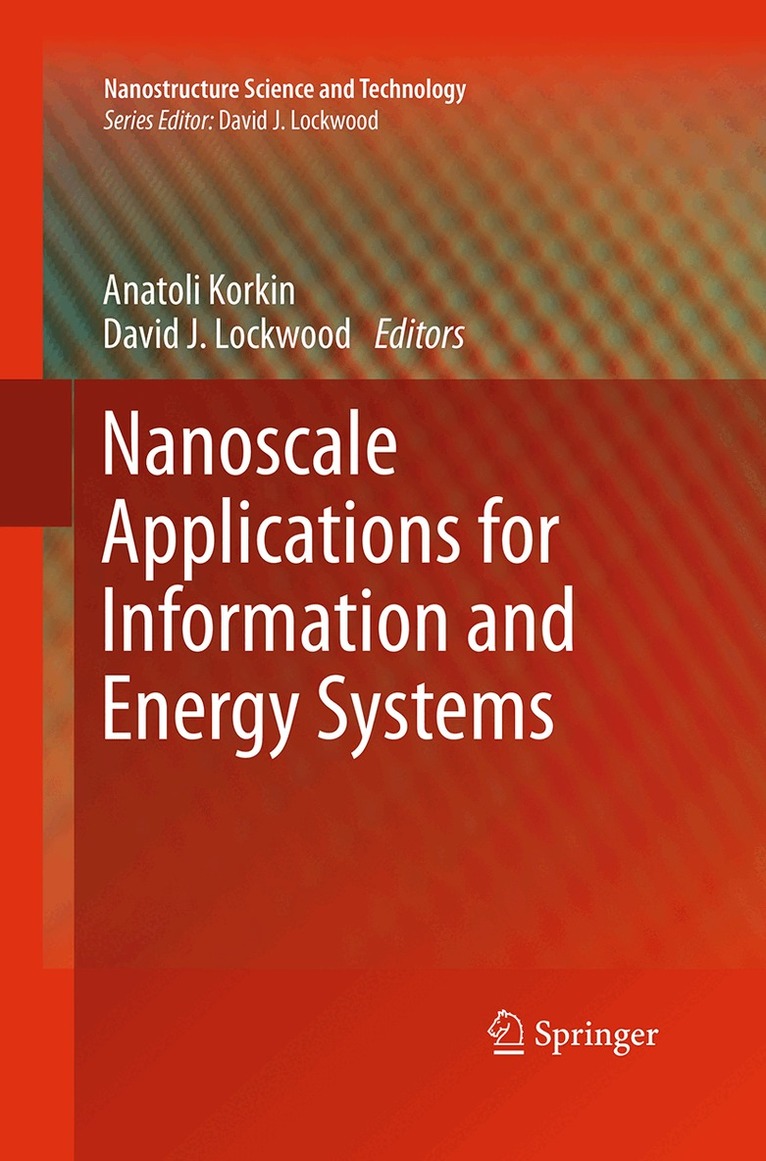
Nanoscale Applications for Information and Energy Systems presents nanotechnology fundamentals and applications in the key research areas of information technology (electronics and photonics) and alternative (solar) energy: plasmonics, photovoltaics, transparent conducting electrodes, silicon electroplating, and resistive switching. The three major technology areas – electronics, photonics, and solar energy – are linked on the basis of similar applications of nanostructured materials in research and development. By bridging the materials physics and chemistry at the atomic scale with device and system design, integration, and performance requirements, tutorial chapters from worldwide leaders in the field provide a coherent picture of theoretical and experimental research efforts and technology development in these highly interdisciplinary areas.
1 064 kr
Skickas inom 10-15 vardagar
Our second book, Nanotechnology for Electronic 3 4 Materials and Devices, based on the tutorial lectures at NGC2004 in Krakow, 5 Poland, the third book from NGC2007 in Phoenix, Arizona, and the current book 6 from joint NGC2009 and CSTC2009 meeting in Hamilton, Ontario, have been published in Springer’s Nanostructure Science and Technology series.
1 409 kr
Skickas inom 5-8 vardagar
Nanoscale Applications for Information and Energy Systems presents nanotechnology fundamentals and applications in the key research areas of information technology (electronics and photonics) and alternative (solar) energy: plasmonics, photovoltaics, transparent conducting electrodes, silicon electroplating, and resistive switching. The three major technology areas – electronics, photonics, and solar energy – are linked on the basis of similar applications of nanostructured materials in research and development. By bridging the materials physics and chemistry at the atomic scale with device and system design, integration, and performance requirements, tutorial chapters from worldwide leaders in the field provide a coherent picture of theoretical and experimental research efforts and technology development in these highly interdisciplinary areas.
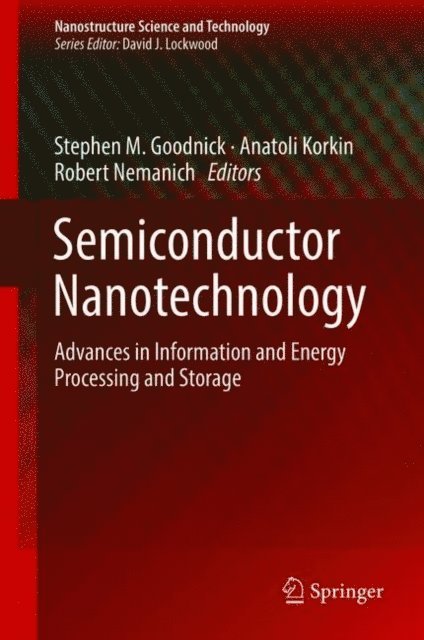
Semiconductor Nanotechnology
Advances in Information and Energy Processing and Storage
Häftad, Engelska, 2019
1 682 kr
Skickas inom 10-15 vardagar
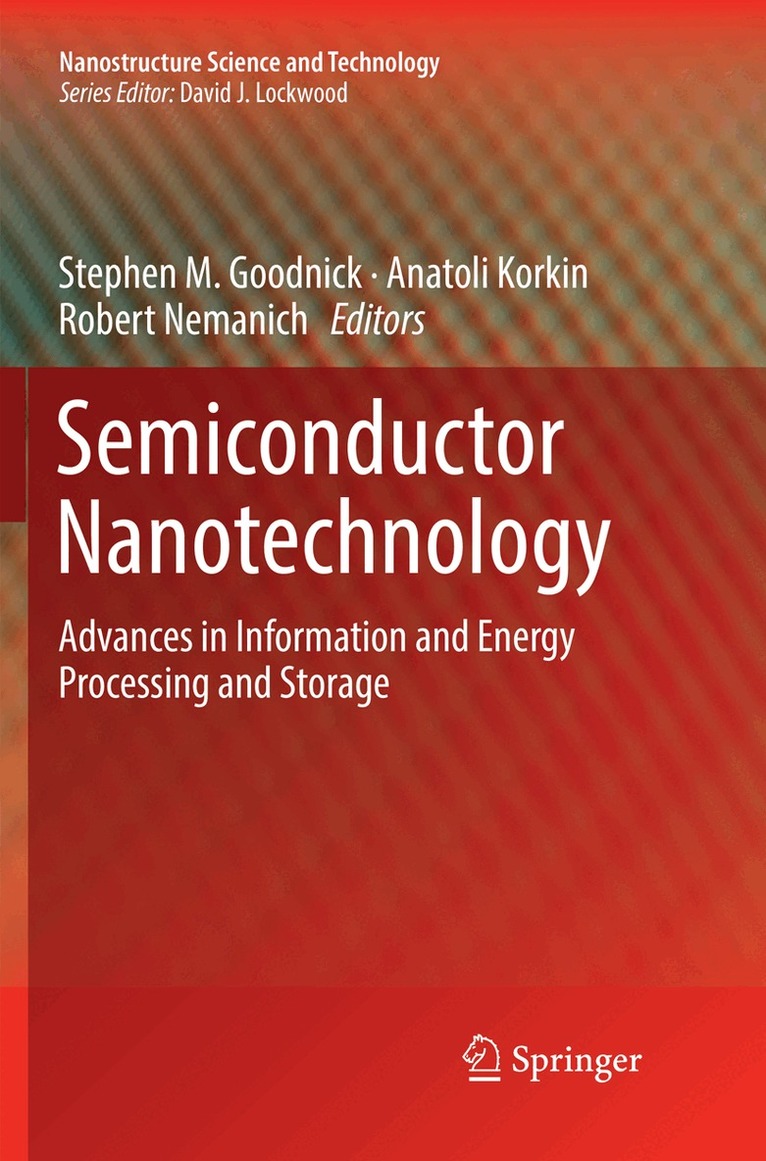
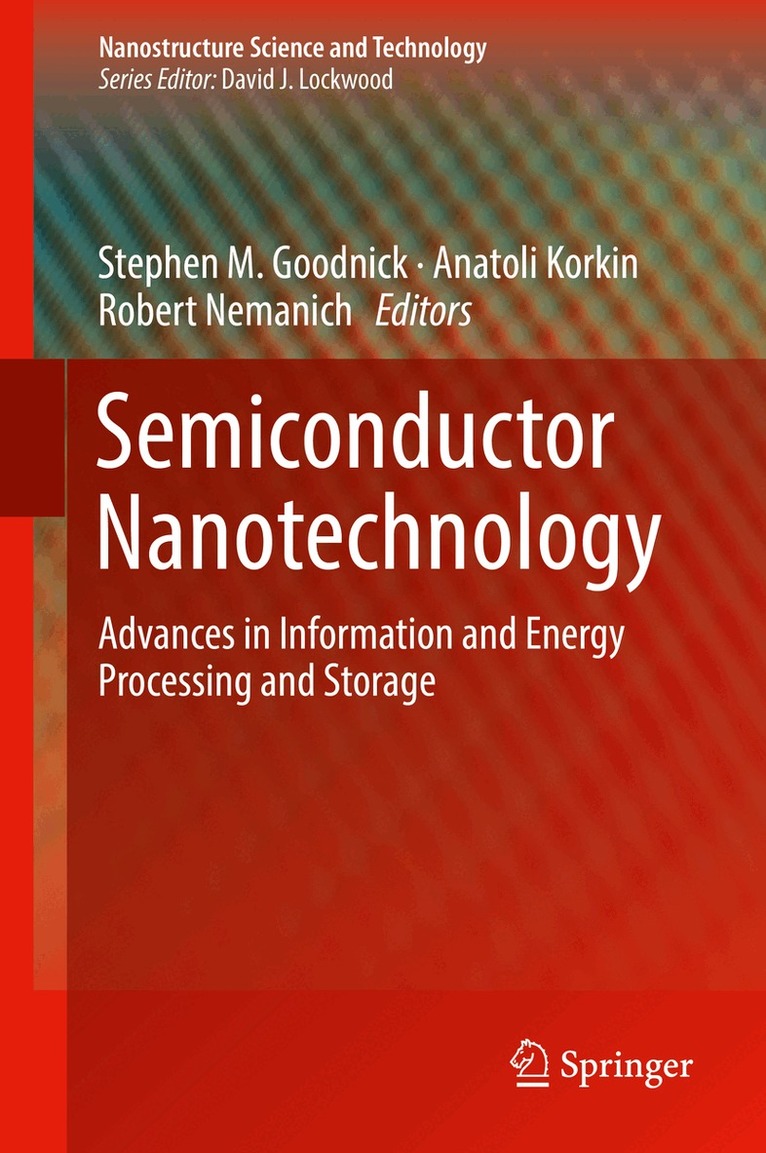
This book presents research dedicated to solving scientific and technological problems in many areas of electronics, photonics and renewable energy. Energy and information are interconnected and are essential elements for the development of human society. Transmission, processing and storage of information requires energy consumption, while the efficient use and access to new energy sources requires new information (ideas and expertise) and the design of novel systems such as photovoltaic devices, fuel cells and batteries. Semiconductor physics creates the knowledge base for the development of information (computers, cell phones, etc.) and energy (photovoltaic) technologies. The exchange of ideas and expertise between these two technologies is critical and expands beyond semiconductors. Continued progress in information and renewable energy technologies requires miniaturization of devices and reduction of costs, energy and material consumption. The latest generation of electronicdevices is now approaching nanometer scale dimensions, new materials are being introduced into electronics manufacturing at an unprecedented rate, and alternative technologies to mainstream CMOS are evolving. Nanotechnology is widely accepted as a source of potential solutions in securing future progress for information and energy technologies.Semiconductor Nanotechnology features chapters that cover the following areas: atomic scale materials design, bio- and molecular electronics, high frequency electronics, fabrication of nanodevices, magnetic materials and spintronics, materials and processes for integrated and subwave optoelectronics, nanoCMOS, new materials for FETs and other devices, nanoelectronics system architecture, nano optics and lasers, non-silicon materials and devices, chemical and biosensors, quantum effects in devices, nano science and technology applications in the development of novel solar energy devices, and fuel cells and batteries.
536 kr
Skickas inom 10-15 vardagar
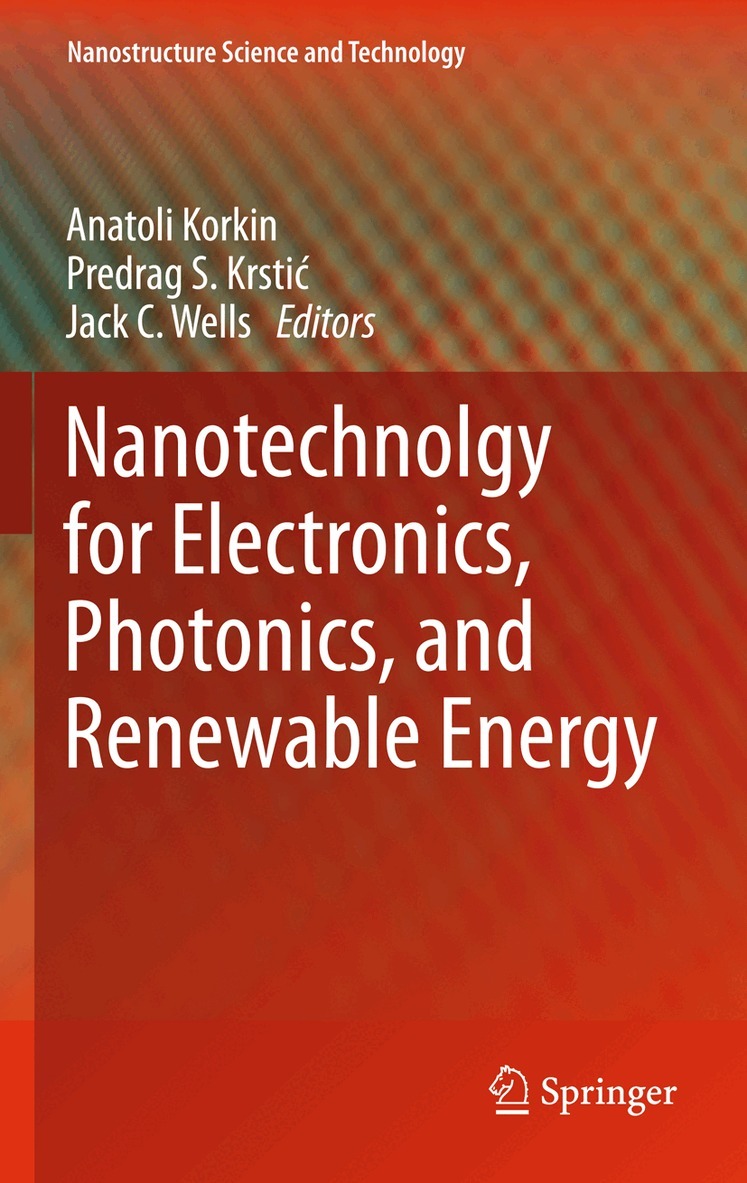
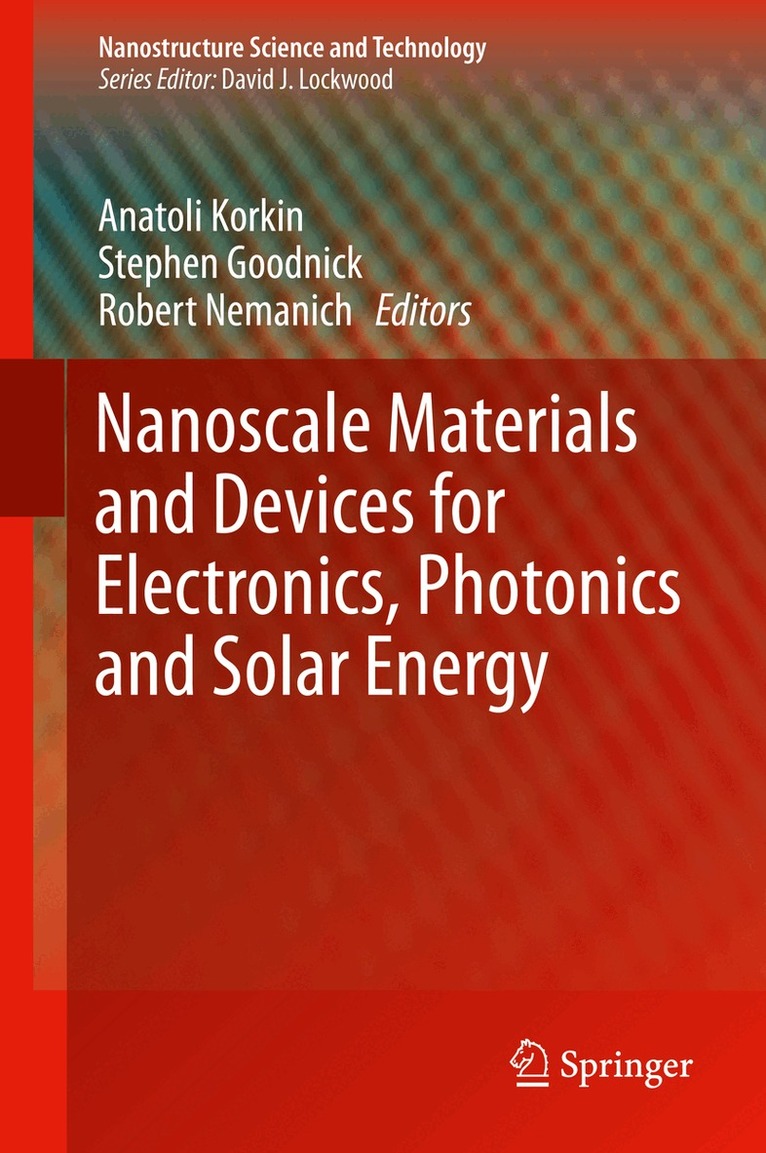
This book presents research dedicated to solving scientific and technological problems in many areas of electronics, photonics and renewable energy. Progress in information and renewable energy technologies requires miniaturization of devices and reduction of costs, energy and material consumption. The latest generation of electronic devices is now approaching nanometer scale dimensions; new materials are being introduced into electronics manufacturing at an unprecedented rate; and alternative technologies to mainstream CMOS are evolving. The low cost of natural energy sources have created economic barriers to the development of alternative and more efficient solar energy systems, fuel cells and batteries.Nanotechnology is widely accepted as a source of potential solutions in securing future progress for information and energy technologies. Nanoscale Materials and Devices for Electronics, Photonics and Solar Energy features chapters that cover the following areas: atomic scale materials design, bio- and molecular electronics, high frequency electronics, fabrication of nanodevices, magnetic materials and spintronics, materials and processes for integrated and subwave optoelectronics, nanoCMOS, new materials for FETs and other devices, nanoelectronics system architecture, nano optics and lasers, non-silicon materials and devices, chemical and biosensors,quantum effects in devices, nano science and technology applications in the development of novel solar energy devices, and fuel cells and batteries.
536 kr
Skickas inom 10-15 vardagar
This book presents research dedicated to solving scientific and technological problems in many areas of electronics, photonics and renewable energy. Progress in information and renewable energy technologies requires miniaturization of devices and reduction of costs, energy and material consumption. The latest generation of electronic devices is now approaching nanometer scale dimensions; new materials are being introduced into electronics manufacturing at an unprecedented rate; and alternative technologies to mainstream CMOS are evolving. The low cost of natural energy sources have created economic barriers to the development of alternative and more efficient solar energy systems, fuel cells and batteries.Nanotechnology is widely accepted as a source of potential solutions in securing future progress for information and energy technologies. Nanoscale Materials and Devices for Electronics, Photonics and Solar Energy features chapters that cover the following areas: atomic scale materials design, bio- and molecular electronics, high frequency electronics, fabrication of nanodevices, magnetic materials and spintronics, materials and processes for integrated and subwave optoelectronics, nanoCMOS, new materials for FETs and other devices, nanoelectronics system architecture, nano optics and lasers, non-silicon materials and devices, chemical and biosensors,quantum effects in devices, nano science and technology applications in the development of novel solar energy devices, and fuel cells and batteries.
Semiconductor Nanotechnology
Advances in Information and Energy Processing and Storage
Inbunden, Engelska, 2018
1 682 kr
Skickas inom 10-15 vardagar
This book presents research dedicated to solving scientific and technological problems in many areas of electronics, photonics and renewable energy. Energy and information are interconnected and are essential elements for the development of human society. Transmission, processing and storage of information requires energy consumption, while the efficient use and access to new energy sources requires new information (ideas and expertise) and the design of novel systems such as photovoltaic devices, fuel cells and batteries. Semiconductor physics creates the knowledge base for the development of information (computers, cell phones, etc.) and energy (photovoltaic) technologies. The exchange of ideas and expertise between these two technologies is critical and expands beyond semiconductors. Continued progress in information and renewable energy technologies requires miniaturization of devices and reduction of costs, energy and material consumption. The latest generation of electronicdevices is now approaching nanometer scale dimensions, new materials are being introduced into electronics manufacturing at an unprecedented rate, and alternative technologies to mainstream CMOS are evolving. Nanotechnology is widely accepted as a source of potential solutions in securing future progress for information and energy technologies.Semiconductor Nanotechnology features chapters that cover the following areas: atomic scale materials design, bio- and molecular electronics, high frequency electronics, fabrication of nanodevices, magnetic materials and spintronics, materials and processes for integrated and subwave optoelectronics, nanoCMOS, new materials for FETs and other devices, nanoelectronics system architecture, nano optics and lasers, non-silicon materials and devices, chemical and biosensors, quantum effects in devices, nano science and technology applications in the development of novel solar energy devices, and fuel cells and batteries.