Fernando Reimers – författare
Visar alla böcker från författaren Fernando Reimers. Handla med fri frakt och snabb leverans.
5 produkter
5 produkter
980 kr
Skickas inom 10-15 vardagar
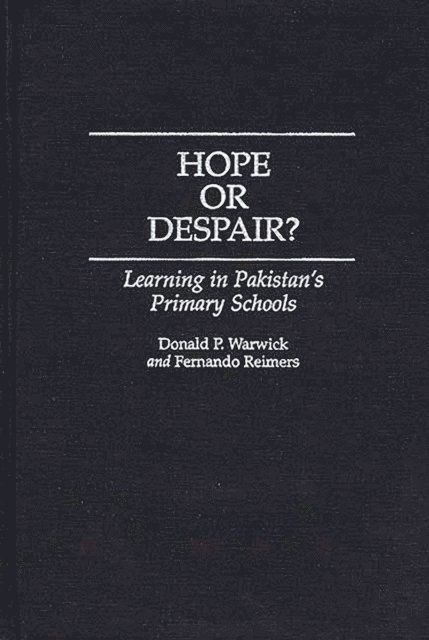
Hope or Despair? asks what promotes and what holds back student learning in Pakistan's government-sponsored primary schools. Using a national sample of schools, students, teachers, and supervisors, it shows how learning is affected by student background, teachers and teaching, school supervision, facilities, and innovation. It is the first book to use achievement tests based on the national curriculum to show influences on learning in the primary schools of an entire developing country. The study also explores why some students complete primary school and others do not.The overall quality of education in Pakistan's government primary schools is low, but student learning rises with the teacher's formal education and with certain teaching practices. Student social class, a strong influence on learning in the United States, makes little difference in Pakistan. Whether the teacher is male or female has no relationship to learning in science, but it does affect achievement in mathematics. Neither supervision nor school facilities are related to achievement. This unique study will be of great interest to those concerned with schooling effectiveness in developing countries as well as to economists, sociologists, and political scientists interested in human resources in those countries.
980 kr
Skickas inom 10-15 vardagar
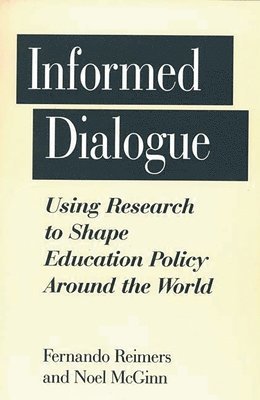
The authors of this book explain how decisions about education and educational policymaking can be informed by research-based knowledge. They develop a framework to organize three approaches, which are: policy dialogue as persuasion, policy dialogue as negotiation, and policy dialogue as participation and organizational learning. The book includes a nine-stage model for how best to employ research to influence this type of learning using a participatory approach. A current review of literature in research utilization in education is also discussed.
448 kr
Skickas inom 10-15 vardagar
The authors of this book explain how decisions about education and educational policymaking can be informed by research-based knowledge. They develop a framework to organize three approaches, which are: policy dialogue as persuasion, policy dialogue as negotiation, and policy dialogue as participation and organizational learning. The book includes a nine-stage model for how best to employ research to influence this type of learning using a participatory approach. A current review of literature in research utilization in education is also discussed.
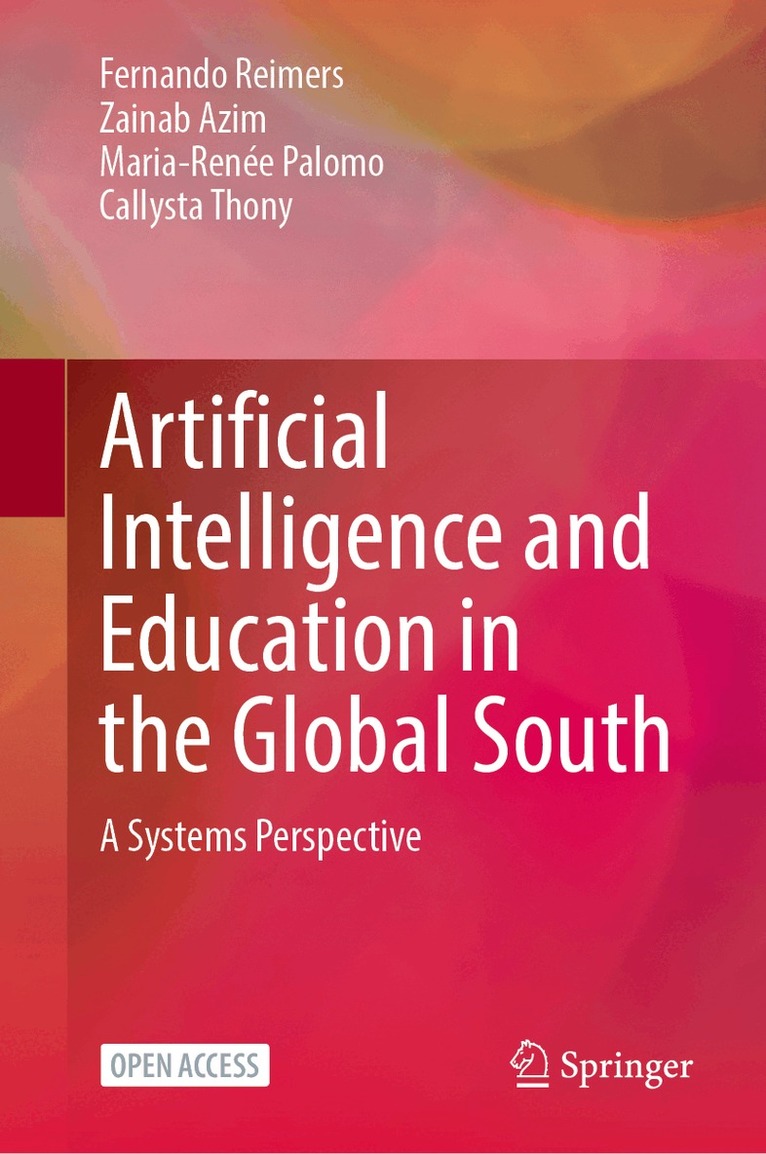
Artificial Intelligence and Education in the Global South
A Systems Perspective
Inbunden, Engelska, 2025
519 kr
Skickas inom 10-15 vardagar
This open access book examines the dynamic intersection of artificial intelligence and education in the Global South, where resource constraints and demographic trends create unique challenges and opportunities. Adopting a systems perspective, it explores how AI can transform teaching, curriculum, assessment, teacher professional development, school leadership and system governance while addressing AI literacy, improving the effectiveness of education and developing transferable skills. The book highlights the risks of exacerbating existing inequalities if technology is not carefully integrated and stresses the importance of human-centered, locally adapted solutions. The book examines whether AI is supporting innovation or the transformation of education systems and how it is addressing the principal most vexing challenges with respect to the areas examined. Each chapter draws on an analysis of the potential of AI, on evidence of its use and on evaluation on the implementation and effectiveness of applications. Each chapter concludes with main takeaways for policy and practice, key ethical issues and questions that merit more research.
Educating for a Climate Changed Future
From First Order Impacts to System Level Transformation
Inbunden, Engelska, 2026
870 kr
Kommande
This open access book offers a comprehensive, systems-level examination of how schooling and climate change shape one another. Drawing on insights from climate science, comparative education, education policy and implementation research, it distinguishes between first‑order effects—how climate hazards and slow-onset changes disrupt learning—and second‑order effects—how education systems respond through curriculum, teacher preparation, infrastructure, operations and community engagement. It maps five major narratives of climate change education—climate literacy, climate action, green economy skills, education for sustainable development and critical/decolonial approaches—and shows how they coexist and interact in global frameworks and national policies. Moving from policy to practice, it analyzes national case studies of policy reform, case studies of transformation at the school level and examines the role of educator networks and of eco-systems supporting climate change education efforts. Using a complexity science perspective, it explains why many systems remain in “low climate learning traps” and outlines realistic strategies to escape them and achieve systemic policy coherence, offering guidance for researchers, policymakers, practitioners and graduate students working toward climate‑ready education systems.