Filipovic Luna Filipovic – författare
Visar alla böcker från författaren Filipovic Luna Filipovic. Handla med fri frakt och snabb leverans.
5 produkter
5 produkter
E-bok
Engelska, 20211 062 kr
Läs direkt efter köp
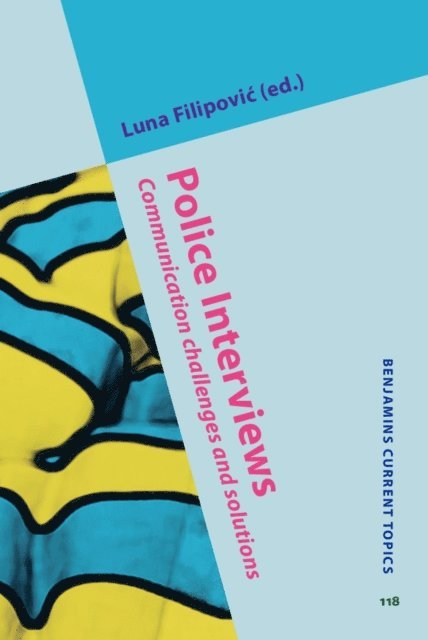
This collection breaks new ground in police communication research. It involves the first instance of the same dataset being analysed from different theoretical and methodological perspectives as well as providing original and detailed insights into both monolingual and bilingual UK police interviews and US police interrogations of suspects. The topics include the role of metacommunication and its appropriate vs. inappropriate use in evidence elicitation, assessment of mitigation vs. aggravation strategies in questioning, identification of right vs. wrong empathy and the importance of getting it right, effects on complexity in police speak on quantity and quality of information obtained, and the multiple challenges that affect interpreter-mediated exchanges in this highly sensitive communicative context. All levels of linguistic meaning are covered, words, constructions, sentences, discourse, and contextualised within psycholinguistic and sociolinguistic knowledge about inferencing, emotion, and social interaction. This holistic approach helps us explain where, when and why communicative conflicts arise in this sensitive context and propose concrete practical solutions to resolve them. This volume will be useful and relevant to both academics, students and researchers, and to professionals in the domains of language and the law. Originally published as special issue of Pragmatics and Society 10:1 (2019).
E-bok
PDF, Engelska, 20141 258 kr
Läs direkt efter köp
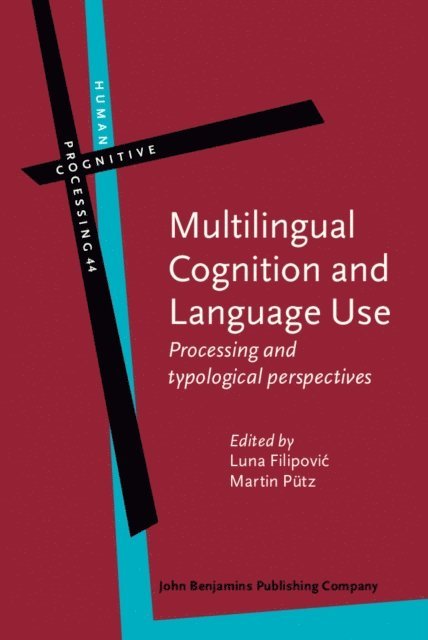
This volume provides a multifaceted view of certain key themes in multilingualism research today and offers future directions for this research area in the context of the multilingual development of individuals and societies. The selection of studied languages is eclectic (e.g. Amondawa, Cantonese, Bulgarian, Dene, Dutch, Eipo, Frisian, German, Mandarin Chinese, Māori, Russian, Spanish, and Yukatek, among others), they are typologically diverse, and they are contrasted from a variety of perspectives, such as cognitive development, aging, acquisition, grammatical and lexical processing, and memory. This collection also illustrates novel insights into the linguistic relativity debate that multilingual studies can offer, such as new and revealing perspectives on some well-known topics (e.g. colour categorisation or language transfer). The critical and comprehensive discussions of theoretical and methodological considerations presented in this volume are fundamental for numerous current, future, empirical and interdisciplinary studies of linguistic diversity, linguistic typology, and multilingual processing.
E-bok
PDF, Engelska, 20121 258 kr
Läs direkt efter köp
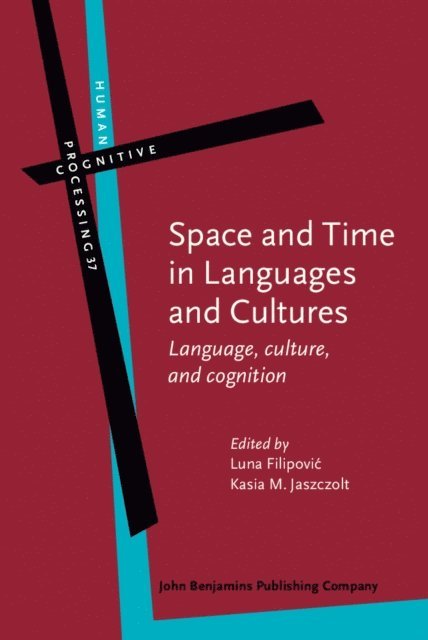
This is an interdisciplinary volume that focuses on the central topic of the representation of events, namely cross-cultural differences in representing time and space, as well as various aspects of the conceptualisation of space and time. It brings together research on space and time from a variety of angles, both theoretical and methodological. Crossing boundaries between and among disciplines such as linguistics, psychology, philosophy, or anthropology forms a creative platform in a bold attempt to reveal the complex interaction of language, culture, and cognition in the context of human communication and interaction. The authors address the nature of spatial and temporal constructs from a number of perspectives, such as cultural specificity in determining time intervals in an Amazonian culture, distinct temporalities in a specific Mongolian hunter community, Russian-specific conceptualisation of temporal relations, Seri and Yucatec frames of spatial reference, memory of events in space and time, and metaphorical meaning stemming from perception and spatial artefacts, to name but a few themes. The topic of space and time in language and culture is also represented, from a different albeit related point of view, in the sister volume Space and Time in Languages and Cultures: Linguistic diversity (HCP 36) which focuses on the language-specific vis-à-vis universal aspects of linguistic representation of spatial and temporal reference.
E-bok
PDF, Engelska, 20121 305 kr
Läs direkt efter köp
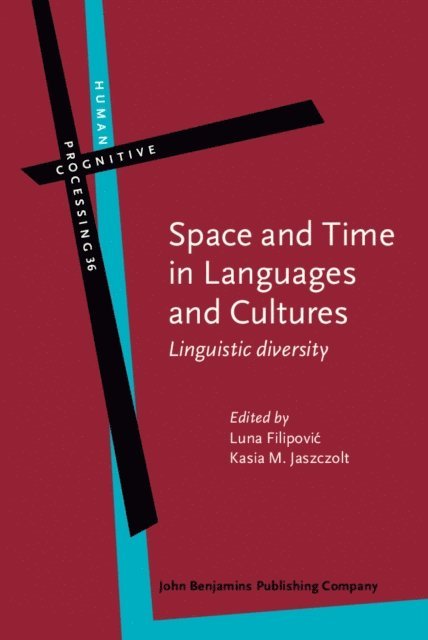
This volume offers novel insights into linguistic diversity in the domains of spatial and temporal reference, searching for uniformity amongst diversity. A number of authors discuss expression of dynamic spatial relations cross-linguistically in a vast range of typologically different languages such as Bezhta, French, Hinuq, Italian, Japanese, Polish, Serbian, and Spanish, among others. The contributions on linguistic expression of time all shed new light on pertinent questions regarding this cognitive domain, such as the hotly debated relationship between cross-linguistic differences in talking about time and universal principles of utterance interpretation, modelling temporal inference through aspectual interactions, as well as the complexity of the acquisition of tense-aspect relations in a second language. The topic of space and time in language and culture is also represented, from a different point of view, in the sister volume Space and Time in Languages and Cultures: Language, culture, and cognition (HCP 37) which discusses spatial and temporal constructs in human language, cognition, and culture in order to come closer to a better understanding of the interaction between shared and individual characteristics of language and culture that shape the way people interact with each other and exchange information about the spatio-temporal constructs that underlie their cognitive, social, and linguistic foundations.
E-bok
PDF, Engelska, 20071 384 kr
Läs direkt efter köp
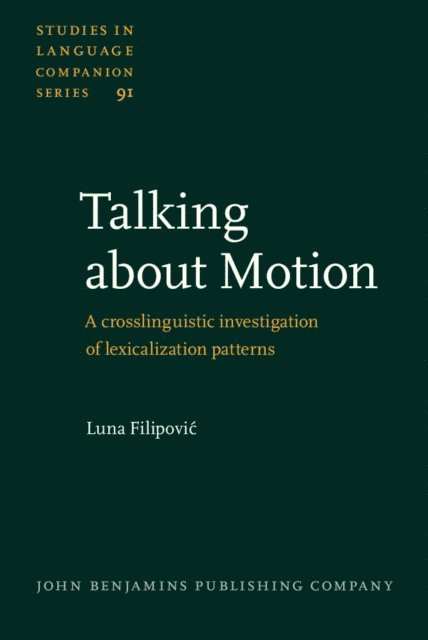
This is a corpus-based study of lexicalization of motion events in Serbo-Croatian and English, with contrasting examples from Spanish, French, Italian, Mandarin Chinese and Albanian. Talmy’s typology (1985) provides the backdrop for the analysis and the focus is on intratypological differences that affect habitual presence or absence of information in motion expressions crosslinguistically as well as “pattern clashing” in translation. This fresh look at issues regarding linguistic typology, lexical and construction meaning and spatio-temporal construals in language and experience results in a more finely grained classification of verbalized motion events. The study offers an eclectic overview of different theoretical approaches and insists on theoretically unbiased set of tools and principles that can be used in studies of any cognitive domain in any language. It provides an in-depth discussion of current issues in cognitive linguistics in particular and suggests systematic implementation of the research findings in applied and interdisciplinary studies of language.