Putz Martin Putz – författare
Visar alla böcker från författaren Putz Martin Putz. Handla med fri frakt och snabb leverans.
11 produkter
11 produkter
E-bok
PDF, Engelska, 2012600 kr
Läs direkt efter köp
E-bok
PDF, Engelska, 20131 012 kr
Läs direkt efter köp
E-bok
PDF, Engelska, 2016910 kr
Läs direkt efter köp
E-bok
Engelska, 2016910 kr
Läs direkt efter köp
E-bok
PDF, Engelska, 20141 117 kr
Läs direkt efter köp
This volume is intended to be a contribution to the rapidly growing field of research into Cognitive Sociolinguistics which draws on the convergence of methods and theoretical frameworks typically associated with Cognitive Linguistics and Sociolinguistics. The papers in this volume, written by internationally renowned scholars in the fields of sociolinguistics (e.g. Labov) and cognitive sociolinguistics, seek to explore and systematize the key theoretical and epistemological bases for the emergence of this socio-cognitive paradigm. More specifically, the papers, originally published in Review of Cognitive Linguistics 10:2 (2012), focus on terms and concepts which are foundational to the discussion of Cognitive Sociolinguistics such as the role of cognition in the sociolinguistic enterprise; the social recontextualization of cognition; variability in cognitive systems; usage-based conceptions of language; pragmatic variation and cultural models of thought; cultural conceptualizations and lexicography as well as cognitive processing models and perceptual dialectology. All the papers are anchored in instrumental empirical data analysis. The volume provides a welcome contribution to the field for anyone interested in Cognitive Linguistics and its new developments. The seven papers included in this book were originally presented at the 34th International LAUD Symposium on Cognitive Sociolinguistics, which took place in March 2010 at the University of Koblenz-Landau (Germany).
E-bok
PDF, Engelska, 20141 258 kr
Läs direkt efter köp
This volume provides a multifaceted view of certain key themes in multilingualism research today and offers future directions for this research area in the context of the multilingual development of individuals and societies. The selection of studied languages is eclectic (e.g. Amondawa, Cantonese, Bulgarian, Dene, Dutch, Eipo, Frisian, German, Mandarin Chinese, Māori, Russian, Spanish, and Yukatek, among others), they are typologically diverse, and they are contrasted from a variety of perspectives, such as cognitive development, aging, acquisition, grammatical and lexical processing, and memory. This collection also illustrates novel insights into the linguistic relativity debate that multilingual studies can offer, such as new and revealing perspectives on some well-known topics (e.g. colour categorisation or language transfer). The critical and comprehensive discussions of theoretical and methodological considerations presented in this volume are fundamental for numerous current, future, empirical and interdisciplinary studies of linguistic diversity, linguistic typology, and multilingual processing.
E-bok
PDF, Engelska, 19921 981 kr
Läs direkt efter köp
For this volume, 30 well-known linguistics and researcher in related fields were invited to present an overview of their most important insights and theories as these have evolved over the past 30 years. Against the background of work done in other areas of study, the contributors reflect on the development of their ideas; the book shows what progress has been made, and how priorities have shifted these past decades. By placing current ideas in a wider historical perspective, Thirty Years of Linguistics Evolution will become a unique instrument for future generations of linguists to gain insight into the overall trends and problems that have dominated linguistics in the second half of the 20th century.The impressive contributions to this volume provide a glowing and appropriate testimonial to the many years of effort which René Dirven has devoted to linguistic research and to the forging of contacts between scholars all over the world. The topics are wide-ranging, the titles intriguing, the content challenging. The whole has been scrupulously edited by Martin Pütz to provide a book which I am sure will be of considerable interest and value to scholars and students alike. David Crystal, Bangor, Wales.
E-bok
PDF, Engelska, 19972 029 kr
Läs direkt efter köp
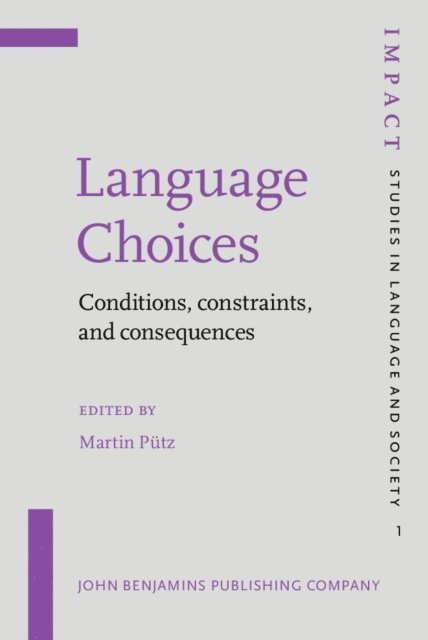
This volume is about various aspects of the theory and application of language contact and language conflict phenomena seen from an interdisciplinary perspective. The focus is on the linguistic, social, psychological, and educational issues (conditions, constraints, and consequences) involved in the status and use of languages in multilingual settings.The book is divided into four sections dealing with the following areas: Theoretical issues: This section addresses key issues such as the nature of the concepts of language maintenance, language loyalty and language identity, language shift, language loss and language death. It includes the search for models of the often contradictory theoretical issues involved in language contact.Language policy and language planning: This section examines the various language policies carried out by official agencies and focuses on the two basic options available to a multilingual nation: assimilation or pluralism.Attitudes towards languages: The section is geared towards research into determinants of language attitudes, the methods for the measurements of attitudes, as well as the relationship between language policy and attitude change.Codeswitching and language choice: The linguistic, social, psychological, and anthropological implications of using two different codes will be examined from different perspectives. Relevant research topics include: the situational uses of code-switching, linguistic and social constraints on codeswitching, and code-switching vs. borrowing. A further research paradigm deals with the search for relativized constraints, resulting from the interaction of universal principles and aspects particular to each codeswitching situation.
E-bok
PDF, Engelska, 20001 651 kr
Läs direkt efter köp
About a century after the year Benjamin Lee Whorf (1897–1941) was born, his theory complex is still the object of keen interest to linguists. Rencently, scholars have argued that it was not his theory complex itself, but an over-simplified, reduced section taken out of context that has become known as the Sapir-Whorf hypothesis that has met with so much resistance among linguists over the last few decades. Not only did Whorf present his views much more subtly than most people would believe, but he also dealt with a great number of other issues in his work. Taking Whorf’s own notion of linguistic relativity as a starting point, this volume explores the relation between language, mind and experience through its historical development, Whorf’s own writing, its misinterpretations, various theoretical and methodological issues and a closer look at a few specific issues in his work.
E-bok
PDF, Engelska, 19941 384 kr
Läs direkt efter köp
The selected articles compiled in the present volume are based on contributions prepared for the 17th International L.A.U.D. (Linguistic Agency University of Duisburg) Symposium held at the University of Duisburg on 23-27 March 1992. The 13 papers in this book focus on problems and issues of intercultural communication. The first part is devoted to theoretical aspects related to the interaction of language and culture and deals with the issue from anthropological, cognitive, and linguistic points of view. Part II raises issues of language policy and language planning such as the manipulation of language in intercultural contact; it includes case studies pertaining to multilingual settings, for example in Africa, Australia, Melanesia, and Europe. The volume opens with a foreword by Dell H. Hymes.
E-bok
PDF, Engelska, 20101 258 kr
Läs direkt efter köp
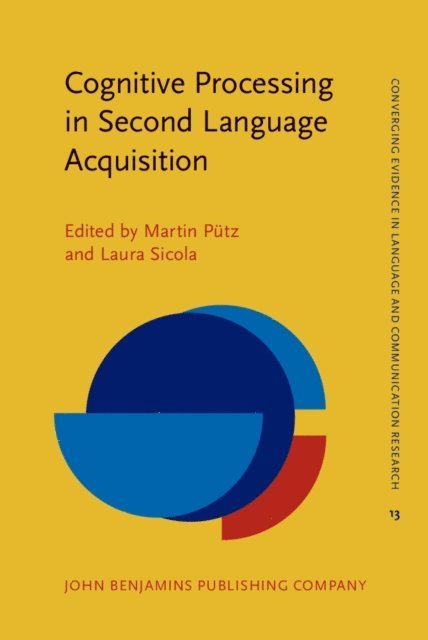
This edited volume represents state of the field research linking cognition and second language acquisition, reflecting the experience of the learner when engaged in noticing, input/output processing, retrieval, and even attrition of target forms. Contributions are both theoretical and practical, describing a variety of L1, L2 and L3 combinations from around the world as observed in spoken, written, and computer-mediated contexts. The book relates conditions of language, task, medium or environment to how learners make decisions about language, with discussions about the application or efficacy of these conditions on linguistic success and development, and pedagogical implications.