Filiz Yenişehirlioğlu - Böcker
Visar alla böcker från författaren Filiz Yenişehirlioğlu. Handla med fri frakt och snabb leverans.
7 produkter
7 produkter
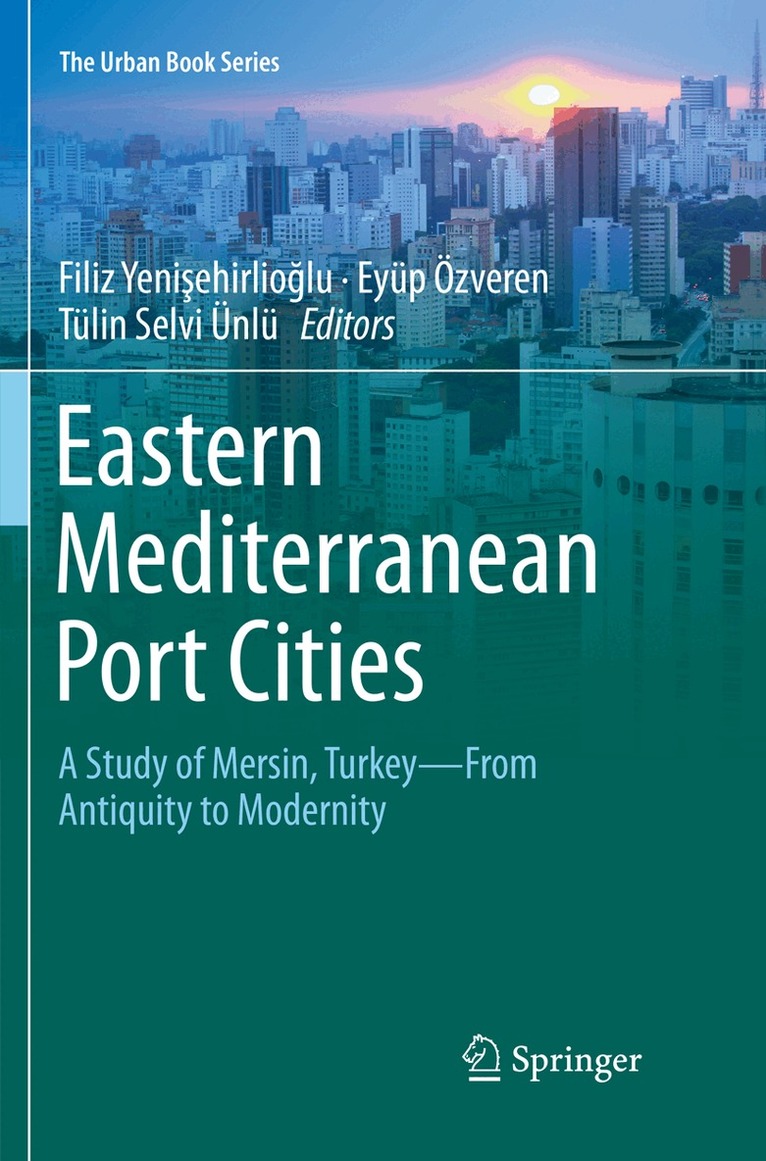
Eastern Mediterranean Port Cities
A Study of Mersin, Turkey—From Antiquity to Modernity
Häftad, Engelska, 2019
1 092 kr
Skickas inom 10-15 vardagar
This book surveys the historical development, current problems and likely prospects for Eastern Mediterranean port cities, providing contributions from scholars from various disciplines, such as archaeologists, historians, economists, urban planners and architects. By studying the city of Mersin and the surrounding area, it offers insights into the changing nature of Eastern Mediterranean port cities.The first part of the book discusses the approaches to the Mediterranean World, from the late prehistory to the present, and questions the implications of the values inherited from the past for a sustainable future. The second part then examines the social structure of Eastern Mediterranean port cities presenting an in-depth study of different ethnic groups and communities. In the third part the changing physical structure of these cities is elucidated from the perspectives of archaeology, architecture, and urban planning. The last part focuses on urbanmemory through a detailed study based on live recordings of original accounts by the local people. The book benefits prospective researchers in the field of Mediterranean studies, archaeology, history, economic history, architecture and urban planning.
1 314 kr
Skickas inom 10-15 vardagar
This book studies the change in Mediterranean port cities, from the nineteenth century when they flourished as a result of international economic relations and advances in transportation technology, through the twentieth century when the nation-states were at their prime time. This trajectory with two distinct parts belongs as a whole to what we call the modern times. Whereas in the first phase, Mediterranean port cities became hubs of spontaneous urban complexity and social diversity thanks to reciprocal relations that made them the places of cultural exchange, where people from different parts of the Mediterranean met one another, during the second, because of the interruption of such connectivities and major demographic changes the same cities experienced by way of massive migration, they became less and less unlike other cities with which they shared the same geography in general and the nation-state territory, in particular. Over the last few decades, with a new roundof globalization, port cities increasingly find themselves facing new opportunities and connectivities, the realization of which would make them once again different, albeit in variegated ways and to degrees. Our narrative foregrounds contexts and connectivities with specific attention paid to mobility, fragility, and precarity. The purpose of this book is to highlight commonalities of and differences among the select Mediterranean port cities, with a focus on the role of social actors, changing economic relations and spatial characteristics and practices.
673 kr
Skickas inom 5-8 vardagar
1 314 kr
Skickas inom 10-15 vardagar
This book studies the change in Mediterranean port cities, from the nineteenth century when they flourished as a result of international economic relations and advances in transportation technology, through the twentieth century when the nation-states were at their prime time. This trajectory with two distinct parts belongs as a whole to what we call the modern times. Whereas in the first phase, Mediterranean port cities became hubs of spontaneous urban complexity and social diversity thanks to reciprocal relations that made them the places of cultural exchange, where people from different parts of the Mediterranean met one another, during the second, because of the interruption of such connectivities and major demographic changes the same cities experienced by way of massive migration, they became less and less unlike other cities with which they shared the same geography in general and the nation-state territory, in particular. Over the last few decades, with a new roundof globalization, port cities increasingly find themselves facing new opportunities and connectivities, the realization of which would make them once again different, albeit in variegated ways and to degrees. Our narrative foregrounds contexts and connectivities with specific attention paid to mobility, fragility, and precarity. The purpose of this book is to highlight commonalities of and differences among the select Mediterranean port cities, with a focus on the role of social actors, changing economic relations and spatial characteristics and practices.
Eastern Mediterranean Port Cities
A Study of Mersin, Turkey—From Antiquity to Modernity
Inbunden, Engelska, 2018
1 096 kr
Skickas inom 10-15 vardagar
This book surveys the historical development, current problems and likely prospects for Eastern Mediterranean port cities, providing contributions from scholars from various disciplines, such as archaeologists, historians, economists, urban planners and architects. By studying the city of Mersin and the surrounding area, it offers insights into the changing nature of Eastern Mediterranean port cities.The first part of the book discusses the approaches to the Mediterranean World, from the late prehistory to the present, and questions the implications of the values inherited from the past for a sustainable future. The second part then examines the social structure of Eastern Mediterranean port cities presenting an in-depth study of different ethnic groups and communities. In the third part the changing physical structure of these cities is elucidated from the perspectives of archaeology, architecture, and urban planning. The last part focuses on urbanmemory through a detailed study based on live recordings of original accounts by the local people. The book benefits prospective researchers in the field of Mediterranean studies, archaeology, history, economic history, architecture and urban planning.
493 kr
Skickas inom 7-10 vardagar
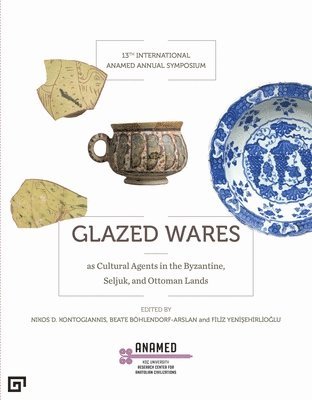
This volume collects research presented at the Koç University Research Center for Anatolian Civilizations (ANAMED) 2018 international annual symposium. It brings together researchers engaged in the study of the decoration and technology of glazed pottery, ranging from the early Byzantine era to the end of the Ottoman period. Topics explored include pottery production in Constantinople, glazed ceramic production and consumption in medieval Thebes, pottery imports in Algiers during the Turkish Regency, considerations of trading routes and their influences, the relationships between Italy and the Byzantine and Ottoman world through pottery, and more.
760 kr
Skickas inom 3-6 vardagar
Weaving the History: Mystery of a City, Sof exhibition explores the history of the Angora goat and its precious mohair and the premium, luxurious fabric called sof produced from the Angora goat’s brilliant unadulterated mohair yarn during the Ottoman Era. Sof production and mohair weaving once shaped the economy and social life of Ankara, especially in the 16th century ceased to an end in the 19th century and sof has become a forgotten value. This exhibition catalog documents the making of a research- based exhibition. Furthermore, it aims to become a reference book for researchers by compiling objects demonstrating the importance of the Angora goat and the usages of mohair together with presenting articles authored by researchers from various disciplines.Articles compiled in the first part of this book focus on subjects such as the roots of weaving in Anatolia, biological characteristics of the Angora goat, the Angora goat economy in the 19th century and the changes in the Angora goat density in Ankara, the adventure of the Angora goat in France and South Africa, the history of the Angora goat and mohair production in Ankara, mohair supply chain in the republican period, the use of the Angora goat as a symbol in the designs of banknotes, stamps and logos, the story of the 18th century painting the “View of Ankara” from Rijksmuseum collection which is the oldest painting known to depict Ankara and mohair weaving.The exhibition catalog features objects and artefacts from Koç University Vehbi Koç Ankara Studies Research Center VEKAM’s library and archive, museum and personal collections. Among these, 16th and 17th century examples from mohair from the Topkapi Palace collection, 19th and 20th century clothing fashioned from mohair and sof from Sadberk Hanim Museum collection and sof fabric samples from Ethnographical Museum of Ankara collection and View of Ankara from Rijkmuseum portrays the importance of mohair and exemplifies its usages. A compilation of engravings, rare books, photographs about the Angora goat and mohair preparation tools and natural dyes used for dyeing mohair, in addition to contemporary woven and knitted mohair examples are also included in this catalog for readers to trace both the history and the processes included in mohair related production in Ankara and Anatolia.