Fionnuala Ni Aolain – författare
Visar alla böcker från författaren Fionnuala Ni Aolain. Handla med fri frakt och snabb leverans.
7 produkter
7 produkter
E-bok
Engelska, 2017498 kr
Läs direkt efter köp
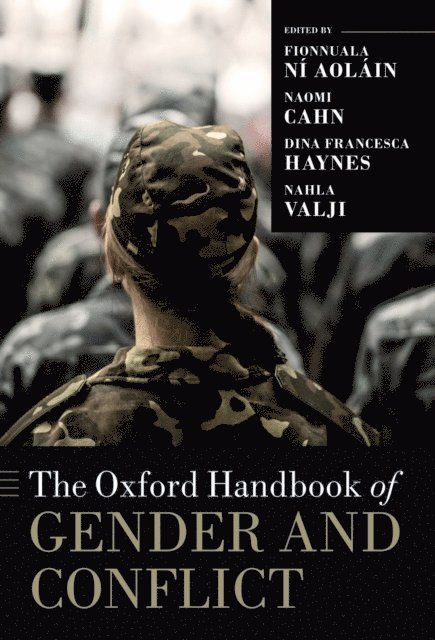
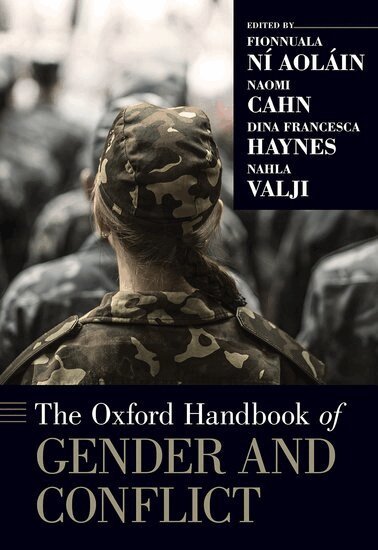
Traditionally, much of the work studying war and conflict has focused on men. Men commonly appear as soldiers, commanders, casualties, and civilians. Women, by contrast, are invisible as combatants, and, when seen, are typically pictured as victims. The field of war and conflict studies is changing: more recently, scholars of war and conflict have paid increasing notice to men as a gendered category and given sizeable attention to women''s multiple roles in conflict and post-conflict settings.The Oxford Handbook of Gender and Conflict focuses on the multidimensionality of gender in conflict, yet it also prioritizes the experience of women, given both the changing nature of war and the historical de-emphasis on women''s experiences. Today''s wars are not staged encounters involving formal armies, but societal wars that operate at all levels, from house to village to city. Women are necessarily involved at each level. Operating from this basic intellectual foundation, the editors have arranged the volume into seven core sections: the theoretical foundations of the role of gender in violent conflicts; the sources for studying contemporary conflict; the conflicts themselves; the post-conflict process; institutions and actors; the challenges presented by the evolving nature of war; and, finally, a substantial set of case studies from across the globe. Genuinely comprehensive, this Handbook will not only serve as an authoritative overview of this massive topic, it will set the research agenda for years to come.
Inbunden, Engelska, 2011
1 752 kr
Skickas inom 5-8 vardagar
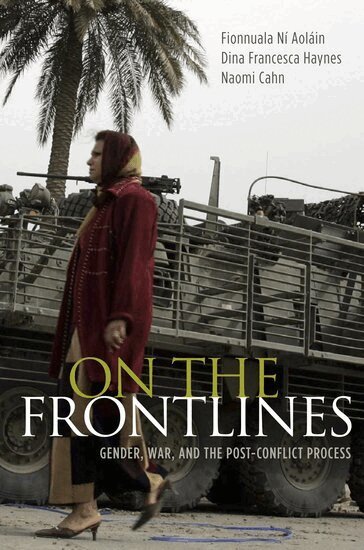
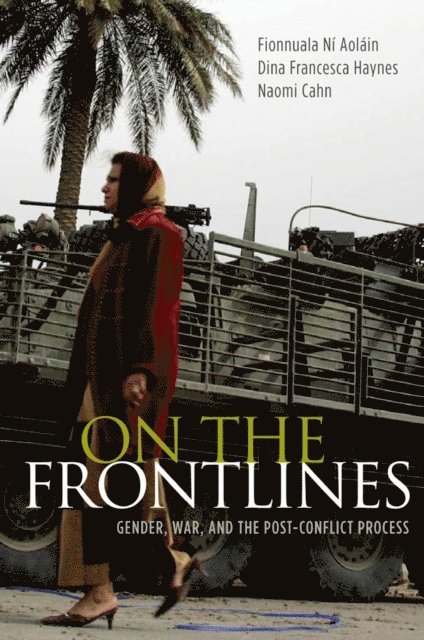
Gender oppression has been a feature of war and conflict throughout human history, yet until fairly recently, little attention was devoted to addressing the consequences of violence and discrimination experienced by women in post-conflict states. Thankfully, that is changing. Today, in a variety of post-conflict settings--the former Yugoslavia, Afghanistan, Colombia, Northern Ireland --international advocates for women's rights have focused bringing issues of sexual violence, discrimination and exclusion into peace-making processes. In On the Frontlines, Fionnuala Ní Aoláin, Dina Francesca Haynes, and Naomi Cahn consider such policies in a range of cases and assess the extent to which they have had success in improving women's lives. They argue that there has been too little success, and that this is in part a product of a focus on schematic policies like straightforward political incorporation rather than a broader and deeper attempt to alter the cultures and societies that are at the root of much of the violence and exclusions experienced by women. They contend that this broader approach would not just benefit women, however. Gender mainstreaming and increased gender equality has a direct correlation with state stability and functions to preclude further conflict. If we are to have any success in stabilizing failing states, gender needs to move to fore of our efforts. With this in mind, they examine the efforts of transnational organizations, states and civil society in multiple jurisdictions to place gender at the forefront of all post-conflict processes. They offer concrete analysis and practical solutions to ensuring gender centrality in all aspects of peace making and peace enforcement.
Häftad, Engelska, 2011
456 kr
Skickas inom 5-8 vardagar
Gender oppression has been a feature of war and conflict throughout human history, yet until fairly recently, little attention was devoted to addressing the consequences of violence and discrimination experienced by women in post-conflict states. Thankfully, that is changing. Today, in a variety of post-conflict settings--the former Yugoslavia, Afghanistan, Colombia, Northern Ireland --international advocates for women's rights have focused bringing issues of sexual violence, discrimination and exclusion into peace-making processes. In On the Frontlines, Fionnuala Ní Aoláin, Dina Francesca Haynes, and Naomi Cahn consider such policies in a range of cases and assess the extent to which they have had success in improving women's lives. They argue that there has been too little success, and that this is in part a product of a focus on schematic policies like straightforward political incorporation rather than a broader and deeper attempt to alter the cultures and societies that are at the root of much of the violence and exclusions experienced by women. They contend that this broader approach would not just benefit women, however. Gender mainstreaming and increased gender equality has a direct correlation with state stability and functions to preclude further conflict. If we are to have any success in stabilizing failing states, gender needs to move to fore of our efforts. With this in mind, they examine the efforts of transnational organizations, states and civil society in multiple jurisdictions to place gender at the forefront of all post-conflict processes. They offer concrete analysis and practical solutions to ensuring gender centrality in all aspects of peace making and peace enforcement.
Inbunden, Engelska, 2018
2 983 kr
Skickas inom 3-6 vardagar
Traditionally, much of the work studying war and conflict has focused on men. Men commonly appear as soldiers, commanders, casualties, and civilians. Women, by contrast, are invisible as combatants, and, when seen, are typically pictured as victims. The field of war and conflict studies is changing: more recently, scholars of war and conflict have paid increasing notice to men as a gendered category and given sizeable attention to women's multiple roles in conflict and post-conflict settings.The Oxford Handbook of Gender and Conflict focuses on the multidimensionality of gender in conflict, yet it also prioritizes the experience of women, given both the changing nature of war and the historical de-emphasis on women's experiences. Today's wars are not staged encounters involving formal armies, but societal wars that operate at all levels, from house to village to city. Women are necessarily involved at each level. Operating from this basic intellectual foundation, the editors have arranged the volume into seven core sections: the theoretical foundations of the role of gender in violent conflicts; the sources for studying contemporary conflict; the conflicts themselves; the post-conflict process; institutions and actors; the challenges presented by the evolving nature of war; and, finally, a substantial set of case studies from across the globe. Genuinely comprehensive, this Handbook will not only serve as an authoritative overview of this massive topic, it will set the research agenda for years to come.
E-bok
PDF, Engelska, 2011377 kr
Läs direkt efter köp
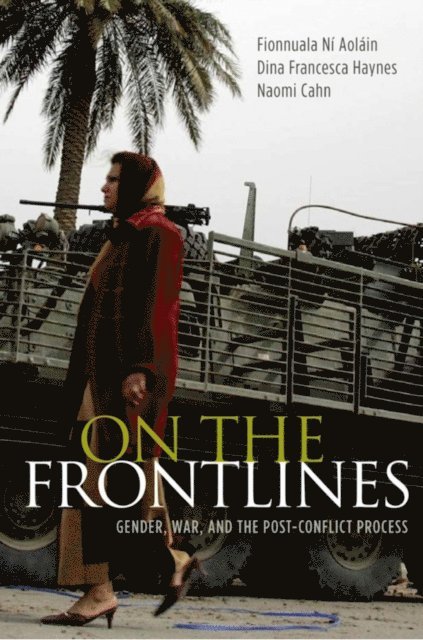
Gender oppression has been a feature of war and conflict throughout human history, yet until fairly recently, little attention was devoted to addressing the consequences of violence and discrimination experienced by women in post-conflict states. Thankfully, that is changing. Today, in a variety of post-conflict settings--the former Yugoslavia, Afghanistan, Colombia, Northern Ireland --international advocates for women''s rights have focused bringing issues of sexual violence, discrimination and exclusion into peace-making processes. In On the Frontlines, Fionnuala N? Aol?in, Dina Francesca Haynes, and Naomi Cahn consider such policies in a range of cases and assess the extent to which they have had success in improving women''s lives. They argue that there has been too little success, and that this is in part a product of a focus on schematic policies like straightforward political incorporation rather than a broader and deeper attempt to alter the cultures and societies that are at the root of much of the violence and exclusions experienced by women. They contend that this broader approach would not just benefit women, however. Gender mainstreaming and increased gender equality has a direct correlation with state stability and functions to preclude further conflict. If we are to have any success in stabilizing failing states, gender needs to move to fore of our efforts. With this in mind, they examine the efforts of transnational organizations, states and civil society in multiple jurisdictions to place gender at the forefront of all post-conflict processes. They offer concrete analysis and practical solutions to ensuring gender centrality in all aspects of peace making and peace enforcement.
E-bok
PDF, Engelska, 2013553 kr
Läs direkt efter köp
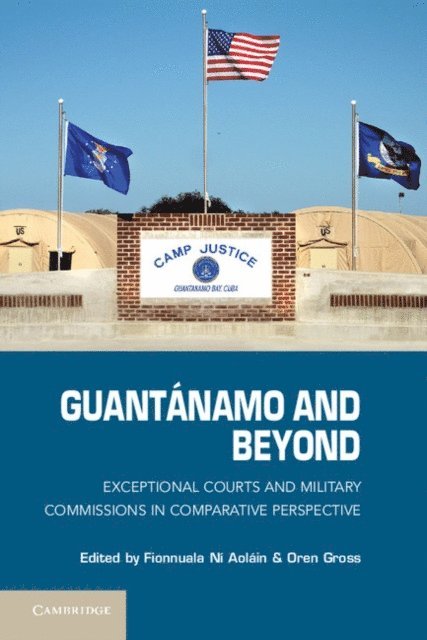
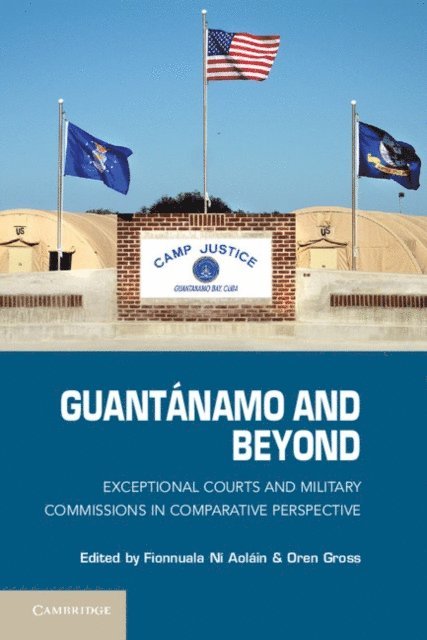
The Military Commissions scheme established by President George W. Bush in November 2001 has garnered considerable controversy. In parallel with the detention facilities at Guantánamo Bay, Cuba, the creation of military courts has focused significant global attention on the use of such courts to process and try persons suspected of committing terrorist acts or offenses during armed conflict. This book brings together the viewpoints of leading scholars and policy makers on the topic of exceptional courts and military commissions with a series of unique contributions setting out the current ''state of the field''. The book assesses the relationship between such courts and other intersecting and overlapping legal arenas including constitutional law, international law, international human rights law, and international humanitarian law. By examining the comparative patterns, similarities and disjunctions arising from the use of such courts, this book also analyzes the political and legal challenges that the creation and operation of exceptional courts produces both within democratic states and for the international community.
E-bok
Engelska, 2013548 kr
Läs direkt efter köp
The Military Commissions scheme established by President George W. Bush in November 2001 has garnered considerable controversy. In parallel with the detention facilities at Guantánamo Bay, Cuba, the creation of military courts has focused significant global attention on the use of such courts to process and try persons suspected of committing terrorist acts or offenses during armed conflict. This book brings together the viewpoints of leading scholars and policy makers on the topic of exceptional courts and military commissions with a series of unique contributions setting out the current ''state of the field''. The book assesses the relationship between such courts and other intersecting and overlapping legal arenas including constitutional law, international law, international human rights law, and international humanitarian law. By examining the comparative patterns, similarities and disjunctions arising from the use of such courts, this book also analyzes the political and legal challenges that the creation and operation of exceptional courts produces both within democratic states and for the international community.